


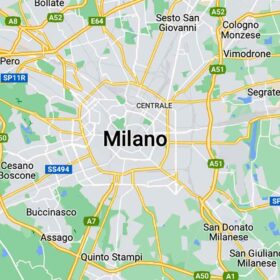
 The Geographic Location of Milan – A Strategic Spot in the Heart of Europe
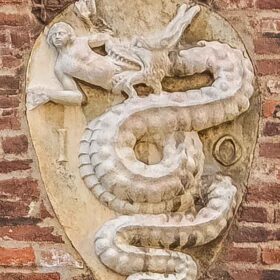 Milan’s coat of arms
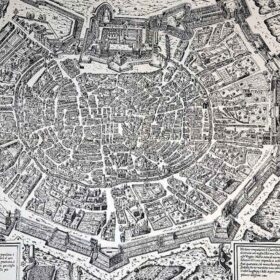 History of Milan
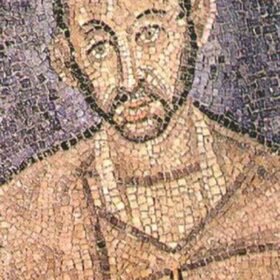 Saint Ambrose
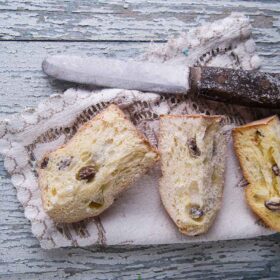 History of Panettone
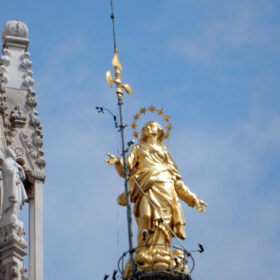 Madonnina
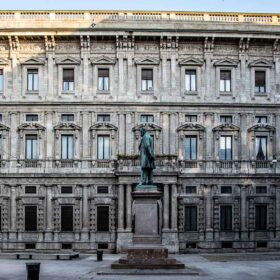 City Hall
 Milanese cuisine


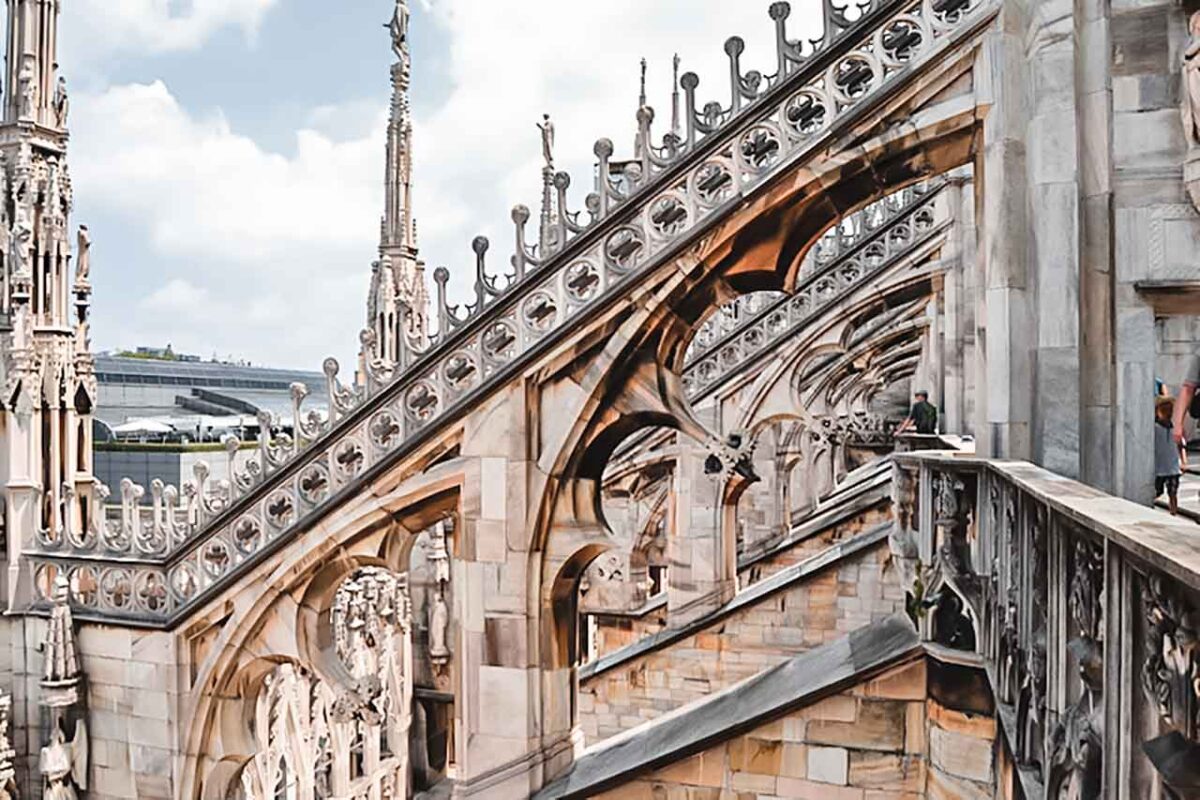
Planning a trip to Milan and looking for more than the standard guidebook information? Milan is a city that, at first glance, is associated with fashion, design, and finance, but beneath this modern facade lies a rich history, fascinating legends, and secrets that will surprise even experienced travelers.
After years of living in this city, I discovered that Milan’s true magic lies in the details: in a bas-relief hidden on a medieval palace capital, in stories of ghosts wandering through the cathedral, or in the history of the canals that once made the city resemble Venice. These are curiosities that travel guides rarely mention, yet they allow you to see Milan from an entirely new perspective.
How Milan Got Its Name: The Mysterious Half-Woolly Sow
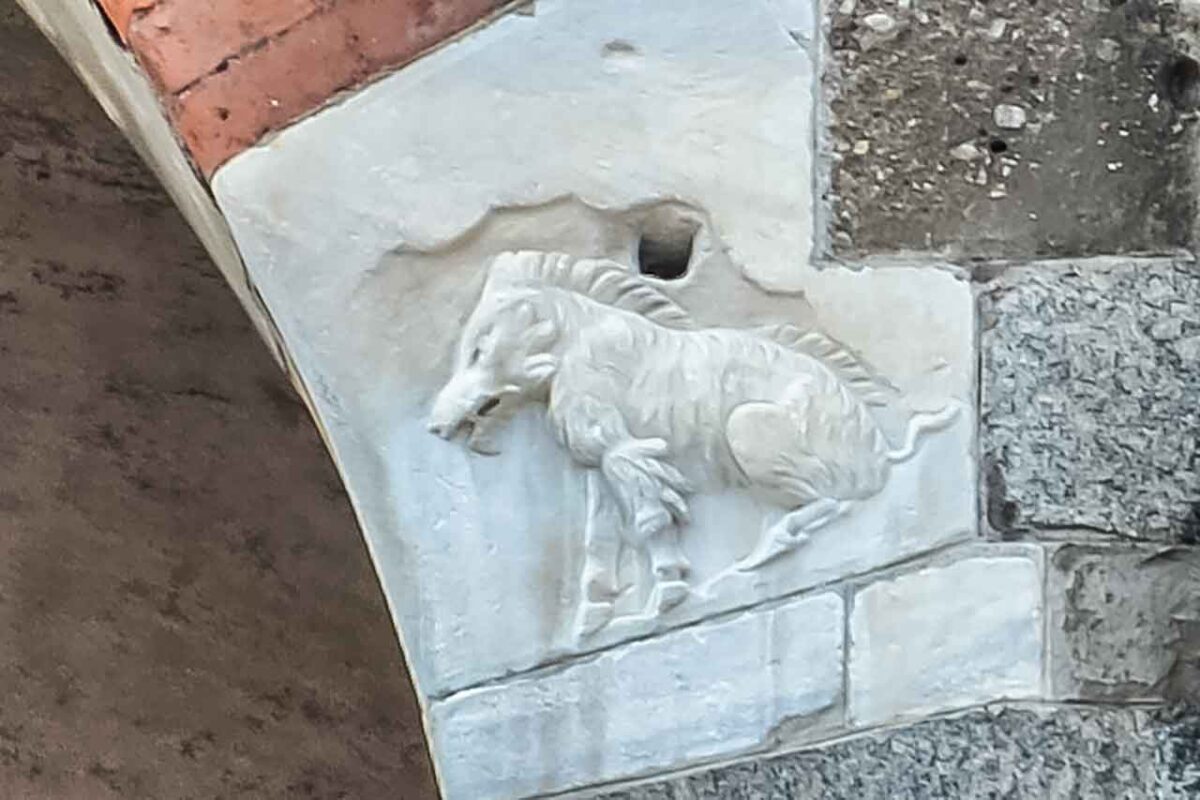
Let’s start from the very beginning, with the legend of the city’s founding. If you ask the average tourist about Milan’s symbol, they’ll probably point to the biscione (the Visconti serpent) or the red and white cross. Few people know that the city’s original symbol was the scrofa semilanuta, a sow (female wild boar) covered with wool only on the front half of her body.
The story dates back to the 6th century BC, when the Celtic chieftain Bellovesus, leading his people across the Alps, was searching for a place to found a new city. According to legend, as described by the historian Titus Livius, the priests advised Bellovesus to look for a sign from the gods. The prophecy said that a special animal would indicate the place where the city should be founded.
And indeed, on the vast Celtic plain, the warriors came across a sow with long fur covering only the front part of her body. For the Celts, the wild boar was a sacred animal, so the interpretation was clear: this was exactly where the city should be built. They named it Medhelan (from the Celtic “land of the middle”), which over time transformed into the Latin Mediolanum, and then into Milan. Some scholars believe that the word “Mediolanum” may also mean “half-woolly” (medio-lanum), directly referencing the legend of the sow.
Where can you see the half-woolly sow today? A bas-relief depicting this mythical creature is located on the capital of the second arch of the Palazzo della Ragione on Piazza dei Mercanti. It was discovered during construction work in 1233 and is often dated to the pre-Roman or Celtic period, though some scholars date it as far back as the 7th century BC. You’ll find additional depictions in the inner courtyard of Palazzo Marino (the current city hall) and on the official city gonfalon, at the feet of the figure of St. Ambrose.
The Duomo: 600 Years of Construction and Thousands of Secrets
Milan Cathedral is not just a symbol of the city, but a true treasure trove of unexpected curiosities. Let’s start with the basics: construction lasted nearly 600 years, from 1386 until 1965, when the last bronze doors were installed. This never-ending construction even entered everyday language: Milanese people say “lungh ‘me la fabrica del Domm” (as long as building the cathedral) when describing something that drags on forever. Ta nieskończąca się konstrukcja weszła nawet do języka potocznego: mediolańczycy mówią “lungh ‘me la fabrica del Domm” (długie jak budowa katedry), gdy opisują coś, co ciągnie się w nieskończoność.
A Statue of Liberty Older Than New York’s
On the Duomo’s facade, among its 3,400 statues, you’ll find a figure that looks strikingly familiar. It’s “La Legge Nuova” (The New Law), a statue from 1810 that holds a radiant torch in her hand and wears a crown on her head. Sound familiar? Yes, this figure was created about 70 years before Frédéric Auguste Bartholdi’s Statue of Liberty in New York. Some art historians suggest that the French sculptor may have drawn inspiration from this Milanese prototype.

A Nail from the Cross of Christ and the Red Light
In the arcade above the main altar, you’ll notice a small red light. This isn’t just an ordinary lamp, but a marker for the place where, according to tradition, one of the nails from Christ’s cross is kept, brought here by St. Helena in the 4th century.
Every year, on the Saturday preceding September 14 (the Feast of the Exaltation of the Holy Cross), the Archbishop of Milan ascends on a special platform called the nivola (cloud), to retrieve the relic and display it for the faithful’s adoration. It’s one of the most remarkable liturgical rituals in Europe, and tradition attributes the design of the nivola’s mechanism to Leonardo da Vinci.
“Mangiare a ufo”: Where Did This Saying Come From?
According to popular Milanese etymology, the Italian idiom “mangiare a ufo” (to eat for free, “freeloading”) has a direct connection to the construction of the Duomo. Blocks of marble from the quarries of Candoglia were transported by canal to Milan. To avoid customs fees, each block was inscribed with A.U.F. (Ad Usum Fabricae Ambrosianae, meaning “for the use of the Ambrosian factory”). Goods marked with this abbreviation were exempt from all taxes. Over time, Milan residents began using the expression “a ufo” to describe anything obtained for free. While linguists treat this etymology as a folk interpretation, it is deeply rooted in Milanese tradition.
Demons, Gargoyles, and a Pact with the Devil
On the exterior of the cathedral, there are 96 gargoyles (doccioni), and among the 3,400 statues, you’ll find not only saints and angels but also demons, monsters, and grotesque creatures. Why would a Christian temple contain so many diabolical representations?
Legend has it that one night Gian Galeazzo Visconti, the ruler of Milan, woke up drenched in sweat. The devil in his dream demanded that the duke build a cathedral full of images of hellish creatures, or else his soul would be damned for eternity. Visconti, terrified by the vision, began construction of the Duomo and filled it according to the devil’s wishes.
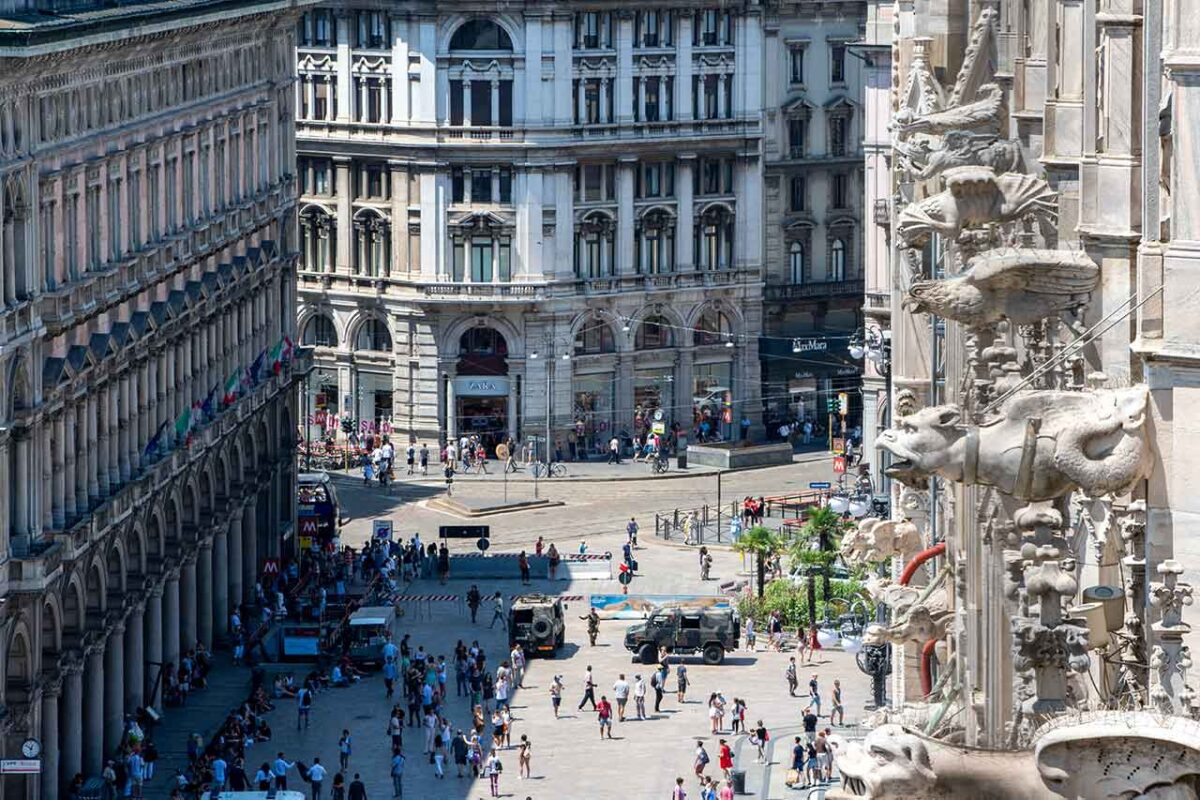
Fun fact: among the statues on the cathedral roof, you’ll find not only religious figures but also statues of boxers Primo Carnera and Erminio Spalla, a tennis racket, and even a mountaineering boot. Italian tradition allowed considerable freedom in decorating temples. And at the very top, at a height of 108.5 meters, the golden Madonnina watches over the city, the most famous symbol of Milan.
Carlina’s ghost
The Duomo has its resident ghost. Carlina was a young newlywed who climbed to the cathedral’s terraces during her honeymoon. According to legend, tormented by guilt (she was pregnant by another man), she fell from the top of the building. Her body was never found. Since that day, Carlina’s ghost allegedly appears in wedding photos of couples posing at the cathedral entrance.
The Sack of Judgment Day
When entering the cathedral, notice the burlap sack hanging from the ceiling of one of the naves. This is the so-called “sacco del Giudizio Universale” (sack of Judgment Day). Legend has it that it will only fall to the ground on the day the world ends. What’s inside? Nobody knows.
Milan Like Venice: Hidden Canals Beneath the City
Dziś, gdy spacerujemy ulicami centrum, trudno uwierzyć, że jeszcze sto lat temu Mediolan był miastem kanałów, porównywanym do Wenecji. System Navigli obejmował ponad 90 kilometrów dróg wodnych, którymi transportowano towary, w tym słynny marmur z Candoglii do budowy Duomo.
Leonardo da Vinci and the Vincian Canal Locks
Leonardo da Vinci przybył do Mediolanu w 1482 roku na zaproszenie Ludovico Sforzy i spędził tu prawie 20 lat. Oprócz malowania Ostatniej Wieczerzy, geniusz z Vinci zajmował się również inżynierią hydrauliczną. To on udoskonalił system śluz kanałowych (conche), które umożliwiały żeglugę mimo różnic poziomów wody.
The most famous of these, the Conca dell’Incoronata on Via San Marco, still functions today and is the only surviving example of a “Vincian lock” in the city center. Leonardo designed an innovative double-gate system with a small window in the lower part that allowed water flow to be regulated. This solution was so effective that it’s still used on canals worldwide today.
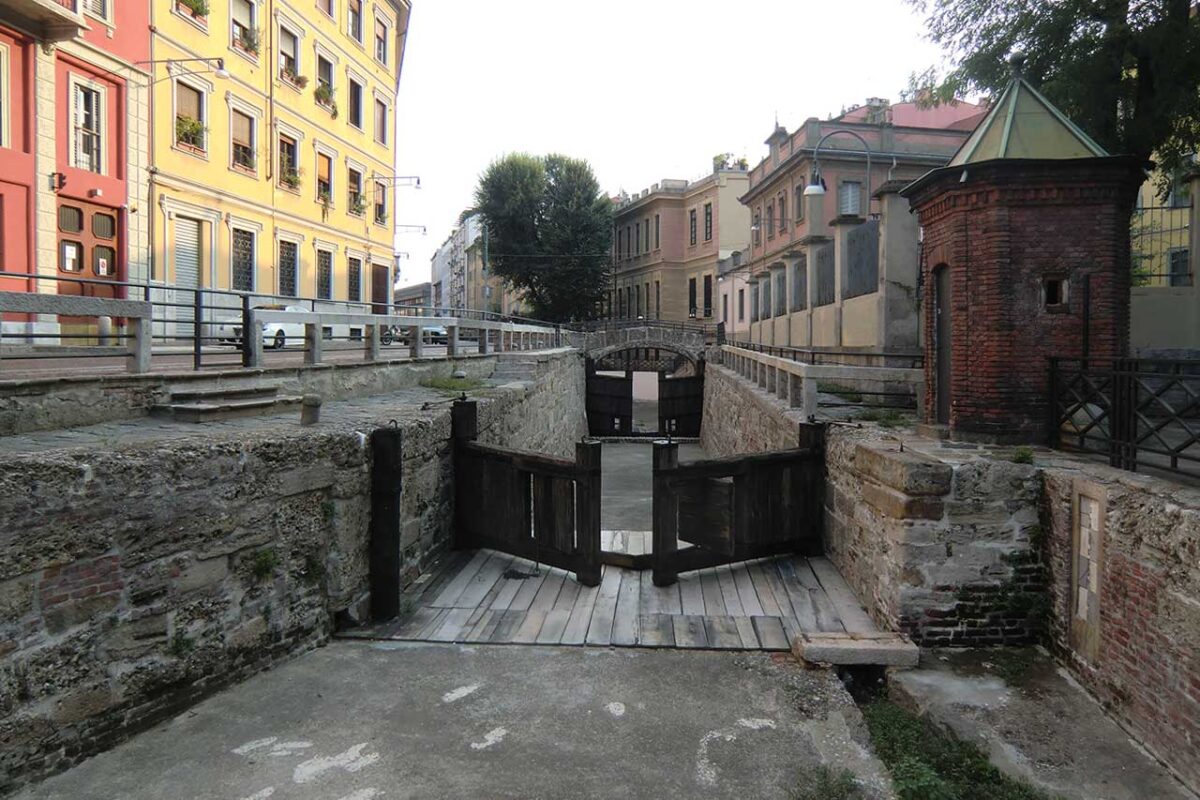
In the Codex Atlanticus, preserved in the Ambrosian Library, you’ll find Leonardo’s sketches showing designs for locks, dredgers, and bridges for Milan’s canals.
Why Did the Canals Disappear?
Between 1929 and 1930, during the Fascist era, the decision was made to fill in most of the canals in the city center. The official reason was hygiene and modernization, but many historians believe it was also about destroying the city’s “romantic” image, which the Futurists considered outdated.
Many canals still flow beneath Milan’s streets. During heavy rainfall, water emerges from sewer covers, reminding us of the hidden water network under the city. There are plans to partially uncover the former canals, particularly along Via Melchiorre Gioia and Via Senato, but the projects are still awaiting implementation.
Today, only three fragments remain from the former system: Naviglio Grande, Naviglio Pavese (connected by the Darsena), and Naviglio Martesana in the northeastern part of the city. Near Naviglio Grande, it’s worth visiting the picturesque Vicolo dei Lavandai, the alley of the old washermen.
The Devil’s Column at the Basilica of Sant’Ambrogio
One of Milan’s most intriguing legends can be found right next to the Basilica of Sant’Ambrogio, the most important Romanesque church in Lombardy. To the left of the main entrance stands a solitary column from Roman times, and in its shaft, you can see two distinct holes.
According to legend, one morning saint Ambrose St. Ambrose, the patron saint of Milan, encountered the devil himself at this spot, who was trying to persuade him to abandon his episcopal ministry. The saint, without hesitation, kicked Satan so hard that he hit his horns against the column, leaving two characteristic holes. The devil supposedly got stuck in the stone until the next day, after which he vanished through one of the holes, leading straight to hell.
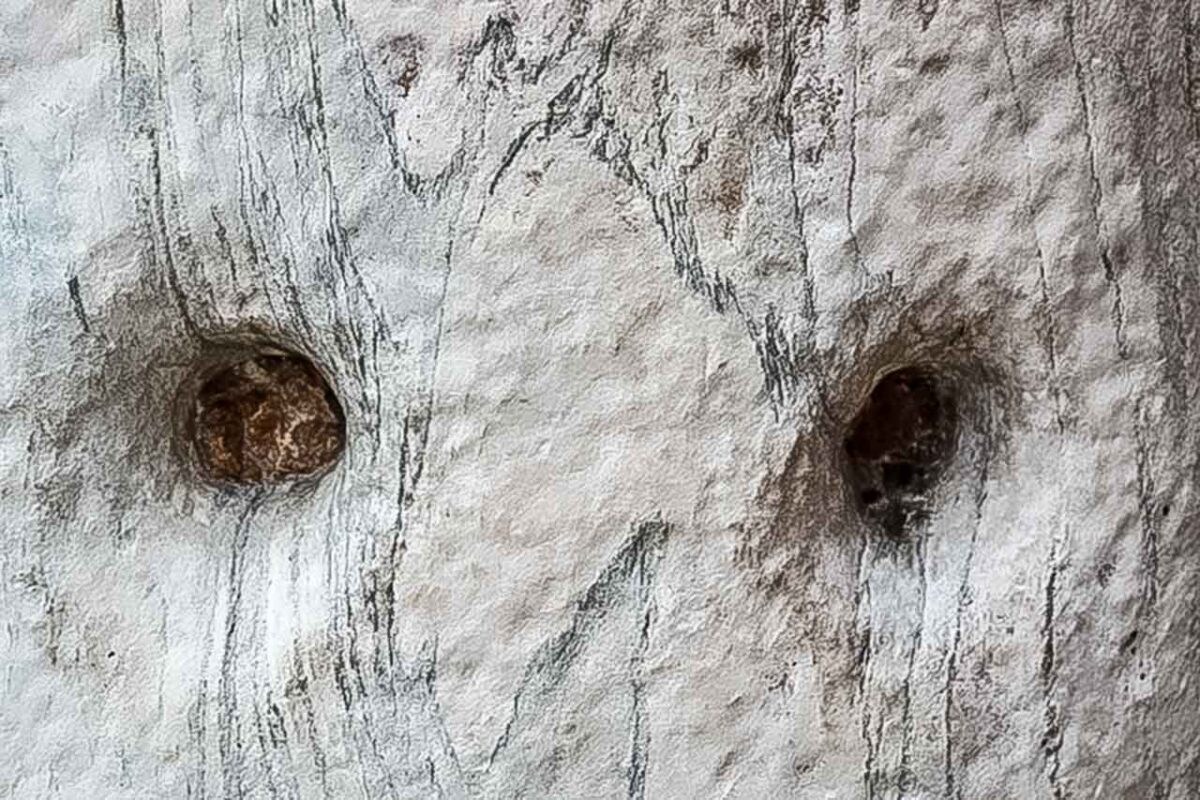
Local tradition holds that if you put your ear to the holes, you’ll smell sulfur and hear the bubbling of the Styx, the infernal river. On the night before Easter Sunday, you can supposedly see a chariot transporting damned souls, with the devil himself at the reins.
Galleria Vittorio Emanuele II: The Bull Ritual and the Architect’s Tragedy
Galleria Vittorio Emanuele II is not just “Milan’s living room” and one of the oldest shopping galleries in the world, but also the site of two fascinating stories. It’s also worth knowing that you can visit Highline Milano, a walking platform on the Gallery’s roof with a view of the dome.
Three Turns on the Bull
On the mosaic floor in the central octagon, you’ll find four coats of arms of the former capitals of the Kingdom of Italy: Turin (bull), Florence (lily), Rome (Capitoline wolf), and Milan (red cross). The Turin bull has become the object of an unusual ritual: tradition requires you to stand with the heel of your right foot on its… family jewels and make three full clockwise turns with your eyes closed.
Where did this strange custom come from? One theory says it was the Milanese way of mocking rival Turin, the former capital of Italy. Another suggests the ritual has pagan roots connected to fertility and prosperity. Either way, thousands of tourists line up daily to perform the turns, and city services must regularly restore the mosaic, which wears down quickly.
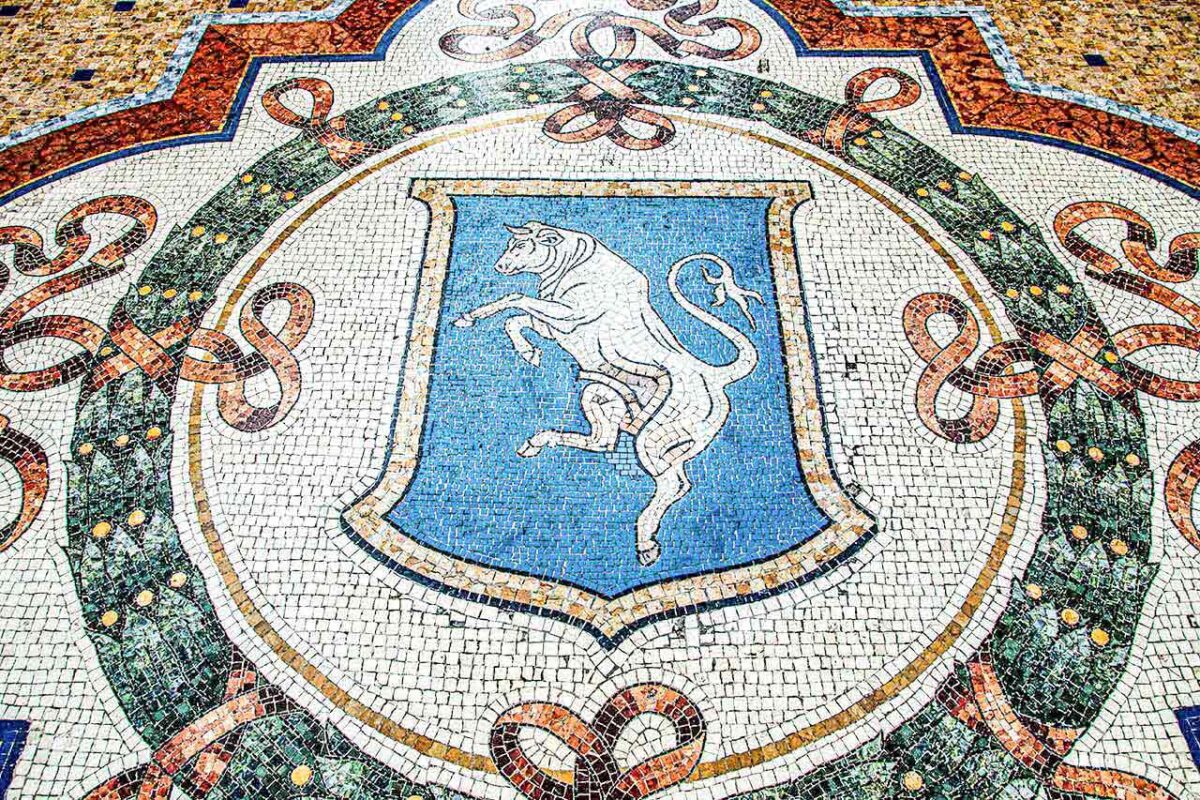
The real curiosity: according to the original tradition, the gesture brings luck only if you perform it at midnight on New Year’s Eve, standing on the heel of your right foot.
The Architect’s Tragic Death
Giuseppe Mengoni, the architect of the Gallery, did not live to see its grand opening. On December 30, 1877, just a few days before the inauguration, he fell from the scaffolding while inspecting the dome and died on the spot. It was officially ruled an accident, though rumors spoke of suicide. A memorial plaque at the Gallery entrance from Piazza del Duomo commemorates his tragic fate.
Teatro alla Scala: The Loggione, Ghosts, and Kitchens in the Boxes
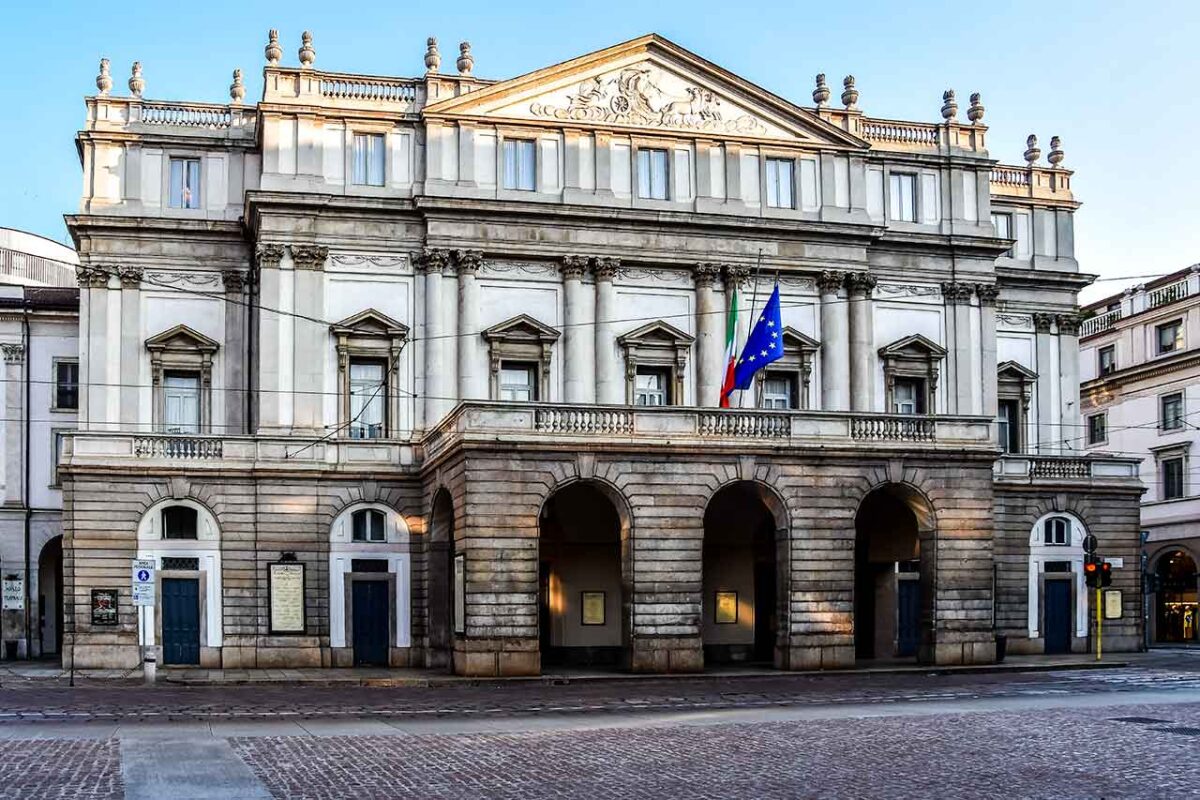
La Scala is one of the most famous opera houses in the world, but few people know its lesser-known secrets.
Where Did the Name Come From?
Teatro alla Scala has nothing to do with stairs (scala in Italian means “stairs”). The name comes from the church of Santa Maria alla Scala, which stood on this site until 1776 and which in turn owed its name to its benefactress, Beatrice Regina della Scala from the powerful Scaligeri family of Verona.
The Loggione: Opera’s Judges
The second tier of the gallery, just below the ceiling, is the famous loggione, the domain of the most demanding audience members. The loggionisti are known for their uncompromising judgments: their applause and boos determine the success or failure of a performance. According to the current artistic director, many singers avoid La Scala precisely because of their fear of the harsh judgment of the gallery audience.
Fun fact: the acoustics in the loggione are the best in the entire theater, even though the view of the stage is the worst. True music lovers know this is where you hear best.
Kitchens in the Boxes and Gambling in the Foyer
In the 18th and 19th centuries, theater boxes were privately owned by aristocratic families, even recorded in the cadastre as “two-room apartments.” Behind each box was a small room where servants prepared meals for their masters during performances. Gambling flourished in the theater halls, and among the regular roulette patrons was reportedly Alessandro Manzoni himself, the author of “The Betrothed.” The poet Vincenzo Monti supposedly “saved” him from the addiction with the words: “We want to write beautiful verses, and you keep behaving like this!”
The Ghosts of La Scala
Legend has it that the theater is haunted by the ghost of Maria Malibran, the famous 19th-century soprano who died young. Others have “seen” the ghost of Maria Callas, who was the queen of this stage for years.
December 7: Prima di Sant’Ambrogio
Since 1951, the opening of La Scala’s opera season falls on December 7, St. Ambrose’s Day, the patron saint of Milan. It’s one of the most important cultural events in Europe, broadcast live on television. On the same day, the Christmas tree on Piazza del Duomo is lit and the first panettone of the season is traditionally cut.
Aperitivo: The Milanese Invention That Conquered the World
Aperitivo is today synonymous with the Italian lifestyle, but few people know that it was Milan that turned it into a social ritual.
Gaspare Campari and the Birth of a Culture
In 1860, Gaspare Campari created in Novara the recipe for the famous bitter with its characteristic red color. Seven years later, while Galleria Vittorio Emanuele II was still under construction, he opened Caffè Campari at the corner with Piazza del Duomo. It was here that aperitivo ceased to be a medicinal digestive mixture and became a social ritual.
In 1915, Gaspare’s son, Davide Campari (the first Milanese person born in the Gallery!), opened Camparino across the street, the “younger brother” of the family establishment. It was the first bar with a hydraulic system delivering chilled soda water directly from the cellar to the bar. Thus Campari Seltz was born.
Milano-Torino: The Father of All Cocktails
At the Camparino bar, the Milano-Torino was created, one of the first mixed aperitifs in history. The recipe was simple: Campari from Milan and vermouth from Turin. This drink became the father of the Americano (with added soda water), which in turn was the ancestor of the Negroni (with gin instead of soda, at the request of Count Camillo Negroni in Florence in 1919).
Bar Basso and the Negroni Sbagliato
In 1967 at Bar Basso on Via Plinio, bartender Mirko Stocchetto accidentally created the Negroni Sbagliato (“mistaken”). Instead of gin, he poured prosecco into the glass. The mistake turned out to be a bullseye. Today, Bar Basso is a pilgrimage site for cocktail enthusiasts from around the world, and the Negroni Sbagliato celebrates triumphs in the best bars on the planet.
“Milano da bere”
In the 1980s, Ramazzotti’s advertising slogan “Milano da bere” (Milan to drink) became a symbol of an entire era. Aperitivo transformed into apericena, a combination of a drink with a rich buffet that for many Milanese replaces dinner. It was from here that happy hour spread throughout all of Italy.
Panettone: The Legend of Toni and the True History
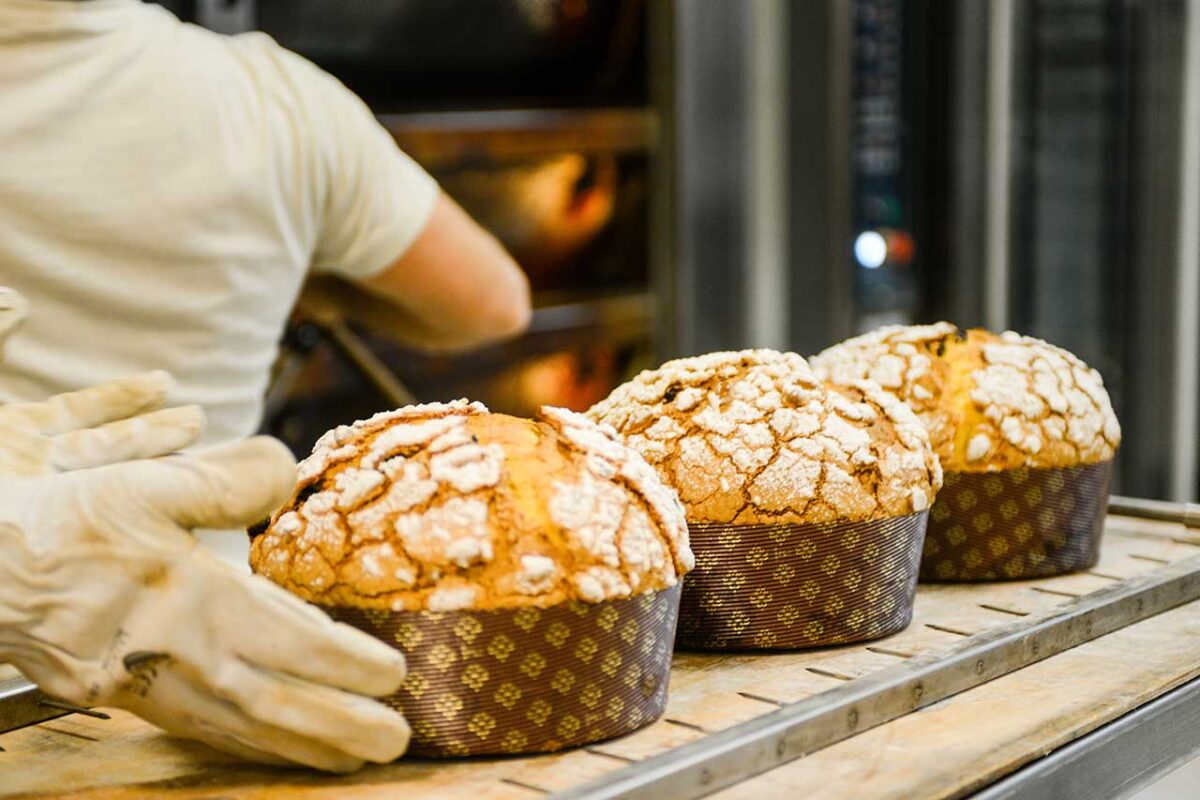
No article about Milan would be complete without the story of panettone, the Christmas cake that conquered the world. You’ll find the full history of panettone in a separate article, but here are some of the most interesting facts.
Pan de Toni
The most famous legend takes us to the court of Ludovico Sforza in 1495. During the Christmas Eve feast, the cook burned the holiday dessert. In desperation, a young kitchen helper named Toni offered his own humble bread, which he had prepared from leftovers: flour, eggs, butter, sugar, raisins, and candied peels. The dessert was a hit, and the duke asked for its name. “L’è il pan del Toni” (it’s Toni’s bread), the embarrassed cook replied. And so panettone was born.
Historical Roots
The true story is less romantic but equally fascinating. As early as the Middle Ages, Milanese families prepared an enriched bread called “pan de Sciori” (bread of the lords) for Christmas. Until 1395, all bakeries in Milan were prohibited from baking wheat bread except during the holiday season. It was this tradition that evolved over centuries into today’s panettone.
Angelo Motta and the Revolution
Until the 1920s, panettone was a flat, compact cake. Angelo Motta, born into a humble family in 1890, changed everything. Inspired by Russian kulich, he introduced triple rising over 20 hours and special paper molds. Thus the characteristic tall dome we know today was born.
Competitor Gioacchino Alemagna picked up the idea, and a legendary rivalry between Motta and Alemagna began, driving industrial panettone production for decades. Both brands still exist today.
The Tradition of St. Blaise
On February 3, St. Blaise’s Day, Milan celebrates the end of panettone season. The tradition stems from the legend of a gluttonous monk named Desiderio, who ate a panettone before he had time to bless it. When the housewife returned for the cake, the monk, to his amazement, found it in the package, even larger than before.
Biscione: The Visconti Serpent
The characteristic symbol of Milan, a serpent swallowing a human figure (or according to some interpretations, spitting out a person), is the coat of arms of the Visconti family, rulers of the city from 1277. Their main residence was Sforza Castle, which today is one of the city’s main attractions.
Where Did This Macabre Symbolism Come From?
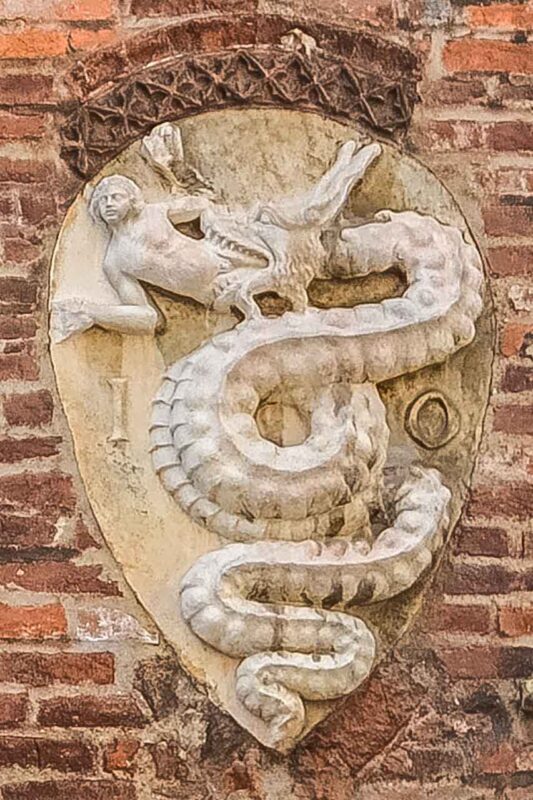
One legend tells of the knight Ottone Visconti, who during a crusade defeated a Saracen warrior bearing the image of a serpent swallowing a man on his shield. Visconti adopted the symbol as a sign of his victory.
Another version tells of a huge serpent terrorizing the area around Milan. When it swallowed a child, Ottone Visconti killed the beast and saved the boy. Hence the interpretation that the serpent is not swallowing but spitting out the person.
Today you’ll find the biscione everywhere: from the city’s coat of arms, to the Alfa Romeo logo (whose museum is located near Milan), to the Inter Milan emblem. You can read more about the rivalry between Milan’s football clubs in the article about the Milan Derby.
San Bernardino alle Ossa: The Chapel of Skulls
In the very center of Milan, right next to the church of Santo Stefano, lies one of the most macabre places in the city. The Ossuary of San Bernardino alle Ossa is a small chapel whose walls are literally lined with human skulls and bones arranged in decorative patterns.
The chapel’s origins date back to 1210, when a cemetery was established next to the neighboring hospital. When there was no more room for burials, the bones were exhumed and transferred to a special chapel. Over time, especially after plague epidemics, the collection grew.

Where do these remains come from? Legends speak of the bones of Christians murdered by heretics, martyrs, or victims of the plague of 1630. The truth is more prosaic: they’re simply exhumed remains from the old hospital cemetery.
Monumental Cemetery: An Open-Air Sculpture Museum
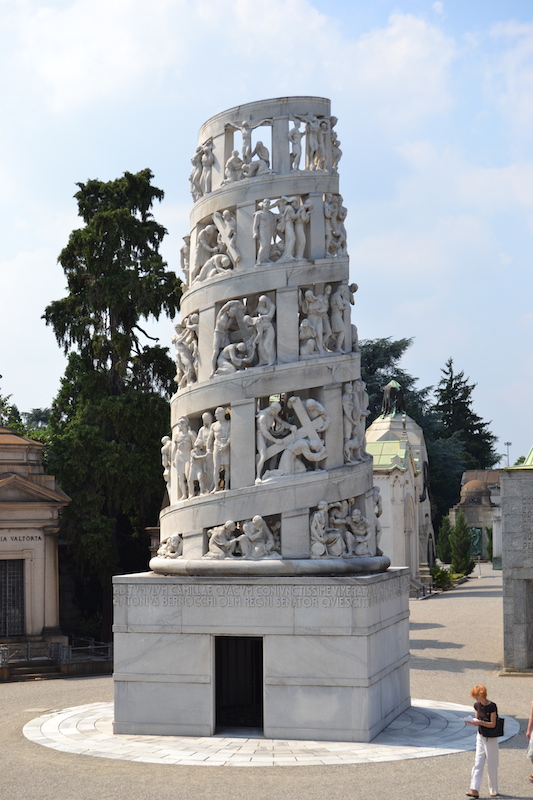
Cimitero Monumentale is not just a burial ground, but a true art gallery. Founded in 1866, it houses works from various eras and styles, from neoclassicism to futurism.
Among the 250,000 burials, you’ll find the graves of Alessandro Manzoni, the Campari family, the Pirelli family, and conductor Arturo Toscanini. But the real attraction is the tombstones and mausoleums themselves, some designed by famous architects and sculptors.
Lesser-Known Facts About Milan
Milan Was the Capital of the Roman Empire
Few people know that from 286 to 402 AD, Milan (Mediolanum) was the capital of the Western Roman Empire, more politically important than Rome itself. It was here that Emperor Constantine issued the Edict of Milan in 313, establishing freedom of religion throughout the empire.
The First Electrically Lit Building in Italy
In 1883, La Scala was the first public building in Italy to receive electric lighting from the Edison company. The great chandelier in the main hall has 383 lightbulbs.
Four Chessboards in Sant’Ambrogio
The Basilica of Sant’Ambrogio features four chessboards among its decorative elements: it’s the only church in Italy with this motif. According to one interpretation, the chess pieces symbolize the eternal struggle between angels (white pieces) and demons (black pieces), between good and evil.
Torre Velasca
Among Milan’s controversial buildings, it’s worth mentioning Torre Velasca, a brutalist skyscraper from the 1950s that some love and others hate. You can read more about the city’s modern architecture in the article about Milan’s impressive skyscrapers.
Ponte delle Sirenette
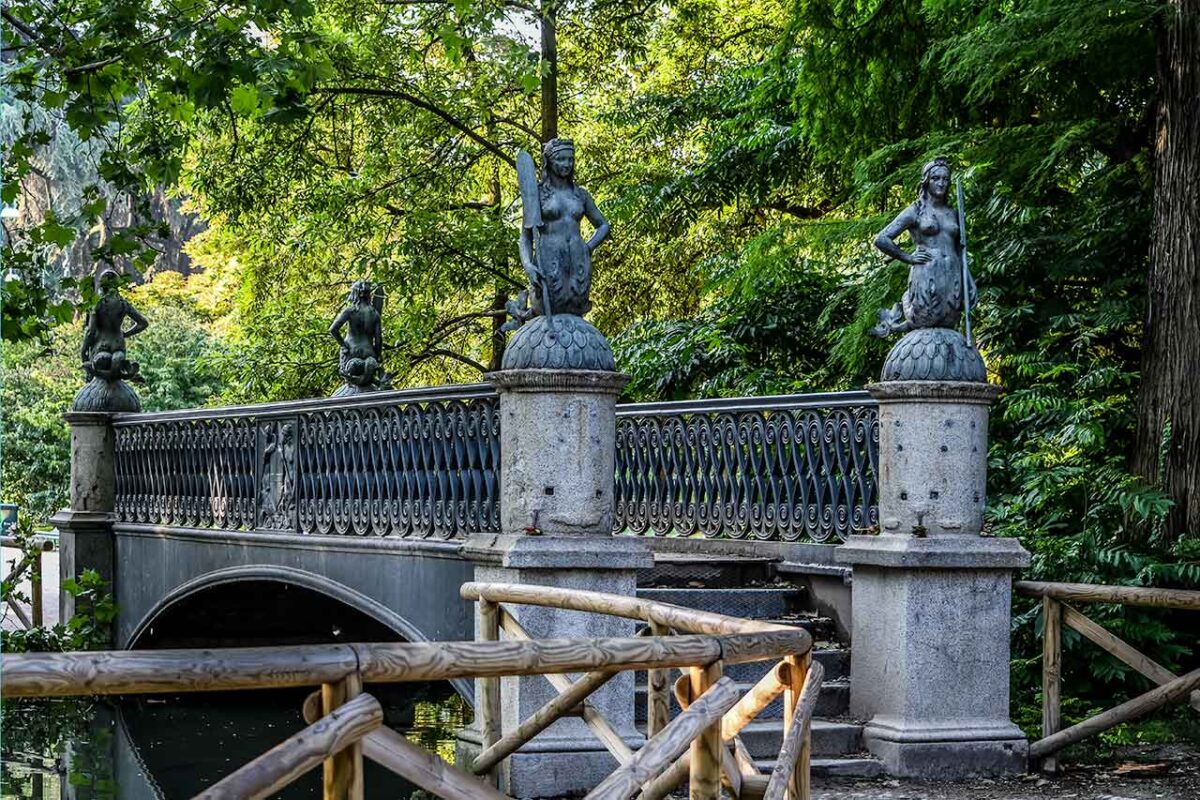
In Parco Sempione stands Italy’s first iron bridge, the Ponte delle Sirenette, originally built in 1842 over a Naviglio in another part of the city. The four sirens adorning the corners of the bridge became objects of admiration for young 19th-century Milanese due to their “curvaceous shapes.”
Concrete Igloos
On the outskirts of the city, on Via Lepanto, stand eight concrete igloos built in 1946 as temporary housing for families who lost their homes during the bombings. They have a diameter of 7.5 meters and a height of 3 meters. Some are still inhabited today.
Practical Information
How to Get to the Mentioned Places?
Most of the described attractions are located in the city center, within walking distance of Piazza del Duomo. You’ll find detailed information about getting around the city in the guide to Milan’s public transportation.
If you want to see more, check out the complete list of Milan attractions.
Best Time to Visit
Early morning (8:00-10:00 AM) is the ideal time to visit the Duomo and its terraces without crowds. The Gallery is most atmospheric in the evening, when lights illuminate the mosaics. For aperitivo, head out between 6:00 and 8:00 PM, especially on Fridays.
How Much Time Should You Allow?
For a thorough visit to all the described places, you need at least two full days. If you have less time, check out the ready-made plan for Milan in One Day. I also recommend going up to the Duomo terraces, which offer a panoramic view of the entire city.
In Closing
Milan is a city that reveals its secrets slowly. Beneath the glittering surface of the fashion and finance capital lies a rich history, fascinating legends, and places that will surprise even experienced travelers. Next time you’re walking through Piazza dei Mercanti, stop by the capital with the sow. When you enter the Gallery, make three turns on the bull (remember: right heel!). And when you sit down for aperitivo, raise a toast to Gaspare Campari, who transformed a medicinal elixir into an Italian social ritual.
Milan awaits discovery. All you need to do is look up, peek around the corner, and let the city tell its story.


I lived in Milan for 18 years, and it was there that I came to know the city’s daily life best - not just its landmarks, but also its rhythm, its habits, and its less obvious sides. Today I live in Wrocław, but I still return to Milan regularly.