


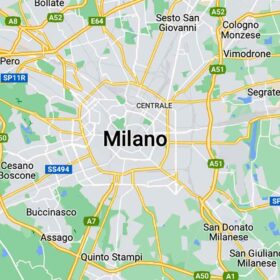
 The Geographic Location of Milan – A Strategic Spot in the Heart of Europe
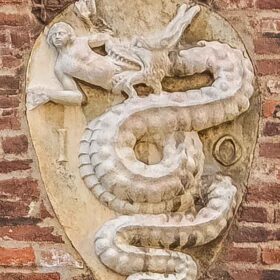 Milan’s coat of arms
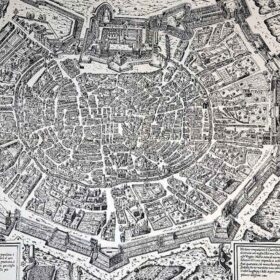 History of Milan
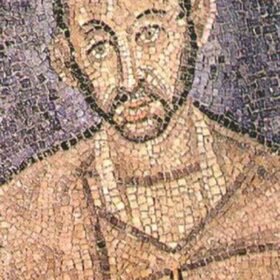 Saint Ambrose
 History of Panettone
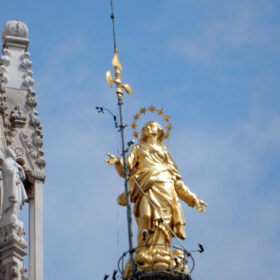 Madonnina
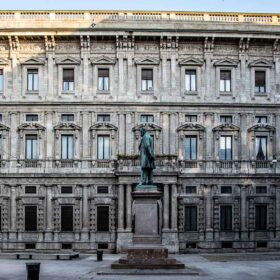 City Hall
 Milanese cuisine


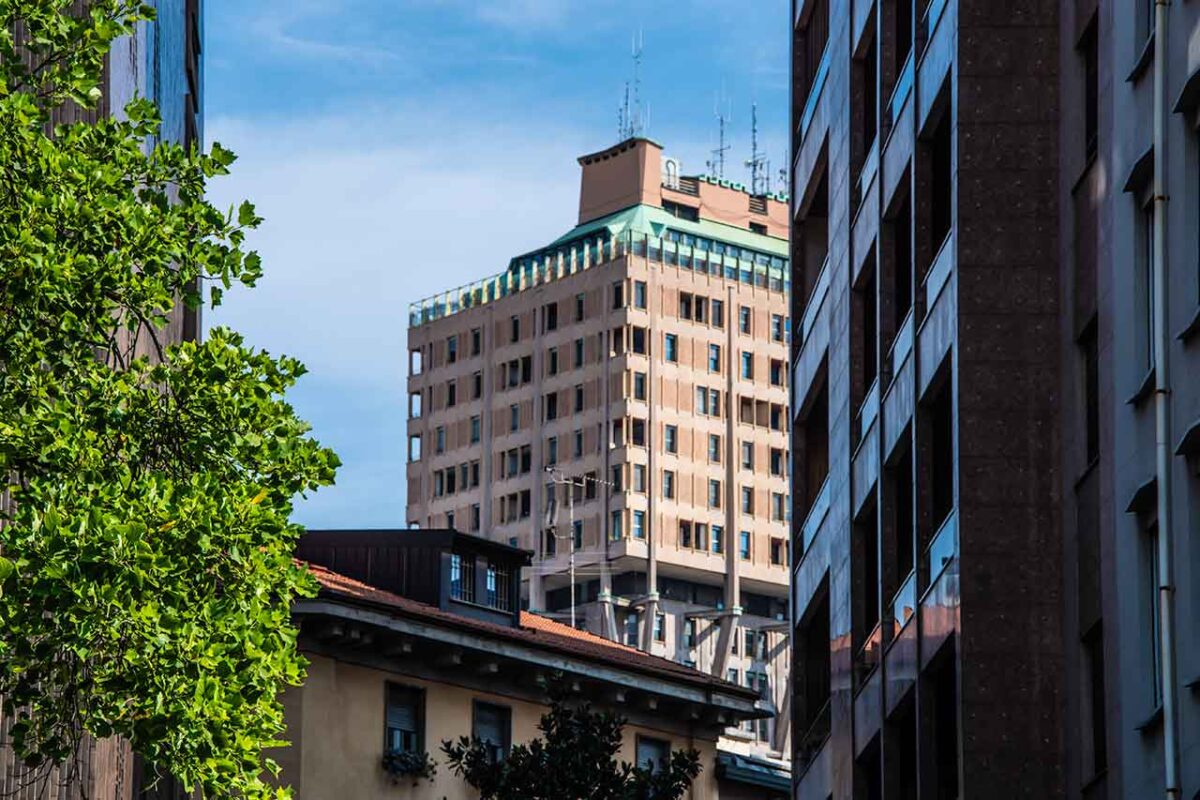
This unusual structure is a symbol of Milanese Brutalism and for decades has divided both locals and visitors with its raw, almost monumental appearance.
Torre Velasca is unlike any other building in the world. It stands prominently in the heart of the city as proof that postwar Milanese architecture could be bold, uncompromising, and deeply rooted in local tradition, even if at first glance it looks like something from another planet.
Why does Torre Velasca look like a concrete mushroom?
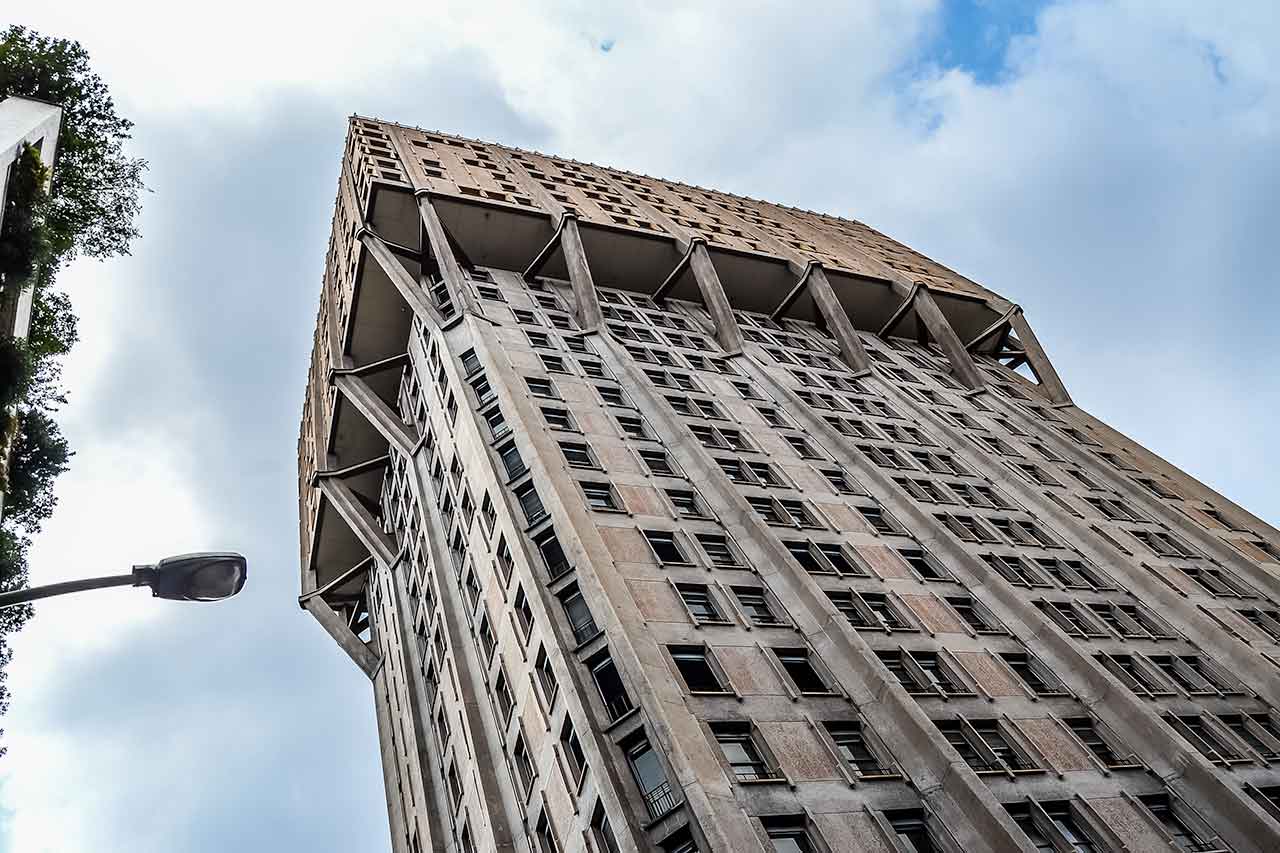
The tower’s distinctive silhouette, widening from the 18th floor upward, draws on medieval defensive towers and the traditions of Lombard architecture.
This distinctive skyscraper was built between 1956 and 1958, with the main structure completed in a record 268 days, and the entire building finished in 1960. It is considered one of the most important works of postwar architecture. Its name comes from a square laid out in 1651 on the initiative of Spanish governor Juan de Velasco.
Because of its unusual shape, locals quickly nicknamed it the “skyscraper with suspenders.” Torre Velasca’s form is striking: the lower floors occupy less space than the upper levels, giving the building a mushroom-like profile. The architects from the BBPR group, however, intended it as a contemporary reinterpretation of medieval tower structures, such as those at Castello Sforzesco, designed to fit into the historic fabric of central Milan.
This distinctive structural solution also had a practical purpose. The first eighteen floors (the building reaches a total height of 106 meters) were designed for shops and offices, which required less depth. The upper levels, up to the twenty-sixth floor, house apartments. The wider top made it possible to create larger living spaces and bring in more natural light.
The BBPR Group and Its Vision of Modernity
The tower was designed by the legendary BBPR studio, whose work redefined Italian modernism by integrating it with historical context.
Torre Velasca was designed by the BBPR studio (Gian Luigi Banfi, Lodovico Barbiano di Belgiojoso, Enrico Peressutti, Ernesto Nathan Rogers) for the company Rice, with Professor Arturo Danusso as structural consultant. The building was constructed on the ruins left by the Anglo-American bombings of 1943, in the heart of Milan, just next to the Università Statale.
The project began in 1950-1951. The original concept of a steel tower was abandoned due to the high cost of materials. Final design changes were made between 1952 and 1955, and the construction itself was financed by Società Generale Immobiliare. Despite its complex form, the building’s main structure was completed in a record 268 days.
The decision to use concrete instead of steel—favored at the time by iconic American skyscrapers – was not driven by cost alone. An initial assessment by experts from New York showed that the Italian steel industry was not yet equipped to handle such a structure. Concrete proved to be a more flexible material, making it possible to realize the vision of a neo-Gothic tower in a modern form.
Location of Torre Velasca
The tower dominates Piazza Velasca and stands just 600 meters from the Duomo Cathedral, about a 5- to 7-minute walk away, creating a striking contrast between Brutalism and Gothic revival architecture.
Torre Velasca is located right in the center of Milan, very close to the Università Statale, between Corso di Porta Romana and Via Larga. It is clearly visible from the roof of the Duomo. Although it is much taller than the surrounding historic buildings, the sandy-pink tone of its facade was originally meant to harmonize with the color of the bricks and plaster of the neighboring houses. The Missori metro station on the yellow M3 line is located right by the building’s main entrance.
Is it the ugliest building in the world?
Torre Velasca regularly appears in rankings of the ugliest buildings in the world, published by outlets including The Daily Telegraph, which only reinforces its controversial reputation. For some, it is heavy and oppressive; for others, it is an outstanding example of postwar architecture. In 2011, the building was officially recognized as a historic monument and placed under preservation protection, which is still unusual for such a relatively young structure.
Renovation and the building’s new role
After years of neglect, Torre Velasca underwent a major renovation completed in 2025. The work included not only the facade, but also the interiors and the way the
The renovation was carried out by the Hines group. The façade was cleaned, the distinctive supports were restored, and the original color scheme was brought back after being almost completely hidden for years under layers of smog and grime. The function of the interiors also changed. Today, Torre Velasca houses short-term rental apartments, offices, and retail and service spaces on the ground floor. As a result, the building has once again become part of the city’s everyday life rather than remaining a closed symbol of a past era.
How to get to Torre Velasca (Practical information)
Torre Velasca is very easy to reach, since it stands close to the city center and right next to a metro station. The easiest way to get there is by taking the yellow M3 line and getting off at Missori. The tower is practically right outside the station exit.
Metro (best option)
Trams
Buses
Suburban trains (S-lines)
What to see near Torre Velasca
It is worth walking a little farther around Torre Velasca, because within a 5- to 10-minute walk there are several interesting places. Closest is the Università Statale, with the courtyard of the former Jesuit palace. Not far away is Piazza Santo Stefano, a quieter part of the center with a basilica and traces of the old city walls. A few minutes farther on is the Crypt of San Sepolcro, linked to the Roman history of Milan. In the church of Santa Maria presso San Satiro, meanwhile, you can see Bramante’s famous perspective illusion. If you feel like extending the walk, Corso di Porta Romana is also a good direction to head. The whole route can easily be done in about an hour.

Film trivia: Torre Velasca appears in Dino Risi’s cult film The Widower (Il Vedovo) from 1959, starring Alberto Sordi and Franca Valeri. The building serves there as a backdrop for a story about ambition and the modernity of postwar Italy.




Frequently Asked Questions (FAQ)
Can you go to the top of Torre Velasca?
At the moment, the tower serves office and residential purposes, including luxury apartments, so tourists cannot freely visit the upper floors. You can, however, access the public lobby and the restaurants on the lower level.
Is Torre Velasca a Brutalist building?
Yes, it is considered one of the most important examples of Italian Brutalism, although it also combines elements of Neo-Gothic design and Functionalism.
How far is the tower from the Duomo?
The tower is only about 500 meters (0.3 miles) from the Duomo, and the walk takes around 5 to 7 minutes at an easy pace.
I lived in Milan for 18 years, and it was there that I came to know the city’s daily life best - not just its landmarks, but also its rhythm, its habits, and its less obvious sides. Today I live in Wrocław, but I still return to Milan regularly.