


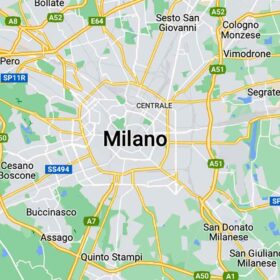
 The Geographic Location of Milan – A Strategic Spot in the Heart of Europe
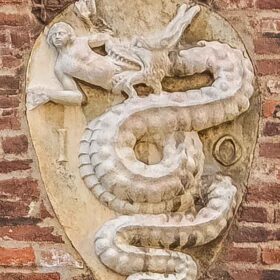 Milan’s coat of arms
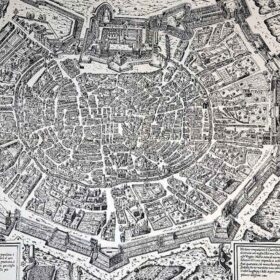 History of Milan
 Saint Ambrose
 History of Panettone
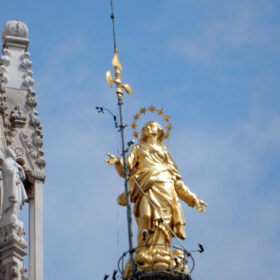 Madonnina
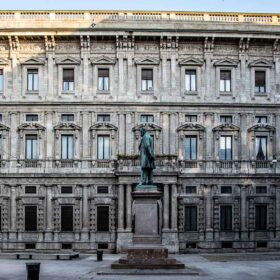 City Hall
 Milanese cuisine


Did you know that Milan owes its economic and cultural boom to its incredibly advantageous geographic position? It’s no fluke that this city has been one of Europe’s wealthiest hubs for centuries!
Milan’s Exact Coordinates and Place on the Map
Milan, Italy’s second-largest metropolis, sits in the northwestern part of the country at 45°28′ north latitude and 9°11′ east longitude. The city is smack in the middle of the Po Valley (Italian: Pianura Padana), one of the largest and most fertile lowland regions in Southern Europe.
This prime location has given Milan a standout spot on Europe’s map:
Milan is the capital of the Lombardy region, covering an area of roughly 182 square kilometers (70 square miles). Together with its sprawling metropolitan area, it stretches across nearly 1,600 square kilometers (618 square miles).
The Po Valley – The Geographic Heart of Northern Italy
The Po Valley, where Milan is located, is Italy’s biggest lowland expanse, stretching over about 46,000 square kilometers (17,760 square miles). It’s framed by stunning mountain ranges:
This massive valley was carved out by the Po River and its tributaries, which, over thousands of years, deposited rich sediments that turned the area into a goldmine for agriculture. Milan lies close to the Ticino River to the west and the Adda River to the east, both major feeders of the Po.
The flat terrain of the Po Valley has been a game-changer for building transportation networks, making it a breeze for Milan to keep tight trade ties with the rest of Europe for centuries.
How Milan’s Location Shapes Its Climate
Tucked inland, far from the sea but ringed by mountains, Milan has a unique continental climate with a Mediterranean twist. Here’s what that looks like:
The surrounding mountains act like a natural shield: the Alps block chilly northern winds, while the Apennines temper Mediterranean influences. This combo has shaped Milan’s economy, architecture, and way of life for ages.
Here’s a fun fact: winter often brings a thermal inversion, where cold air gets trapped in the valley, blanketing Milan in fog while the nearby mountains bask in sunshine.
Milan’s Spot Along Major Transportation Routes
Since Roman times, Milan has sat at the crossroads of vital trade routes linking northern Europe to the Mediterranean. This prime position has fueled its growth as:
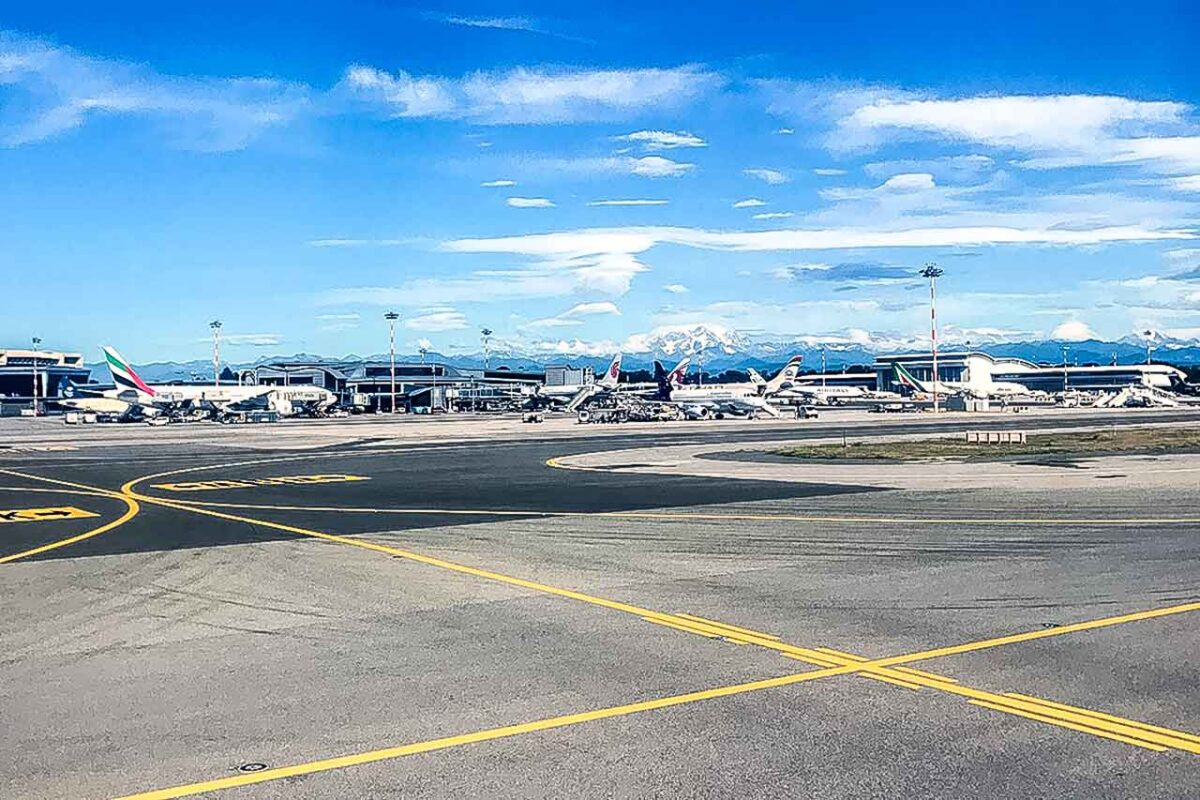
Milan is also a key stop on the European E35 highway, running from Amsterdam to Rome, and other major trans-European routes. Plus, it’s a linchpin in Italy’s and Europe’s rail networks, with Milano Centrale station handling both domestic and international trains, including high-speed lines.
How Milanese People Make the Most of Their Location
Lifestyle and Culture
Milan’s geography has left a big mark on how its people live:
Economy and Industry in Milan and Lombardy
Sitting on the fertile Po Valley and at the heart of European trade routes, Milan’s location has built its economic muscle:
- Textiles and fashion – easy access to trade routes brought in top-notch materials, kickstarting the textile industry and later cementing Milan’s status as a global fashion capital
- Finance – straddling northern and southern Europe, Milan became Italy’s financial powerhouse, home to the Italian stock exchange and major banks
- Food industry – the rich lands around Milan supply ingredients for local classics like risotto alla milanese, cotoletta alla milanese, and panettone
- Markets and trade – Milan’s been a hotspot for fairs and expos for centuries, and today it hosts world-class events like the Salone del Mobile furniture fair
Milan’s Location from a Tourist’s Perspective
Milan’s geographic spot is a huge plus for travelers for a few reasons:
A Central Launchpad
Using Milan as your base for exploring northern Italy gives you easy access to a ton of attractions within a 1-2 hour trip:
- Alpine lakes – Como (50 min), Maggiore (60 min), Garda (90 min)
- Medieval towns – Bergamo (50 min), Pavia (40 min), Cremona (90 min)
- The Alps and ski areas – reachable in 2-3 hours
- Ligurian coast – Genoa and Cinque Terre (about 2 hours)
- Other big cities – Turin (1 hr), Bologna (1 hr), Verona (1.5 hrs), Venice (2.5 hrs)
Thanks to a top-notch public transit system, most of these spots are a quick train ride away – no car needed.
Easy Access
Milan’s location makes it one of Italy’s most reachable cities:
A Mix of Experiences in One Place
Sitting at the crossroads of cultures and landscapes, Milan offers a unique blend:
Challenges Tied to Milan’s Location
Despite its perks, Milan’s geography comes with some downsides:
Environmental Issues
Tourism Drawbacks
How Geography Shaped Milan’s History
Milan’s spot has molded its story over the centuries. Founded around 600 BCE by the Celtic Insubres tribe in the Po Valley’s heart, it was dubbed Mediolanum (“place in the middle of the plain”). The Romans turned it into a key administrative hub, even making it the Western Roman Empire’s capital in the 4th century. In the Middle Ages, its central location helped it thrive as a powerful city-state under the Visconti and Sforza families. Proximity to Alpine passes boosted trade and cultural swaps with northern Europe, sparking art and architecture booms. In the 19th century, the fertile valley and hydropower from Alpine rivers fueled an industrial revolution. Today, Milan’s strategic spot keeps it a global leader in fashion, design, and business with killer transport links.
You can learn more about the fascinating history of the city from the article about the history of Milan.
Practical Tips for Tourists Tied to Milan’s Location
When’s the Best Time to Visit?
Milan’s climate, shaped by its geography, makes spring (April-June) ideal, with temps between 59-77°F (15-25°C), blooming parks, and longer days. Fall (September-October) offers mild weather and fewer crowds. Christmas has its charm too, with festive lights and markets. Skip July and August for the heat and humidity, and November and February for fog and rain.
What to Pack?
Milan’s weather swings call for:
How to Tap Into Milan’s Central Location?
Plan extra days for day trips:
FAQ: Frequently Asked Questions about Milan’s location
What is the geographic location of Milan?
Milan is located at 45°28′ north latitude and 9°11′ east longitude. It sits in the heart of the Po Valley, surrounded by the Alps to the north and west and the Apennines to the south.
In which part of Italy is Milan located?
Milan is located in the northwestern part of Italy.
What region is Milan in?
Milan is the capital of the Lombardy region.
What country is Milan in?
Milan is in Italy.
How far is Milan from the sea?
Milan is about 170 km (106 miles) from the Ligurian Sea coast, near Genoa.
Summary
Milan’s geographic location in the very heart of the Po Valley, at the intersection of Europe’s major transportation routes, has shaped its unique character. For centuries, this position granted the city strategic importance in trade, military affairs, and culture.
Today, Milan’s geographic position remains a huge advantage – for both residents and tourists. The ease of getting to nearby lakes, mountains, and historic towns makes it an ideal base for exploring northern Italy.
At the same time, the specific climate resulting from its location between the Alps and the Apennines poses certain challenges – from seasonal fogs to summer heatwaves. Yet, it’s precisely these geographic conditions that give Milan its distinctive character and influence the lifestyle of its residents.
When planning a visit to the capital of Lombardy, it’s worth keeping these geographic factors in mind to fully take advantage of all the opportunities offered by this fascinating city, strategically located at a key point in Europe.

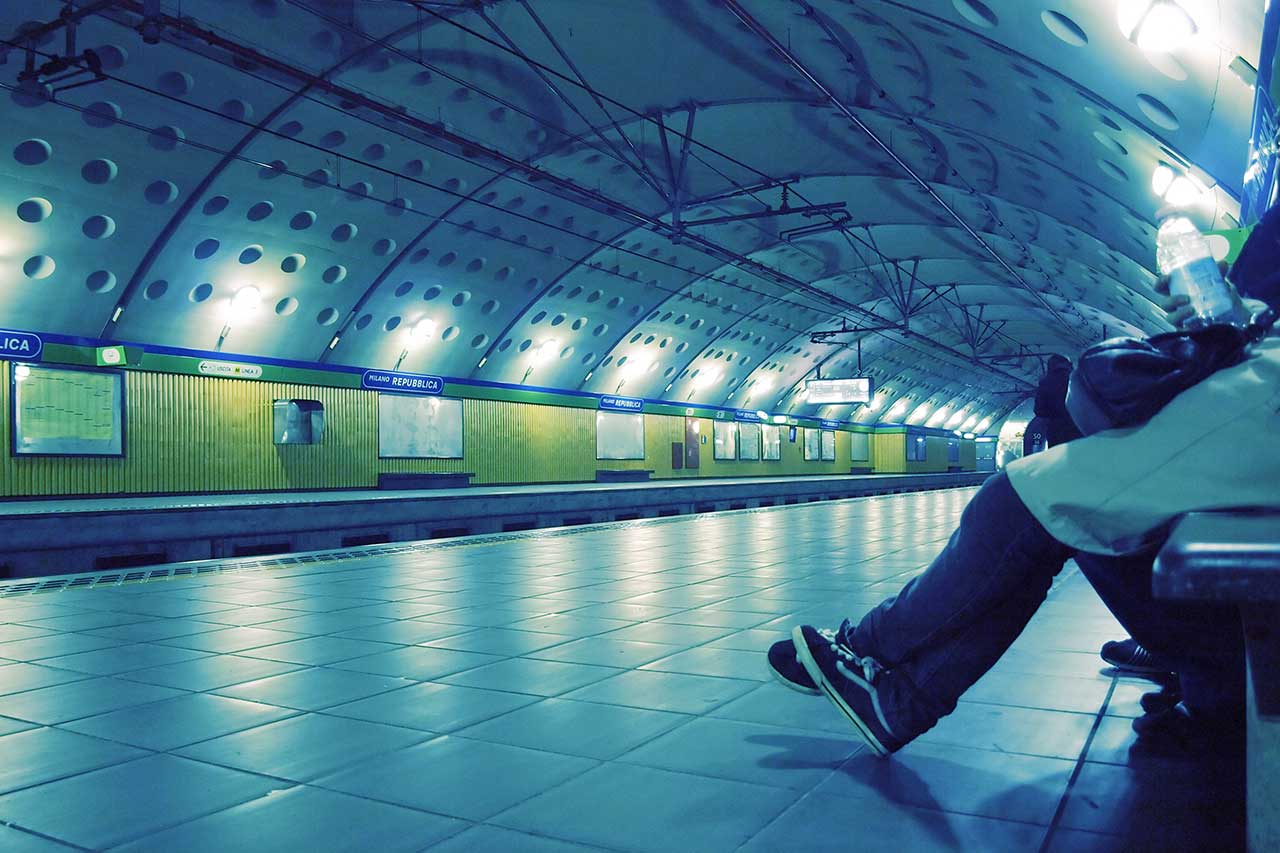
I lived in Milan for 18 years, and it was there that I came to know the city’s daily life best - not just its landmarks, but also its rhythm, its habits, and its less obvious sides. Today I live in Wrocław, but I still return to Milan regularly.