


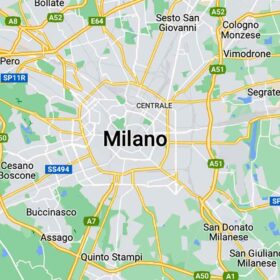
 The Geographic Location of Milan – A Strategic Spot in the Heart of Europe
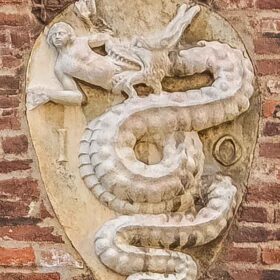 Milan’s coat of arms
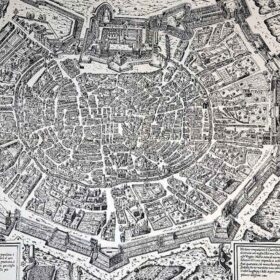 History of Milan
 Saint Ambrose
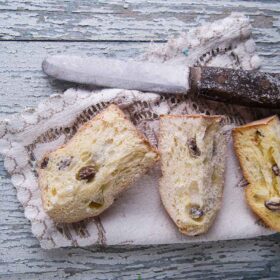 History of Panettone
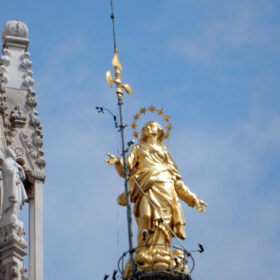 Madonnina
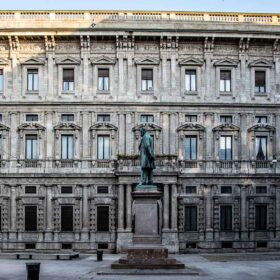 City Hall
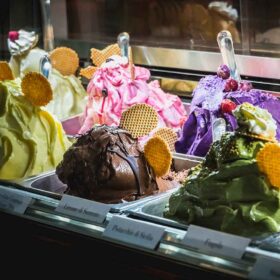 Milanese cuisine


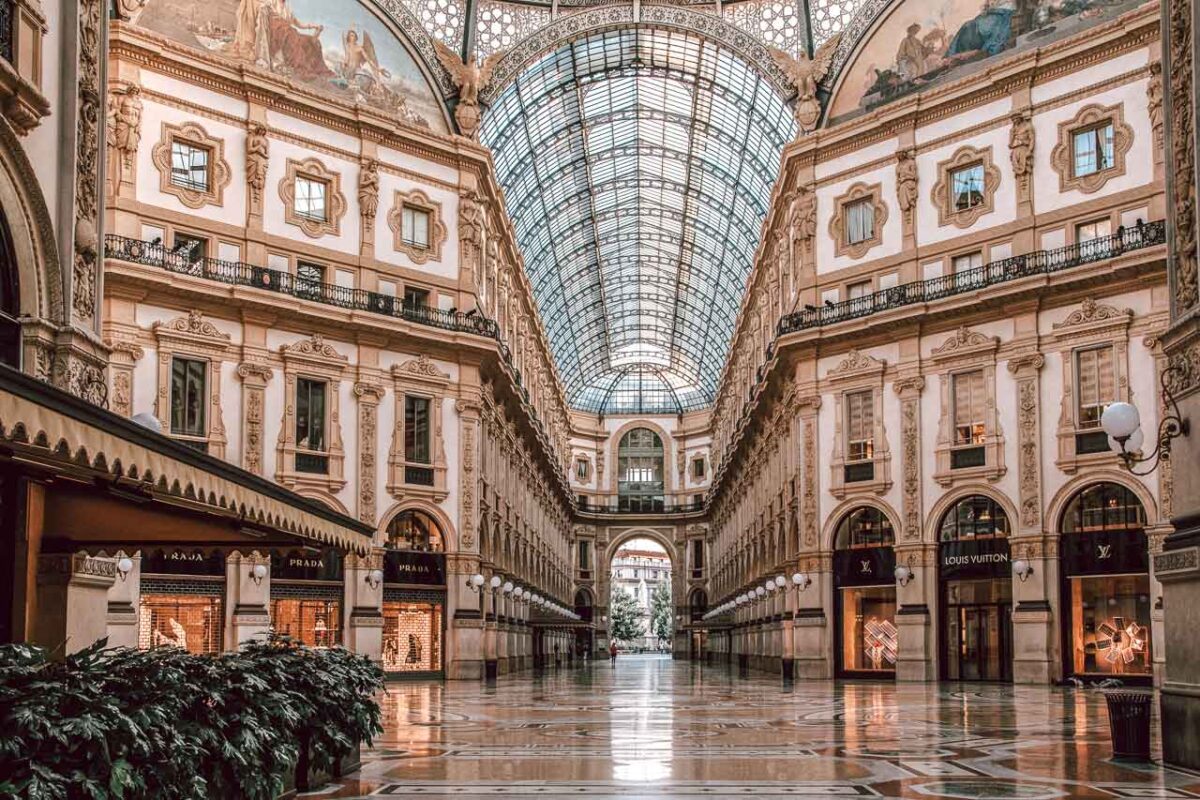
Galleria Vittorio Emanuele – “Il salotto milanese” and a trendy shopping passage
Let’s talk about the beautiful Victor Emanuel Gallery (Galleria Vittorio Emanuele II) in Milan – the perfect place for shopping lovers, the superstitious or the simply curious. This masterpiece, created by the genius Giuseppe Mengoni, is known as “Il Salotto” and it’s easy to see why!
This place is simply bustling! It is one of the busiest arcades in Milan and, along with the trendy Via Montenapoleone and Via della Spiga, is a favorite spot for fashion lovers. Renowned brands and designers call this place home, making it an ideal destination for both local and international shoppers. For tourists, it is one of the top attractions in Milan (and it’s free), alongside the Duomo cathedral.
Galleria Vittorio Emanuele II is no ordinary shopping center. It is a landmark, the heart of Milan, located right next to the famous Piazza del Duomo. And the locals call it the Salotto di Milano (Salon of Milan).
Today, it remains a center of shopping, leisure, and entertainment for everyone from proud Milanese to enthusiastic tourists.
Called “La Galleria,” it is like the godmother of all shopping malls. Following the 19th-century European trend of creating commercial-covered arcades in major cities, Milan decided to join the trend by creating a unique place covered in iron and glass. Trust me, Galleria Vittorio Emanuele II, rich in history and enticing in its style, is a must-see when visiting Milan.
Ready? Let’s go!
Journey to the Past: The History of the Galleria Vittorio Emanuele II
Let’s go back to March 7, 1865. It was then that King Victor Emmanuel II of Savoy initiated construction, laying the cornerstone for what was later to become the famous Gallery. Construction was a real rollercoaster, with many ups and downs, which was finally completed around 1877-78.
Well, in the mid-19th century, Milan, like other European powers such as Paris or London, was investing in modern technology and architecture. So they thought: “Hey, why not build a gallery – big, magnificent, and elegant?” And thus began the search for the perfect architect to turn this dream into reality. Over 170 architects submitted their ideas, but it was Giuseppe Mengoni who took the top prize. His vision? A long corridor intersected by a shorter arm, all under an octagonal glass roof with two majestic triumphal arches guarding the main entrances.
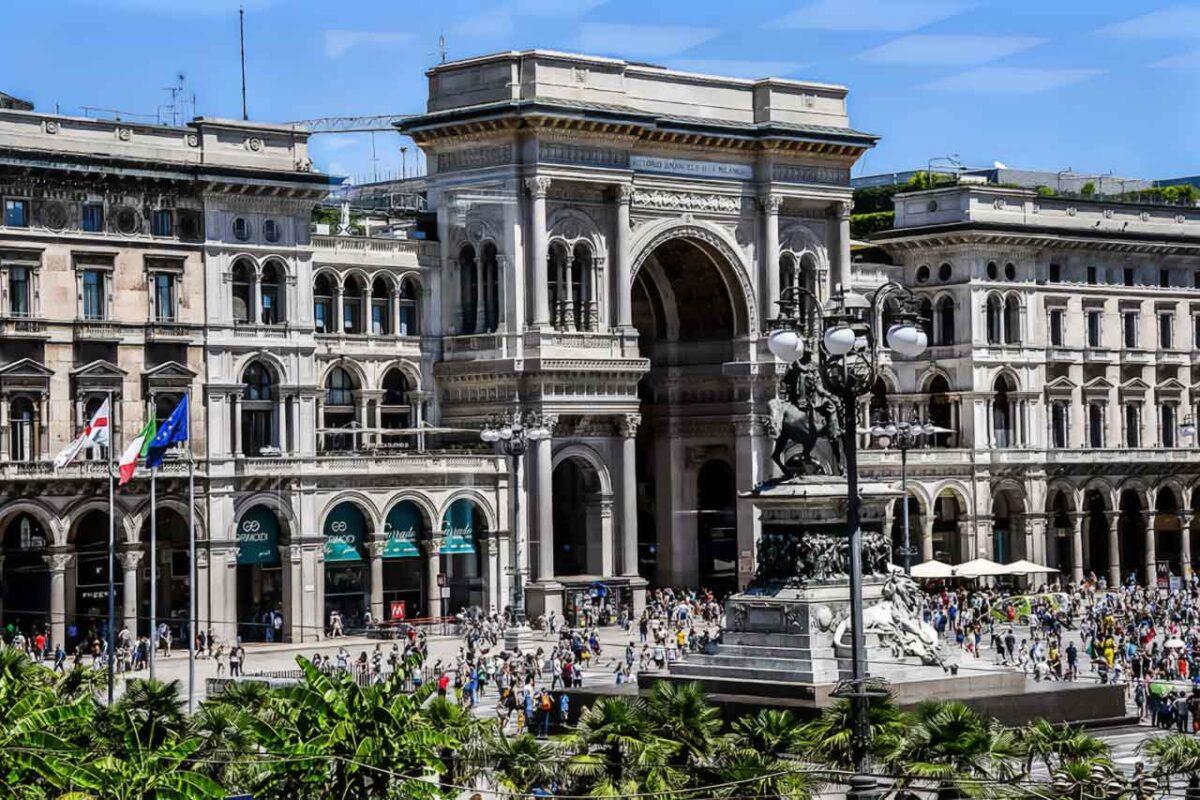
Although it was originally intended to be a street in honor of Emperor Franz Joseph of Austria, or at least that was the plan in 1859, when Giuseppe Mengoni began work the gallery was dedicated to King Vittorio Emanuelle II di Savoia of Italy. It opened in 1867 and was fully completed in 1878.
A strange coincidence links the great personalities who had to do with the Gallery. The architect who designed it died exactly one day before the final inauguration by falling from a structure he had climbed to inspect the final details. Only ten days later, King Vittorio Emanuele II, after whom the Gallery is named, who inaugurated it amidst the snow on January 1, 1878, also died.
First coffee shops
Within a short time after its inauguration, the Galleria quickly became known as the “salon of Milan,” becoming the heart of the city’s bourgeoisie, which was eager to visit the newly established elegant stores. However, it is the restaurants and cafes that have really won their hearts. To this day, establishments dating back to that era, such as Caffè Campari, Caffè Savini – originally known as Caffè Gnocchi – and Caffè Biffi, continue to enchant visitors with their enduring charm.
As an interesting side note, the Galleria was at the forefront of technological advances even in the 19th century! In the early years, the galleries were lit by gas lamps. A device called a “rattìn” (which means “little mouse” in Milanese dialect) was used to light all the lamps in sequence. Giuseppe Mengoni came up with a brilliant idea and created a system with a rail that ran a few centimeters from the gutter around the perimeter of the dome, forming a concentric ring.
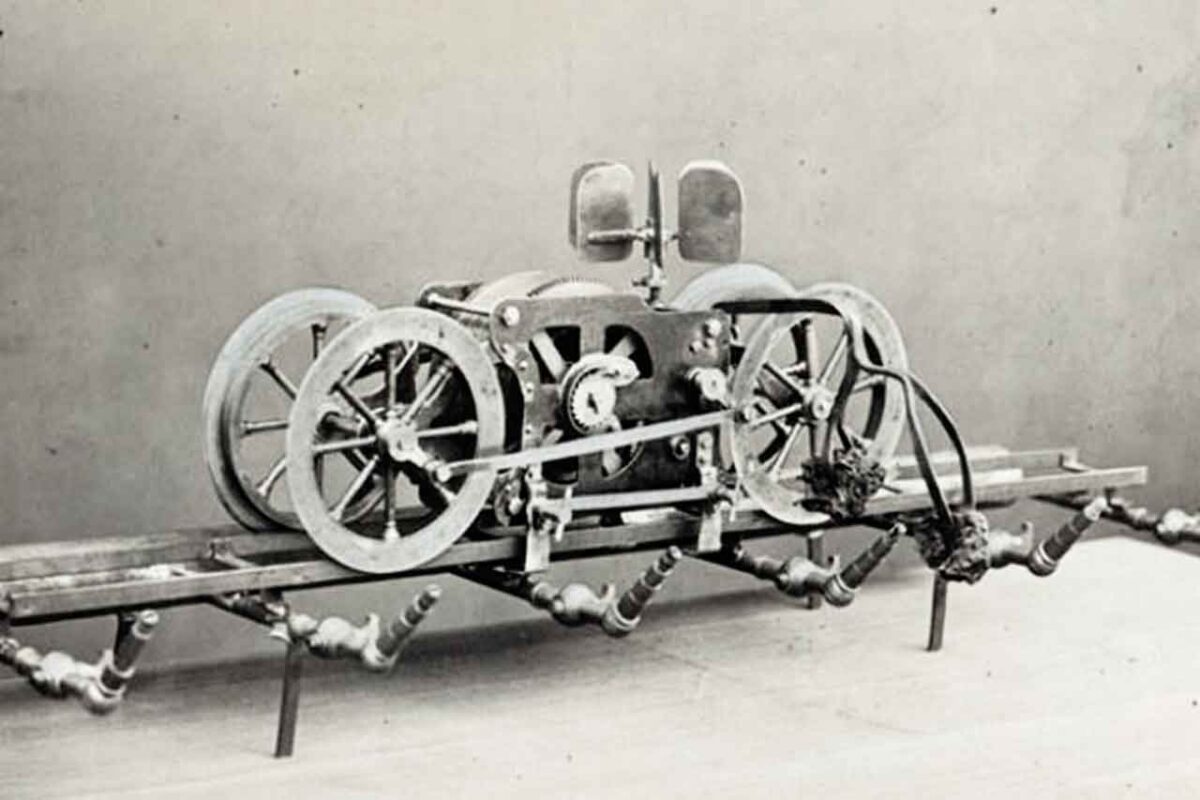
A spring-loaded device similar to a small locomotive moved along this rail, at the top of which a washer soaked in a flammable liquid was lit. Watching the rattìn make its rounds became a favorite local custom until 1883, when electric lighting was finally installed. So it’s interesting to see how the iconic Galleria also pioneered new lighting innovations. When you visit this historic landmark, stop, close your eyes, and imagine a “mouse” gliding through the galleries each night in the era of gas lamps.
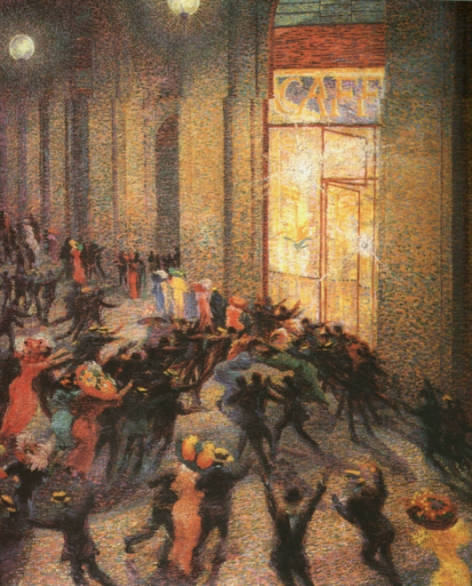
In 1914 and early 1915, just before Italy entered World War I, the Galleria was the site of demonstrations by interventionists and pacifists, often ending in brawls. One of the brawls in the Galleria was immortalized by Futurist Boccioni in his painting “Rissa in Galleria” (Brawl in the Galleria).
In 1919, a tragic event occurred in which 19-year-old anarchist Bruno Filippi lost his life when his bomb exploded. This happened as he attempted to carry out an assassination attempt at the Biffi Café, a well-known meeting place for Milan’s wealthy.
Bombings and reconstruction
During World War II, the Galleria in Milan suffered from Allied bombing. In August 1943, the glass roof and part of the building’s interior were destroyed. Reconstruction work began in 1948, and the Board approved the final project restoring the original structure of Trustees. The renovation was completed in 1955, and further restoration work was carried out in 1967 to restore the floor and mosaics to their original condition. The Galleria’s second inauguration occurred on December 7, 1955, coinciding with the premiere at Teatro alla Scala.

Renovation before EXPO 2015
From March 2014 to April 2015, the most comprehensive restoration of the Galleria since World War II was carried out in preparation for Expo 2015. Before the work began, a detailed analysis of the materials and their historical sequence was carried out to restore the original colors of the Gallery’s plasterwork. This was followed by restoration and cleaning of the stones and decorative concrete surfaces—the total restoration involved as many as 35,000 man-hours of work over an area of 14,000 square meters.
To ensure the continuity of commercial operations and accommodate time constraints, the renovation was carried out without traditional scaffolding. Instead, a self-propelled portal was used, inspired by the scaffolding technique used by Brunelleschi during the construction of the dome of Santa Maria del Fiore. Thanks to this innovative solution, the restoration work could be carried out efficiently and effectively.
The renovation’s impressive results restored the gallery to its former splendor. The entire process required enormous work, but the results were well worth it. The Galleria regained its beauty while preserving its original structure and character. This restoration proved the city of Milan’s dedication to its heritage and desire to show it to the world in the best possible light.
Architecture
Arms
The Galleria’s main structure consists of two crossed arms. The longer arm, connecting Piazza della Scala to Piazza Duomo, measures 196 meters, while the shorter arm, which connects via Foscolo and via Pellico, is 105 meters long. The interior facades of the gallery, arranged over three floors plus a mezzanine, impress with striking decoration in the Lombard Renaissance style.
To complement the decoration of the side arms, the inside of the two side entrances is decorated with four crescents. Each depicts a different field: Science by Bartolomeo Giuliano and Industry by Angelo Pietrasanta on the archway at Via Pellico, art by Raffaele Casnedi, and Agriculture by Eleuterio Pagliano on the archway at Via Foscolo. These paintings add charm and splendor, highlighting the importance of various fields in the development of society.


Entry arches
The main entrance arch in Piazza del Duomo was designed to resemble a real triumphal arch in structure and size. It consists of three vertical sections: the central section contains the main passage, and the side sections, symmetrical to the central one, are divided into two horizontal rows. The lower row has a smaller pedestrian passage located between two Corinthian columns that support a cornice. The upper tier of the arch is repeated in the form of louvered windows.
On the facade, which reaches 32 meters above the ground, there is a dedication to the Gallery:
“A VITTORIO EMANUELE II. I MILANESI ” – To Victor Emanuel II. The Milanese
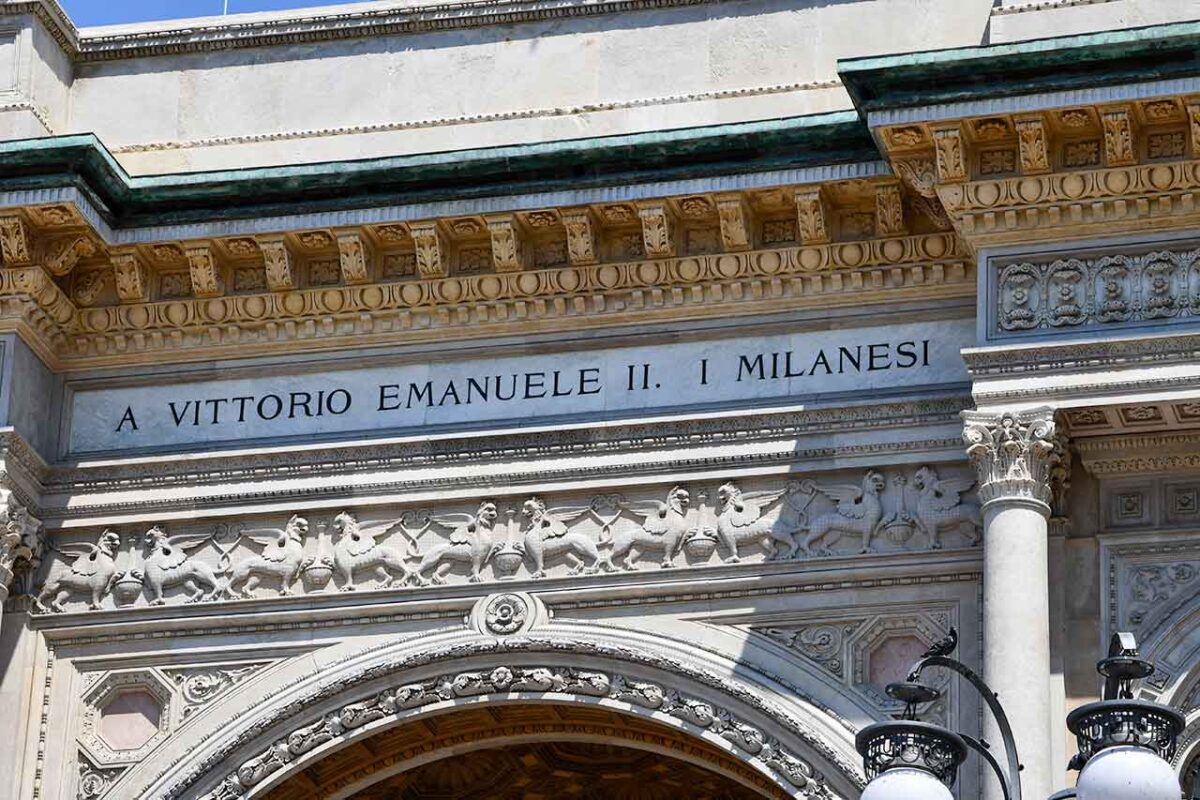
It is a tribute to King Victor Emmanuel II from the people of Milan.
On the opposite side, from Piazza della Scala, there is a second arch, a bit more modest, reflecting the layout of the main arch on the Piazza del Duomo side. To deal with the unevenness of the axis of the Galleria and Piazza della Scala, a Renaissance exedra was added at the exit of the Galleria.
Octagon

At the intersection of the Gallery’s arms is a space topped by a dome, which is known as the “octagon” because of its distinctive octagonal shape.
This octagon, where opposite sides are 36 meters apart, is decorated with walls featuring caryatids, telamons and stucco, just like the rest of the Gallery.
Originally, there were 25 cast statues depicting major figures from Italian history, such as Dante, Leonardo, Cavour, Volta, and others, but these were removed and have not been restored since 1891 due to their poor condition.
On the floor of the octagon is a large central mosaic depicting the coat of arms of the House of Savoy and the motto F.E.R.T, which to this day remains the subject of much debate and there is no single agreed version as to its interpretation. This mosaic adds to the unique character of the place and is a tribute to this important dynasty.
The upper parts of the four walls in the middle are decorated with painted lunettes, 15 meters wide at the base, representing different continents, which four artists recognized in Milan were chosen to decorate. The continents are:


The Bull in Galleria Vittorio Emanuele
One of the most fascinating attractions of the Galleria Vittorio Emanuele II in Milan, located on the floor in one of its arms just in front of the Swarovski boutique, is the bull mosaic. A popular ritual associated with this mosaic is to turn on your heel three times on the bull’s testicles. This is believed to bring good luck, guarantee another visit to Milan, and serve as a good omen for the future.
The bull, on a floor with mosaics featuring the coats of arms of the three capitals of a united Italy, represents Turin, the country’s first capital. It is one of the gallery’s many symbols, along with the lily symbolizing Florence and the she-wolf representing Rome. Over time, the bull became a good luck talisman, especially since the 19th century, when it gained popularity as a fertility-related amulet valued by women.
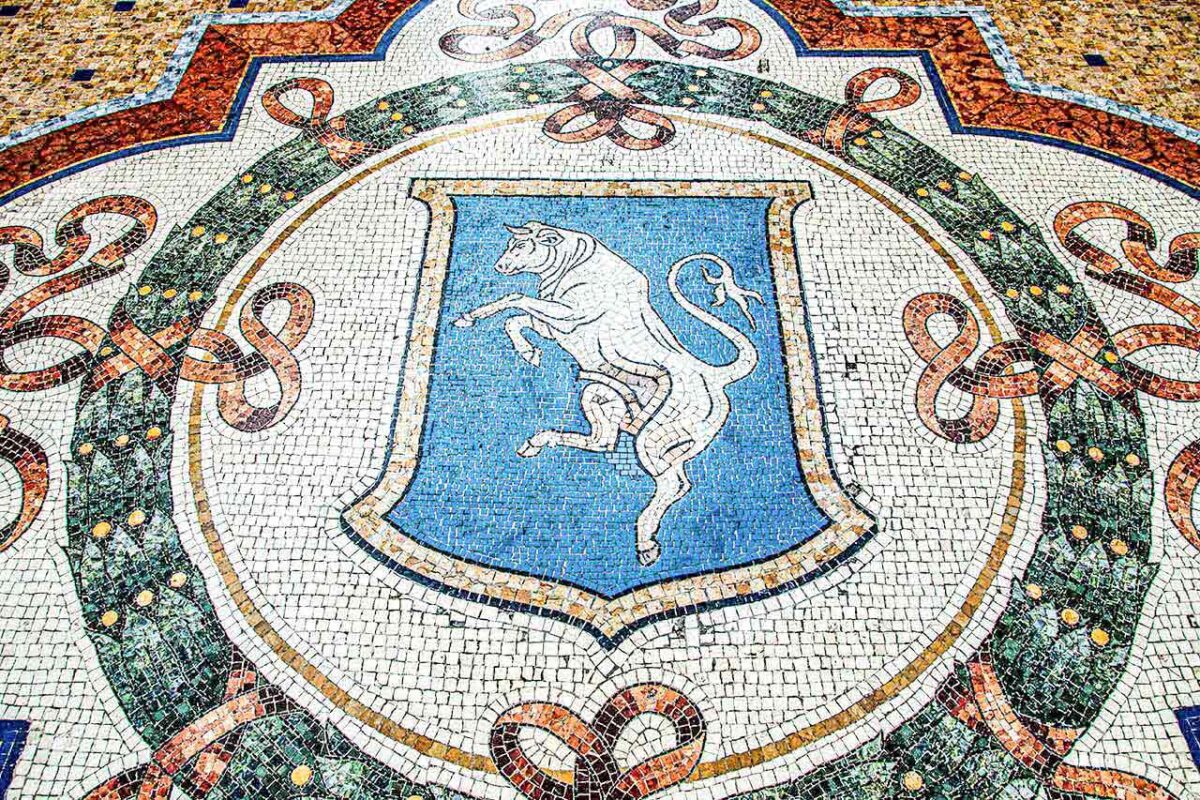
Today, no matter what it symbolizes, the bull is one of the most sought-after places by tourists. Long lines can often be seen around it, as everyone wants to ensure their good fortune by taking a spin on the bull’s testicles.
Museums in the Gallery
Galleria Vittorio Emanuele II is so large that it not only houses many boutiques, restaurants, and even hotels but also two museums! These are Leonardo3 – The World of Leonardo and Milano Osservatorio by the Prada Foundation.
The Leonardo Museum3 is an interactive exhibition dedicated to the work of Leonardo da Vinci. Using modern technology, the museum brings da Vinci’s genius and legacy to life through interactive displays, multimedia guides, and reconstructions of his inventions, artwork, and architectural designs. As a result, visitors can not only see life-size reconstructions of da Vinci’s flying machines or 3D models of his designs but also understand his contributions to anatomy, optics, physics, and other scientific fields.
The Prada Foundation’s Milano Osservatorio is an exhibition space, called “Osservatorio” for short, that opened in December 2016. It is located on the fifth and sixth floors of Galleria Vittorio Emanuele II. The Osservatorio is primarily dedicated to photography, and its inaugural exhibition was “Give Me Yesterday.”
Restaurants and Bars in Galleria Vittorio Emanuele II
Right at the beginning of Galerri’s existence, the first service establishments were created. Among them were several cafes and restaurants, which became real centers of Milan’s social and political life. Intellectuals and workers gathered here, from Futurists led by Filippo Tomaso Marinetti to journalists, writers, artists and poets.
Among the premises that still exist today, we can mention:
Biffi – opened on September 15, 1867, by Paolo Biffi, confectioner to the King of Italy. It was then that the remarkable history of the property began, which continues to this day. In 1882, the restaurant made a name for itself as a technological pioneer, becoming the first restaurant in Milan to be equipped with electric lighting.
Today the restaurant occupies two rooms on the first floor and has a spacious outdoor area. Here you can taste Milanese cuisine in a retro atmosphere. The menu is dominated by osso buco with risotto, of course, Milanese style.
Savini – Savini Restaurant is one of the city’s true icons, whose fame extends beyond the Galleria. As Carlo Castellaneta put it, “Savini is Milan like the Galleria and La Scala.” Opened in 1867, it quickly became a place resonating with the voices of the aristocracy and the vibrancy of Milan’s Belle Époque. Its location not far from La Scala attracted the wealthy social classes, who met here and enjoyed exquisite dishes.
Caffè Camparino – Caffè Camparino was opened in 1867 by Davide Campari in the newly opened Galleria Vittorio Emanuele II in Milan. It quickly became a meeting place for the nobility, bourgeoisie, artists, bankers, writers and foreign travelers. The café was often visited by famous opera composers and performers from the nearby La Scala theater. Camparino represents the café culture and history of Milan at the turn of the century. Today, it still retains its prestige as an iconic café and restaurant in the Galleria, serving traditional Milanese cocktails and food.
Among the other restaurants worth mentioning; La Locanda del Gatto Rosso, where you can eat tasty Milanese and Italian cuisine with friendly service; Dodici Gatti (12 cats), a small pizzeria hidden on the 6th floor offering consumption overlooking the gallery dome; or Cracco, with a Michelin star.
Stores at the Gallery

Galleria Vittorio Emanuele II in Milan is a true paradise for lovers of luxury brands and fashion. Over the years, the gallery has become home to many prestigious Italian and international fashion brands. Here you will find boutiques of such fashion houses as Prada, Gucci, Louis Vuitton, Armani, Versace, Massimo Dutti, Chanel, Luisa Spagnoli, Saint Laurent. Of the other stores worth mentioning are Brick’s, Tod’s, Andrew’s Ties and Cadei, Piumelli, Mejana, Borsalino, Moncler, Montblanc. At Nola you’ll buy a gift for pipe and cigar lovers and at Swarovski you’ll buy jewelry. Book moths, on the other hand, will find something for themselves at one of the bookstores: the historic Librerie Bocca, La Rizzoli or La Feltrinelli.
Hotels in the Gallery
Guests who love luxury can opt for Seven Stars Galleria, a hotel offering seven unique suites, where for a price reaching up to €15,000 per night you can secure services such as white-glove butler service and the option of a personal chef.
A little more economical but also unique are two other facilities located in the Gallery: Galleria Vik Milano and BMORE Apartments. Also noteworthy is Park Hyatt
Highline Galleria
Credits: Daniela DEP, CC BY-SA 4.0, via Wikimedia Commons
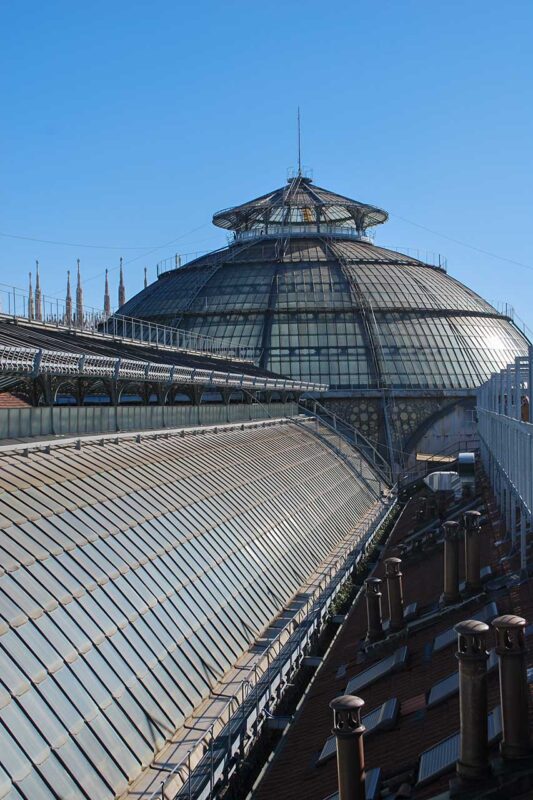
If anyone does not have enough sightseeing from the inside, they can climb to the roof and admire the dome from up close. The Highline Galleria is an unusual walking path, as it sits 40 meters high on the roof of Galleria Vittorio Emanuele II, allowing visitors to enjoy views of the city center and its skyline. The path recreates the original 250-meter-long route to maintain the Galleria’s glass roof.
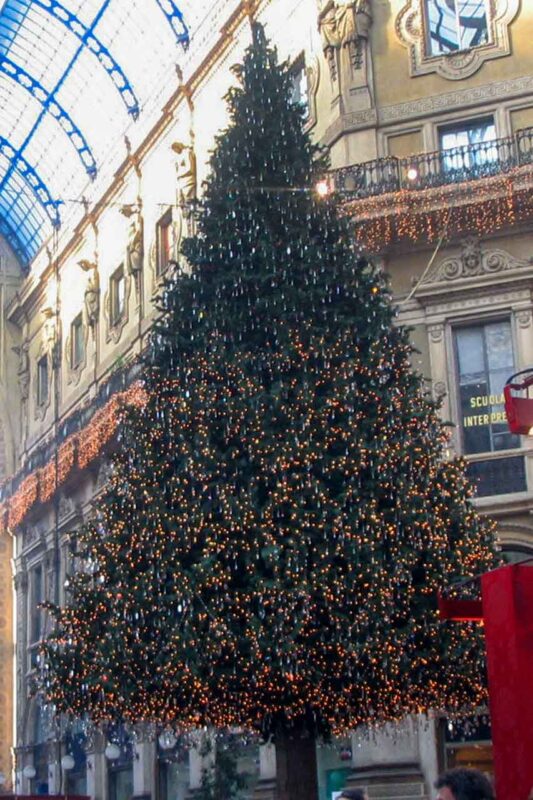
If you happen to visit Milan during Christmas, make sure to stop by the Galleria. In addition to the beautifully decorated shop windows, you can admire the Christmas tree adorned by Swarovski under the dome!

I lived in Milan for 18 years, and it was there that I came to know the city’s daily life best - not just its landmarks, but also its rhythm, its habits, and its less obvious sides. Today I live in Wrocław, but I still return to Milan regularly.