


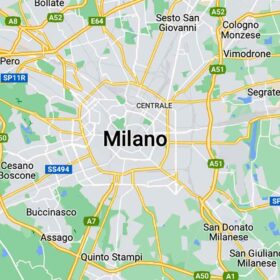
 The Geographic Location of Milan – A Strategic Spot in the Heart of Europe
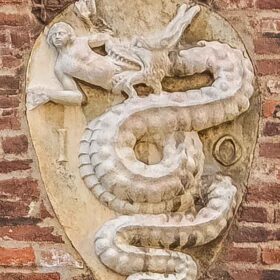 Milan’s coat of arms
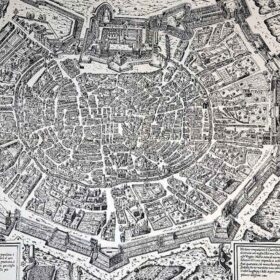 History of Milan
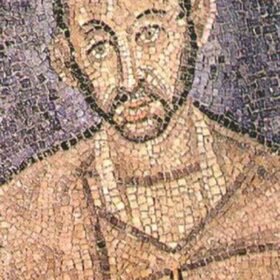 Saint Ambrose
 History of Panettone
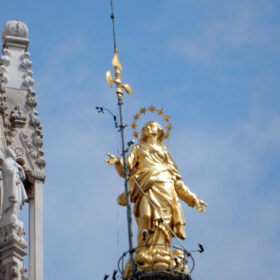 Madonnina
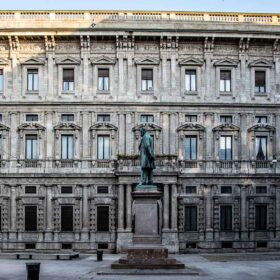 City Hall
 Milanese cuisine


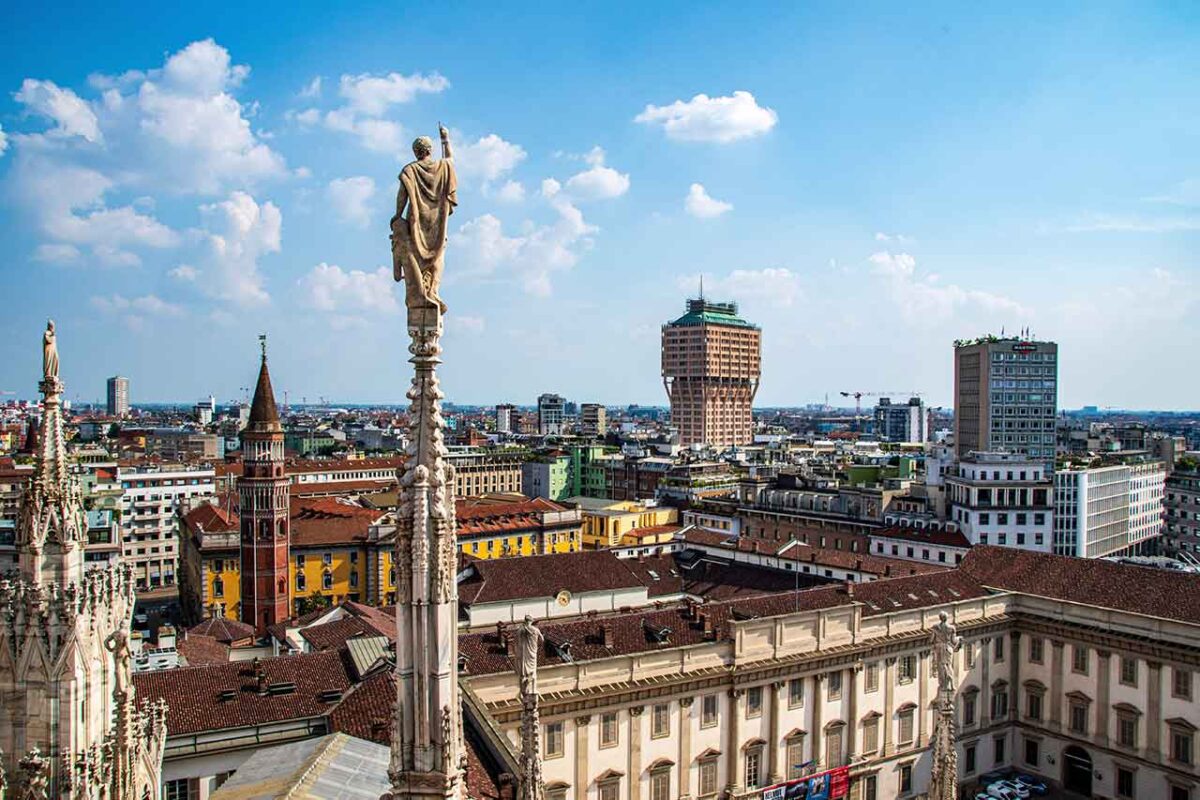
April is one of the best months for a trip to Milan. Spring is already clearly in the air, the temperatures are ideal for long walks, and the city has not yet slipped into the heavier, sticky rhythm of summer. Squares and streets are green again, trees are in bloom, café terraces are filling up, and Milan shows a lighter, more enjoyable side of itself at this time of year.
It is exactly in this moment, from April 13 to 19, 2026, that Milano Art Week takes place – a week when contemporary art extends far beyond the walls of museums and galleries. Alongside major exhibitions and art fairs, there are live events, projects in the streets, special programs, and small artistic interventions scattered across the city. Although many people mainly associate April in Milan with Design Week, Milano Art Week offers a completely different perspective – quieter, more art-focused, more connected to the urban landscape, and built around less obvious encounters with culture. The event is now in its tenth edition, and this year’s program looks especially full.
What Is Milano Art Week and When Does It Take Place?
Milano Art Week 2026 is a weeklong program devoted to contemporary art, taking place in Milan from April 13 to 19, 2026. During that time, more than 400 events organized by 230 participants are scheduled across the city.
The event is backed by the Comune di Milano, with coordination handled by the Arte Totale ETS association. In practice, that means a week in which art fairs, exhibitions at major institutions, commercial gallery openings, live events, and special projects all happen at the same time in different parts of Milan.
This year’s edition looks especially interesting for several reasons. Milano Art Week is celebrating its tenth edition, miart is turning thirty, and Paris Internationale is coming to Milan for the first time ever outside France.
It is also worth paying attention to the dates. Right after Milano Art Week comes Salone del Mobile and Fuorisalone, in other words Milan Design Week. In 2026, the furniture fair is scheduled for April 22-27, so the two events fall very close together. For anyone staying in the city longer or planning a more flexible trip, that can make for a very convenient and interesting combination.
Milano Art Week at a glance:
miart: an art fair for collectors – and not only for them
miart 2026 is the thirtieth edition of one of the most important modern and contemporary art fairs in Europe. This year, 160 galleries from 24 countries will take part, and the fair will be held in a new location in the CityLife district.
The fair runs from April 17 to 19, with a VIP preview the day before, on Thursday, April 16. The venue will be the South Wing of Allianz MiCo – a modern, three-level space overlooking CityLife. This change of address from previous editions is not accidental. The more intimate, compact format is meant to be a deliberate shift in pace rather than a compromise.
This year’s theme – New Directions: miart, but different – refers to the innovative path saxophonist John Coltrane took in 1963, the centenary of his birth. You do not have to be interested in jazz to understand the idea behind it. It points instead to openness, dialogue, improvisation, and an element of surprise.
Tickets
Advance online ticket prices:
Practical information
Exhibition sections: what to look for and where
The miart 2026 program is divided into four main sections, each showing a different side of the fair.
Gallerie d’Italia and free admission
Anyone with a miart ticket gets free entry to Gallerie d’Italia at Piazza della Scala 6, where the caveau – a vault normally closed to visitors – is opened during the fair days from April 17 to 19. Inside, around 500 works from the Intesa Sanpaolo collection are kept on sliding panels. During Art Week, works by Robert Ryman and Mario Schifano are on view there. Admission is free with a miart ticket, but advance booking is required through gallerieditalia.com or by email at [email protected].
An English-language guided visit is available Friday through Sunday at 1:00 PM.
Top 5 exhibitions at public institutions
During Art Week, most of Milan’s major institutions either open new exhibitions or strengthen their existing programs – below are five worth including in your plan.
Milan is a city that takes exhibitions seriously, and that does not apply only to the center. Pirelli HangarBicocca is on the northern edge of the city, while Fondazione Prada sits a little south of the center.
Anselm Kiefer at Palazzo Reale
Among the most important premieres of this year’s Milano Art Week, Le Alchimiste at Palazzo Reale stands out in particular. Anselm Kiefer builds an exhibition here around matter, alchemy, and history, and the overall effect is unmistakably monumental. That, in itself, is only one reason to plan a visit. At the same time, Palazzo Reale is also hosting other major exhibitions, including the Robert Mapplethorpe retrospective Le forme del desiderio, with more than 200 works, and Metafisica / Metafisiche.
Cao Fei at Fondazione Prada
At Fondazione Prada, beginning April 9, you can see Dash, a new project by Chinese artist Cao Fei. It is an exhibition built around multimedia and video, raising questions about the relationship between people, technology, and the environment. The institution itself has long been one of the strongest points on Milan’s art map, and its building, designed by Rem Koolhaas, is worth visiting even apart from the current program.
Rirkrit Tiravanija at Pirelli HangarBicocca
The House That Jack Built, open since March 26, is a project by the Thai artist built around the intersection of architecture and relational practice. It is presented at Pirelli HangarBicocca, a post-industrial space in a former factory in the Bicocca district in northern Milan. This is one of those places worth visiting not only because of the exhibition itself, but also because of the site and the character of its interior. At the same time, you can also see Benni Bosetto’s first major solo museum exhibition in Italy, and on April 18 take part in events included in the Art Week program.
Admission is free.
Pirelli HangarBicocca is one of the few major institutions in Milan that consistently does not charge admission. During Milano Art Week, it is worth booking a timed entry slot in advance through the official website: pirellihangarbicocca.org.
Entrance: Via Chiese 2, Bicocca metro station (M5).
Chiharu Shiota at MUDEC
At MUDEC, or Museo delle Culture, Chiharu Shiota presents the site-specific installation The Moment the Snow Melts. Thousands of threads descend from the ceiling, with cards suspended between them bearing the names of people who can no longer be met again. It is a work centered on memory, presence, and loss, and at the same time one of those installations that looks completely different in photographs than it does in real space. In Shiota’s case, physically stepping inside the structure is an essential part of the experience.
Andrea Branzi at Triennale
Andrea Branzi. Continuous Present , on view from April 19 to October 4, 2026, traces the work of one of the central figures of Italian design. The exhibition is curated by Toyo Ito, the Japanese architect and Pritzker Prize laureate.
Ghost Track: art hidden inside historic museums
Ghost Track is one of the most interesting ideas in this year’s Milano Art Week. Instead of creating a separate exhibition, contemporary artists enter into dialogue with the permanent collections of historic museums, sometimes so discreetly that at first glance they are almost unnoticeable.
So this is not about loud, spectacular installations, but about subtle interventions in places not usually associated with contemporary art, such as the natural history museum or the archaeological museum. These are more like visual insertions, shifts, and question marks hidden among the exhibits than a conventional exhibition in the traditional sense. That is exactly why Ghost Track feels a little like visiting a gallery and a little like following traces inside a space that seems familiar at first.
Museums and sites included in Ghost Track:
For a visitor, that means something simple: you go to Castello Sforzesco or the aquarium, and your regular visit comes with something extra. The project is included free with the Milano Museo Card.
Paris Internationale in Milan
Paris Internationale, the independent art fair platform founded in Paris in 2015, is leaving France for the first time and making its Milan debut from April 18 to 21, 2026.
The choice of venue says a great deal about the character of the project. Palazzo Galbani, at Via Fabio Filzi 25R, is a seven-story modernist building from 1956-1959 associated with Pier Luigi Nervi. The building is currently undergoing redevelopment, so the fair is literally taking place inside an active construction setting. But that is not an accidental inconvenience. It is part of the idea itself. From the beginning, Paris Internationale has chosen unconventional, historic spaces in transition and treated them as part of the overall experience.
The format is deliberately intimate: around 34-35 galleries across 2,000 square meters, with quality clearly chosen over quantity. Participating galleries come from Milan, including Clima, Francesca Minini, Lia Rumma, and Ordet, as well as from Paris, Zurich, and other European cities. The VIP preview is on April 17, and the fair opens to the public from April 18 to 21.
Palazzo Galbani is right by Stazione Centrale and Palazzo Pirelli, within walking distance of the main train station. The full list of participating galleries and the program is available at: parisinternationale.com.
Milano Art Week in the streets: live events, parades, and ArtLine
Some parts of the program, such as the motorcycle parade and the unveiling of the sculpture in CityLife Park, are completely free and move beyond the walls of institutions.
Milano Art Week is not limited to museums, galleries, and fairs that require a ticket or accreditation. A significant part of the program takes place in the urban space and makes it possible to plan an entire day without paying for admission. A few highlights are worth mentioning here:
Mototrombe (April 17) – a city sound procession conceived by Aronne Pleuteri and led by composer Dario Buccino. Its premise is simple: motorcycle exhausts become musical instruments. Absurd? Only at first glance. In reality, it is a loud tribute to Luigi Russolo and his Futurist “art of noises,” thrown directly into the contemporary space of Milan. It is one of those things you should hear – and feel – at least once.
Meeting point and start: Piazza Duca d’Aosta, the square in front of Milano Centrale, at 5:00 PM. 17:00.
Jeremy Deller’s Octospider (April 19) – the final element of the ArtLine collection, a surreal hybrid of spider and octopus, a giant eight-legged structure that could easily become a new symbol of the district.
Official unveiling with the artist and city authorities: 12:00 PM, CityLife Park. The easiest stop is Tre Torri on the M5 line.
On April 18, curators Katia Anguelova and Roberto Pinto lead two tours of the full ArtLine collection, at 11:00 AM and 3:00 PM. If you want to understand why giant sculptures stand in the park and what they mean, this is the best possible opportunity. Admission is free and no registration is required – you only need to show up by Hand and Foot by Riccardo Previdi, or near Tre Torri station, and look for the group with ArtLine badges.
It is also worth knowing that openings at commercial galleries take place from Monday to Thursday, April 13-16, from 6:00 PM to 9:00 PM, and admission is free. This is the best time for gallery hopping: you walk in, look around, sometimes get a glass of prosecco, and then move on to the next gallery a block away. It works especially well in Brera, Isola, and Porta Romana.
How to plan Milano Art Week: a practical 2-3 day itinerary
With more than 400 events, selection is the key. Below is a suggested three-day plan for anyone who wants a broad view of the program without feeling like they are sprinting from one stop to the next.
Before arriving, it is worth checking the digital program at digital.milanoartweek.it, where everything can be filtered by day, place, and category. In practice, it works best to choose a few priorities for each day and leave some room for spontaneous decisions.
Day 1: miart and Gallerie d’Italia
The first day is best built around miart, so it makes sense to buy your ticket online in advance and plan your visit for the morning or around midday at South Wing Allianz MiCo. The easiest way to get there is on the M5 metro to Portello. After the fair, that same ticket gives you free entry to Gallerie d’Italia, where a special project curated by Nicola Ricciardi is on view during Art Week. The evening is best left for one of the openings at a commercial gallery – the current schedule is easiest to check on the Milano Art Week website.
Day 2: institutions in the center
The second day can be devoted to the most important institutions located closer to the center. In the morning, it is worth planning a visit to Palazzo Reale, where the exhibitions by Anselm Kiefer and Robert Mapplethorpe alone can easily take up several hours. In the afternoon, the natural continuation is Triennale, with Andrea Branzi. Continuous Present. . Between the two, a walk through Brera fits perfectly, especially since many commercial galleries there remain open free of charge.
Day 3: Ghost Track and northern Milan
The third day is best started at Castello Sforzesco, where you can combine Ghost Track with the regular museum collections. After that, you can head north to Pirelli HangarBicocca, where Rirkrit Tiravanija’s project is on view. In the evening, on April 18 or 19, you can finish the day in CityLife, especially if the unveiling of Octospider is part of your plan.
If you have less time, a good shorter version is to combine Palazzo Reale, Ghost Track at Castello Sforzesco, and evening gallery openings. That still gives you a real sense of Milano Art Week, even without visiting miart.
Where to stay during Art Week: book early
During Art Week and Design Week, hotel prices in central Milan reach levels comparable to high season, so it is worth booking well in advance.
That applies across the center, but especially to:
The closer you get to the dates, the harder it becomes to find solid options under €150-200 per night. During this week, Milan’s hotel market behaves much like it does during Fashion Week.
FAQ – frequently asked questions about Milano Art Week
Is Milano Art Week free?
It depends on the venue. miart is ticketed, with tickets sold through the official channel. Exhibitions at institutions such as Palazzo Reale, Fondazione Prada, and Triennale have regular admission fees. Ghost Track is included with the Milano Museo Card. Many openings at commercial galleries and street events are free.
Is Milano Art Week the same as Design Week?
No. Milano Art Week focuses on contemporary art and takes place April 13-19, 2026. Design Week, meaning Salone del Mobile and Fuorisalone, is centered on design and furniture and in 2026 runs from April 22 to 27. The two weeks are separate, although some installations and galleries are active during both.
How do you buy a miart ticket?
Through miart’s official sales channel at miart.it. A miart ticket also gives you free admission to Gallerie d’Italia during Art Week.
Who is Milano Art Week for?
miart is aimed primarily at collectors, gallerists, and art market professionals. The institutional program, Ghost Track, and the street events are open to everyone. The week also makes sense as a travel destination for someone who does not collect art but wants to experience Milan in a very different mode.
For more information, see the sources:


I lived in Milan for 18 years, and it was there that I came to know the city’s daily life best - not just its landmarks, but also its rhythm, its habits, and its less obvious sides. Today I live in Wrocław, but I still return to Milan regularly.