


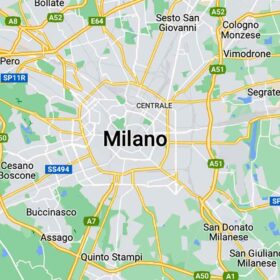
 The Geographic Location of Milan – A Strategic Spot in the Heart of Europe
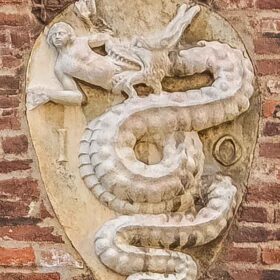 Milan’s coat of arms
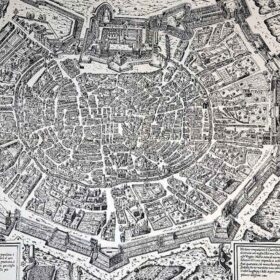 History of Milan
 Saint Ambrose
 History of Panettone
 Madonnina
 City Hall
 Milanese cuisine


Natale con i tuoi, Pasqua con chi vuoi (Christmas with your family, Easter with whoever you want). It is one of those Italian sayings that explains the difference between the two biggest holidays of the year surprisingly well. Christmas in Italy is more family-centered, more homey, and almost obligatory: a family lunch, time with loved ones, dinner at your grandparents’ house. And Easter? Lighter and more open. Easter Monday, on the other hand, clearly moves the celebration out of the home and into the company of friends, day trips, and more informal get-togethers.
In 2026, Easter falls on April 5-6: Easter Sunday is April 5, and Easter Monday (Pasquetta) is April 6. Both days are official public holidays in Italy.
If you are planning an Easter weekend in Milan, in this article I will try to help you understand what to expect during the holiday. This will not be a catalog of customs, but rather a portrait of the city and its residents at a time when the usual daily rush noticeably slows down.
Easter Milan-style, or holidays on its own terms
Easter in Milan is not spectacular or especially public, but that does not mean it matters any less. It simply unfolds at a different pace.
In many regions of southern Italy, for example in Sicily, Puglia, or Campania, Easter means processions, reenactments of the Passion of Christ, crowds in the streets, music, tears, emotion. Milan is completely different. Here, the holiday plays out in a more intimate way: between home, loved ones, the local parish, and the shared table. That does not mean Milanese people do not feel Easter deeply. Of course they do, but in their own way: more quietly, without spectacle, with an emphasis on good food and time spent with the people who matter to them.
It is worth knowing that Milan has its own liturgical tradition. The Archdiocese of Milan follows the Ambrosian Rite, which is different from the Roman Rite observed in the rest of Italy and in Poland. In practice, that means, among other things, a different calendar: Milan’s Carnival lasts a few days longer than in other Italian cities – it ends on Saturday rather than Tuesday – and Lent begins on a different date. That is a separate topic in itself, but it is worth being aware of, because it explains why Carnival in Milan follows its own rules.
Easter Sunday: family, the table, and… silence in the city
Easter Sunday in Milan is a family day and an unusually quiet one. The main event of the day is a shared lunch, not a spectacle in the streets.
In the morning, many Milanese go to Mass. Solemn Easter services are held in the Duomo, but many residents simply choose their own parish church. These more formal Masses take place in the morning and late morning, and afterward families go back home for Easter lunch.
And lunch is, in fact, the most important moment of that Sunday. This is not really about the list of dishes being served, but more about the overall character of the day: a long meal, several hours at the table, conversation, calm. Even people who do not pay much attention to tradition in everyday life sit down together for a shared meal on Easter Sunday. In Italy, this Sunday still carries weight and is not treated like just another day off.
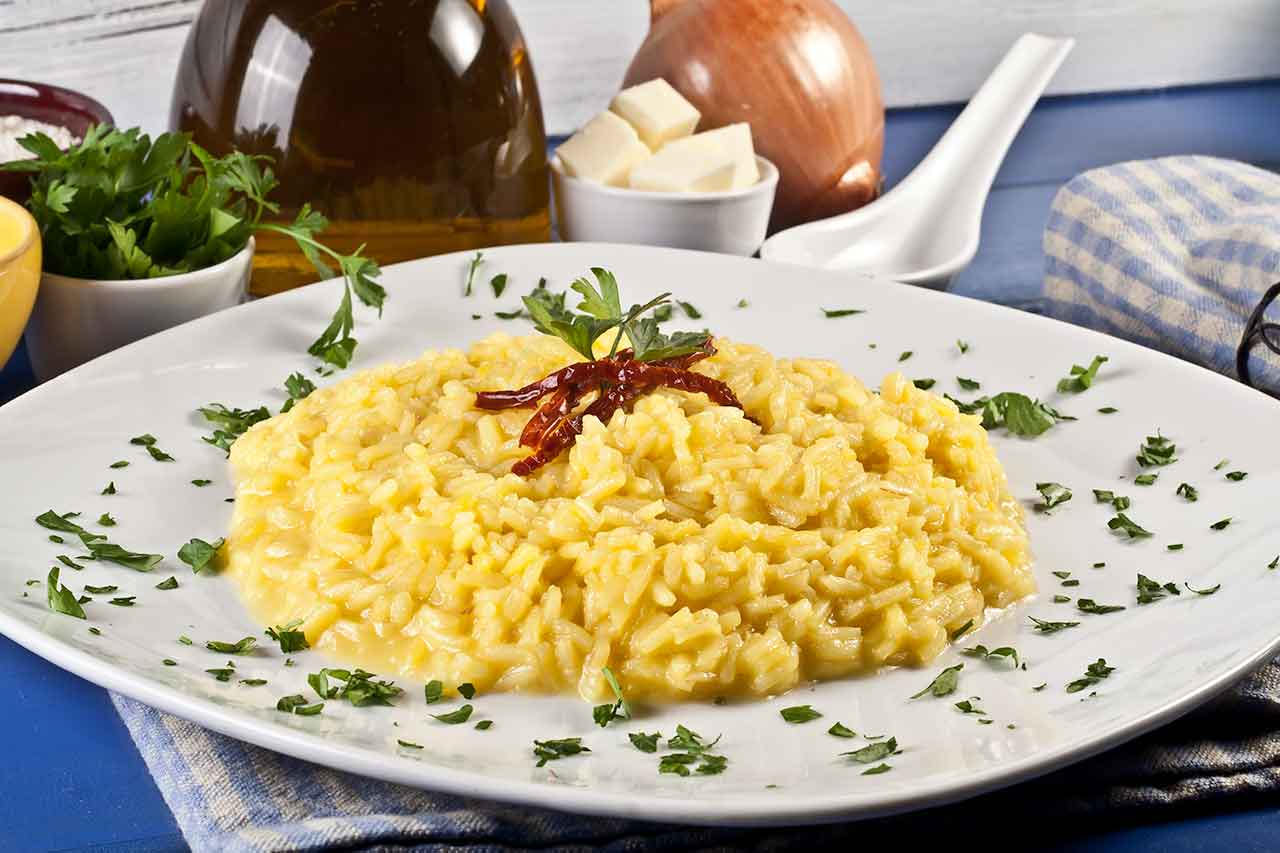
Seasonal dishes appear on the table: asparagus risotto, stuffed pasta such as ravioli or agnolotti, and lamb. For dessert: colomba pasquale and chocolate eggs. The latter are a completely different story from the painted Easter eggs we know in Poland. Italian Easter eggs are made of chocolate, often huge – they can be up to a foot and a half tall – beautifully wrapped, and filled with a surprise inside. They often appear in homes well before Easter, but they are only opened at the holiday table. Sometimes you need a hammer to break the biggest ones open.
If you want to see central Milan without the Milanese, Easter Sunday is your chance. The city looks unusual then: calmer, quieter, and at times surprisingly empty.
How is colomba different from panettone?
Colomba pasquale is panettone’s Easter sister: it also comes from Milan, but it is shaped like a dove and has a distinctly citrusy flavor.
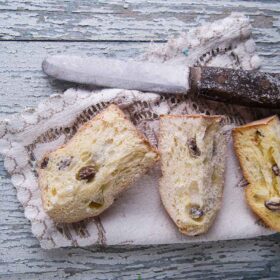
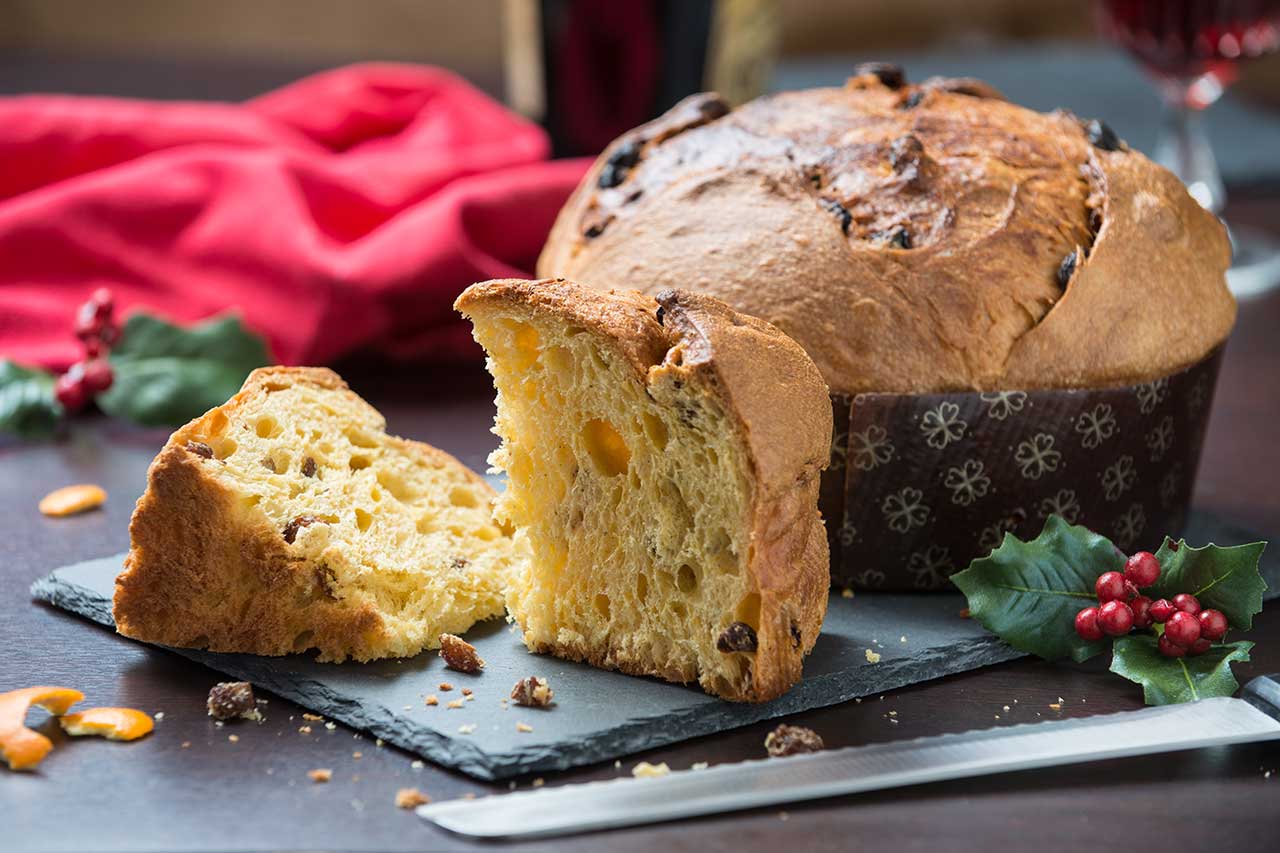
Both colomba and panettone are Milanese inventions, both are yeast cakes, and both require a long rising time. But the differences between them are clear. Panettone has a dome shape and is filled with raisins and candied fruit. Colomba is shaped like a dove – colomba means dove in Italian, a symbol of peace – and instead of raisins it contains candied orange peel, while the top is covered with a crunchy layer of sugar and almonds.
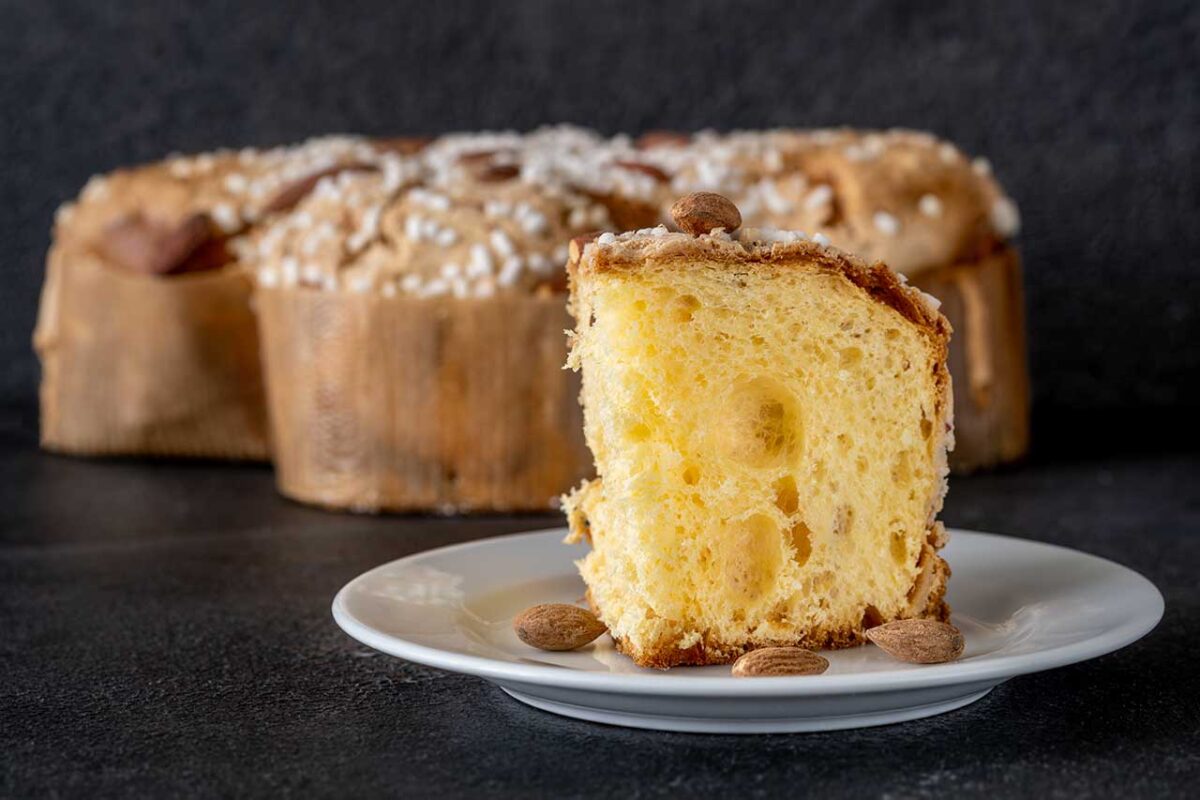
Where does colomba come from? Several legends have grown up around its history. One tells of a baker from Pavia who shaped a cake like a dove to persuade King Alboin not to destroy the city. Another involves Saint Columbanus and a miracle at Theodelinda’s court. Both are old, and both sound like the kind of story you might hear from a grandmother at the Easter table.
Like panettone, colomba eventually stopped being a local specialty and became known throughout Italy. Maybe that is why so many stories have grown up around it too.
You will find colomba easily in supermarkets, in dozens of versions, nicely packaged and ready to drop into your cart. But once you have tried a colomba from a good pasticceria, it is hard to forget: denser, moister, with candied peel that actually tastes like orange instead of orange flavoring.
Pasquetta: “Pasqua con chi vuoi” in practice
Easter Monday in Italy has its own name, its own character, and its own unwritten rules: friends, a picnic, and a trip out of town. And if not a trip, then at least an aperitivo that stretches into the evening.
If Easter Sunday belongs to family, Easter Monday is something else entirely. Pasquetta, literally “Little Easter,” or officially Lunedì dell’Angelo (Angel Monday), is the day Italians spend with friends. On this day, the focus shifts away from the family table and more toward seeing friends.
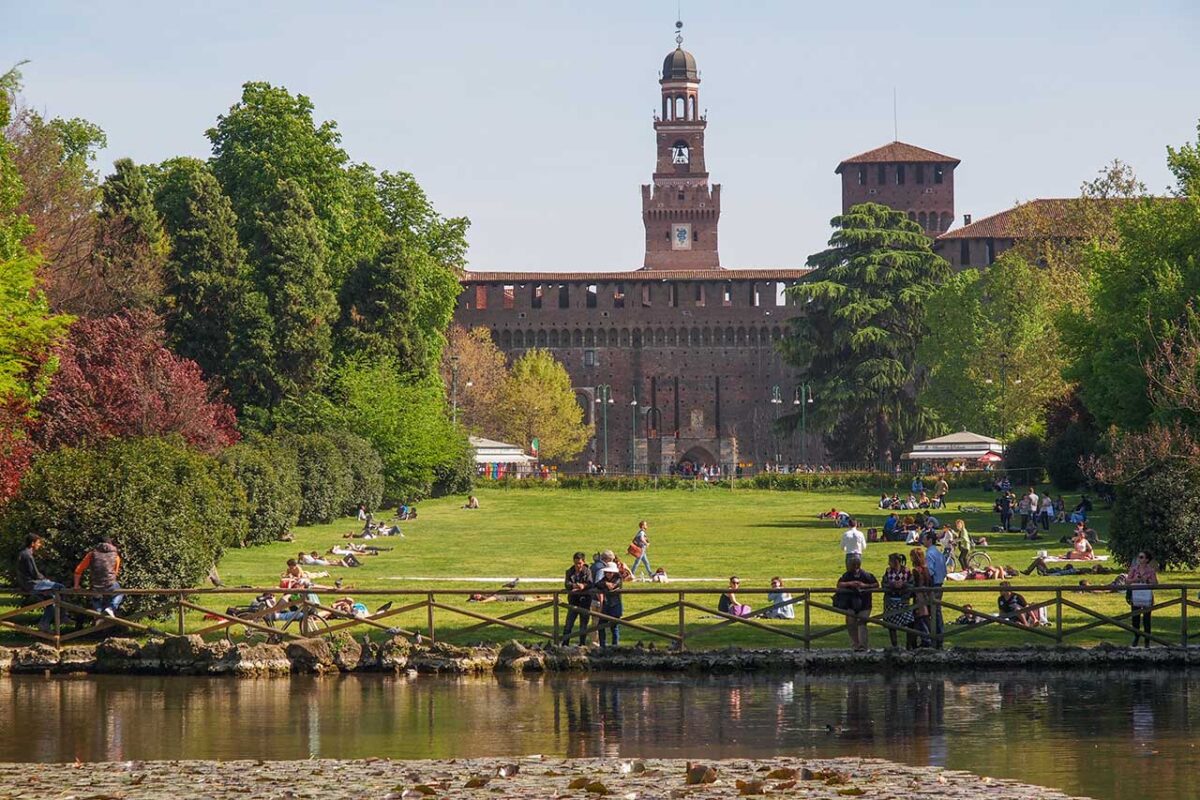
What do Milanese do on Pasquetta? If the weather cooperates – and in early April in Milan it often already feels like spring – the answer is simple: they leave the house. People head to parks for picnics, to trattorias for long lunches, and out for walks. Many leave the city altogether. It is a very typical Milanese instinct: if we have a day off and the sun is out, we head out of town – to Lake Como, toward Stresa and the Borromean Islands, or to the area around Parco del Ticino. Or simply to Parco Sempione with a blanket, leftovers from Sunday lunch, and a bottle of wine.
Fiera dell’Angelo: the oldest Easter fair in Milan
On Easter Monday, near the church of Sant’Angelo, Fiera dell’Angelo takes place, a traditional flower fair that has been held in this very spot continuously since the 16th century.
It is the most distinctive Easter event in Milan and one of the oldest fairs in the city. Every year, Fiera dell’Angelo is held on Easter Monday around the church of Sant’Angelo, along Via Moscova, Piazza Sant’Angelo, and Corso di Porta Nuova, in the Brera area.
The history of the fair dates back to 1511. Legend says that Franciscan friars from the nearby monastery were attacked by bandits, and after their fervent prayers, an angel with a sword appeared and drove the attackers away. In memory of that miracle, people began gathering near the church on Easter Monday. And because the Franciscans were known for growing plants and working in gardens, flowers and greenery came to dominate this annual gathering.
Today, Fiera dell’Angelo features more than 200 stalls spread across several streets. In addition to flowers and plants from Ligurian greenhouses, you will find handicrafts, regional products, books, clothing, and toys for children.
Easter in Milan: what is open, what is closed?
Most museums and restaurants in Milan are open during Easter, although opening hours are sometimes shorter.
This is one of those questions that comes up with every holiday trip to Italy. And the answer is more optimistic than you might expect.

Important: Museum hours on holidays may be different from regular hours and can change from year to year. Always check official websites before your visit.
Is it worth going to Milan for Easter?
Yes, if you want to see Milan in a quieter mood than during trade fair weeks and the city’s biggest events, with excellent museums, fewer everyday crowds, and a spring atmosphere. No, if you are expecting processions and spectacle.
Milan in April is a pretty pleasant place to be. The weather already feels springlike, with average temperatures usually around 59-68°F, although cooler days do happen. Parks begin to bloom, the days get longer, and the atmosphere feels lighter. The city is calmer than at the height of tourist season and noticeably less tense than on a typical weekday, when Milanese are rushing to the office. Museums are open, restaurants serve spring menus, and if you get good weather, Pasquetta in the park or by the lake is one of the nicest ways to spend a Monday.
What will you not find here? Spectacular Easter processions – go to Sicily or Puglia for that – street food and fairs on every corner – this is not Naples – or shopping madness, since some stores will be closed. Milan at Easter is quiet. And that is exactly where its charm lies at this time of year.
Milan is a city most people see on the run: between one fashion fair and the next, between Design Week and another conference, between the morning metro and a rushed evening aperitivo. Easter is one of those moments when that rhythm clearly changes. The city does not stop living, but it becomes calmer. And that is exactly when you get to see it a little differently.
FAQ – frequently asked questions
What is Pasquetta?
Pasquetta is the common name for Easter Monday (Lunedì dell’Angelo) in Italy. Traditionally, it is spent with friends on picnics, day trips out of town, or in parks. In Milan, Fiera dell’Angelo, a flower fair near the church of Sant’Angelo, takes place on that day.
Are museums in Milan open at Easter?
Most major museums – Pinacoteca di Brera, Castello Sforzesco, Museo del Novecento, and MUDEC – are usually open both on Easter Sunday and on Pasquetta, although hours may differ from standard hours. The Last Supper requires advance booking. It is worth checking official websites before your visit.
Are shops in Milan open at Easter?
On Easter Sunday, most large supermarkets are closed, but stores in tourist areas and shopping centers are sometimes open. On Easter Monday, more stores are open, although with shorter hours. Good Friday and Holy Saturday are not public holidays in Italy, so regular retail activity continues.
What is colomba pasquale?
Colomba is a traditional Italian Easter cake shaped like a dove. It is similar to panettone, but made with candied orange peel and topped with almonds and sugar. It is generally considered a baked specialty that originated in Milan, much like panettone.
What is Fiera dell’Angelo in Milan?
It is a traditional fair held every year on Easter Monday near the church of Sant’Angelo, around Via Moscova and Piazza Sant’Angelo. Its tradition dates back to the 16th century. At the fair, you can buy flowers, plants, handicrafts, and regional products.
I lived in Milan for 18 years, and it was there that I came to know the city’s daily life best - not just its landmarks, but also its rhythm, its habits, and its less obvious sides. Today I live in Wrocław, but I still return to Milan regularly.