


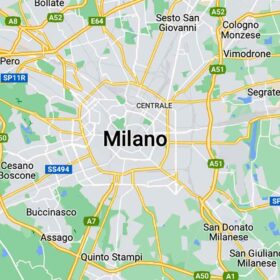
 The Geographic Location of Milan – A Strategic Spot in the Heart of Europe
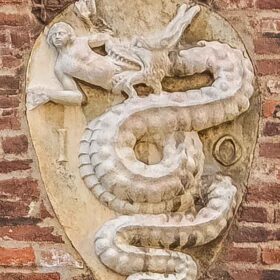 Milan’s coat of arms
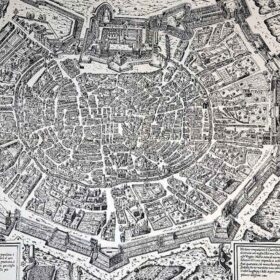 History of Milan
 Saint Ambrose
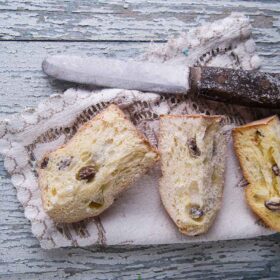 History of Panettone
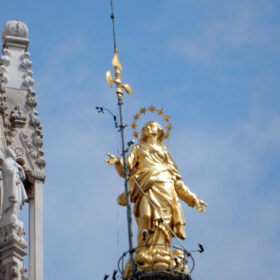 Madonnina
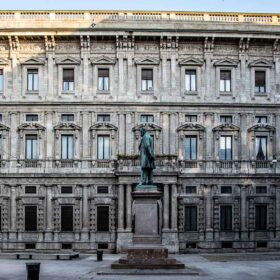 City Hall
 Milanese cuisine


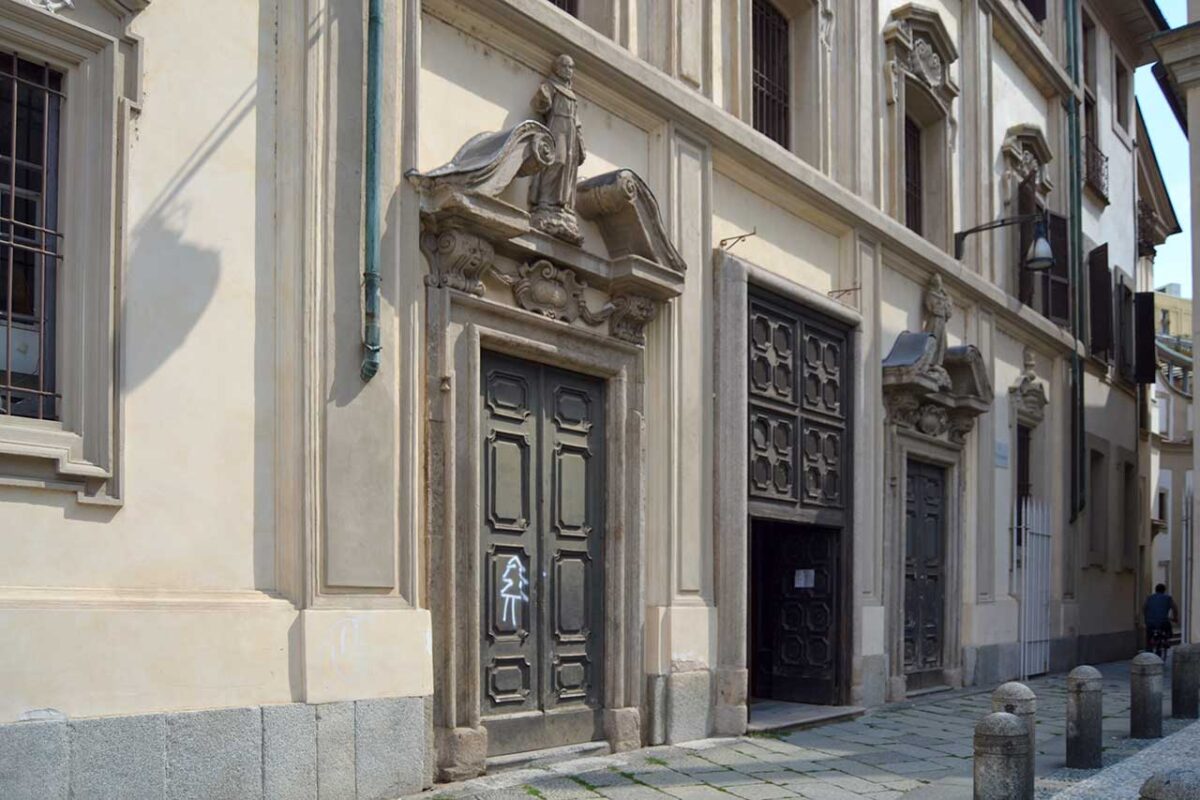
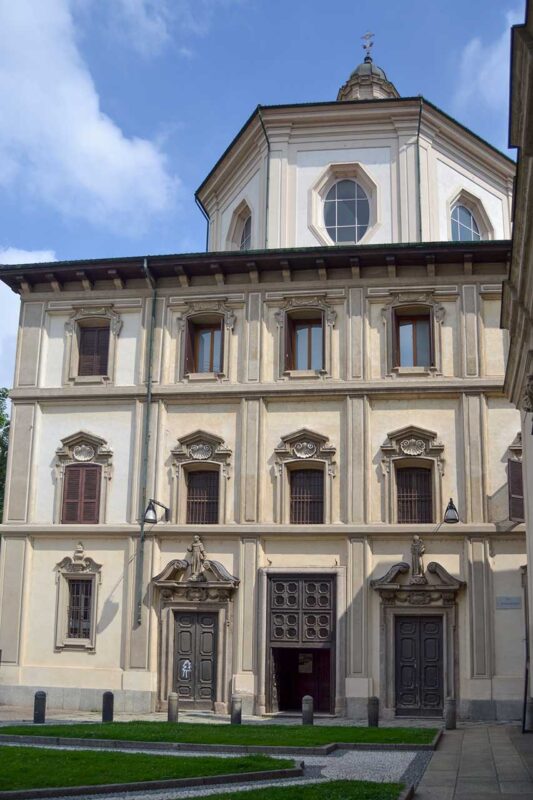
San Bernardino alle Ossa is a church with a free-to-visit ossuary located at Piazza Santo Stefano, a 10-minute walk from the Duomo. The Skull Chapel is open daily, except for Sundays.
I passed this church dozens of times before I even realized what was hidden inside. From the outside, there’s no hint that behind its doors lies one of the most extraordinary chapels in the city. Its walls are lined with human bones, meticulously arranged in geometric patterns over the centuries. The Sanctuary of San Bernardino alle Ossa is the side of Milan that remains in the shadow of the city’s most famous landmarks. And that’s exactly why I encourage you to stop by.
Practical information
Church and Ossuary Opening Hours

|
Church |
Ossuary |
|
|---|---|---|
|
Monday – Friday |
8:00 – 18:00 |
8:00 – 18:00 |
|
Saturday |
9:30 – 18:00 |
9:30 – 18:00 |
|
Sunday |
9:30 – 12:00 |
closed |

The Ossuary is closed on Sundays. Hours may vary during special church services or religious holidays—please check the sanctuary’s website for the latest updates before your visit. If you are coming specifically to see the Bone Chapel, be sure to plan your trip between Monday and Saturday.
Please remember that this is a place of worship, not a museum. Visitors are expected to observe the proper etiquette for a church: maintain silence, behave respectfully, and dress appropriately.
Getting to San Bernardino alle Ossa
The church is located at Piazza Santo Stefano, right next to the Basilica of Santo Stefano Maggiore. The entrance address is often listed as Via Carlo Giuseppe Merlo 4.
Directions:
San Bernardino fits perfectly into a walking route from the Duomo area toward Corso di Porta Romana. It’s a less-traveled but incredibly charming path where you can take a break from the crowds and truly feel the rhythm of authentic Milanese life.
The History of San Bernardino alle Ossa
The church of San Bernardino alle Ossa was a response to a dilemma faced by all growing ancient metropolises: what to do with remains when the cemetery can no longer hold another body?
It all began in the 12th century, when a city hospital operated near the Basilica of Santo Stefano Maggiore. The hospital cemetery filled up quickly. In 1210, it was decided to build a separate room—an ossario (ossuary)—to store the bones of previously buried patients, freeing up space for new graves. It was a somewhat haunting form of logistics, but quite pragmatic for the Middle Ages.
In 1269, a small church dedicated to the Virgin Mary, Saint Sebastian, and Saint Ambrose was built next to the ossuary. In the 15th century, it came under the care of the Confraternita dei Disciplini, a religious brotherhood that added Saint Bernardino of Siena to the group of patron saints. This is where today’s name comes from.
The real turning point came in 1642, when the bell tower of the nearby Santo Stefano Basilica collapsed, destroying the original ossuary. The reconstruction took several decades. When it was finally completed, the decision was made to arrange the collected bones not just in piles, but in decorative compositions that covered the chapel’s entire walls. The darkness of the walls is balanced by Sebastiano Ricci’s 1695 fresco. It gives the space an unexpected tone: on the vault, in the light of heavenly triumph, angels carry souls toward salvation.
In the mid-18th century, the church was expanded to its current size. The old temple became the vestibule for the new, larger one. The facade was completed in 1776.
What to See in the Ossuary Chapel
The Ossuary Chapel is a separate room accessible from inside the church. Its walls are lined with bones arranged in decorative patterns, and the ceiling features the famous fresco by Sebastiano Ricci.
As you enter through the church and turn to the side, you find yourself in a small, dim, and quiet space. The walls are covered in bones meticulously shaped into crosses, rosettes, and other geometric compositions. Skulls are placed in regular intervals, almost like windows in a building’s facade. The entire space is a masterpiece of Baroque memento mori aesthetics. In the 17th century, such decorations weren’t meant to terrify; they served as a daily reminder of the fragility of life, in an era where death was not a taboo subject, but a natural continuation of life.
Looking up, in total contrast to the somber walls, is the radiant fresco “Triumph of Souls in the Company of Angels,” painted by Ricci in 1695. It is the only splash of color in the entire chapel—a bright, dynamic procession of angels carrying souls toward a destination far different from what the dark atmosphere of the room might suggest.


Artworks inside the church of San Bernardino alle Ossa
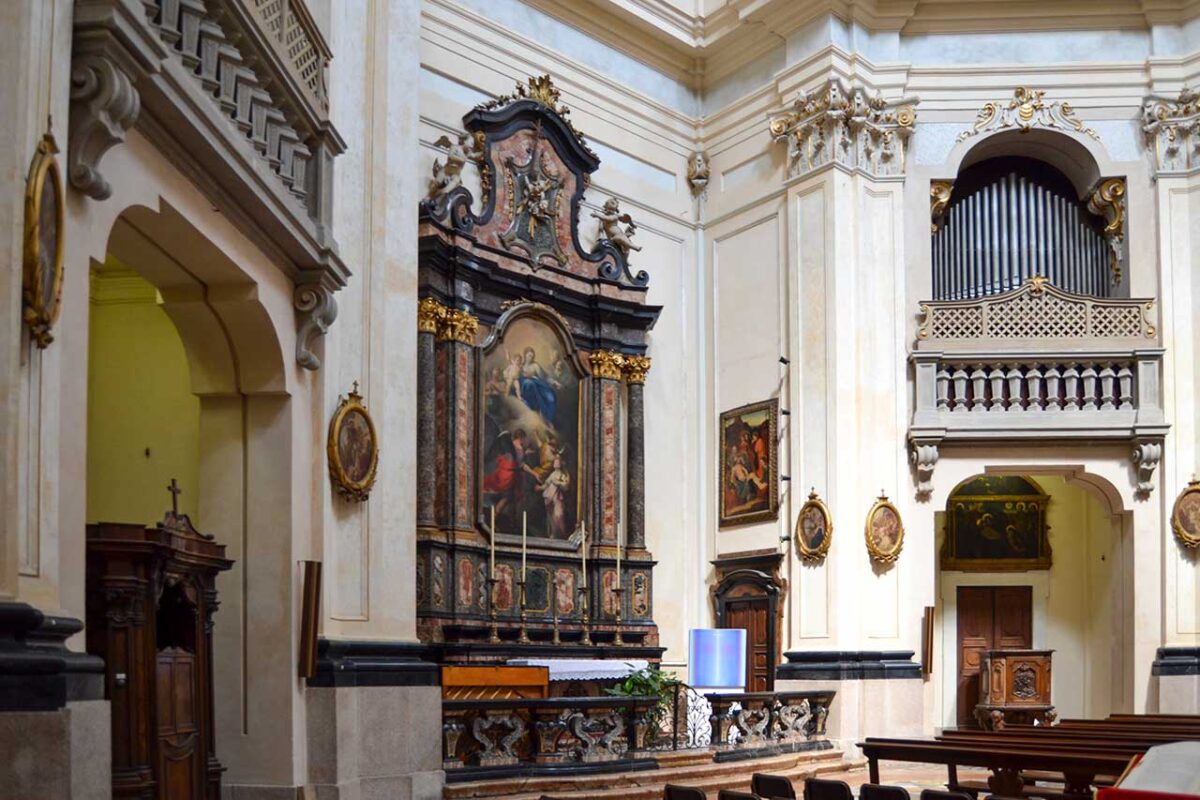
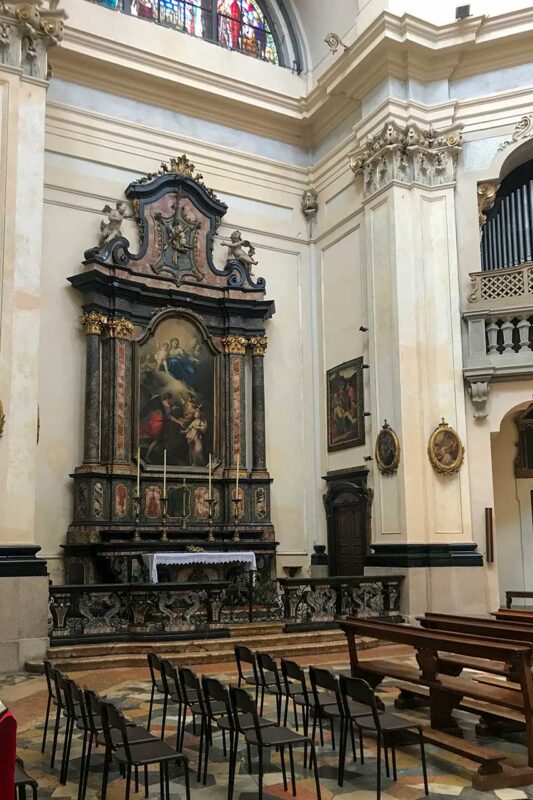
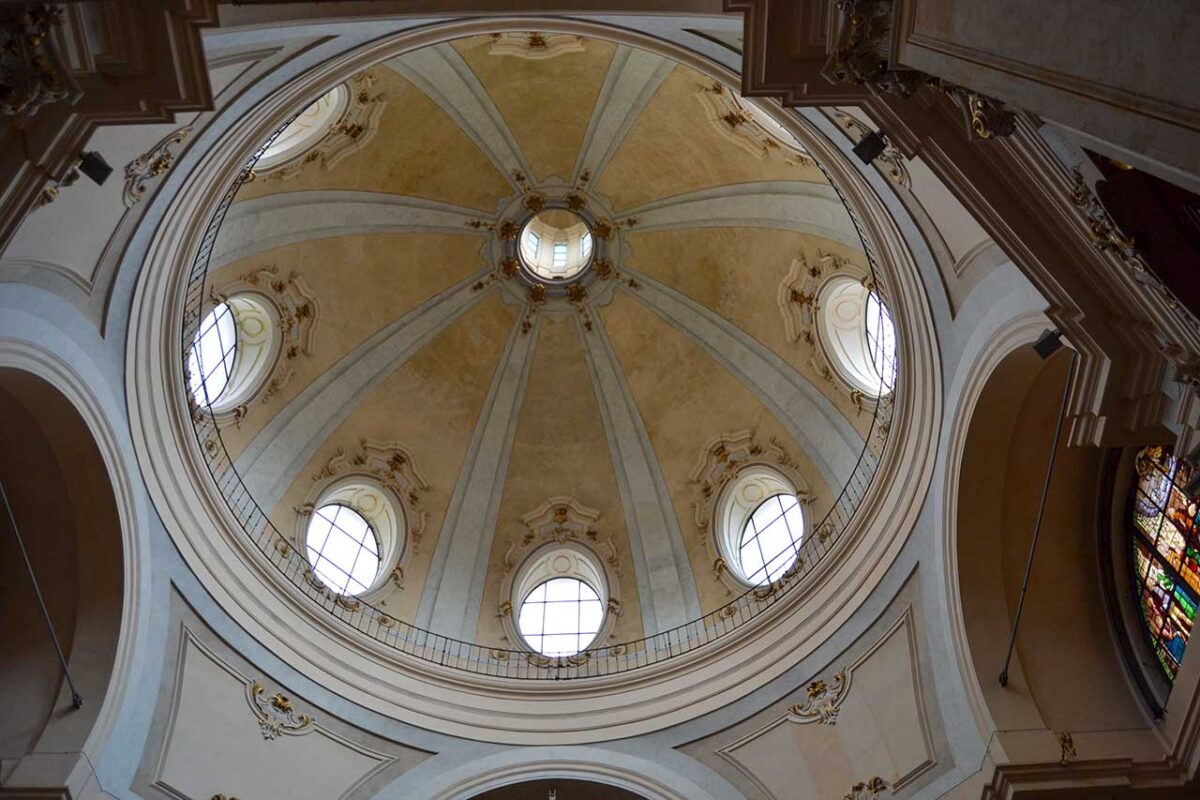
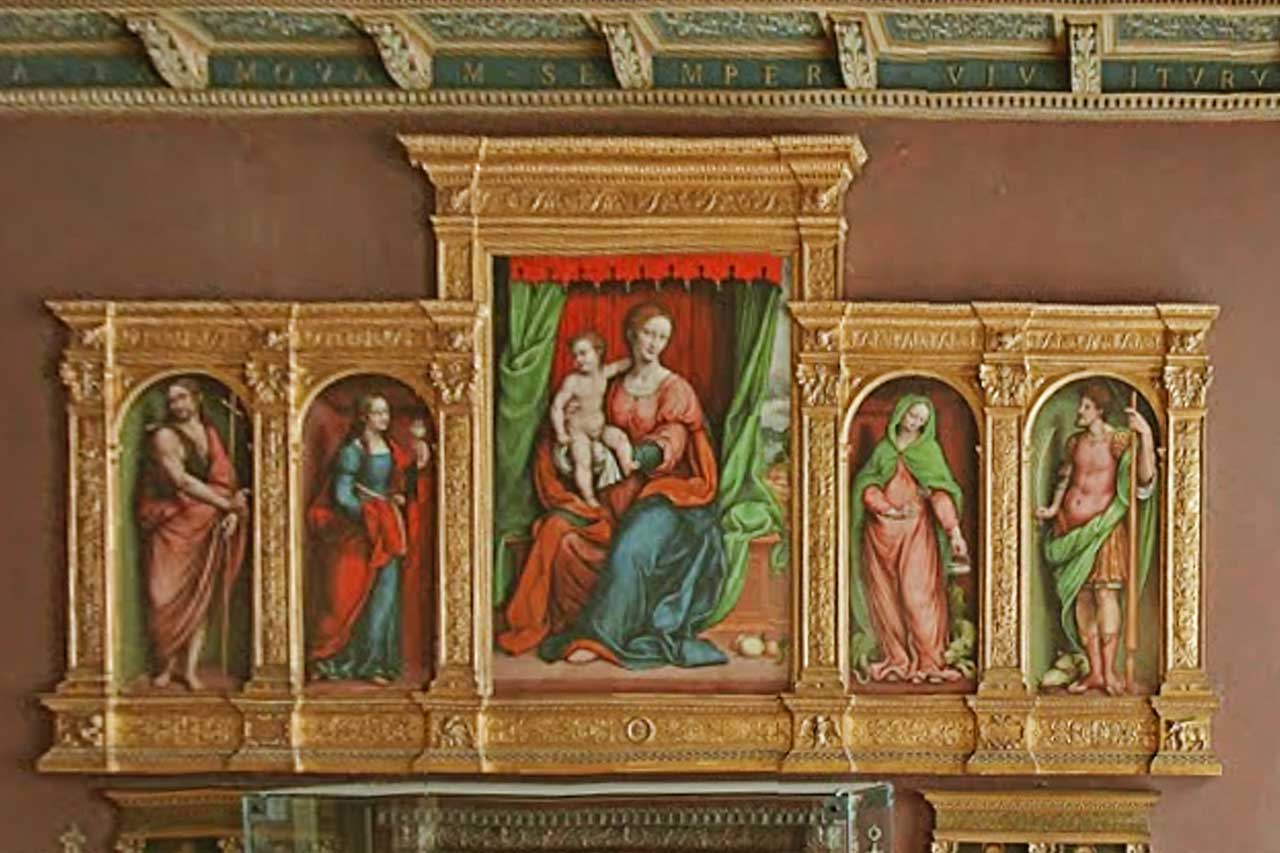
Inside the Church of San Bernardino alle Ossa in Milan, in addition to the famous ossuary chapel, one can admire several works of art that artistically enrich this unique place. Among these works stand out:
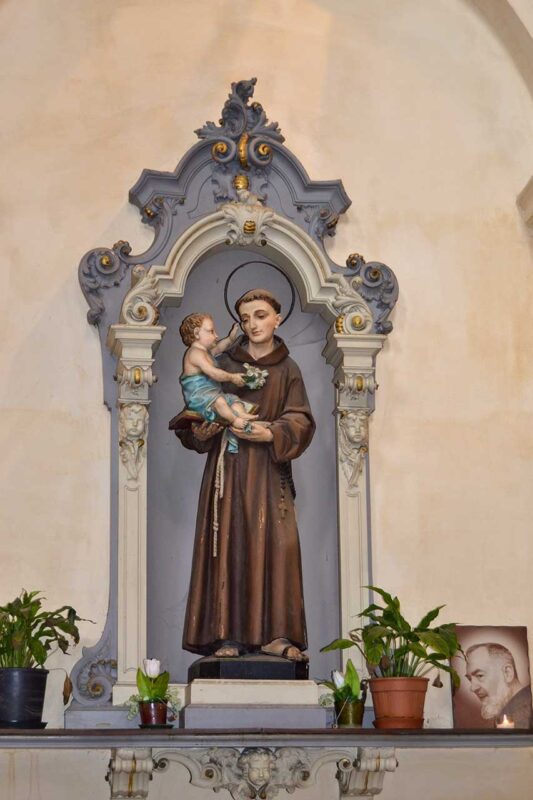

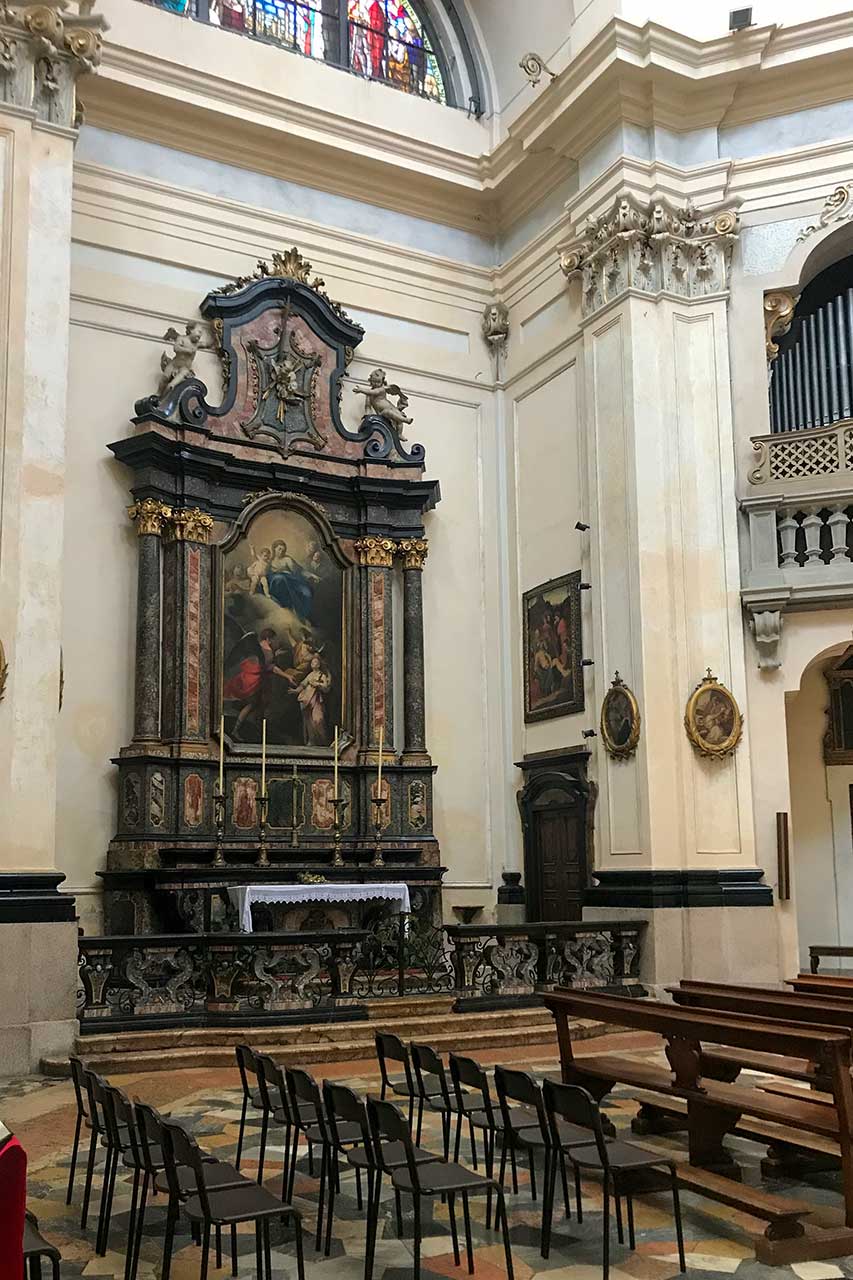
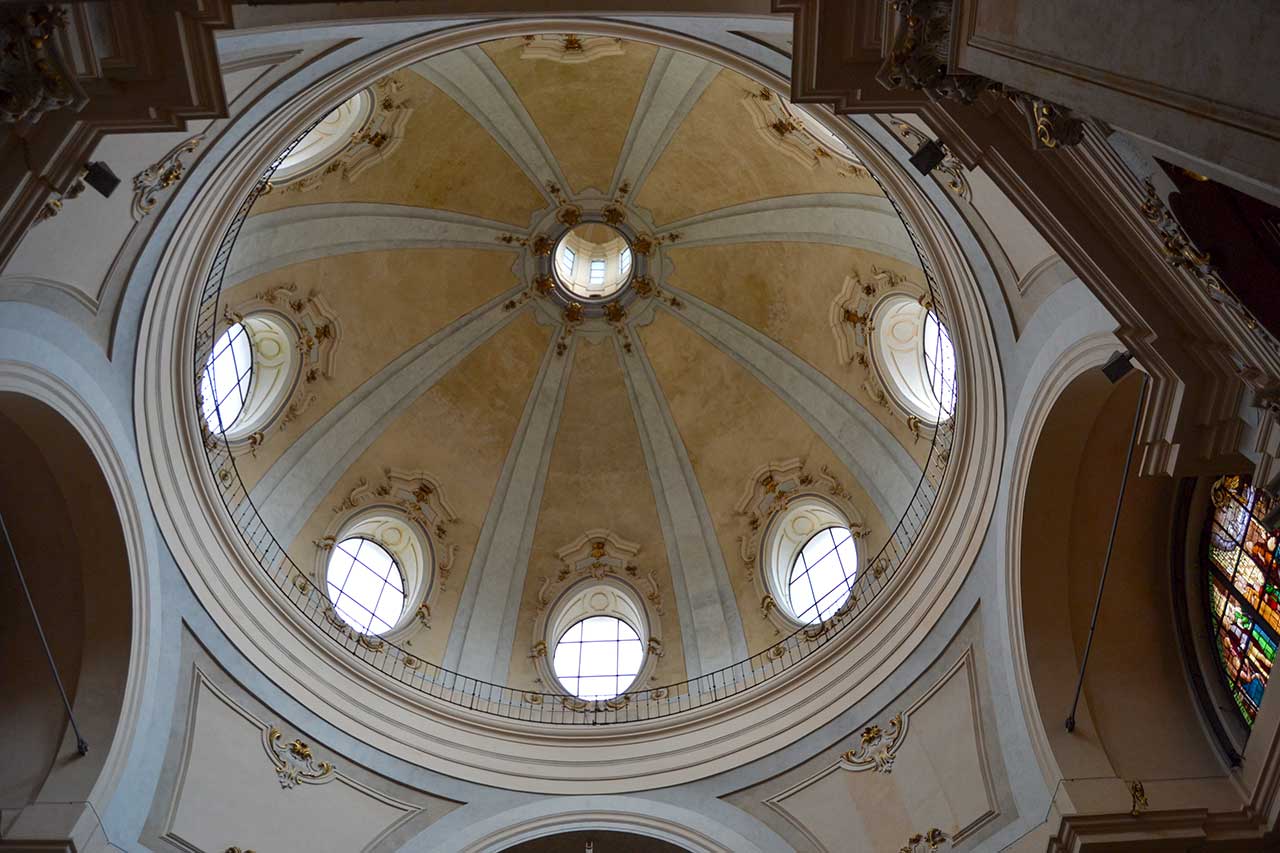
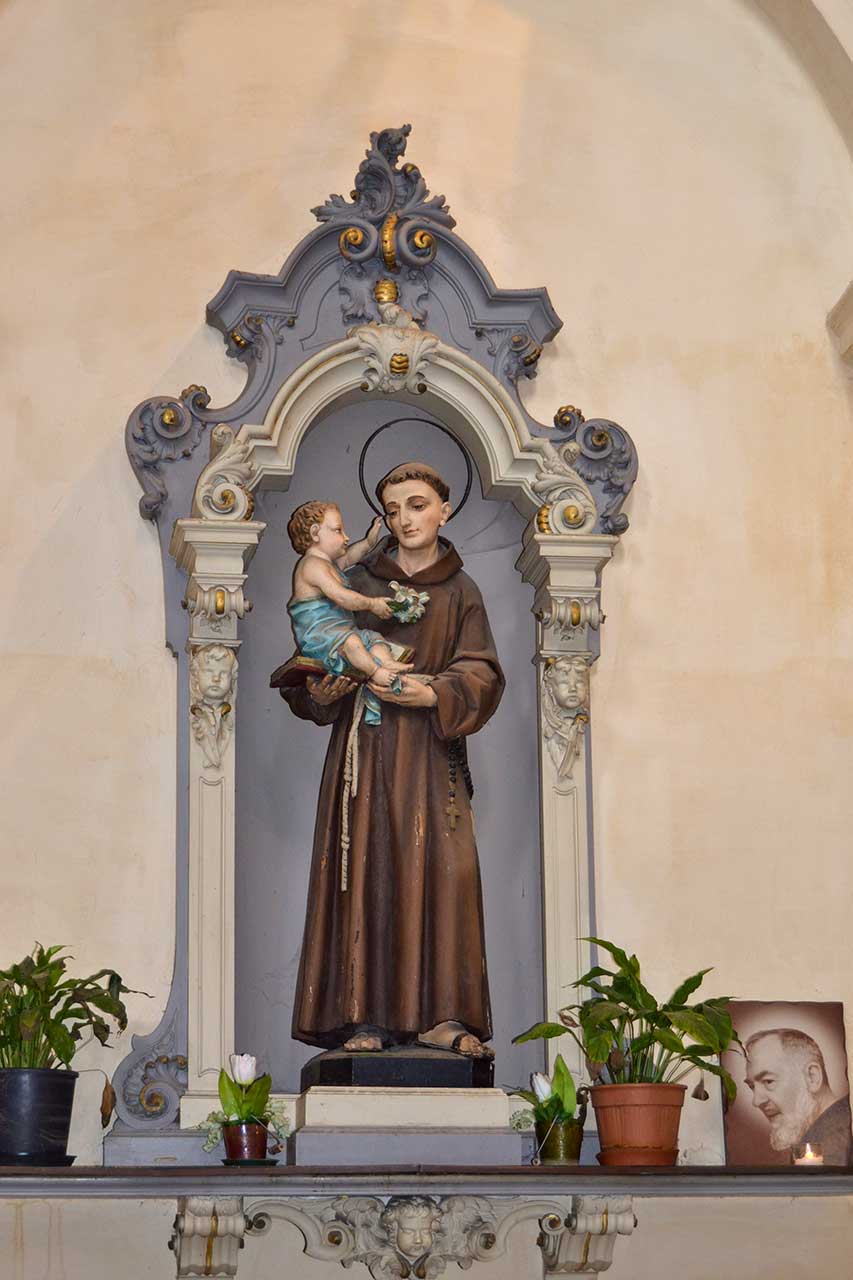
Legends and Curiosities
San Bernardino alle Ossa draws attention not only for its history but also for local legends tied to All Souls’ Day.
According to local tradition, on the night of November 2nd—Giorno dei Morti (All Souls’ Day)—a young girl buried in the ossuary would come to life and dance with the other skeletons. While this is clearly folklore, it perfectly captures the atmosphere that this place evokes, even without the myths.
Quite unexpectedly, among all these remains, you can find the tomb of the Veragua family—descendants of Christopher Columbus himself. Beneath the surface of daily Milanese life, there are often such surprising connections to the wider world and ancient empires.
The influence of this site reached far beyond the borders of Italy; the famous Capela dos Ossos in Évora, Portugal, was actually modeled after the Milanese original. Those familiar with the site in Portugal will find the same kind of metaphysical chill here in Milan, though presented in a much more condensed, almost “stifling” form.
San Bernardino is located just a ten-minute walk from the Cathedral, near the M3 Missori metro station. While you’re in the area, it’s worth pairing your visit with the nearby Crypt of San Giovanni in Conca, where early Christian walls remain hidden beneath the modern street level. Both sites share what is most precious about Milan: authenticity, a lack of crowds, and free admission—details rarely mentioned in commercial guidebooks.
FAQ: Frequently Asked Questions about San Bernardino alle Ossa
Is there an admission fee for the ossuary?
Admission is free. You may leave a donation in the candle offering box at the entrance or inside the chapel. No one is authorized to collect fees on behalf of the sanctuary.
Is the ossuary open on Sundays?
No. The Bone Chapel is closed on Sundays. The church itself is open on Sundays from 9:30 AM to 12:00 PM. If you specifically want to see the ossuary, plan your visit for Monday through Saturday.
Are children allowed in the chapel?
There is no formal age restriction. However, the atmosphere is quite intense. It is best to use your own judgment to decide if your child is emotionally ready for the experience.
How much time should I allow for the visit?
The chapel itself takes about 15–20 minutes. Including the main church and a moment of quiet reflection, plan for about 30 minutes. It can easily be combined with other nearby sights during a walk through the city center.
Can I take photos?
There is no official ban, but the rules of a place of worship apply: be quiet, discreet, and respectful. Flash photography and loud behavior are inappropriate.
Is San Bernardino alle Ossa the same as the “Skull Church in Milan”?
Yes. The San Bernardino alle Ossa chapel is the only site of its kind in Milan and is commonly known as the ‘Skull Church’ or the ‘Skull Chapel’.
I lived in Milan for 18 years, and it was there that I came to know the city’s daily life best - not just its landmarks, but also its rhythm, its habits, and its less obvious sides. Today I live in Wrocław, but I still return to Milan regularly.