


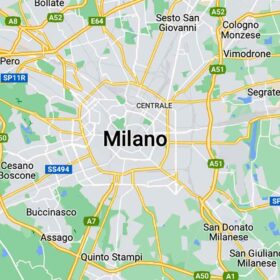
 The Geographic Location of Milan – A Strategic Spot in the Heart of Europe
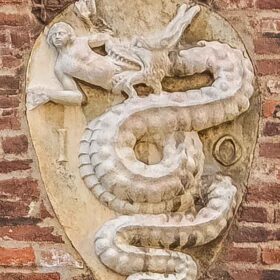 Milan’s coat of arms
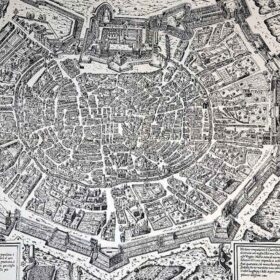 History of Milan
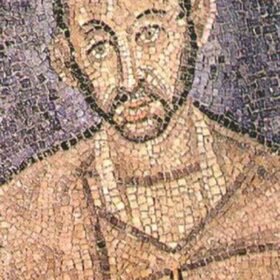 Saint Ambrose
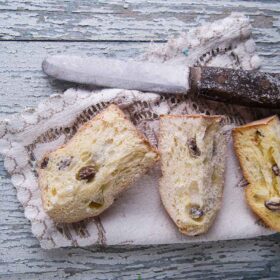 History of Panettone
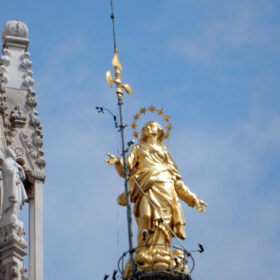 Madonnina
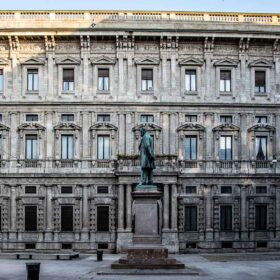 City Hall
 Milanese cuisine


There are places in Milan that you visit “in passing.” The Basilica of Saint Ambrose is not one of them. It is one of the oldest churches in the city, the foundation of the entire Ambrosian tradition, and a place compared to which the Duomo is a relatively new building. Built between 379 and 386 AD by Bishop Ambrose himself – the patron saint of Milan – it has stood in the same spot for nearly sixteen centuries. Milan has changed around it many times.
Visiting it with the feeling that “just a photo of the facade is enough” is a major mistake. The Golden Altar, 4th-century mosaics, the crypt with the remains of saints, and the so-called “Devil’s Column” – all of this is inside. Moreover, since late 2025, a brand-new museum route has been added: Ambrosius. Il Tesoro della Basilica. Ambrosius. Il Tesoro della Basilica .
Before you go in – here are a few things worth knowing.
Basic Information
Opening hours
Basilica (Free Admission):
|
Day |
Hours |
|---|---|
|
Monday – Saturday |
10:00 AM – 12:00 PM and 2:30 PM – 6:00 PM |
|
Sunday |
15:00-17:00 |
Ambrosius – Basilica Treasury (Paid):
|
Day |
Hours |
|---|---|
|
Monday – Saturday |
9:30 AM – 12:30 PM and 2:30 PM – 5:30 PM |
|
Sunday |
14:30-17:00 |
Check current ticket prices and book online: ambrosiusiltesorodellabasilica.it
History of the Basilica
The Basilica of Saint Ambrose was founded in the late 4th century on the site of an early Christian cemetery and for centuries served as the model for Romanesque architecture throughout Lombardy.
Ambrose, the Bishop of Milan during the time the city served as the capital of the Western Roman Empire, chose to build on land outside the city walls — specifically where Christian martyrs were buried. This led to the church’s original name: Basilica Martyrum, or the Basilica of Martyrs. Ambrose himself was laid to rest here after his death in 397 AD.
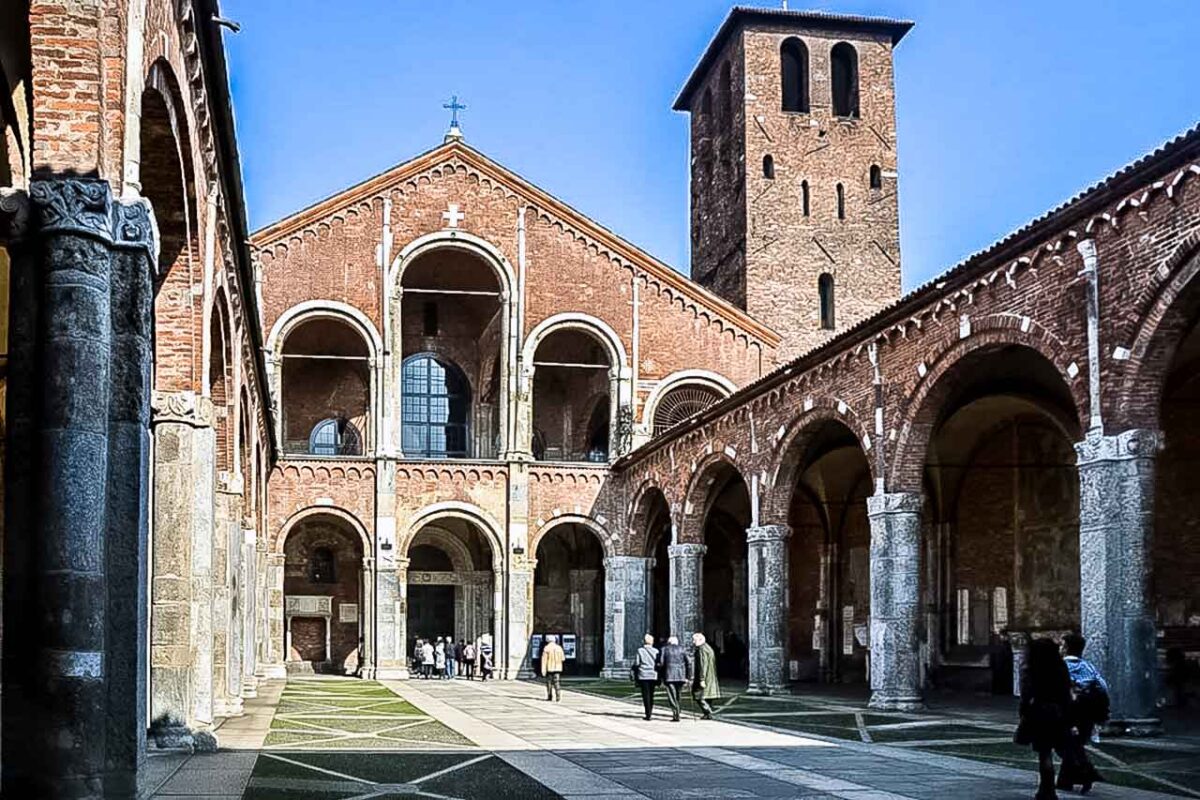
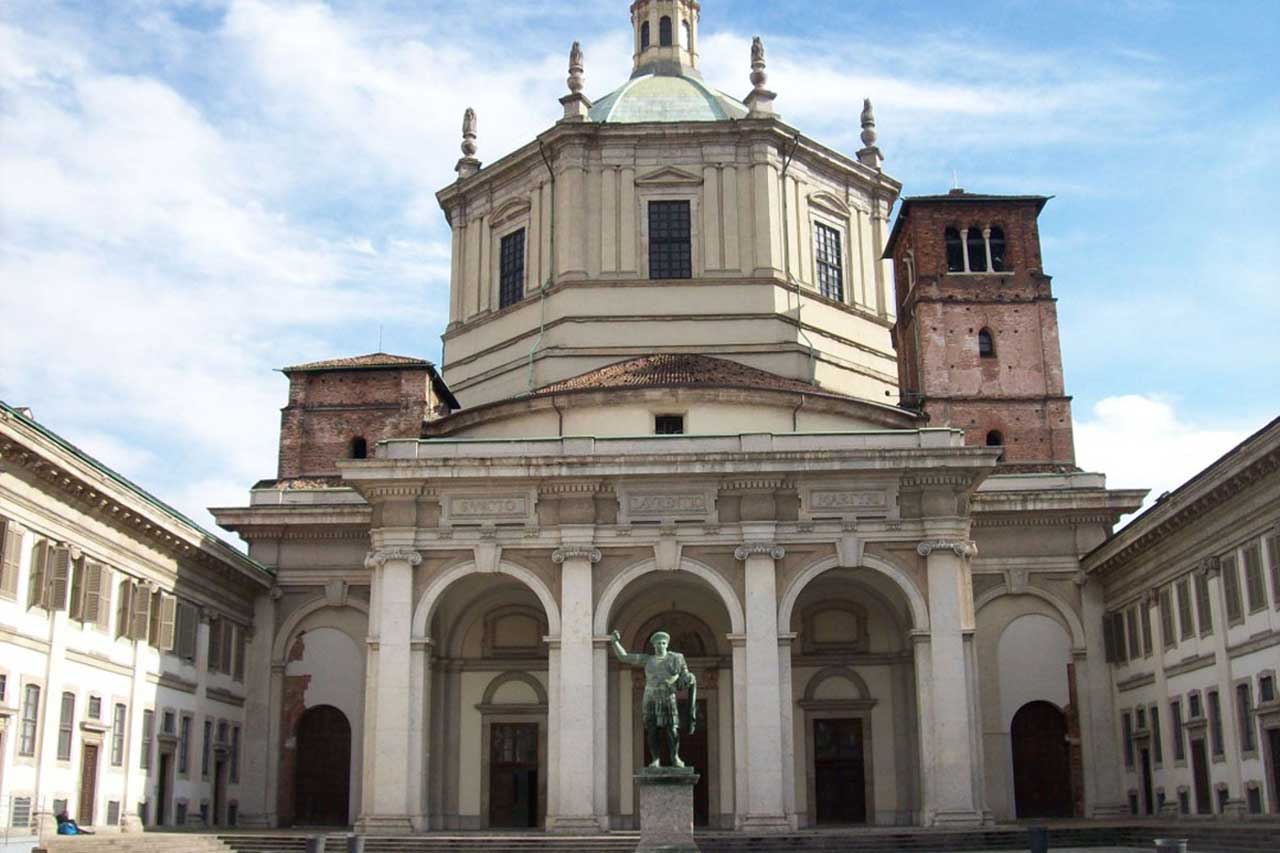
The building underwent several reconstructions over the centuries. The turning point occurred between the 11th and 12th centuries, when the basilica acquired its current form – Romanesque, with a square atrium called a quadriportico, two asymmetrical bell towers, and an austere brick facade. The taller tower (campanile dei Canonici) dates back to the 12th century; the shorter one (campanile dei Monaci) is from the century prior.
In September 1395, Gian Galeazzo Visconti was crowned the first Duke of Milan in front of the basilica. In 1943, Allied bombings severely damaged the atrium and the dome; reconstruction efforts lasted through the late 1940s.
A fun fact to know before you enter: the bell of the taller tower tolls every Friday at 3 AM in memory of the Passion of Christ. An ancient tradition that continues to this day.
What to See Inside the Basilica of St. Ambrose?
The interior of the basilica houses several world-class masterpieces spread across three naves and the presbytery; it is worth entering with a map and taking your time.
Quadriportico – The Entrance Atrium
Before crossing the church threshold, take note of the large open atrium with cloisters on four sides. It is one of the few surviving examples of an early Christian quadriportico in Italy. Fragments of sarcophagi and tomb slabs are embedded in its walls and floor.
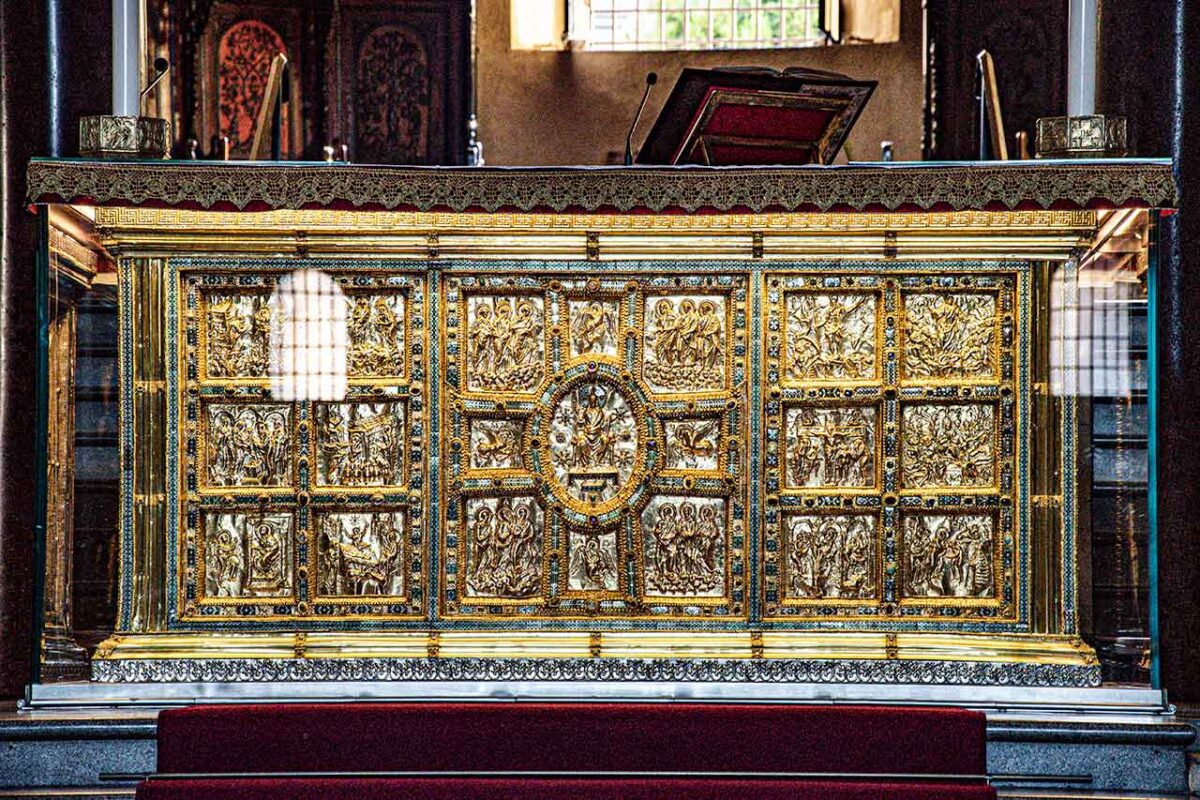
The Golden Altar (Altare d’oro)
A masterpiece of early medieval goldsmithing, commissioned by Archbishop Angilbert II between 824 and 859 AD and crafted by the goldsmith Vuolvino. The four sides are decorated with scenes from the lives of Saints Gervasius and Protasius (the gold front side) and the life of Saint Ambrose (the silver back side). The altar is protected by a glass case — you can view it from every angle.
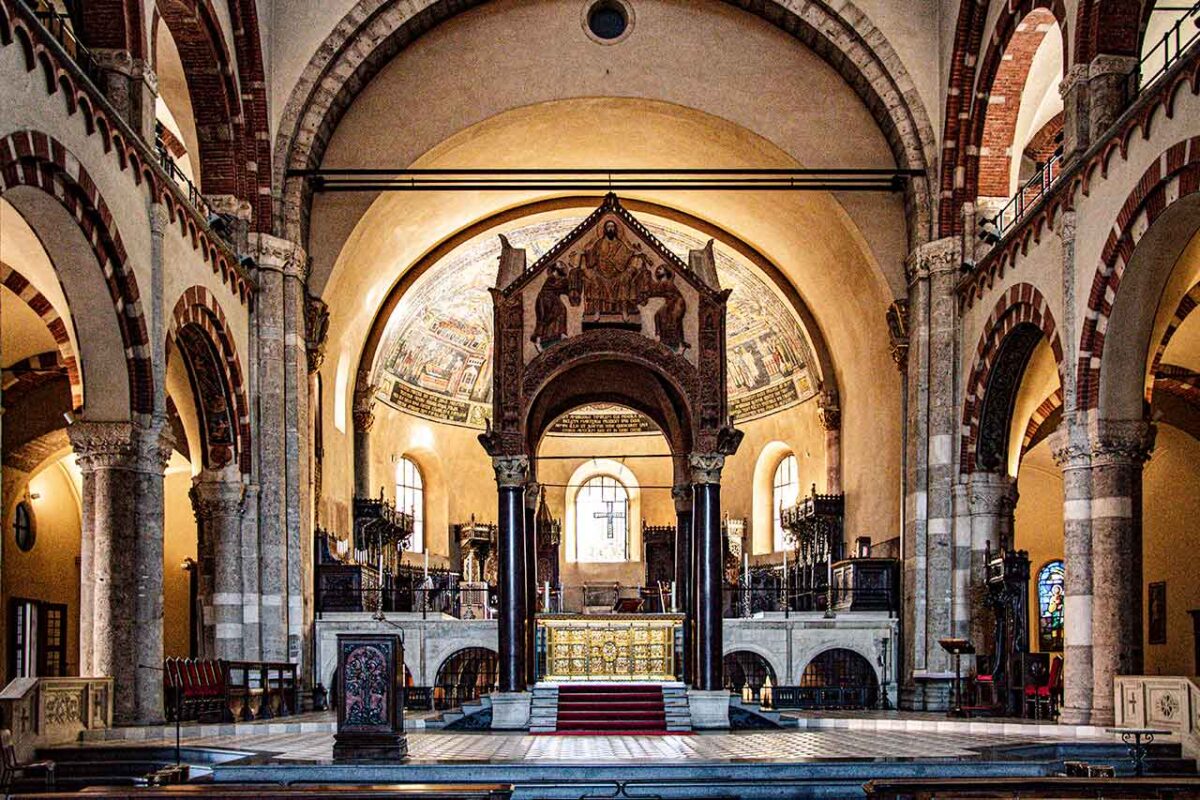
Ciborio – The Altar Canopy
Hovering above the altar is a four-sided canopy supported by four columns from the 8th–9th century. The mosaics on its surface are among the rare surviving examples of Lombard-Byzantine art. This is a rarity on a European scale.
The Ambo – The 1201 Pulpit
One of the most beautiful Romanesque pulpits in Italy. Constructed using fragments of an older 4th-century sarcophagus, it was rebuilt in 1201. Look at the details: the reliefs and small columns that support the stairs.
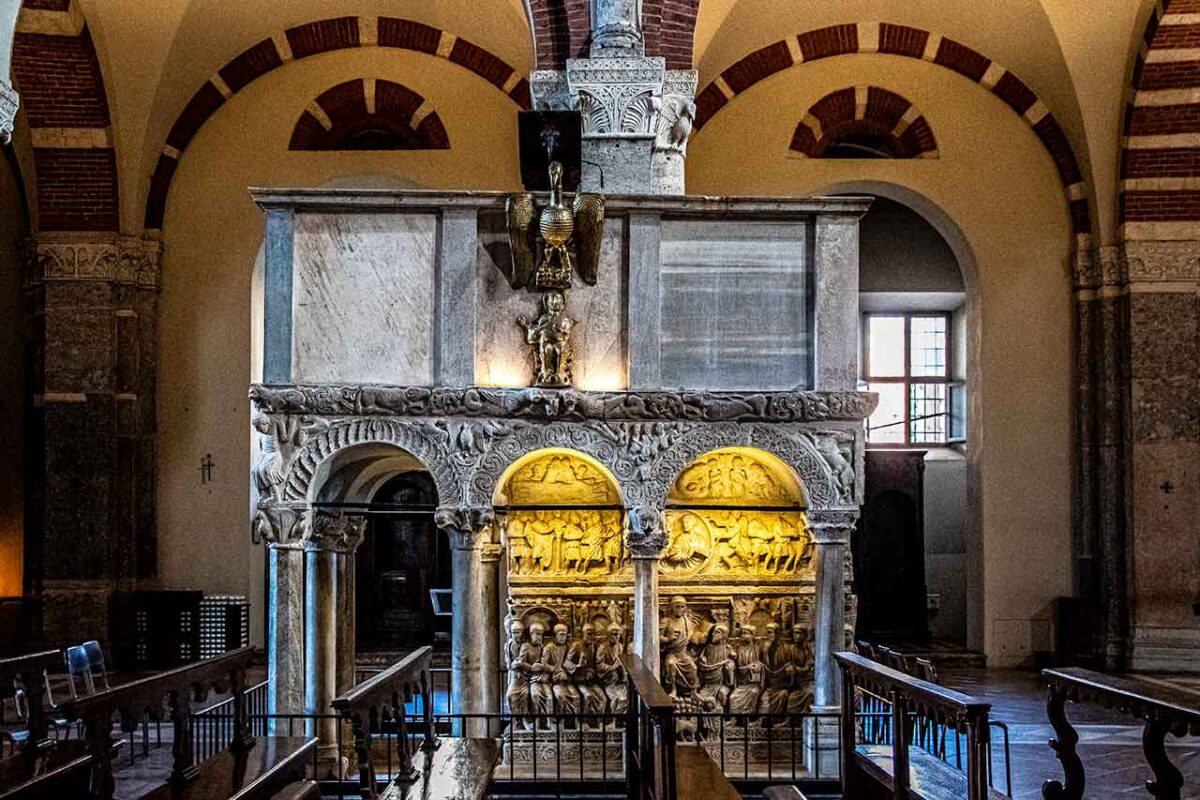
The Sarcophagus of Stilicho (Sillicone)
Located beneath the ambo is a 4th-century sarcophagus, for centuries attributed to the general Stilicho. While historians today question this attribution, the sculptural work itself is outstanding: all four sides are covered in biblical scenes in high relief.
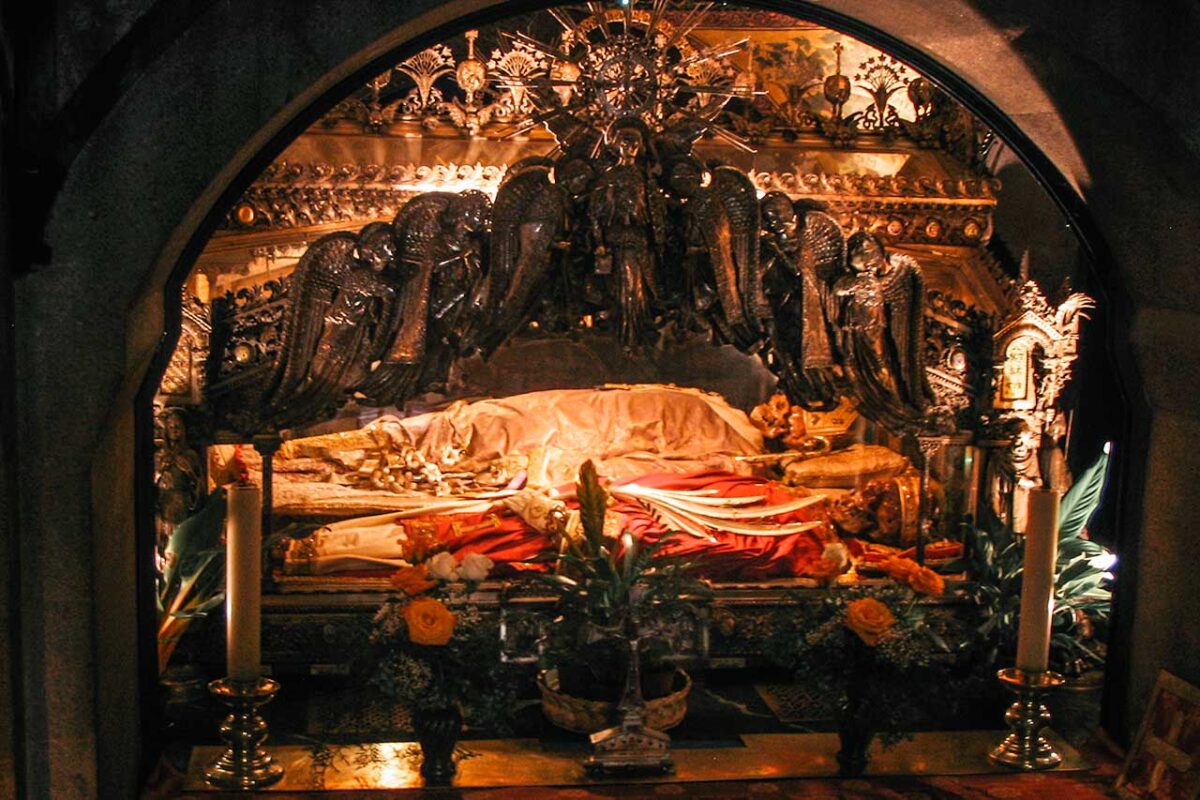
The Crypt with Relics
Three glass coffins placed in the crypt beneath the high altar contain the mortal remains of Saints Ambrose, Gervasius, and Protasius. They are displayed in ornate liturgical vestments. You can reach the crypt via narrow steps leading down from the presbytery.
Sacello di San Vittore in Ciel d’Oro
A small chapel attached to the right nave, almost invisible from the outside. Inside, the dome is covered in 5th-century mosaics on a gold background — featuring the oldest surviving portrait of Saint Ambrose. It is a contemplative space that is easy to miss if you are rushing.
Apse Mosaic
The massive mosaic in the main apse depicts Christ surrounded by Milanese saints. It dates back to the 4th and 8th centuries; it was restored after wartime bombings but still retains original fragments.
9th-Century Marble Bishop’s Throne
Located in the left nave is a stone bishop’s throne, which is still used today for certain liturgical ceremonies.
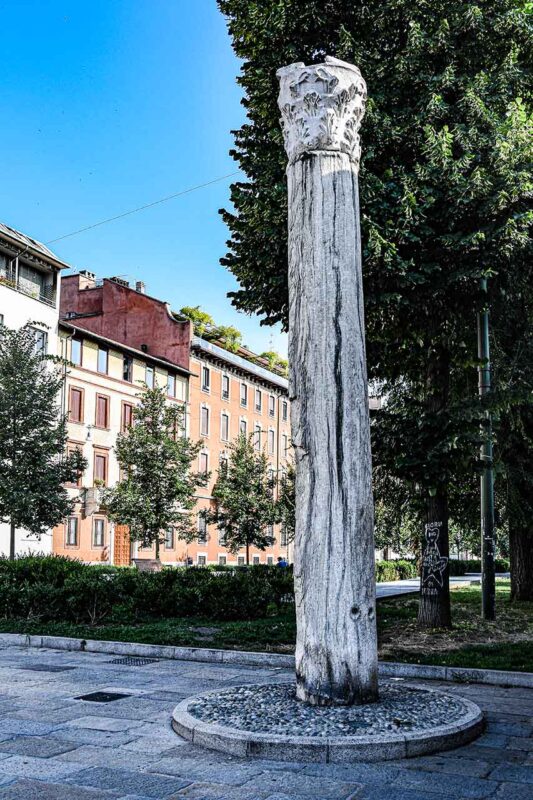
The “Devil’s Column” outside the Basilica
While not technically part of the interior, this is worth knowing before you go in: near the entrance stands a column with a Corinthian capital that Milanese locals have called the colonna del diavolo for centuries. According to legend, two holes in the shaft are marks left by the devil’s horns when he tried to strike down Bishop Ambrose. Archaeologists have a slightly more grounded explanation, but the legend remains alive.
Ambrosius – The New Museum Tesoro della Basilica (Basilica Treasury)
Opened in December 2025, the Ambrosius Museum represents the biggest change in how the basilica is visited in years – the new route connects the treasury, the San Vittore chapel, and medieval monastery halls into one cohesive, narrative experience.
The museum has a separate entrance, independent of the basilica: located at Piazza Sant’Ambrogio 23, right next to the Colonna del Diavolo. You can buy tickets at the on-site box office or online via Vivaticket. Admission to the church itself remains free.
The route passes through three main spaces:
The museum also offers educational programs for schools and families, workshops, and guided tours (mandatory reservation).
Prices and detailed schedule: ambrosiusiltesorodellabasilica.it.

If you plan to visit both Ambrosius and the basilica, enter the museum first (opens at 9:30 AM) and then proceed to the church — the museum route provides essential context for what you will see inside.
How to Get to the Basilica
The Basilica of Saint Ambrose is located in central Milan, not far from Sforza Castle and The Last Supper — it is easy to combine with other attractions in this part of the city.
Other nearby attractions:
This section of Milan can easily be explored on foot in a single afternoon.
How Much Time Should You Set Aside?
Sightseeing the basilica alone (without the museum): 45–60 minutes, if you want to truly look at all the elements rather than just the golden altar and the crypt.
With the Ambrosius Museum: 2–2.5 hours total. The museum is not large but is “content-dense.”
When is the Best Time to Visit?
The basilica is popular but rarely as crowded as the Duomo. You can easily arrive at 10:00 AM on a Monday or Tuesday and have the interior practically to yourself.
Avoid: Times of Mass (check the current schedule at basilicasantambrogio.it) and December 7th. On December 7th, the feast day of Milan’s patron saint, Sant’Ambrogio, huge crowds gather at the basilica, including the traditional
Oh Bej! Oh Bej! fair by the walls of Sforza Castle. While the fair is worth seeing, the basilica will be packed and focused on liturgy that day.
FAQ
Is there an entrance fee for the basilica?
No, entrance to the basilica itself is free and does not require a reservation for individual visitors. There is a fee for the Ambrosius Museum (Basilica Treasury), which has a separate entrance at Piazza Sant’Ambrogio 23.
How do I get to the Basilica of St. Ambrose by metro?
Use the Sant’Ambrogio station on Line M2 (Green) or Line M4 (Blue). The exit leads directly to Piazza Sant’Ambrogio — the basilica is visible from the stop.
Can I take photos inside the basilica?
Yes, photography is allowed. Please be respectful of those praying and do not use a flash near the artifacts.
Is the Basilica of St. Ambrose closed on Sundays?
The church is open on Sundays but with limited hours: 3:00 PM – 5:00 PM. The Ambrosius Museum operates on Sundays from 2:30 PM – 5:00 PM. In the morning, the basilica is reserved for Mass and is not open for sightseeing.
How long does a visit take?
The basilica alone: 45–60 minutes. With the Ambrosius Museum: about 2–2.5 hours. If you add nearby attractions (San Lorenzo, the Science Museum), plan for a full, pleasant day in this part of Milan.
Sources:


I lived in Milan for 18 years, and it was there that I came to know the city’s daily life best - not just its landmarks, but also its rhythm, its habits, and its less obvious sides. Today I live in Wrocław, but I still return to Milan regularly.