


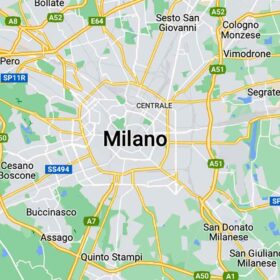
 The Geographic Location of Milan – A Strategic Spot in the Heart of Europe
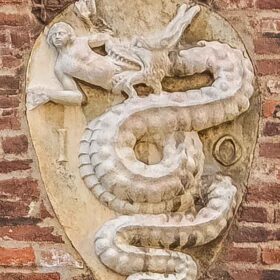 Milan’s coat of arms
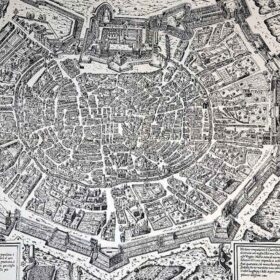 History of Milan
 Saint Ambrose
 History of Panettone
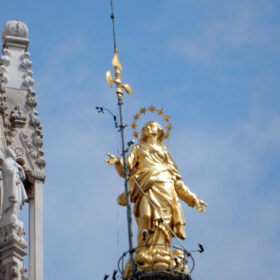 Madonnina
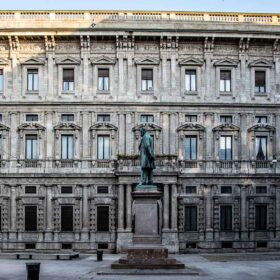 City Hall
 Milanese cuisine


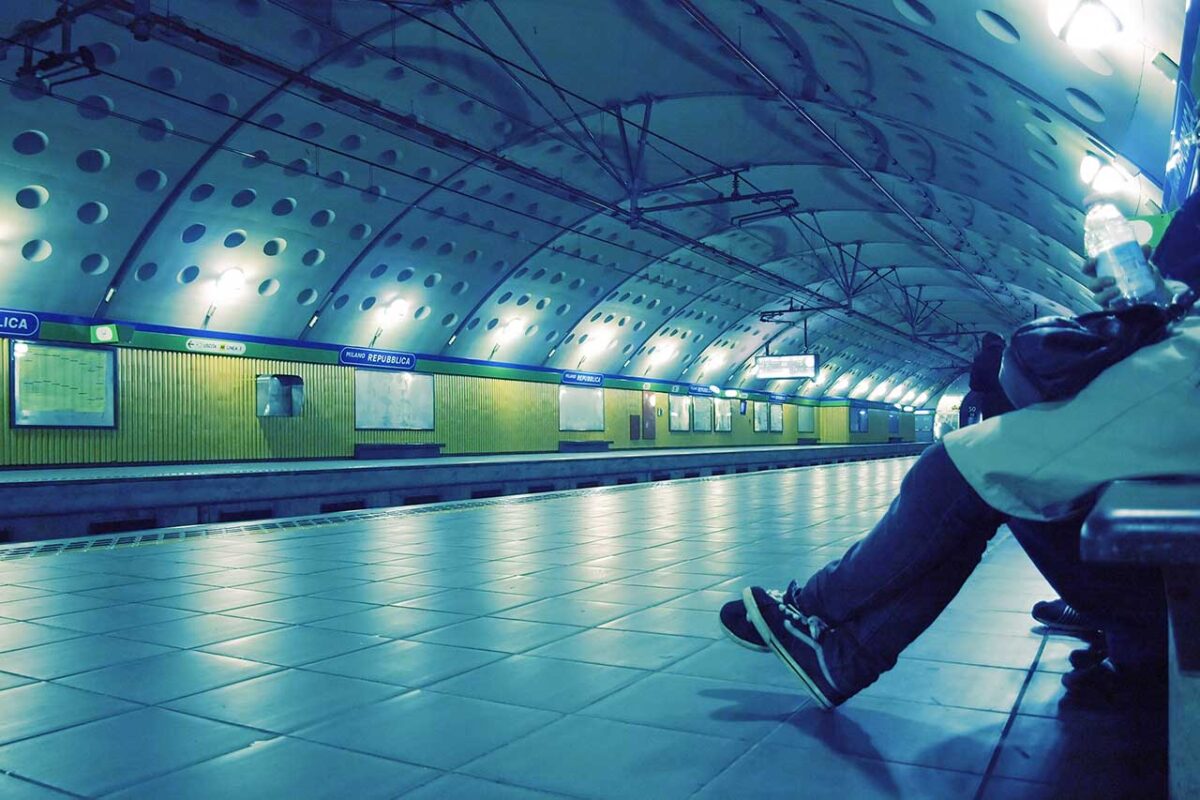
The ATM strike in Milan is usually announced in advance and has guaranteed operating hours, but outside of these hours, the metro, trams, and buses may operate randomly.
You’re planning a weekend in Milan and suddenly find out there’s a public transport strike scheduled for the day you arrive. Or maybe you’re already standing on the Duomo metro platform wondering why no train has shown up for half an hour. Public transport strikes are part of life in Italy, and sooner or later, every tourist and resident will deal with one.
In Milan, a sciopero (strike) isn’t some catastrophic event – it’s just how the city works sometimes. Metro, tram, and bus workers regularly organize protests, and Italian law gives them broad rights to express their grievances. For tourists who’ve planned their Milan itinerary down to the minute, this sounds terrifying. But here’s the thing: with the right preparation, a strike doesn’t have to ruin your trip.
Why Milan strikes matter more than you think
Strajki są częste i potrafią zablokować dojazdy do atrakcji i na lotniska; bez sprawdzenia ATM łatwo stracić czas i pieniądze.
Strajki we Włoszech to efekt silnych związków zawodowych i prawnej ochrony prawa do protestu. W Mediolanie dotyczą głównie metra, tramwajów i autobusów obsługiwanych przez ATM (Azienda Trasporti Milanesi). Mogą również obejmować pociągi regionalne Trenord, choć rzadziej wpływają na dalekobieżne połączenia Trenitalia czy Italo.
Here’s the most important thing to know: strikes are almost always announced in advance, usually at least 5 days ahead. The problem? Tourists don’t know to check. You research opening hours for The Last Supper, book tickets to the Pinacoteca di Brera, but nobody reminds you to check the ATM website for the strike calendar.
Milan strikes vary in scale – most last either 4 hours or a full day (24 hours). They might affect all forms of transport at once or just specific types (like only trams). How often? Depending on the year and social tensions, anywhere from a handful to a dozen or more strikes annually.
What strikes actually look like on the ground
Picture this: you head down to the Lanza metro stop one morning to catch a train to Milano Centrale station. The ticket machine works fine, the turnstiles are open, but the display board shows a cryptic message in Italian instead of “next train in 2 minutes.” People are standing around waiting, but nobody knows if a train will actually come.
That’s a strike in action. It doesn’t mean the city grinds to a halt, but it does mean unpredictability. Some metro lines run, others don’t. Tram #1 might come every half hour instead of every 10 minutes, or the airport bus might not leave the depot at all. Information at stations can be unclear, delayed, or only in Italian.
How it works legally
Italian law requires that during public transport strikes, fasce di garanzia – guaranteed service hours – must be maintained. This is a compromise between workers’ right to strike and residents’ and tourists’ right to get around the city.
Outside the guaranteed hours, service is limited or completely suspended. In practice, if a strike runs from 8:45 AM to 3:00 PM and you’re planning to sightsee during that time, expect serious problems.
Italian law requires that during public transport strikes, fasce di garanzia – guaranteed service hours – must be maintained. This is a compromise between workers’ right to strike and residents’ and tourists’ right to get around the city.
Outside the guaranteed hours, service is limited or completely suspended. In practice, if a strike runs from 8:45 AM to 3:00 PM and you’re planning to sightsee during that time, expect serious problems.
What are fasce di garanzia and how do they work during a strike?
Guaranteed hours are periods when transport is supposed to operate at a minimum, but it can be crowded, services are less frequent, and there is no certainty on the outskirts.
Są to prawnie wymagane przedziały czasu, zwykle w porannym i popołudniowym szczycie.
Most commonly:
Exact hours vary between carriers and can change depending on the type of strike, so always check the announcement for the specific strike on the ATM or Trenord website.
Why guaranteed hours aren’t a magic solution
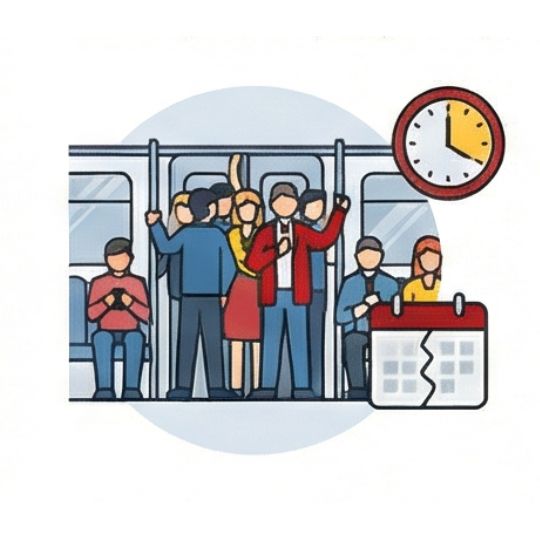
A lot of people think: “OK, there are guaranteed hours, so I’ll just travel then and problem solved.” Unfortunately, reality is more complicated.
First, guaranteed hours get crowded. Every resident is trying to get to work in the same narrow window, so the metro feels like a sardine can. For tourists with luggage or on a hot August afternoon, it’s not pleasant.
Second, service runs less frequently than normal. Instead of metro trains every 2-3 minutes, they come every 10-15 minutes. Connections become tricky because you might miss your transfer.
Third, guaranteed hours don’t offer 100% certainty outside the city center. Some peripheral lines might not run at all, even during theoretically protected hours. This especially affects trams and buses in outlying neighborhoods.
Third, guaranteed hours don’t offer 100% certainty outside the city center. Some peripheral lines might not run at all, even during theoretically protected hours. This especially affects trams and buses in outlying neighborhoods.
Where to check exact hours for a specific strike
Sprawdź komunikat o strajku na atm.it, w aplikacji ATM Milano i w mit.gov.it; tam znajdziesz zakres, datę i dokładne fasce di garanzia.
Your main source: the official ATM website (www.atm.it). In the “Informazioni” or “Avvisi” section, you’ll find announcements about planned strikes, their scope, and exact guaranteed hours.
You can also check:
Announcements are usually published at least 5 days before the strike, but the heaviest information flow appears 2-3 days ahead.
What usually works the worst: the subway, trams, or buses?
Podczas strajku najbardziej cierpi metro i tramwaje; autobusy bywają lepsze, ale są nieprzewidywalne, więc planuj dojazdy bez przesiadek.
Metro – fast, but often limited during strikes
The metro is the backbone of Milan’s transport system. Five lines (M1 red, M2 green, M3 yellow, M4 blue, M5 purple) carry millions of passengers daily. During strikes, the metro is often hit hardest, especially outside guaranteed hours.
In practice, this means you might go down to a station and wait 20-30 minutes for a train, or not see one at all. Line M1 (which connects Centrale station with the center and Duomo) is a priority during guaranteed hours, so it has the best chance of running. M4 and M5, as the newest lines, sometimes have better service during strikes, but that’s not a rule.
Trams – the most unpredictable
Milan’s trams are iconic, but during strikes they become the least reliable form of transport. Why? Because they’re operated by the same ATM workers who are most often on strike.
Tram lines 1, 2, 9, 10, 14, 19 (which run through the center and main tourist attractions) can be completely suspended outside guaranteed hours. Even during those hours, service is sparse and random.
If your sightseeing plan relies on trams, switch to walking or metro (if it’s running) during a strike.
Buses – sometimes work better, but unpredictable
Buses are the most flexible element of the system. Depending on the type of strike and union decisions, they might run more often than trams (because some drivers don’t join the protest) or not leave the depot at all.
Airport buses (line 73 to Linate, X73 to Malpensa) theoretically have priority, but don’t count on regularity during a strike. If you have a flight, don’t risk it – book a private transfer or taxi in advance.
How does the strike affect travel to Malpensa, Linate, and Bergamo?
Największy stres to dojazd na lotnisko: nawet gdy Malpensa Express jedzie, możesz utknąć, bo nie dojedziesz metrem lub tramwajem na Centrale.
Public transport strikes affect access to all three airports serving Milan:
Malpensa – biggest risk
Getting to Malpensa relies mainly on the Malpensa Express (train from Centrale station, about 50 minutes, roughly €13). This train is operated by Trenord, not ATM. In theory, ATM strikes don’t affect it. Check current prices and schedules on the Trenord and malpensaexpress.it websites.
But here’s the catch: to get to Centrale station, you need to use ATM metro (line M2 or M3). If the metro isn’t running, you’re stuck.
Plan B during a strike:
Linate – closest but still a challenge
Linate is closest to the center – the M4 metro from San Babila station to the airport (Linate Aeroporto station) takes about 12-15 minutes and costs €2.20. The metro goes directly to the arrivals/departures hall. During a strike, the M4 line might not run or only operate during guaranteed hours.
Alternatives:
Bergamo Orio al Serio – toughest to reach
This airport is mainly served by buses from Centrale station (Terravision, FlixBus, Orio Shuttle). Travel time 50-60 minutes, cost around €5-10. During ATM strikes, the problem is the same as with Malpensa: how to get to Centrale station.
Solution: If you’re staying near Centrale, walk. If farther, book a taxi/transfer a day early or consider staying in a hotel near the station.
Practical advice for all airports
If you know about a strike in advance and have a flight during hours when transport isn’t running:
When and how often should you check strike information so you aren’t caught off guard?
Sprawdzaj 5-7 dni przed wyjazdem, potem 2 dni przed i rano w dniu strajku; nie ufaj plotkom, tylko oficjalnym komunikatom przewoźników.
Official sources – where to look
Trenord (trenord.it) If you’re planning to get to Malpensa or travel outside Milan, check the Trenord site. Regional train strikes are separate from ATM, though sometimes they overlap.
What not to do when checking information
Don’t rely on:
If you see strike information, always verify it on the official ATM site or in local media (Corriere della Sera Milano, La Repubblica Milano).
How far ahead to check
5-7 days before your trip: First check on the ATM site. If there’s a strike announcement, you have time to modify plans.
2 days before: Second check – unions might cancel the strike or clarify hours.
Morning of the strike: Final check in the ATM app – sometimes strikes are shortened or extended at the last minute.
How to get around Milan during a strike without subways and trams?
Podczas strajku najlepiej działa plan pieszy po dzielnicach; na krótkie trasy sprawdzą się BikeMi, hulajnogi i taxi, a na dojazd na obrzeża czasem Trenord.
Walking – an underrated way to see the city
Central Milan is surprisingly compact. From the Duomo to Sforza Castle is a 15-minute walk. To Navigli – 20 minutes. To the Brera district – 10 minutes.
If you have a whole day in Milan and the weather’s good, a strike can be a great excuse to explore on foot. You’ll discover hidden courtyards, local cafes, and places you’d never see from a tram window.
Practical tip: Plan your sightseeing by neighborhoods, not scattered points across the city. For example: morning at Duomo + Galleria Vittorio Emanuele + La Scala (all within 5 minutes of each other), then walk to Brera (15 minutes) for the Pinacoteca and lunch.
BikeMi – city bikes
Milan has an excellent public bike system called BikeMi. Stations are everywhere in the center and many neighborhoods. Cost: around €6/day or around €2.50/90 minutes (check current prices at bikemi.com).
During strikes, bikes are the best alternative. The city is flat, there are bike lanes (though not everywhere), and traffic isn’t as crazy as Rome.
Note: You need a credit card and the BikeMi app (iOS/Android). Registration takes 5 minutes. Don’t wait until the day of the strike – set up your account earlier.
Electric scooters
In Milan, scooters from Lime, Tier, Dott, and others are available (operators may change, check the current ones available in the App Store/Google Play). Scattered throughout the city center, you can unlock them with an app. Cost: approx. 1€ odblokowanie + ok. 0,20-0,30€/minuta.
Scooters are great for short distances (like from your hotel near Porta Venezia to the Duomo), but remember Milan’s rules: you can’t ride on sidewalks, stick to bike lanes or the road.
Taxis and ride-sharing apps
Free Now (formerly myTaxi) is the most popular taxi app in Milan. Works like Uber, but these are licensed taxis. Standard prices by meter.
Uber is available in Milan, but more expensive than traditional taxis. On strike days, prices might spike due to high demand (surge pricing).
Bolt is often a cheaper alternative to Uber, but less available in Milan.
Practical tip: On strike days, order a taxi at least 30 minutes before you need to leave. Availability drops drastically, especially during rush hours.
Free Now (formerly myTaxi) is the most popular taxi app in Milan. Works like Uber, but these are licensed taxis. Standard prices by meter.
Uber is available in Milan, but more expensive than traditional taxis. On strike days, prices might spike due to high demand (surge pricing).
Bolt is often a cheaper alternative to Uber, but less available in Milan.
Practical tip: On strike days, order a taxi at least 30 minutes before you need to leave. Availability drops drastically, especially during rush hours.
Car-sharing
Milan has Share Now and Enjoy – systems where you rent a car by the minute through an app. Great option if you have a driver’s license and aren’t afraid of Milan traffic.
Cost: around €0.25-0.35/minute, you park in designated zones (the app shows where).
Note: Central Milan has an Area C zone (€5 charge for entry on weekdays 7:30 AM-7:30 PM). Share Now and Enjoy have the fee included, but check the terms.
Czy pociągi Trenord jeżdżą podczas strajków?
Trenord operates regional and suburban trains. If the strike only affects ATM (metro, trams, buses), not Trenord, you can use trains to move between major points.
For example: from Milano Centrale to Milano Porta Garibaldi (10 minutes by train, €2.30). Or from the center to the outskirts, where it’s easier to rent a car or catch a taxi.
Check: trenord.it on the day of the strike. Sometimes ATM and Trenord strikes overlap.
Tips for tourists: how to avoid strike problems
Check before you leave
A week before your trip, look at atm.it and mit.gov.it. If you see a strike announcement during your stay, don’t panic, but adjust your plans.
What you can do ahead:
Be flexible – have a Plan B for sightseeing
Instead of a rigid plan like “9 AM Last Supper, 11 AM Castle, 2 PM Navigli” (which requires metro and trams), design your day around one neighborhood.
Sample alternative plans:
Does travel insurance cover costs related to strikes?
Większość standardowych ubezpieczeń podróżnych nie zwraca kosztów strajku, jeśli był zapowiedziany; gdy masz lot, przyjmij, że dopłacisz za taxi lub transfer.
Some pricier policies have a clause about “events beyond the insured’s control,” but check the details in your policy. If you miss a flight due to a strike, you’ll probably have to cover costs out of pocket.
Enjoy Milan differently
A strike is a good excuse to discover Milan off the beaten path. Instead of the Duomo and La Scala (which require metro anyway), check out:
These places are near the center, so a strike won’t be an obstacle.
Frequently Asked Questions
Do strikes affect trains at the main Milano Centrale station?
Usually not. Public transport strikes (ATM) affect metro, trams, and buses, but not long-distance trains like Trenitalia or Italo. The problem is how to get to Milano Centrale if the metro isn’t running.
Regional Trenord trains might have their own strikes, independent of ATM. Check trenord.it separately.
What happens if a strike catches me by surprise?
If you didn’t check ahead and landed in Milan on a strike day:
– Long walks – bring comfortable shoes
– High taxi prices – demand surge, advance booking impossible
– Changed plans – museums far from your hotel might be unreachable
– Stress – especially if you have a flight to catch
Worst case scenario: you miss your flight or lose half a day waiting for a metro that never comes.
Are tourists informed about strikes in English?
Official ATM announcements are partially translated into English. Main information (date, guaranteed hours, affected lines) is available in English at atm.it.
Local media (Corriere, La Repubblica) publish mainly in Italian, but Google Translate helps. The ATM Milano app has an English version.
Are guaranteed hours always respected?
Legally – yes. Fasce di garanzia are binding and ATM must provide a minimum number of runs during those hours.
In practice – there might be occasional delays (metro train late 10-15 minutes) or minor disruptions (no service on some peripheral sections of lines). But complete suspension during guaranteed hours is illegal and rarely happens.
Strikes are a problem, but not the end of the world
Strikes happen in Milan. That’s a fact. Italian labor unions have a strong position, and protest is a normal way to express dissatisfaction. Milan still functions – cafes are open, museums welcome visitors, restaurants serve risotto alla milanese.
The biggest mistake isn’t running into a strike. The biggest mistake is lack of preparation.
Check atm.it before your trip. Have a Plan B. Be flexible. And remember, sometimes the best travel memories come when everything goes off-plan – when instead of cramming into the metro you discover hidden alleys in Brera, and instead of taking the tram to Navigli you walk and stumble upon the best gelato shop in the city.
Useful links:


I lived in Milan for 18 years, and it was there that I came to know the city’s daily life best - not just its landmarks, but also its rhythm, its habits, and its less obvious sides. Today I live in Wrocław, but I still return to Milan regularly.