


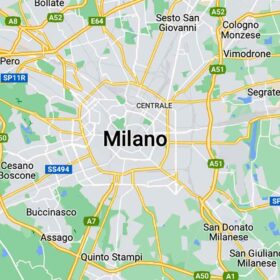
 The Geographic Location of Milan – A Strategic Spot in the Heart of Europe
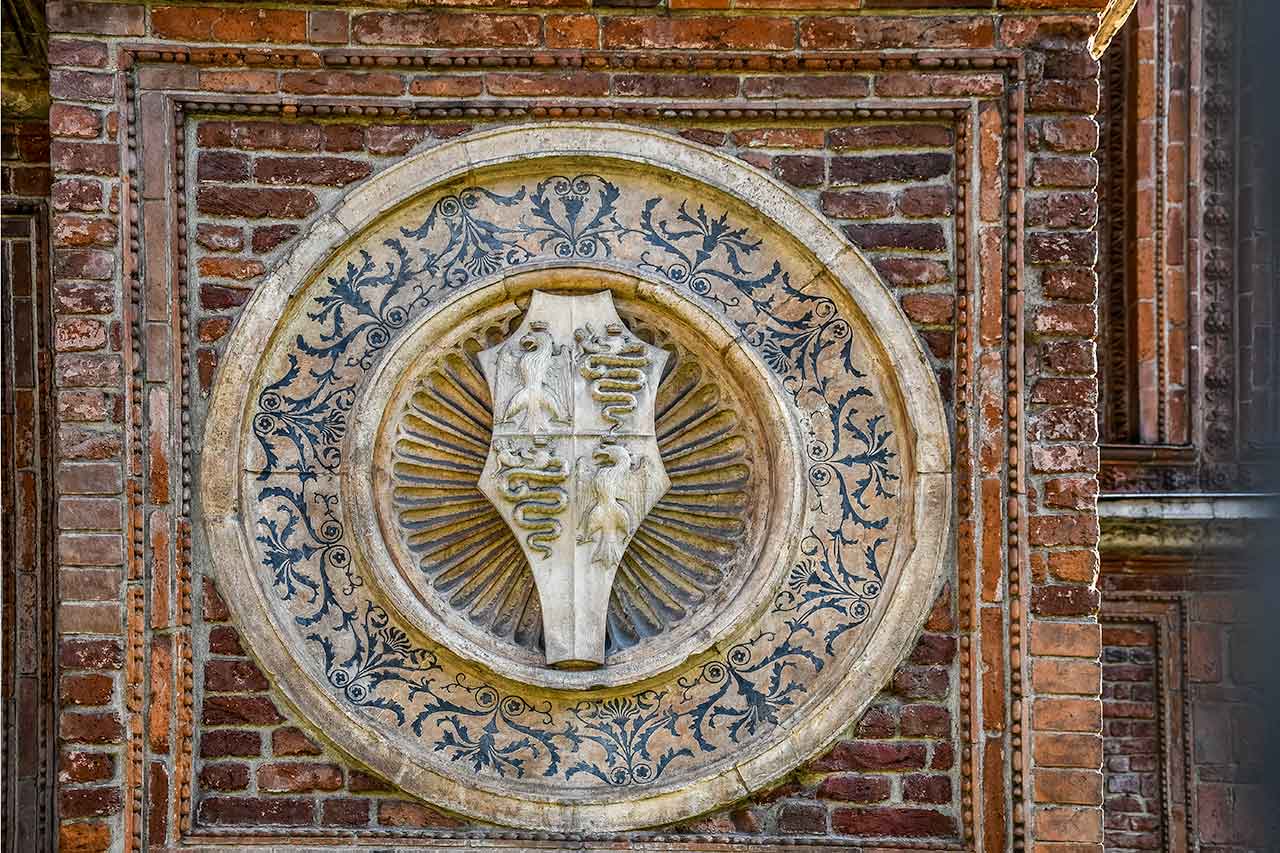
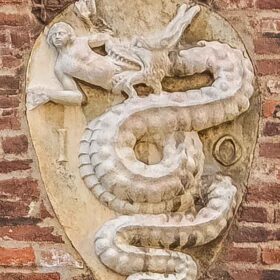 Milan’s coat of arms
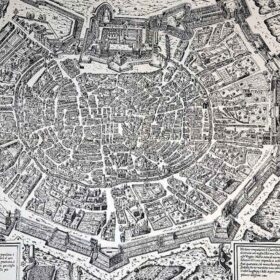 History of Milan
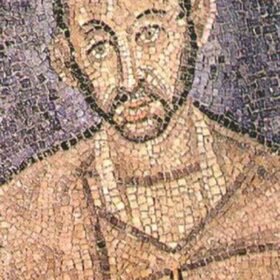 Saint Ambrose
 History of Panettone
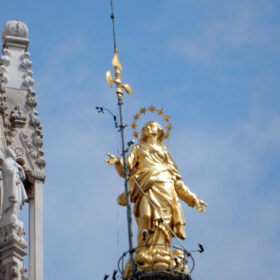 Madonnina
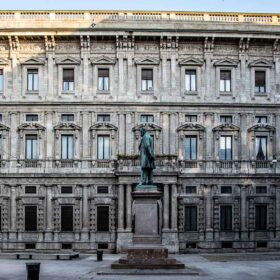 City Hall
 Milanese cuisine


Milan’s Celtic roots – the city’s history recorded in legends
The fascinating history of Milan has two origin stories. According to the ancient historian Titus Livius, the city was founded in 1603 BCE when the Gallic leader Bellovesus laid the first stone on a small hill surrounded by marshes. However, modern historical research points to a much later date – around 590 BCE, when the Insubres tribe, part of the mysterious Golasecca culture, established their settlement called Medhelanon. This culture, named after the town of Golasecca where archaeologists made groundbreaking discoveries, left behind a remarkable legacy.
The Origins of the Settlement
Originally, the city was called Medhelan, beautifully reflecting its location – in the middle of the plain. Indeed, it would be hard to find a better place – the vast Po Valley offered excellent conditions for civilization to flourish.
Legends and Facts
Particularly intriguing is the legend of the city’s founding by Bellovesus, the Celtic leader. According to tradition, he decided to establish the settlement in a place where he encountered an unusual phenomenon – a “half-wooded sow.” This mysterious symbol, depicted as a boar with one side covered in wool, later became the city’s emblem, reflecting the Celts’ deep connection to nature and its significance in their beliefs.
Strategic Location
The location of Medhelan was not random. Some researchers point to the proximity of a sacred place, indicating the deep importance of religion in Celtic society. Others emphasize practical aspects – the presence of the rivers Olona, Lambro, and Seveso, which not only provided access to water but also served as natural communication routes.
Legacy of the Insubres
The Insubres were an extraordinary people – renowned for their warrior culture and masterful metalworking skills. Although their initial settlement was small, they laid the foundations for what would become one of Europe’s most important urban centers.
While modern archaeologists still debate the exact location of the original Medhelan, there is no doubt that this modest Celtic settlement gave birth to one of Europe’s most fascinating cities.
From Roman Power to Medieval Glory
The fate of Milan changed dramatically in 222 BCE when, after a fierce siege, the Romans conquered the Celtic settlement of Medhelan. This victory opened a new chapter in the city’s history and became a crucial moment in Roman expansion into northern Italy.
Birth of Mediolanum
The victorious Romans, appreciating the strategic value of the location, transformed the name to Mediolanum, preserving its Celtic roots while giving it a Latin character. A new Roman city began to flourish on the foundations of the Celtic settlement, gaining importance with each passing year.
Rising Significance
A breakthrough moment came in 49 BCE when Julius Caesar granted Mediolanum municipal rights under Lex Roscia. This decision not only elevated the city’s status but also introduced significant changes in its administration and social organization. Located at the crossroads of important trade routes in the heart of the Po Valley, the city became a natural bridge between Rome and its northern provinces.
Capital of the Western Empire
The city truly flourished in the 3rd century CE when Mediolanum became the main administrative center. This process culminated in Emperor Diocletian’s reforms in 292 CE, making the city the capital of the Western Roman Empire. In the face of growing external threats and internal unrest, the city’s strategic location proved invaluable for efficiently managing the western part of the empire.
The Landmark Edict
One of the most important events in the history of not only the city but the entire empire was the issuance of the Edict of Milan in 313 CE. This groundbreaking decree, jointly announced by emperors Constantine and Licinius, granted religious freedom to all citizens of the empire, including the previously persecuted Christians. This historic event initiated a process that led to Christianity’s dominance in the Roman world.
The transformation of Mediolanum from a Celtic settlement into a powerful administrative center of the Roman Empire provides a fascinating example of how a city can evolve under new rulers and changing historical circumstances. From a local center, it became one of the most important cities of the ancient world, whose significance extended far beyond the empire’s borders.
Milan in the Shadow of Change – From Rome’s Fall to Medieval Power
The fall of the Western Roman Empire marked the beginning of a dramatic transformation for Milan. The once-proud imperial capital entered an era of uncertainty, marked by successive invasions and power shifts.
Era of Invasions
The first major blow came in 452 CE when the Huns under legendary Attila devastated the city. This dramatic event symbolically ended the era of Roman glory and ushered in a period of chaos. However, the real change arrived in 493 when the Ostrogoths under Theodoric the Great took control of the city. The new rulers brought with them Arianism – a branch of Christianity that became the dominant religion in the city.
Wars and Power Shifts
The relative peace didn’t last long. The Byzantine Empire, attempting to reclaim former Roman territories, initiated the long and bloody Gothic War (535-553). In 539, the famous Byzantine general Belisarius captured the city, but Byzantium’s triumph proved short-lived. By 569, the Lombards – a warrior Germanic tribe – entered the city, making Milan one of the key centers of their kingdom.
Birth of a Power
Paradoxically, these turbulent times became the foundation for the city’s later power. Medieval Milan gradually transformed into a powerful city-state. Its strategic location at the intersection of trade routes, combined with strong defensive walls, fostered economic development and political independence.
The Visconti Dynasty
The city’s true flourishing came in the 13th century when the Visconti family took power. This ambitious dynasty, combining political and military talent, ruled the city for over two centuries. Under their leadership, Milan extended its influence over much of northern Italy, becoming a powerful political and economic center.
The Visconti rule not only strengthened the city’s position but also prepared the ground for its cultural and artistic flourishing during the Renaissance. It was during this period that Milan began to transform into the city we know today – a center of European culture, art, and economy.
Milan in the Renaissance – From Sforza Splendor to Spanish Rule
A new era in Milan’s history began with the Sforza family. It all started in 1441 when the talented condottiere Francesco Sforza married Bianca Maria Visconti, daughter of the last Visconti duke. This marriage paved his way to power, which he finally assumed in 1450, after a brief republican period known as the Aurea Repubblica Ambrosiana.
The Golden Age of Renaissance
Under the Sforza rule, Milan flourished, becoming one of the most important Renaissance centers. Particularly significant was the reign of Ludovico Sforza, known as “Il Moro“, who in 1482 brought the brilliant Leonardo da Vinci to the city. It was in Milan that some of the master’s most famous works were created, including the immortal “Last Supper” in the Santa Maria delle Grazie monastery.
Equally significant was the contribution of architect Donato Bramante, whose harmonious style shaped the face of Renaissance Milan. His works, such as the church of Santa Maria presso San Satiro and the Sant’Ambrogio basilica, continue to enchant with their beauty to this day.
Era of Conflicts
However, peace did not last long. The 16th century brought a dramatic power struggle between France and Spain. In 1499, French King Louis XII took the city, forcing Ludovico Sforza into exile. Although the Sforzas tried to regain power, the city’s fate was already sealed.
The turning point came at the Battle of Pavia in 1525, where Spanish Emperor Charles V defeated French King Francis I. After the childless death of the last Sforza, Francesco II, in 1535, the city came under Spanish rule.
Under Spanish Rule
Spanish rule in Milan lasted almost two centuries, until 1713, when the Treaty of Utrecht transferred the city to Austrian control. During this long period, although Milan lost its political independence, it remained a significant cultural and economic center.
This fascinating epoch in the city’s history shows how Milan managed to maintain its cultural and economic position even during periods of political dependence. The Renaissance legacy, especially the works of Leonardo da Vinci and Bramante, continues to make this city unique and attracts art lovers from around the world.
Milan in the Napoleonic Era and the Road to Italian Unification
1796 brought a dramatic change to Milan when Napoleon Bonaparte entered the city. The citizens, weary of Austrian rule, welcomed him as a liberator, and the city became the capital of the newly formed Cisalpine Republic.
The Napoleonic Era
The pinnacle of Napoleonic power came in 1805 when Napoleon was crowned King of Italy in the majestic Duomo Cathedral. This period brought significant reforms to the city – the introduction of the Napoleonic Code, infrastructure modernization, and the construction of roads and bridges.
However, the dream of French power was short-lived. In 1814, Napoleon’s fall meant the return of Austrian rule, and the Congress of Vienna in 1815 incorporated Milan into the newly created Kingdom of Lombardy-Venetia.

The Path to Freedom
Austrian rule, marked by political repression and economic exploitation, awakened a spirit of national liberation in the Milanese. The city became an important center of Risorgimento – the movement aimed at Italian unification.
A pivotal moment came during the 1848 revolution. From March 18-22, the historic uprising known as the “Five Days of Milan” took place. Citizens, armed with whatever they could find, forced Austrian Marshal Radetzky to withdraw from the city. Although the uprising ultimately failed, it became a symbol of the fight for freedom.
Toward Unification
Real change came in 1859 during the Second Italian War of Independence. The Kingdom of Piedmont-Sardinia, under King Victor Emmanuel II and the clever diplomat Count Camillo Benso di Cavour, allied with Napoleon III’s France, defeated the Austrians in the decisive Battle of Solferino.
A New Era
The victory paved the way for Italian unification. In 1861, Victor Emmanuel II was proclaimed king of a unified Italy. Although Rome eventually became the capital of the new state, Milan maintained its position as a key economic and cultural center of the young nation.
The victory paved the way for Italian unification. In 1861, Victor Emmanuel II was proclaimed king of a unified Italy. Although Rome eventually became the capital of the new state, Milan maintained its position as a key economic and cultural center of the young nation.

Mediolan w XIX wieku. Widok z Porta Ticinese
The unification of Italy in 1861 opened a new era of opportunities for Milan. The city quickly transformed into a powerful industrial and financial center, becoming the heart of the country’s economic development. Its strategic location in the Po Valley and developed textile industry made Milan a magnet attracting workers from all over Italy.
Industrial Power
At the beginning of the 20th century, Milan, together with Turin and Genoa, formed the famous “Industrial Triangle” – the economic engine of all Italy. However, this dynamic development also brought social tensions that would soon dramatically affect the fate of the city and country.
Dark Times
1919 brought an event that cast a shadow over the city’s history. It was then that Benito Mussolini, a former socialist journalist, established the first fascist combat group in Milan. Exploiting post-war unrest and nationalist sentiments, he initiated a movement that would soon plunge Italy into the darkness of fascism.
War and Reconstruction
World War II brought enormous destruction to the city. Allied bombing raids, targeting Italy’s industrial heart, destroyed factories, infrastructure, and residential districts. However, post-war Milan showed remarkable resilience. Thanks to the support of the American Marshall Plan and the entrepreneurial spirit of its residents, the city not only rebuilt itself but entered a new era of prosperity.
Fashion Revolution
The post-war period also brought cultural renaissance to the city. Milan emerged as a global center of fashion and design, joining the elite group of metropolises like Paris, New York, and London. This transformation showed that the city could combine industrial power with design finesse.
Milan Today
Today’s Milan is a vibrant metropolis where culture meets business and innovation. The city hosts the prestigious Milan Fashion Week twice a year, maintains world-class cultural institutions like Teatro alla Scala and the Pinacoteca Brera, and continues to innovate with projects like the Bosco Verticale (Vertical Forest).
Fashion and Design Capital
Twice a year, during the famous Milan Fashion Week, the city becomes the world’s fashion capital, attracting designers, models, and fashion enthusiasts from around the globe. The industrial design traditions, dating back to the post-war period, continue to make Milan a center of innovative design.
Cultural Heart of Italy
The city boasts extraordinary artistic treasures. In the church of Santa Maria delle Grazie, visitors can admire Leonardo da Vinci’s famous “Last Supper“, while the Pinacoteca Brera delights with its collection of Renaissance and Baroque masterpieces. The legendary Teatro alla Scala opera house consistently attracts music lovers from around the world.
Tourist Magnet
Millions of tourists annually visit Milan’s iconic sites: the majestic Duomo cathedral, the historic Castello Sforzesco, and the elegant Galleria Vittorio Emanuele II. The city’s location makes it an ideal base for excursions to the picturesque lakes Como and Maggiore.
City of the Future
Milan continuously evolves, maintaining its historical and cultural heritage while boldly embracing modernity. The city demonstrates its commitment to sustainability through projects like Bosco Verticale (Vertical Forest) – an innovative project featuring two towers covered in lush vegetation.
Global Events Hub
In 2015, Milan hosted Expo 2015, which under the theme “Feeding the Planet, Energy for Life” attracted more than 22 million visitors. The event confirmed the city’s position as a global center for innovation and sustainability.
Business and Finance Center
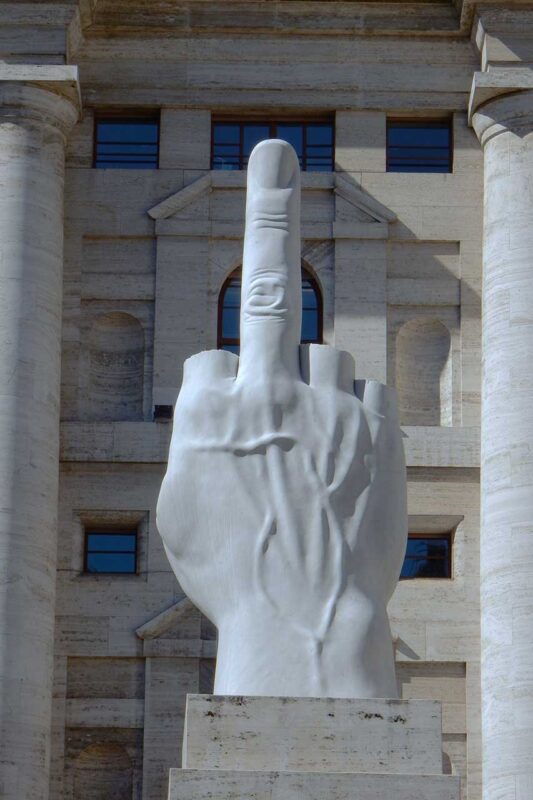
As home to the Borsa Italiana (Italian Stock Exchange), Milan remains one of Europe’s most important financial centers. The diversity of its economic sectors – from finance through fashion to tourism – ensures the city’s stable development and international significance.
Today’s Milan is a city that not only remembers its rich history but boldly looks to the future, constantly evolving and setting new trends in fashion, architecture, and lifestyle.
Conclusion
Today’s Milan is a city of contrasts and opportunities, filled with historical sites yet also modern architecture. As one of Europe’s most important economic and cultural centers, Milan continues to set trends and shape the future not only of Italy but of the entire continent.
This remarkable transformation – from an industrial city to a global metropolis – demonstrates Milan’s exceptional ability for continuous reinvention and adaptation to changing times.
Sources:


I lived in Milan for 18 years, and it was there that I came to know the city’s daily life best - not just its landmarks, but also its rhythm, its habits, and its less obvious sides. Today I live in Wrocław, but I still return to Milan regularly.