


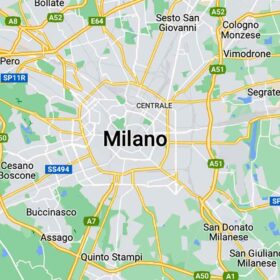
 The Geographic Location of Milan – A Strategic Spot in the Heart of Europe
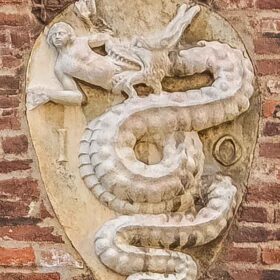 Milan’s coat of arms
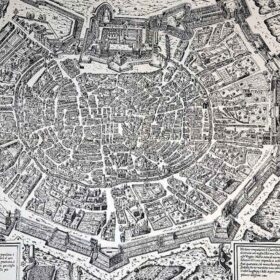 History of Milan
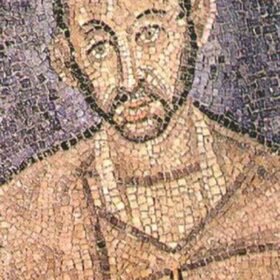 Saint Ambrose
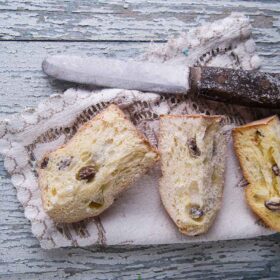 History of Panettone
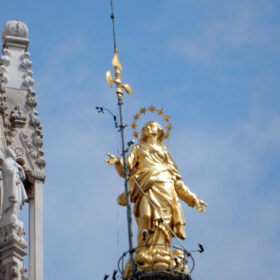 Madonnina
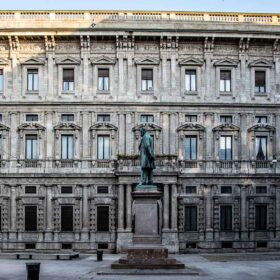 City Hall
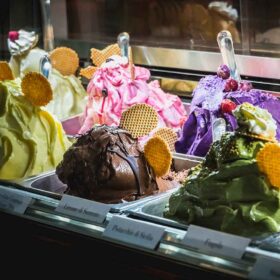 Milanese cuisine


Why is San Maurizio called Milan’s Sistine Chapel?
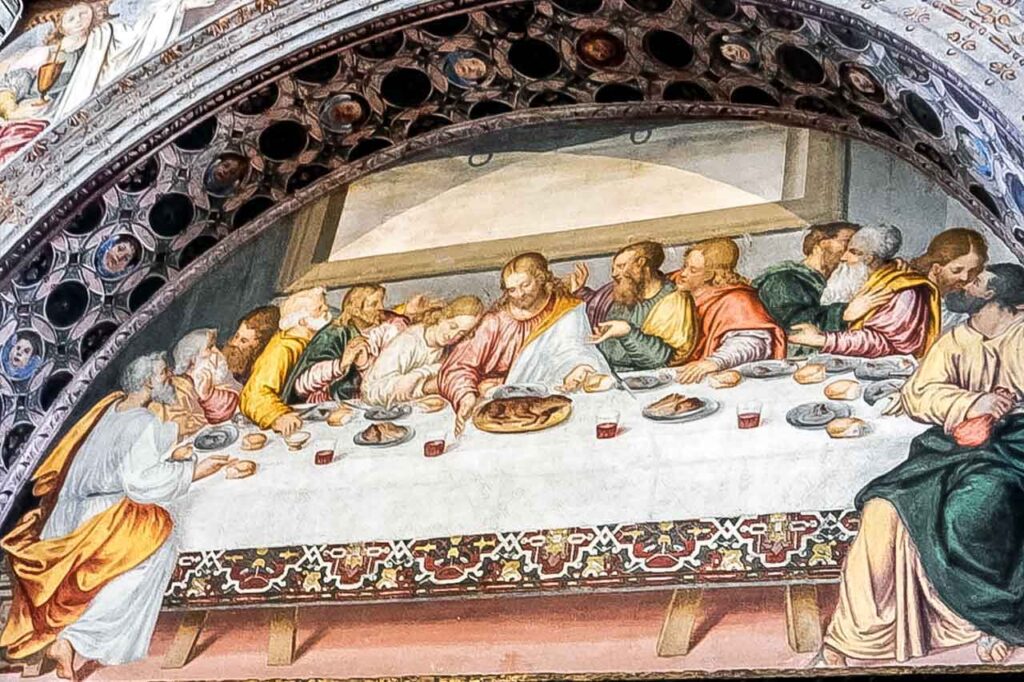
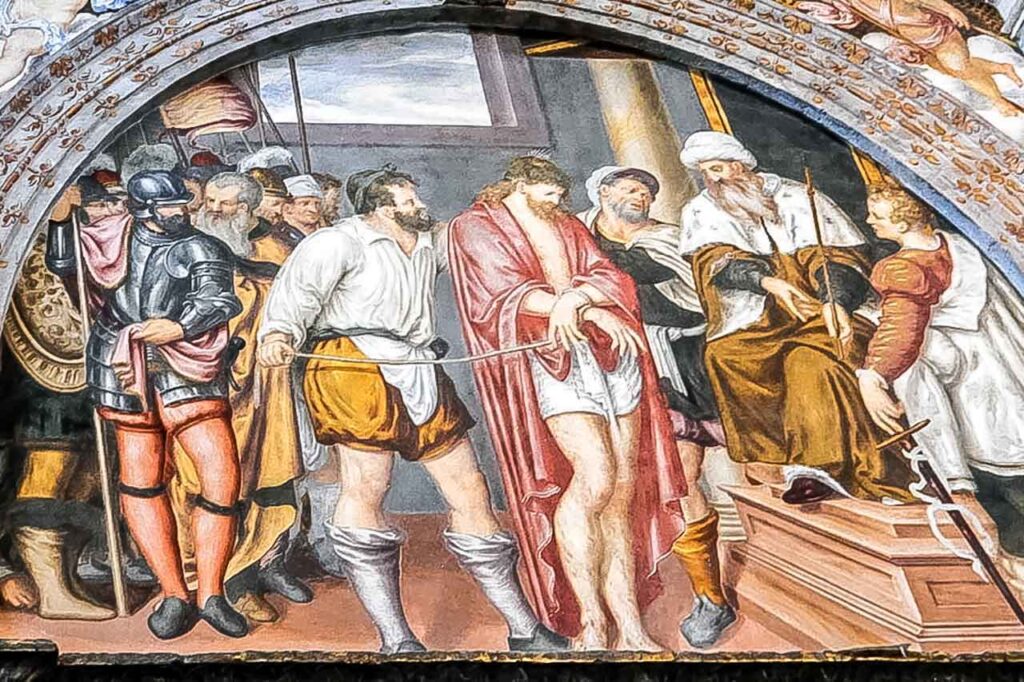
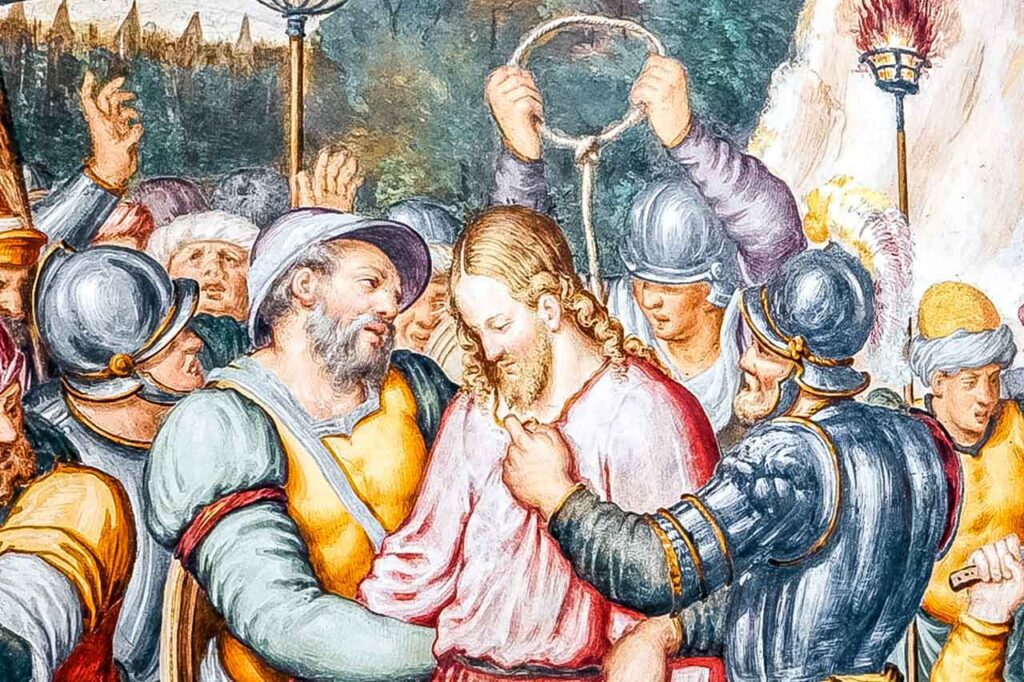
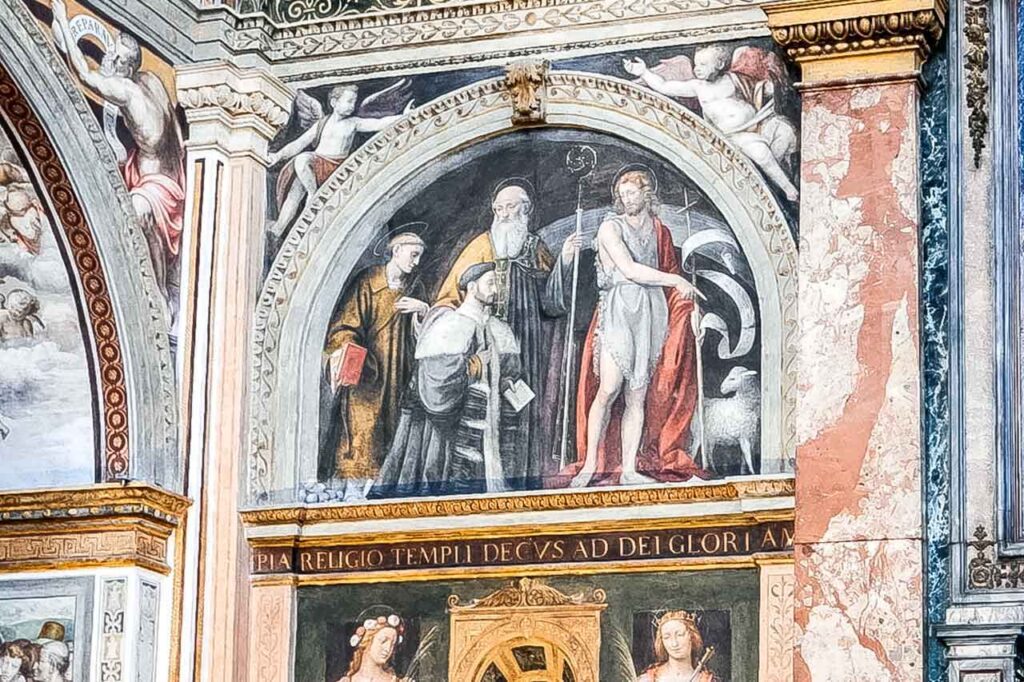
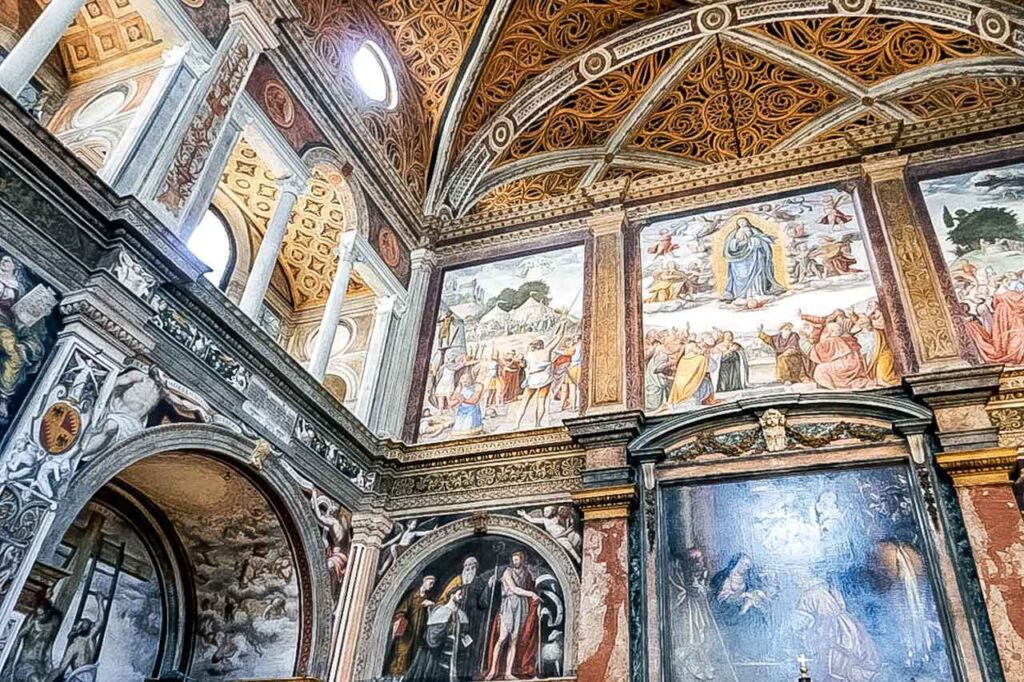
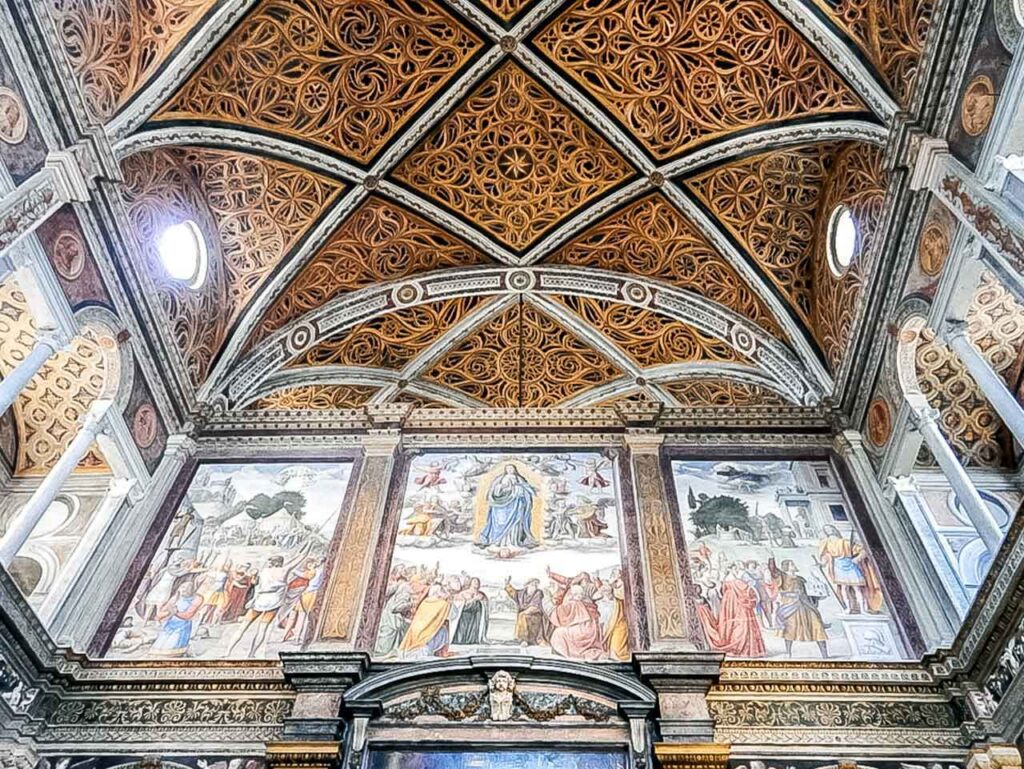
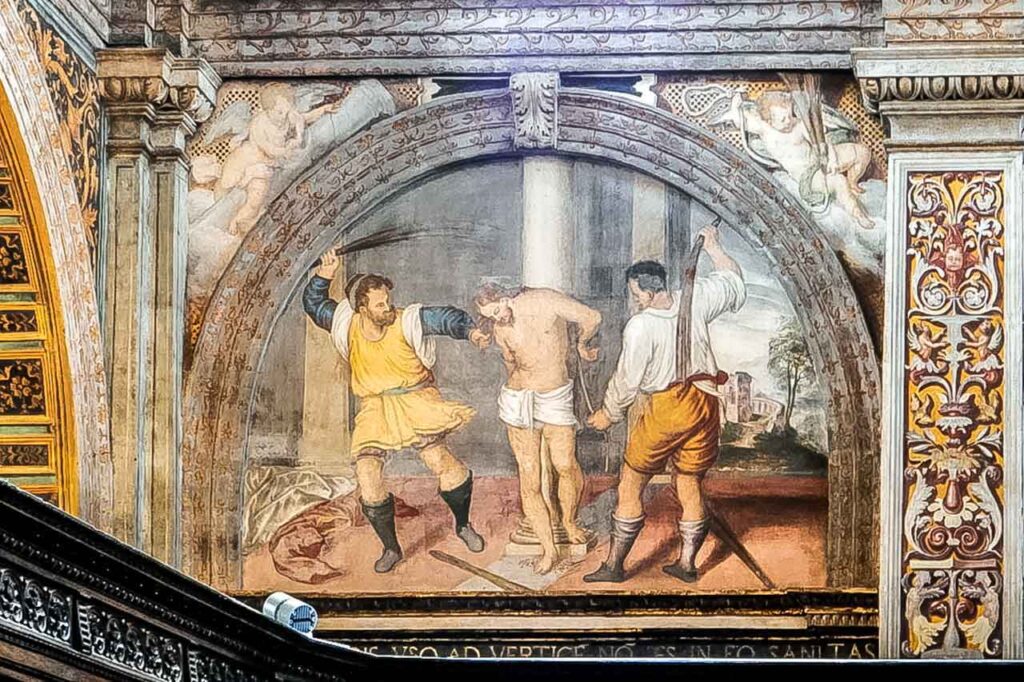
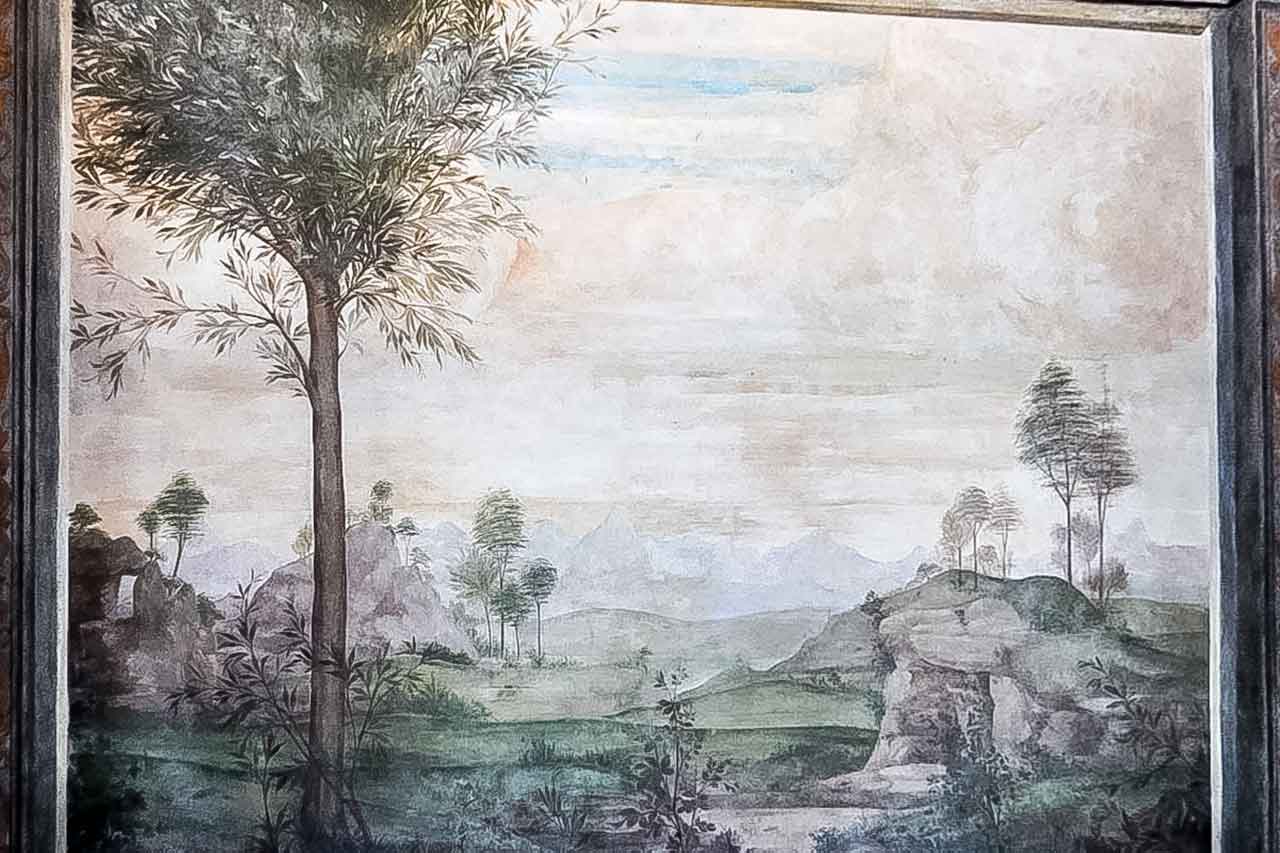
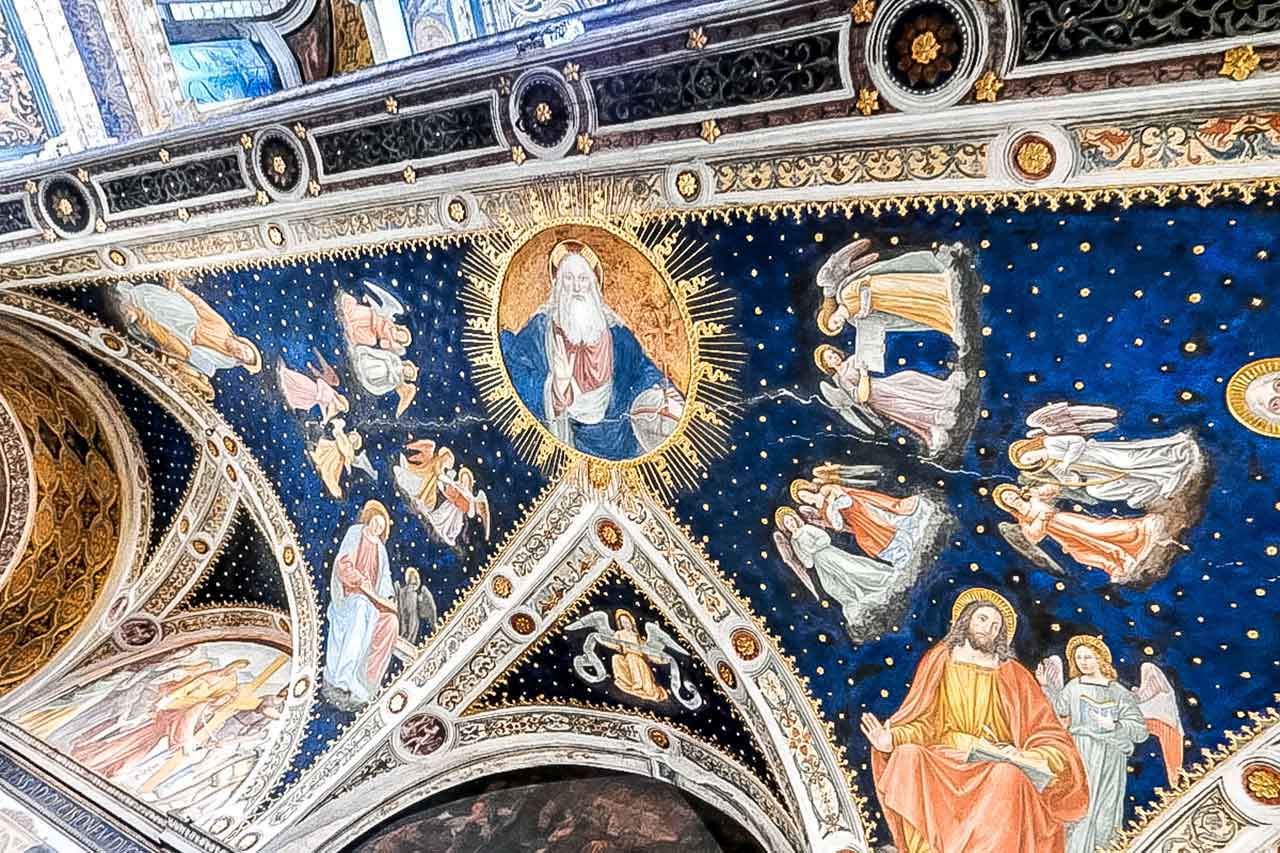
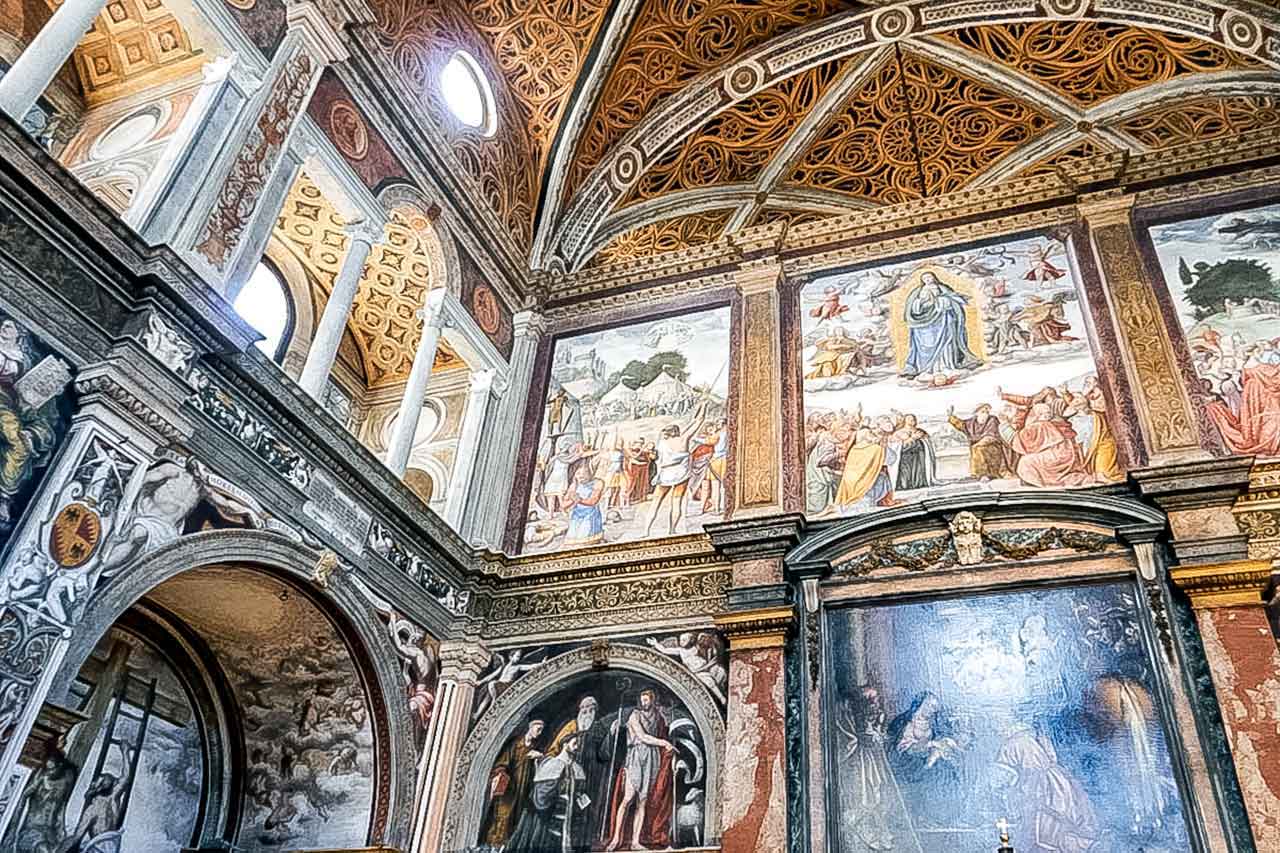
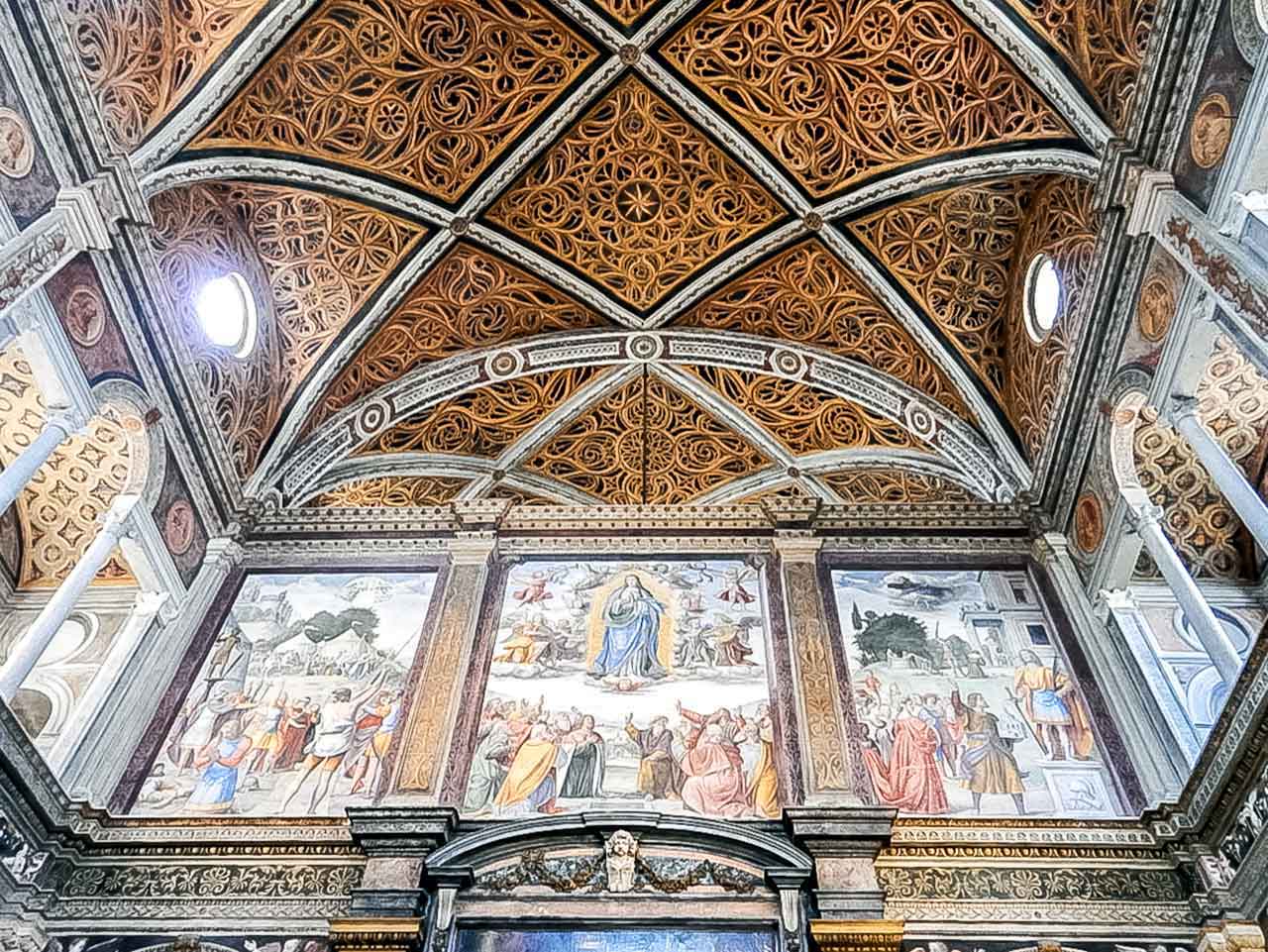
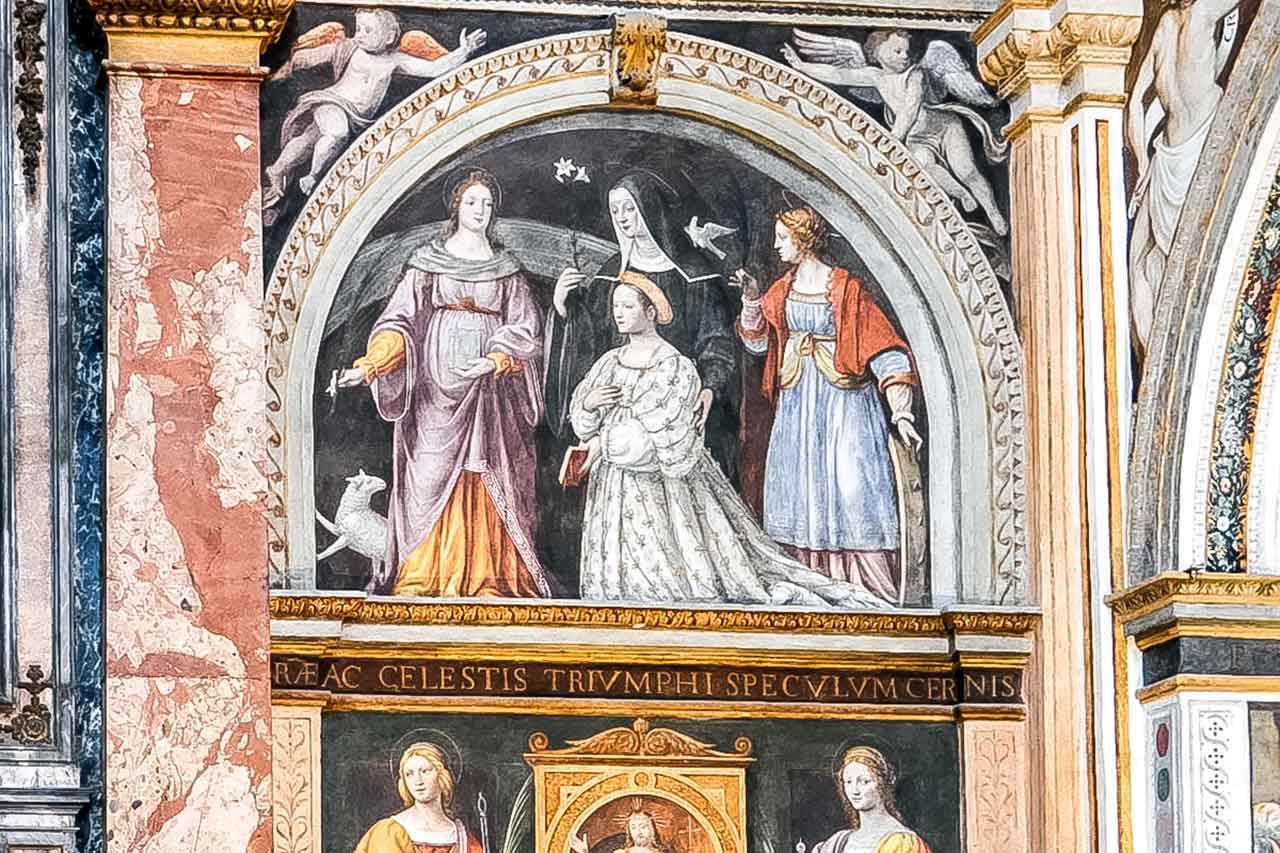
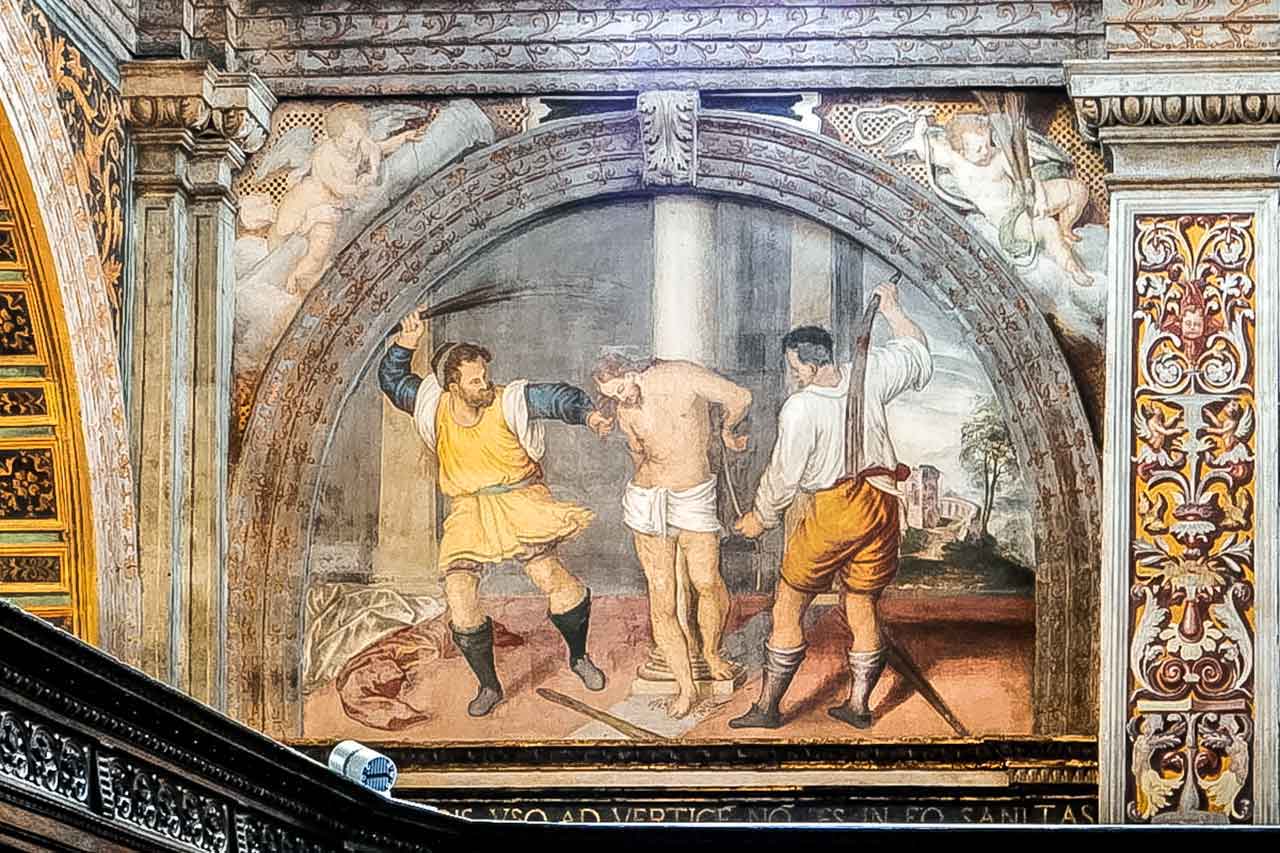
San Maurizio al Monastero Maggiore is a 16th-century church on Corso Magenta, with an interior covered by approximately 43,000 square feet of Renaissance frescoes. Italians call it Cappella Sistina di Milano because every available surface – walls, vaults, arches, pilasters – is adorned with paintings depicting biblical scenes, saints, and martyrs’ stories. It earned this nickname due to the scale of painted decoration comparable to Michelangelo’s masterpiece in Vatican City.
From the outside, it doesn’t look like much – a modest gray stone facade that blends in with other buildings along busy Corso Magenta. For years, tourists rushing to the Duomo or The Last Supper walked right past, with no idea what lay behind those doors. Only when you step inside do you understand where the Vatican comparison comes from. The walls and ceilings are completely covered with frescoes in vivid colors that still make an impression after five hundred years.
Quick Facts – San Maurizio by the Numbers
History of San Maurizio: from Benedictine convent to art gallery
When was the church of San Maurizio al Monastero Maggiore built?
The history of this place dates back to the 8th-9th century, when Monastero Maggiore, the largest and most important Benedictine monastery in Milan, was founded. Originally, the complex was dedicated to Mary. It was only after 964, when Emperor Otto I donated the relic of Saint Maurice, commander of the Theban Legion, to the monastery, that the place took on its current name.
At the beginning of the 16th century, the nuns decided to build a new, larger church. The cornerstone was laid on May 20, 1503. Construction was entrusted to Gian Giacomo Dolcebuono and later continued by Giovanni Antonio Amadeo – both architects were also working on the dome (tiburio) of Milan Cathedral at the time. This was a period of prosperity for the convent, which commanded vast estates and influence in the city.
The Bentivoglio-Sforza family played a crucial role in financing the interior decoration. Alessandro Bentivoglio, then governor of Milan and son of the Lord of Bologna, together with his wife Ippolita Sforza (daughter of Ludovico Sforza, known as il Moro), commissioned the finest artists of the era to decorate the interior. Four of their daughters entered the San Maurizio convent, and one of them – Alessandra – served six terms as prioress.
The golden age ended in 1798 when Napoleon abolished monastic orders. The convent buildings were subsequently used as barracks, a school, and a military hospital. In the 1960s, they became home to the Civico Museo Archeologico di Milano. The church itself remained closed to visitors for decades, its frescoes darkening under layers of grime and moisture.
Key restoration dates for San Maurizio
The restoration took nearly 30 years and cost several million euros. When the church opened to the public in 2006 as part of the Aperti per Voi program run by Touring Club Italiano volunteers, Milan’s media declared that the city had reclaimed its hidden treasure. Since then, over a million people have visited San Maurizio.
A unique layout: a church of two worlds
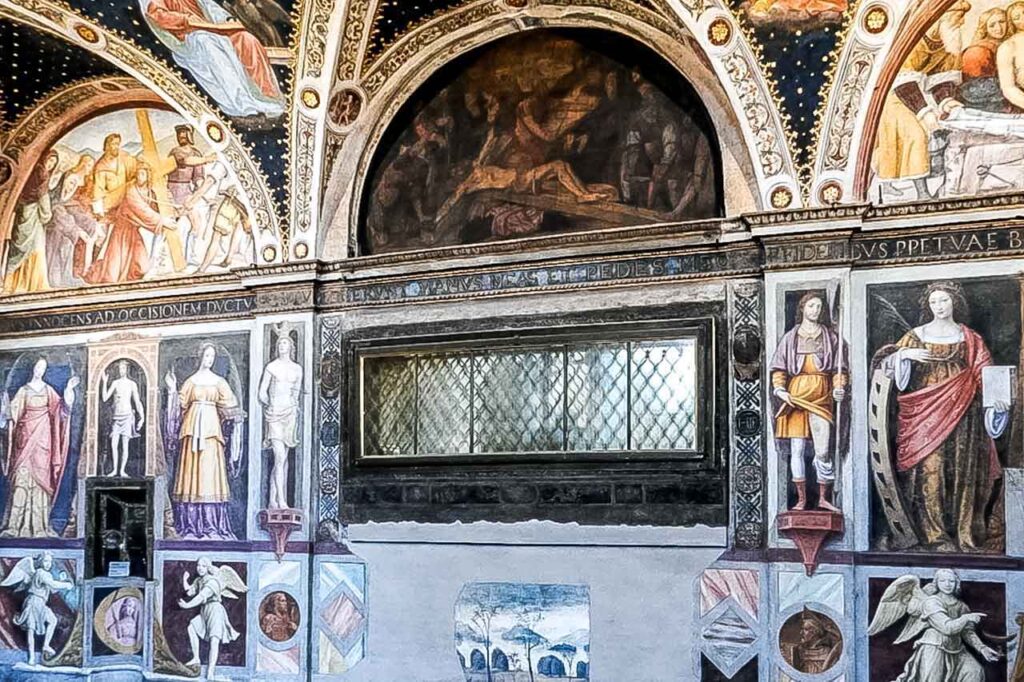
San Maurizio is an example of a chiesa doppia – a double church, an architectural solution typical of women’s convents. A brick tramezzo, a massive dividing wall, splits the interior into two parts:
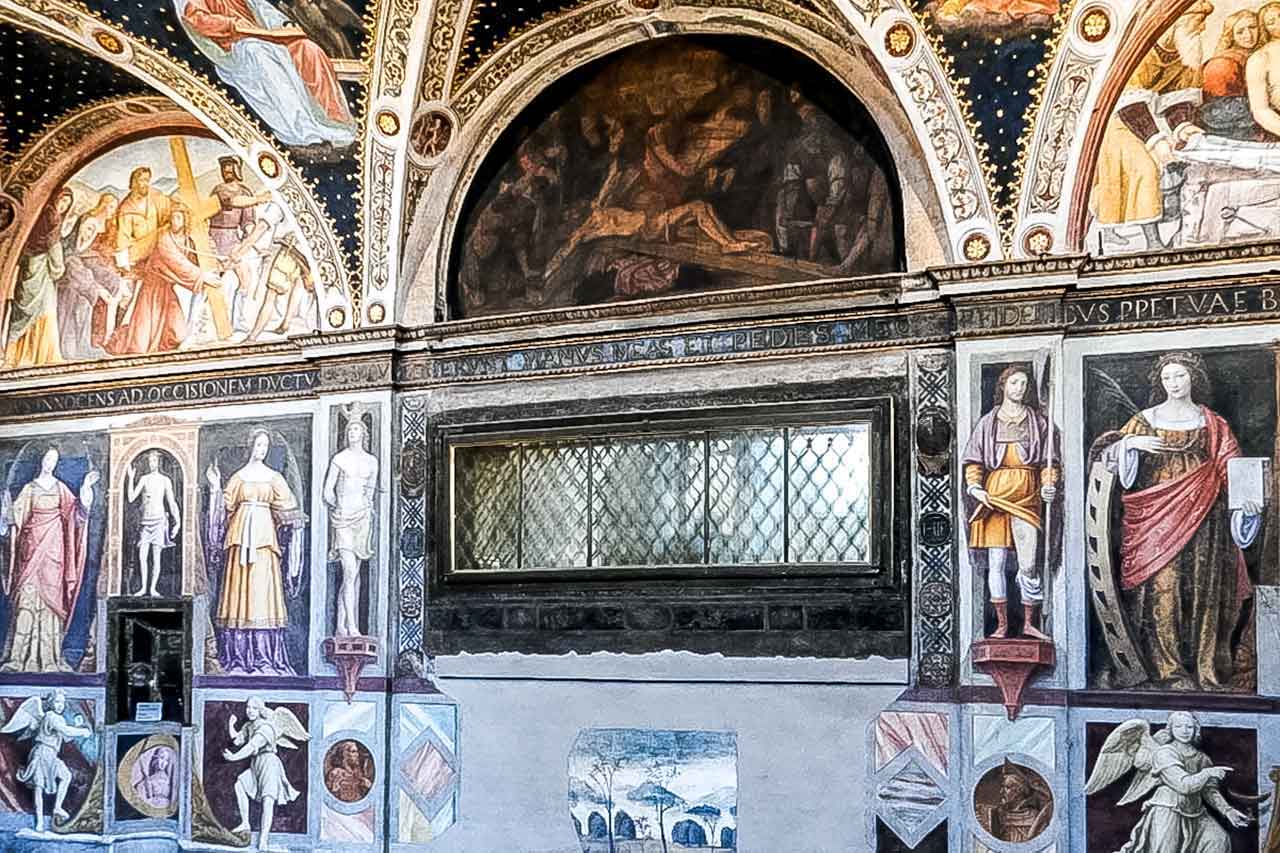
During Mass, the nuns observed the celebrating priest through a grate set into the dividing wall. This division had enormous consequences for the art – the tramezzo wall became a canvas for Bernardino Luini’s most spectacular works, and each section of the church received its own decoration suited to its function. Today, both sections are open to visitors.
The Sistine Chapel vs. San Maurizio: a detailed comparison
Comparisons to Michelangelo’s work in Rome come up constantly, but are they justified?
In some ways, yes. San Maurizio, like the Sistine Chapel, is a comprehensive visual narrative where the frescoes create a coherent theological and artistic program. The scale of the undertaking is comparable – every inch of space was used to tell a story. Both projects represent the pinnacle of al fresco painting of their respective eras.
Differences? Of course there are some. Michelangelo worked essentially alone, while Luini worked with an entire school of artists. The style is also different: Roman monumentality and drama versus Lombard softness and lyricism. But for someone standing inside, these academic distinctions cease to matter.
San Maurizio vs. the Sistine Chapel in Vatican City
|
Feature |
San Maurizio (Milan) |
Sistine Chapel (Vatican) |
|---|---|---|
|
Painted surface area |
approx. 43,000 sq ft (4,000 m²) |
approx. 5,400-10,800 sq ft / 500-1,000 m² (Michelangelo, estimates vary by source) |
|
Year of completion |
c. 1530 (Luini) / 16th c. overall |
1512 (ceiling) / 1541 (Last Judgment) |
|
Principal artist |
Bernardino Luini with his schoolMichelangelo Buonarroti |
Michelangelo Buonarroti |
|
Duration of main frescoes |
approx. 7-8 years (1522-1530)4 years (1508-1512) |
4 years (1508-1512) |
|
Number of artists |
multiple (Luini, Boltraffio, Campi, Peterzano, etc.) |
one (Michelangelo, for the ceiling) |
|
Style |
Lombard Renaissance, Leonardo’s influence |
Roman Renaissance, monumentalism |
|
Admission |
free |
paid (Vatican Museums tickets) |
Inside San Maurizio: the extraordinary frescoes
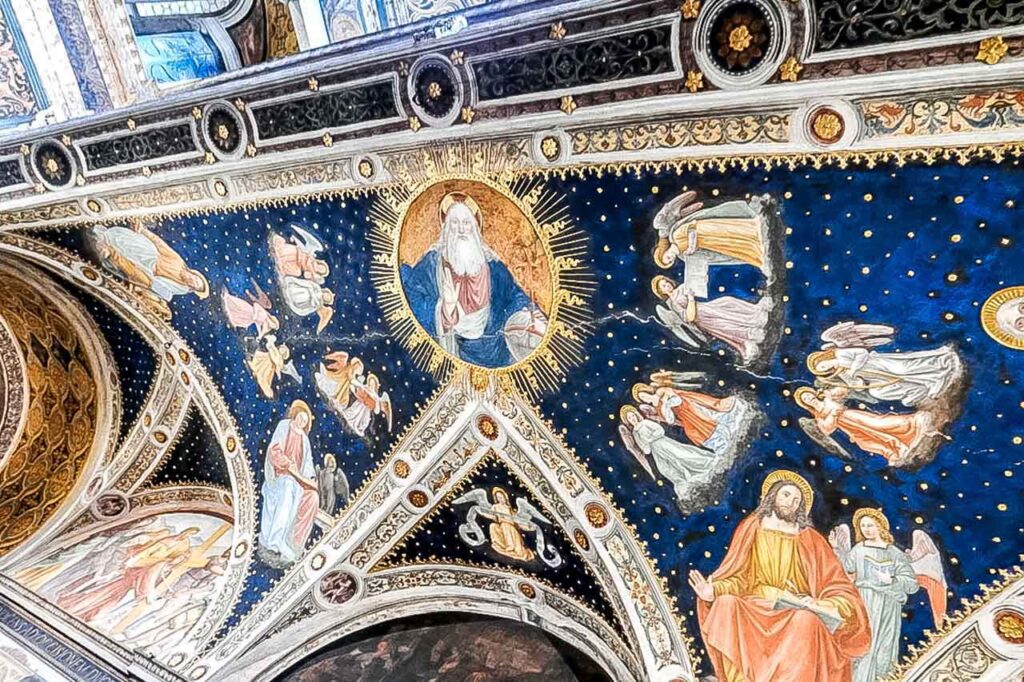
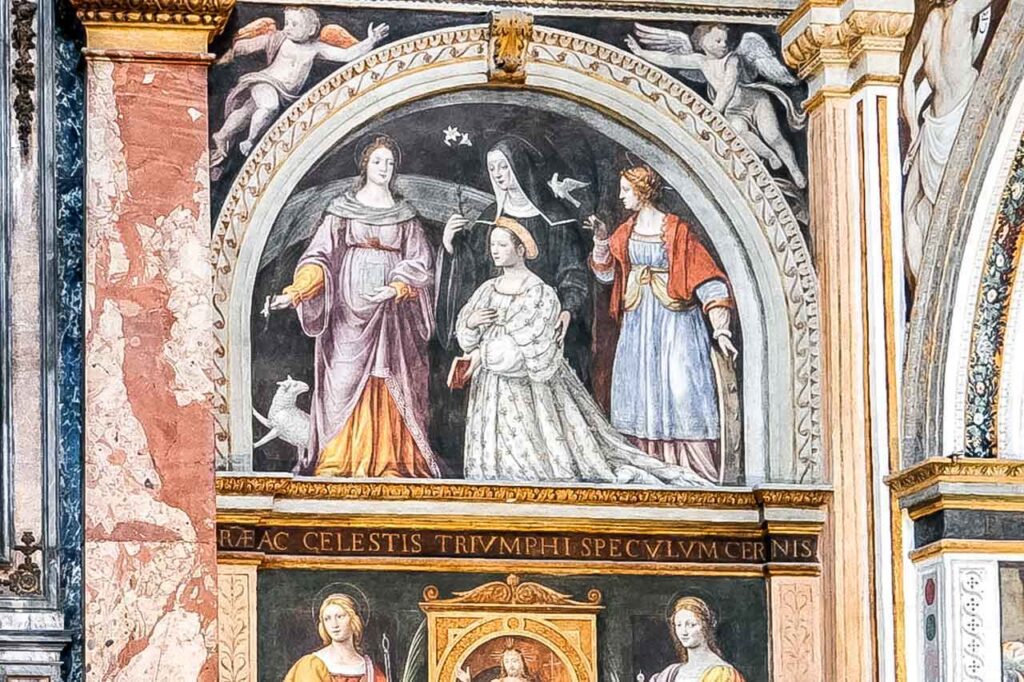
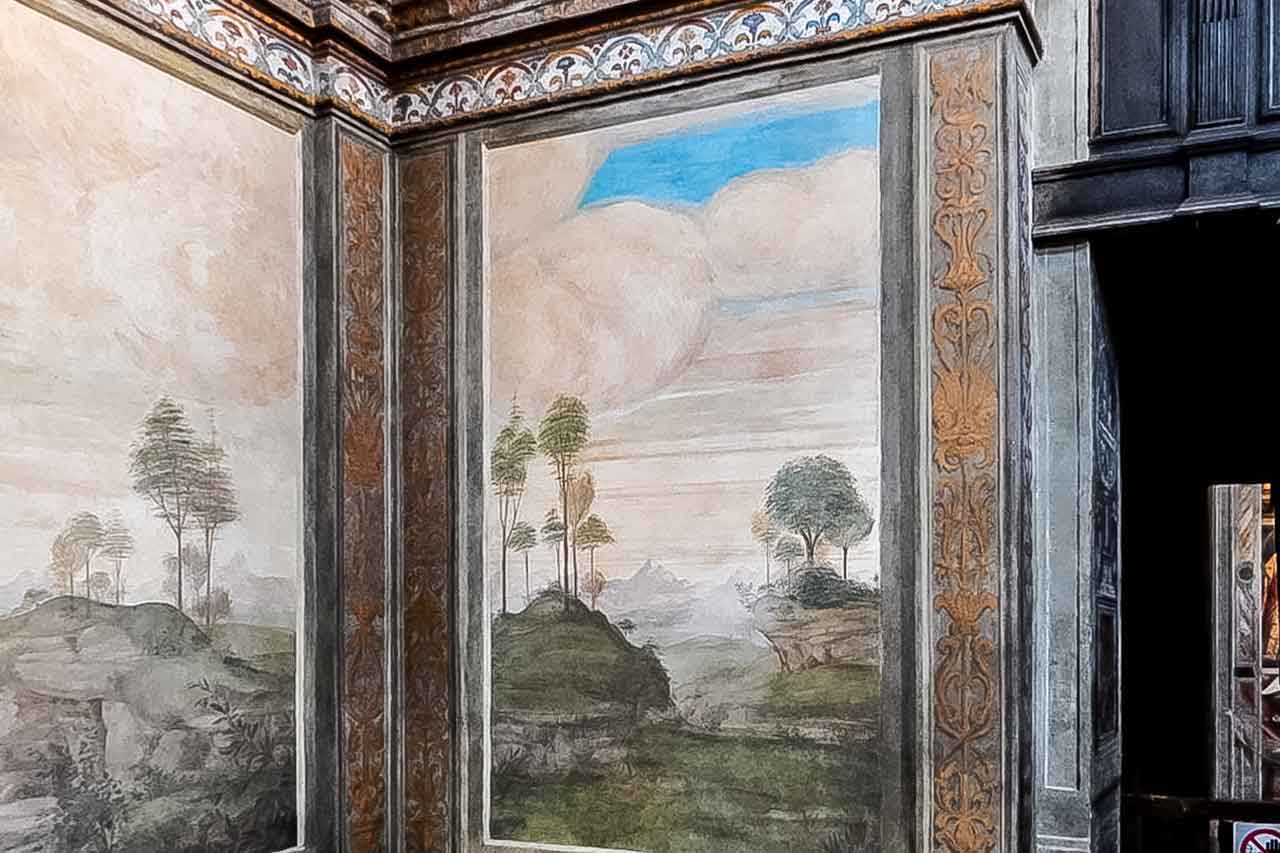
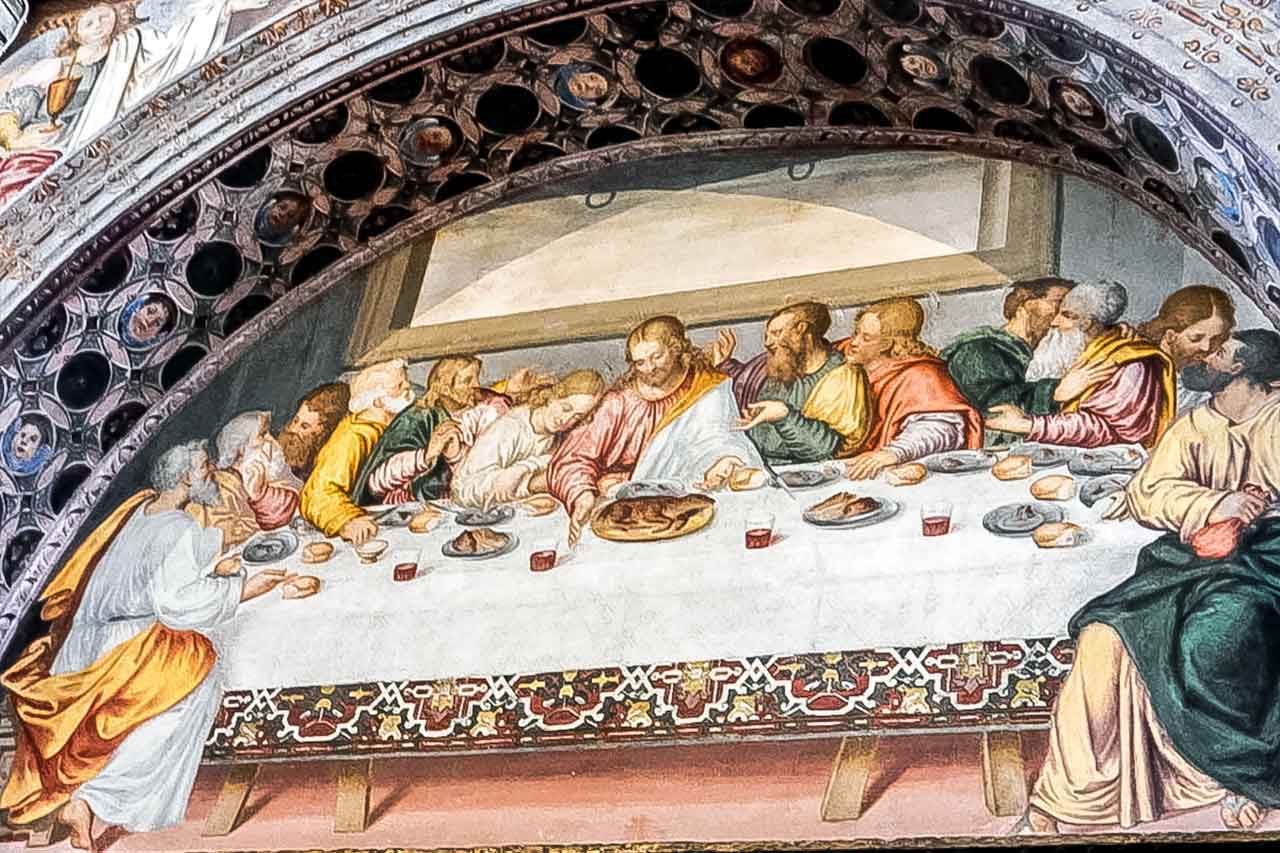
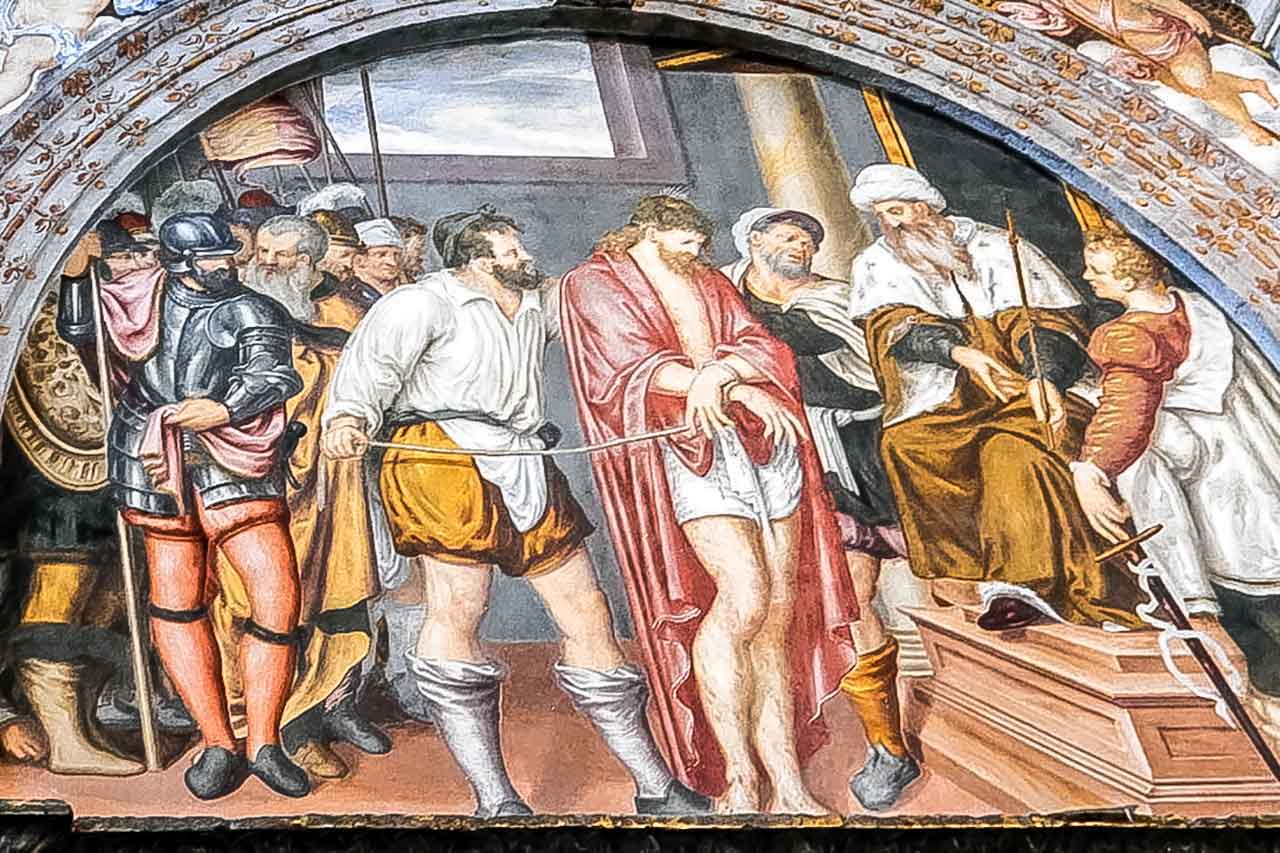
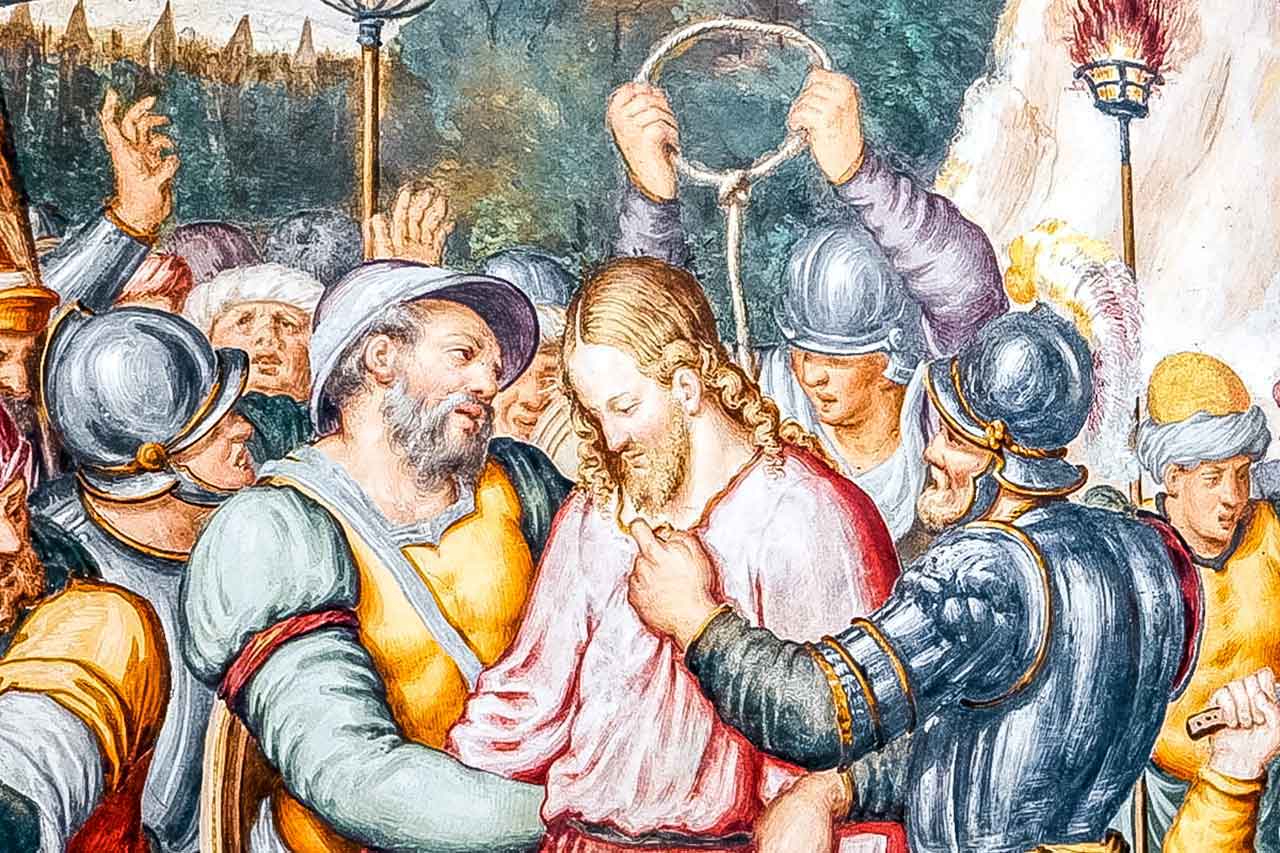
Approximately 43,000 square feet of frescoes cover every available surface – walls, vaults, arches, pilasters. Everything tells a story: biblical, hagiographic, allegorical.
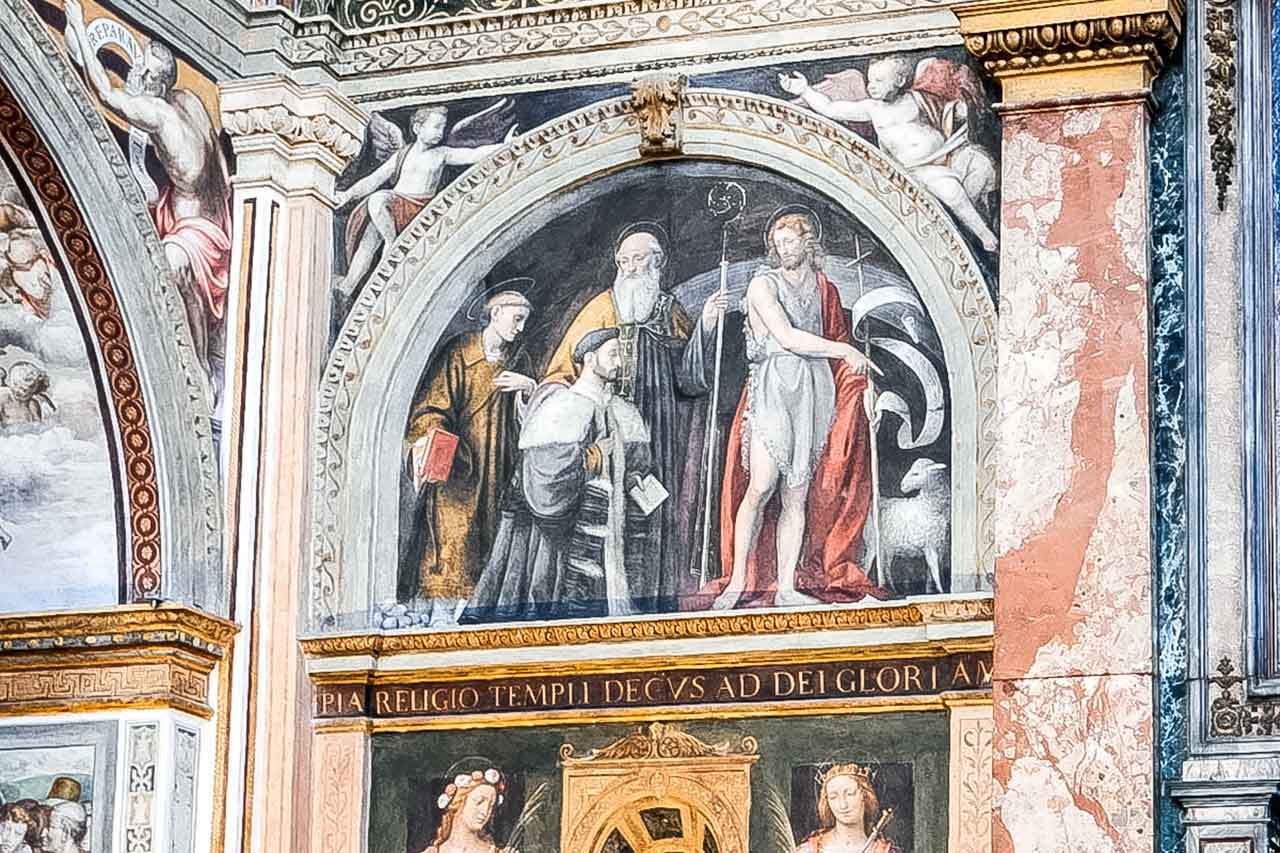
The colors, despite five centuries, still impress. Lapis lazuli blues, warm golds, delicate pink flesh tones. Light streaming through the high windows creates a play of shadows on the painted architecture. Luini’s characteristic gentleness of figures and delicate sfumato (the soft shading technique borrowed from Leonardo) give the interior an atmosphere of tranquility.
Who painted the frescoes at San Maurizio al Monastero Maggiore?
The principal creator of the frescoes was Bernardino Luini (c. 1481-1532), the leading painter of the Milanese Renaissance, who worked here with his school from 1522 to 1530.
Born near Lake Maggiore, Luini became the most important Milanese painter after Leonardo da Vinci. Although he was never a formal student of the master, he learned from him the famous sfumato. His hand is immediately recognizable: monumental figures with classical proportions, gentle faces with a slight smile (that “Leonardesque” smile), flowing drapery, timeless compositional calm.
Major works at San Maurizio – where to find them
|
Work |
Artist |
Location |
Description |
|---|---|---|---|
|
Frescoes on the tramezzo |
Bernardino Luini |
Dividing wall – both sides |
Scenes from the life of St. Maurice, donor portraits, pairs of saints |
|
St. Catherine of Alexandria cycle |
Bernardino Luini |
Besozzi Chapel (3rd on right in public nave) |
Martyrdom of the saint, 1530 |
|
Donor portraits |
Bernardino Luini |
Lunettes above tramezzo, public nave |
Alessandro Bentivoglio and Ippolita Sforza with patron saints |
|
Adoration of the Magi |
Antonio Campi |
Center of tramezzo, main altar |
Altarpiece from 1578-1579, replaced the original arcade |
|
Stories of Noah’s Ark |
Aurelio Luini (Bernardino’s son) |
Nuns’ choir, back wall |
Famous scene with unicorns boarding the ark |
|
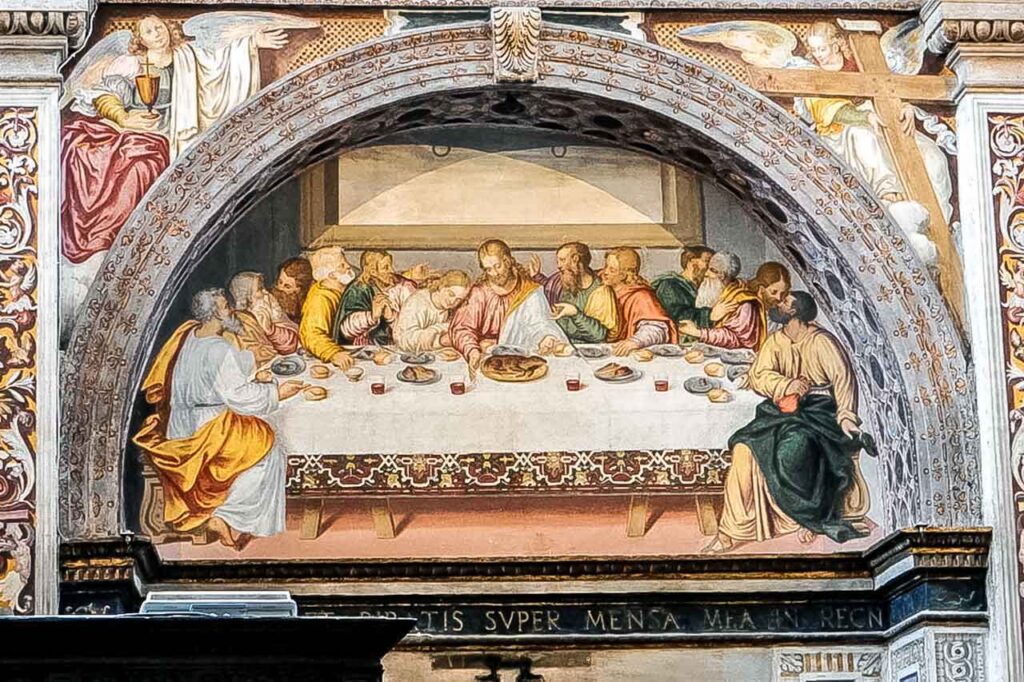
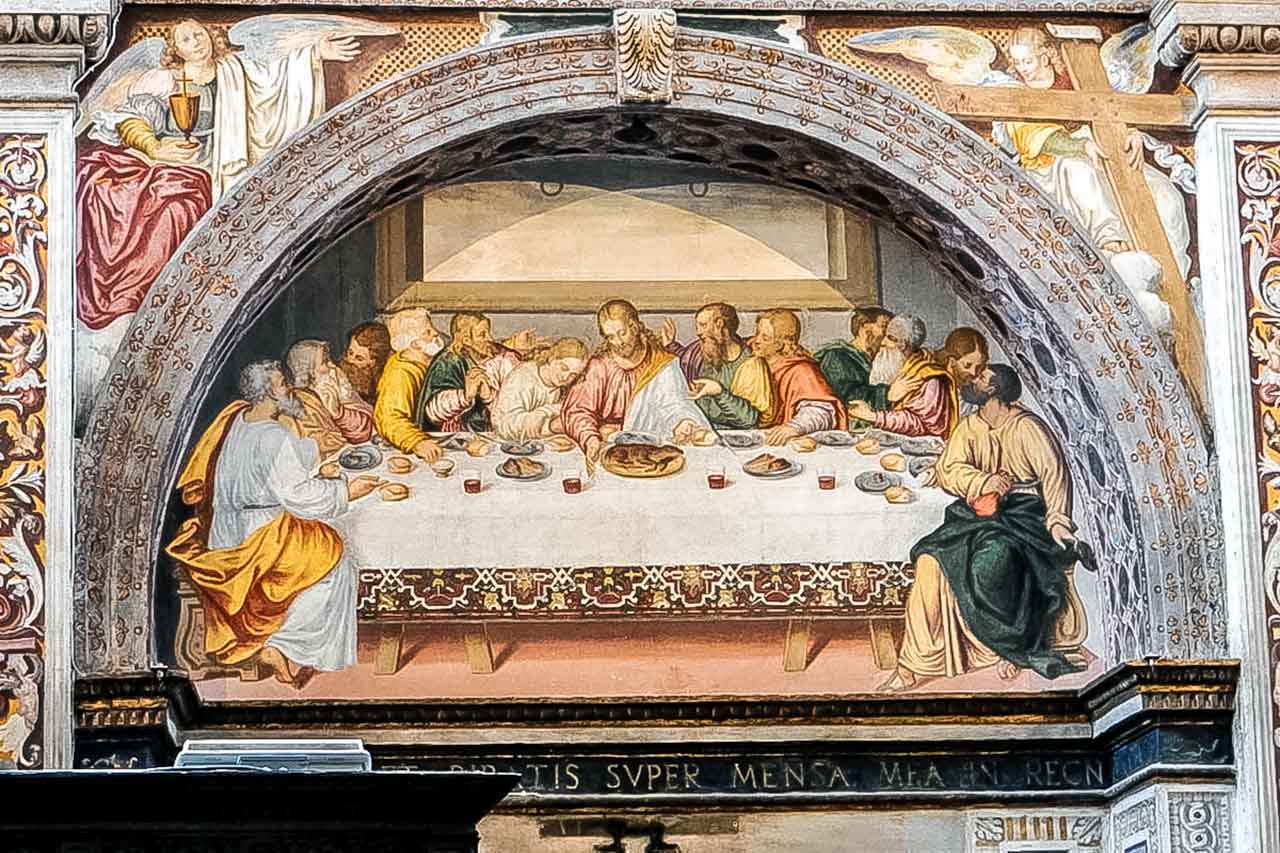
The Last Supper |
Luini’s sons |
Nuns’ choir, back wall |
Scene modeled on Leonardo’s work |
|
Starry sky |
Luini’s school |
Vault of nuns’ choir |
God the Father, Evangelists, and angels |
|
Counter-facade fresco |
Simone Peterzano |
Public nave, wall near exit |
Scene from Christ’s life (1573) – Caravaggio’s teacher |
|
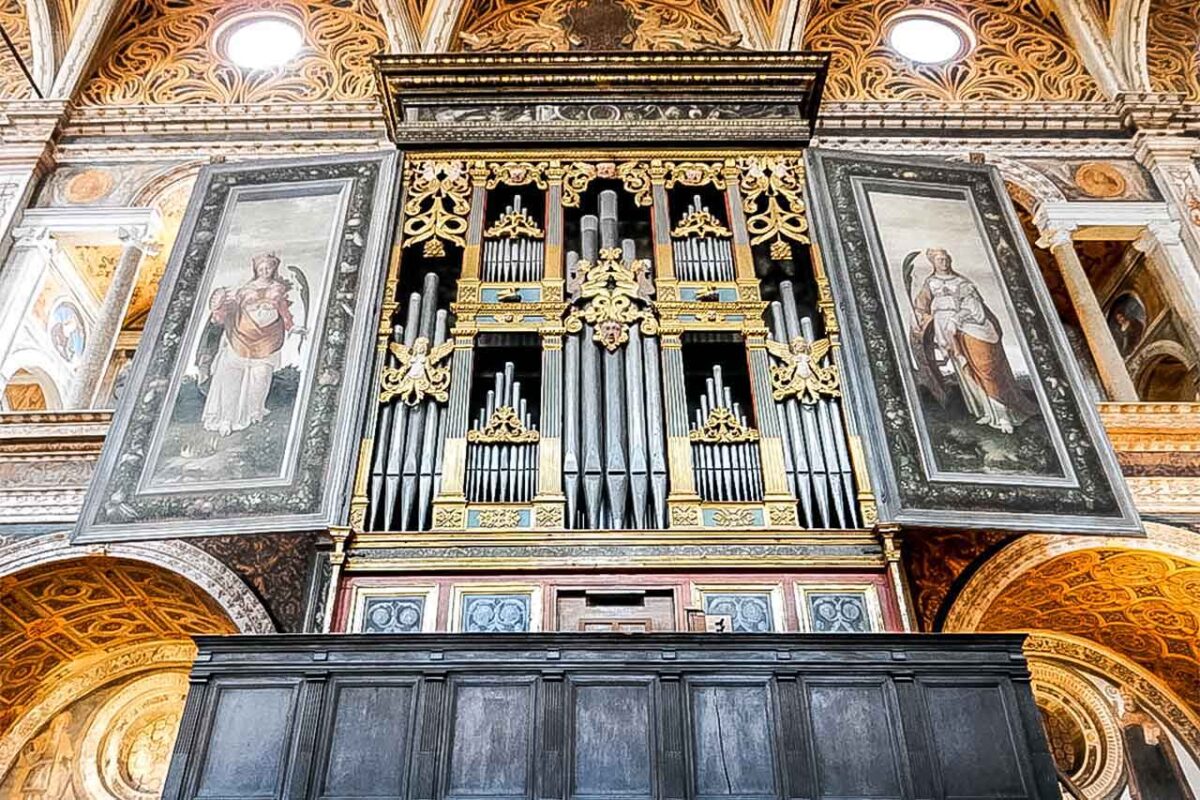
Organ |
Gian Giacomo Antegnati |
Nuns’ choir |
Historic instrument from 1554, still functioning |
Other artists at San Maurizio
Luini didn’t work alone. Contributors to the decoration include:
Hidden details and curiosities
When visiting San Maurizio, keep an eye out for these details:
Unicorns on Noah’s Ark – in the flood scene painted by Aurelio Luini, these mythical creatures stand ready to board the ark alongside the other animals.
Portrait of the Countess of Challant – some art historians suggest that in the martyrdom of St. Catherine scene, Luini painted the face of Catherine of Challant, a governor’s mistress who was beheaded in 1526 for allegedly ordering the murder of her lover. Matteo Bandello wrote in his Novelle: “Whoever would like to see her face portrayed from life, let him go to the church of Monastero Maggiore, and there he will see her painted.”
Aurelio Luini’s dog – the painter’s son hid his dog in three different scenes. You’ll find two portraits in the nuns’ choir: one in the Noah’s Ark scene (lower left corner), the other – find it yourself!
The black square on the ceiling – in the nuns’ choir, a section of uncleaned fresco was deliberately left on the vault. This black square shows what all the paintings looked like before restoration – the contrast with the bright colors around it is striking.
Planning your visit: San Maurizio al Monastero Maggiore
What are the opening hours of San Maurizio al Monastero Maggiore?
The church is open Tuesday through Sunday, 10:00 AM to 5:30 PM (last entry at 5:00 PM). It is closed on Mondays and on January 1, May 1, and December 25.
⚠️ Important: The church is kept open by Touring Club Italiano volunteers as part of the Aperti per Voi program. In exceptional circumstances (force majeure, lack of volunteers), it may be closed without notice. Before your visit, check current information on the Milan Archaeological Museum website or call +39 02 8844 5208.
Groups (minimum 8 people, maximum 30 + guide): Starting January 1, 2026, groups may enter only at designated times: 10:00 AM, 11:00 AM, 12:00 PM, 2:15 PM, 3:15 PM, 4:15 PM. Only one group is allowed per slot. Reservations are required and must be made by contacting Aster ([email protected]) by 5:00 PM on the Friday before your visit.
Is San Maurizio free to visit?
Yes, admission to the church is completely free. You don’t need a reservation if you’re visiting individually or in a group smaller than 8 people. This is one of San Maurizio’s greatest advantages – you can see a masterpiece of Renaissance painting without spending a cent.
How long does it take to visit San Maurizio al Monastero Maggiore?
Plan for at least 45 minutes to see both sections of the church. You’ll start in the public nave (Aula dei Fedeli), then pass through a side door into the nuns’ choir (Coro delle Monache). If you’re interested in art and want to examine the fresco details, you could easily spend 2 hours here.
💡 Tip: The light is most beautiful between 2:00 PM and 4:30 PM, when sunlight streams through the windows and illuminates the frescoes. If you want to avoid crowds, come right when it opens (10:00 AM) on a Tuesday or Wednesday.
How to get to San Maurizio al Monastero Maggiore?
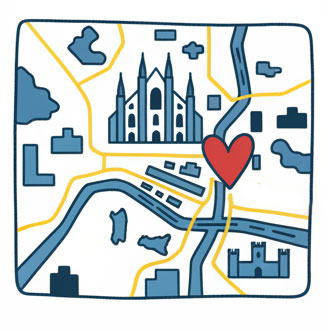
The church is located at Corso Magenta 15. The fastest way to get there is by metro M1 or M2, getting off at Cadorna station, which is a 5-minute walk away.
Metro:
From Cadorna, cross the square, turn right onto Via San Nicolao, and at its end turn left onto Corso Magenta. The church will be on your right, next to the Archaeological Museum.
Tram: Lines 16, 19 – Corso Magenta Via Nirone stop (right at the church)
Bus: Lines 50, 58 – Cadorna stop
On foot:
Practical tips before you enter
Dress code: This is still a place of worship – modest attire is required. Covered shoulders and knees. In summer, bring a scarf for your shoulders.
Photography: Photos are allowed for personal use, but no flash or tripods. Be quiet and respectful of other visitors.
Accessibility: Visitors with mobility impairments can only access the Coro delle Monache through the Archaeological Museum (entrance at Corso Magenta 15). The public nave has steps. Call ahead at +39 02 8844 5208 to let them know you’re coming.
No restrooms: The church has no bathrooms. Use the restrooms at the nearby Archaeological Museum (paid admission: €5) or at cafés along Corso Magenta.
Audio guide: The church doesn’t offer official audio guides, but volunteers often provide basic information in Italian and English.
What to see in the San Maurizio area?
Within a 10-minute walk from the church, you will find some of Milan’s most important attractions: the Archaeological Museum, Leonardo’s Last Supper, the Basilica of Sant’Ambrogio, and the Sforza Castle.
The Civico Museo Archeologico di Milano (Corso Magenta 15) is located right next to San Maurizio, in the buildings of a former monastery. You will see Roman ruins, including a tower from Maximian’s fortifications.
Santa Maria delle Grazie and The Last Supper (8-minute walk) Leonardo da Vinci’s masterpiece in the refectory of the Dominican church.
Basilica of Sant’Ambrogio (10-minute walk) Milan’s most important Romanesque church, founded in 386 AD by Saint Ambrose, the city’s patron saint.
Castello Sforzesco (10 minutes on foot) Ogromna forteca Sforzów z kompleksem muzeów.
Suggested one-day itinerary: “Renaissance Milan”:
Where to eat near San Maurizio?
Within a few minutes’ walk, you’ll find both elegant restaurants for lunch and simple osterias with homemade cuisine.
San Maurizio: practical information summary
|
Information |
Specifications |
|---|---|
|
Address |
Corso Magenta 15, 20123 Milano |
|
Opening hours |
Tue-Sun 10:00 AM-5:30 PM (last entry 5:00 PM) |
|
Closed |
Mondays, Jan 1, May 1, Dec 25 |
|
Admission |
Free |
|
Metro |
Cadorna (M1, M2) – 5 min, Cairoli (M1) – 7 min |
|
Tram |
Lines 16, 19 – Corso Magenta stop |
|
Visit duration |
45 min – 2 hours |
|
Phone |
+39 02 8844 5208 |
|
Accessibility |
Coro delle Monache via Archaeological Museum |
As you’re leaving, turn around one more time. For 200 years, no one came here, the frescoes darkened, and the city forgot its treasure. Today you can see it for free, in peace. That’s a rare privilege.
More information:

I lived in Milan for 18 years, and it was there that I came to know the city’s daily life best - not just its landmarks, but also its rhythm, its habits, and its less obvious sides. Today I live in Wrocław, but I still return to Milan regularly.