


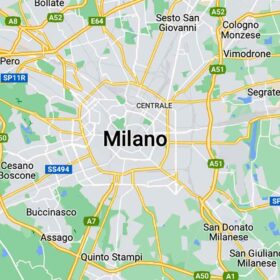
 The Geographic Location of Milan – A Strategic Spot in the Heart of Europe
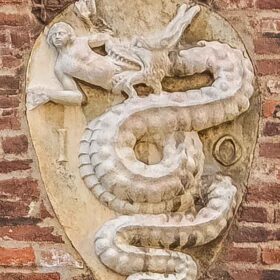 Milan’s coat of arms
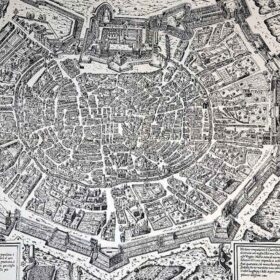 History of Milan
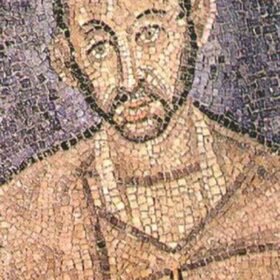 Saint Ambrose
 History of Panettone
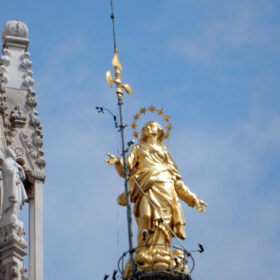 Madonnina
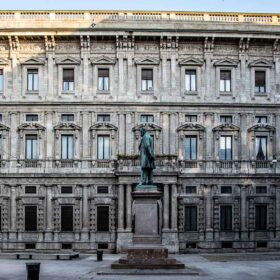 City Hall
 Milanese cuisine


Is anything worth seeing in Milan?
When I think of Milan, I always envision a kaleidoscope of experiences. A city that is rich in history and tradition on one hand, yet pulses with a modern lifestyle on the other. Milan has something extraordinary about it – it’s a place that can be yours in many different ways. Here, you can discover architectural wonders, blend in with crowds of shoppers seeking luxury in the fashion district, savor authentic Italian espresso in a hidden café in Brera, and enjoy an aperitivo by the Navigli canals in the evening. Is there a way to see it all in one visit? Perhaps. Or you might find that this city has much more to offer than anyone could ever tell you.
Sometimes, when faced with the choice of what to see in a new city, we feel overwhelmed. Every guide has its “must-sees,” and the list of essential points to check off grows endlessly. But I believe that Milan can be explored on your own terms—without rushing, choosing what is most interesting and valuable to you. I want to tell you about what is worth seeing, but above all, I want to inspire you to discover this city in your own way.
In this guide, I will take you on a journey through Milan, one that I would plan based on years of experience and love for this city. Here, you will find those “famous places” that you cannot miss—because it’s worth seeing the Duomo cathedral with your own eyes, admiring Leonardo da Vinci’s fresco “The Last Supper,” or sitting in La Scala Theatre. But there will also be places that don’t always make it to the list of standard tourist attractions—those that may not be on the first pages of guidebooks but are the heart of true Milan. You know what I mean? Those hidden corners that you need to feel, not just see.
If you’re looking to explore Milan at a relaxed pace, without rushing or just checking items off a list, you’re in the right place. And if you’re searching for ways to sightsee without spending a fortune, be sure to check out my guide on free attractions in Milan, where I share tips on how to fully enjoy this city without breaking the bank.
So let’s go – together, we’ll discover Milan in a way that will stay with you for a long time.
When planning a trip to Milan, there are several important aspects of the city to keep in mind:
Despite these challenges, Milan has a lot to offer, especially in terms of culture. By giving it a chance, you will discover that this city is full of interesting attractions and surprising experiences.
Top tourist attractions in Milan
Duomo Cathedral of Milan (Duomo di Milano/Dom de Milan)
When you say “Milan,” many people immediately think of one thing – the magnificent Duomo Cathedral. And for good reason! It’s the heart of the city, its soul, and its symbol. I could tell you that it’s the largest Gothic cathedral in Italy, that it took six centuries to build, or that it has so many spires you could lose count. But there’s more to it than just numbers and facts. The Duomo is about emotions – it’s the sight of the setting sun reflecting off the marble, the coolness of the stone pillars you feel as you step inside, the moment you stand on the rooftop and gaze at Milan stretching out to the horizon.
As you wander through the interior, you can feel the remarkable atmosphere of peace and reflection, a sharp contrast to the bustling square just outside the doors. And if you have the courage and energy, I highly recommend climbing to the rooftop. Yes, there’s an elevator, but if you want to feel like a true adventurer, take the stairs. Those views – over the city, the distant Alps, and, on a clear day, even as far as the Apennines – will stay with you forever.
Access to a restricted part of the cathedral, designated for those who wish to pray, is free, but to see the entire cathedral, purchasing a ticket is necessary.
But the Duomo is not just about beautiful views. It’s a place that tells the story of Milan like no other attraction. If you want to learn more about its history, secrets, and architectural details, be sure to check out my guide to the Milan Cathedral. There, you’ll find everything you need to know before visiting this extraordinary site.

Galleria Vittorio Emanuele II – The architectural gem of Milan
When you stand at the entrance of the Galleria Vittorio Emanuele II, you’re not just stepping into one of Italy’s oldest shopping centers but also into a place that has been the heart of elegant Milan for generations, aptly called its “living room.” The gallery is more than just a quick shortcut between the cathedral and La Scala theater. Here, everything has a story – from the mosaic floor beneath your feet with its famous bull, to the historic shopfronts, and the impressive iron-and-glass dome overhead.
I don’t know about you, but I love this blend of luxury, history, and everyday life. Walking through the Galleria, you pass by boutiques of top designers, as well as classic cafés where the spirit of past gatherings of artists and intellectuals still lingers. It’s a place where you can step back in time for a moment – sit down with an espresso, watch the crowd flow by, and simply savor the moment.
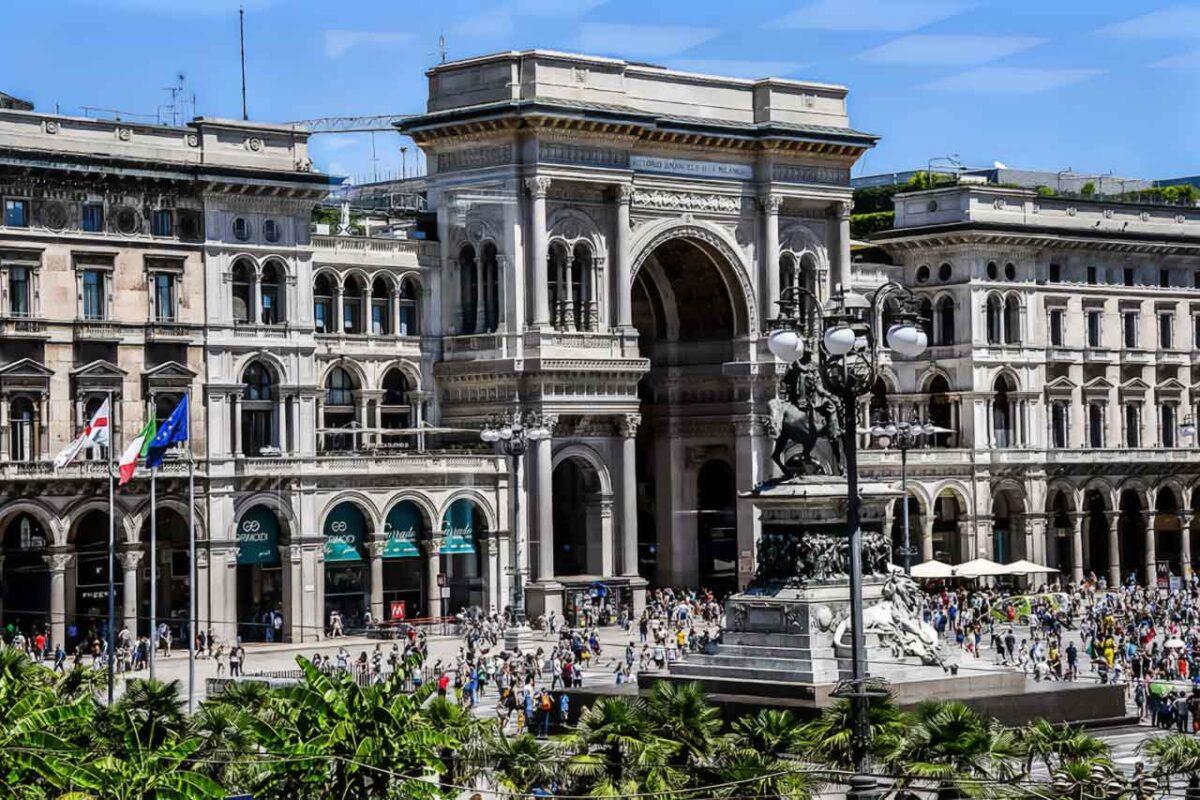
Interestingly, the Galleria wasn’t always as refined as it is today. Over its history, it has gone through various stages, with its story reflecting rebirth and change. Here, every marble piece of the floor has its own tale – perhaps of a couple who met under this roof for the first time, a townsman dreaming of the wider world, or a singer aspiring to a career at La Scala.
If you want to learn more about the secrets and history of Galleria Vittorio Emanuele II – how this place has changed over the years and what makes it so unique – be sure to check out my guide to Milan’s oldest shopping center. There, you’ll find more stories that might just make you see this place in a whole new light.
Church of Santa Maria delle Grazie and Leonardo da Vinci’s “The Last Supper”
Did you know that there’s one place in Milan that draws people from all over the world? Undoubtedly, it’s the Church of Santa Maria delle Grazie. But, to be honest, most of us don’t come here just for the church itself (though it’s beautiful). What attracts people is Leonardo da Vinci’s fresco “The Last Supper,” hidden in the refectory right next door.
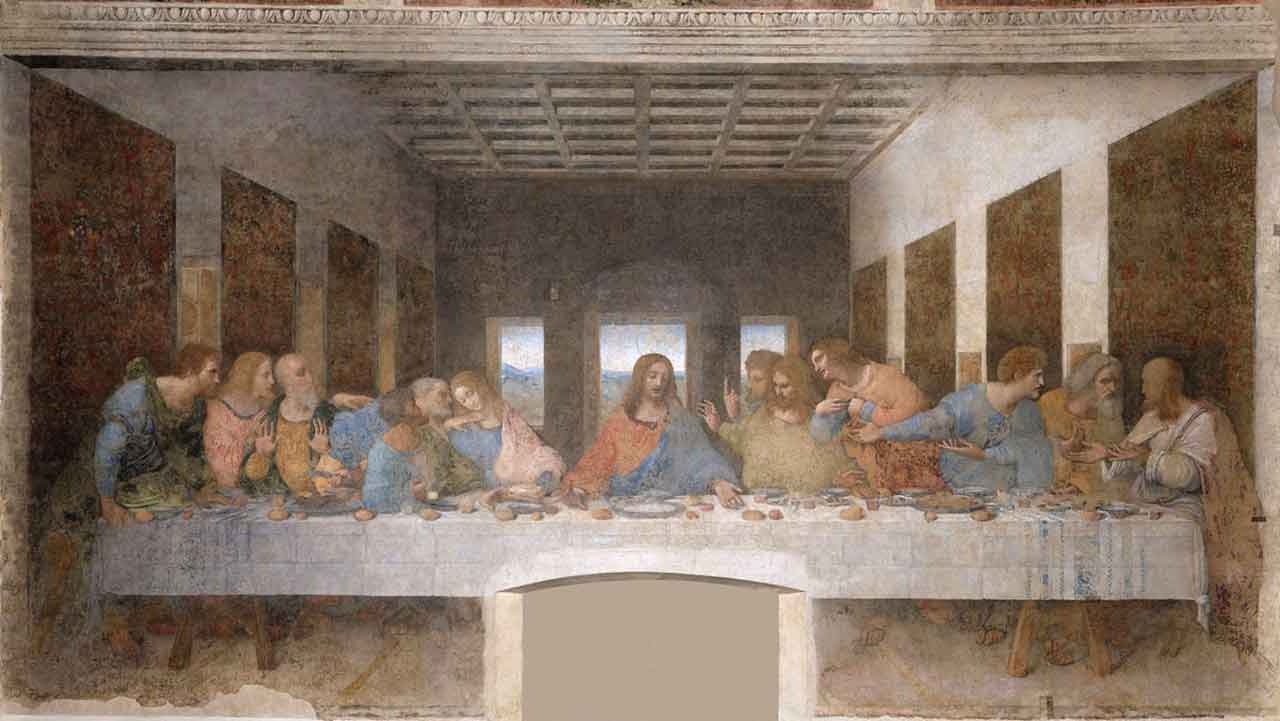
Now, a word of caution – “The Last Supper” isn’t a place you can just drop by on a whim. Tickets must be reserved in advance, as it’s one of the most visited sites in all of Milan. Once you step inside, you’ll understand why. Standing before this famous painting, which you’ve likely seen in photos and textbooks, you’re struck by how different it looks in person. Details that you may have missed before suddenly stand out, and the emotions of the figures are so vividly painted that you feel as if you could step into the scene.
This fresco is a story in itself. Up close, you see how Leonardo experimented with a technique that – to put it gently – wasn’t very durable. It’s a miracle that “The Last Supper” has survived to this day, given all the wars, humidity, and other misfortunes it has endured over the centuries. But those few minutes you have to admire it are worth it because the memory stays with you for a long time.
Want to learn more about The Last Supper and how to book tickets to see it for yourself? Take a peek at my guide for all the information you need: Leonardo da Vinci’s Last Supper.
Pinacoteca di Brera – the jewel in the crown of Milan’s attractions
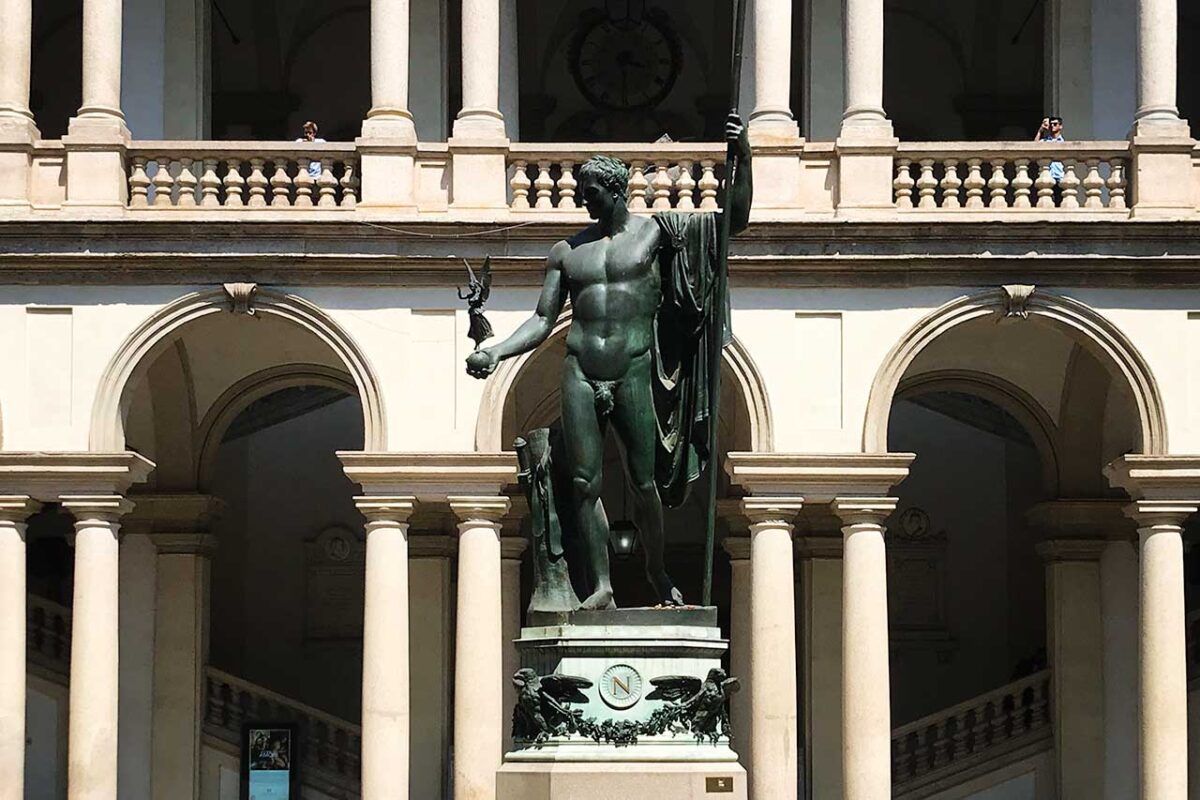
Among its many attractions, the Pinacoteca di Brera stands out as one of the city’s most fascinating cultural hotspots. A treasure trove for art lovers, this place is home to one of the most important art collections in Italy. The history of this place is as interesting as the works it houses – Napoleon Bonaparte transformed this 18th-century palace into a warehouse for confiscated art from northern Italy, laying the foundations for the gallery today.
Within the forty rooms of the Pinacoteca di Brera, visitors can admire works that are the quintessence of Italian artistic genius. Among them are masterpieces such as Andrea Mantegna‘s “Dead Christ“, Raffaello‘s “The Marriage of Mary and Joseph“, Caravaggio‘s “The Supper at Emmaus“, Giovanni Bellini‘s “Pieta“, Francesco Hayez‘s “The Kiss“, and Piero della Francesca‘s “The Madonna and Child Surrounded by Saints“. These are just some of the works that place the Pinacoteca di Brera on the list of the most important attractions in Milan. Alongside these masterpieces, visitors can also admire works by Titian, Tintoretto, Rubens and Picasso.
Entrance tickets cost 10 euros (standard) and 7 euros (concession), which is a small price to pay for the opportunity to immerse yourself in the world of great art masters.
Sforza Castle (Castello Sforzesco) and Parco Sempione
When we think of old times, when princes and warriors decided the fates of cities, massive castles always come to mind. Milan’s Sforza Castle is no exception. This imposing, massive castle in the city center has something monumental about it. Standing before its walls, you can almost feel the echo of the past – the laughter of knights, the clash of swords, and the hum of courtly life. You might even imagine hearing the footsteps of Leonardo da Vinci, who worked here on his masterpieces.
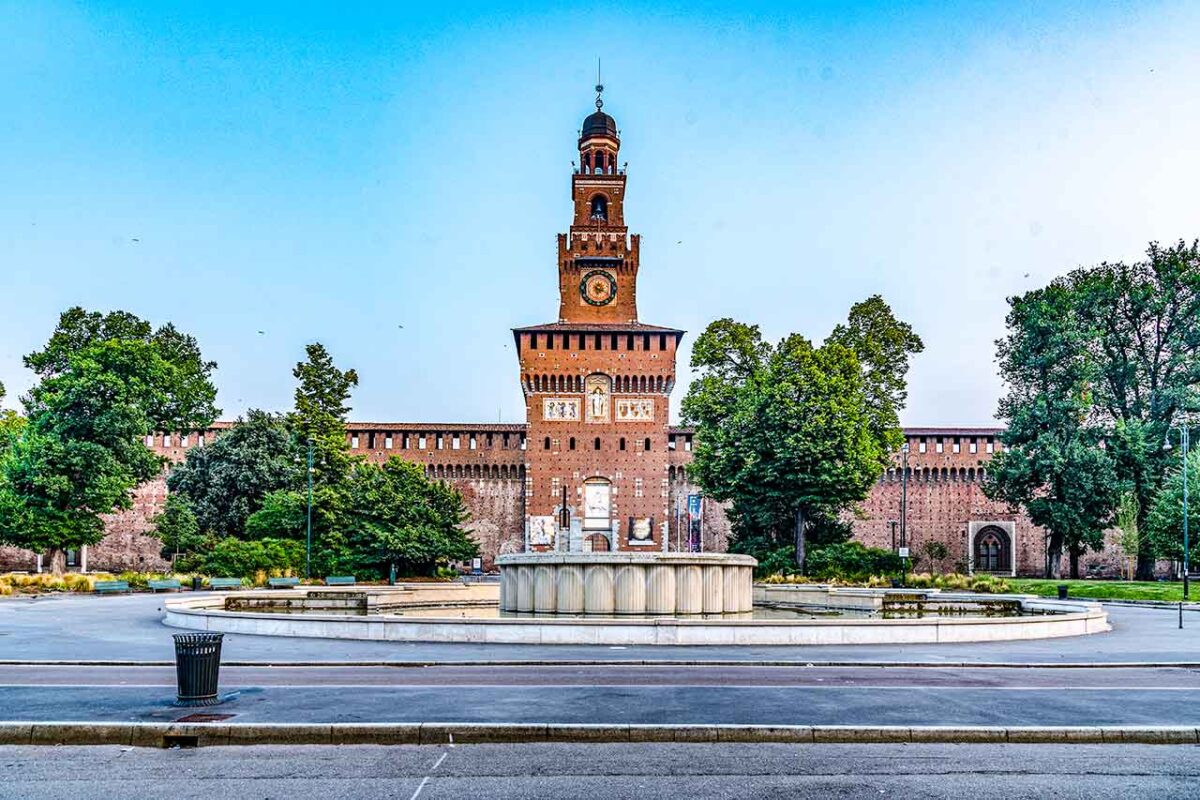
The Sforza Castle is no ordinary fortress. Within its walls you will find true treasures of art and history. Walking through the courtyards and towers, you will see frescoes by Leonardo da Vinci and sculptures by Michelangelo. There are also many other works of art and an interesting museum of musical instruments. Each room hides an interesting story. Even if art is not your passion, a visit to the castle will be like a trip back in time.
And once you’ve soaked in the courtly atmosphere, step outside, and head to the back of the castle. There, you’ll find yourself in Parco Sempione – one of Milan’s most beautiful parks. This is a place that invites relaxation, picnics, and long walks amid greenery. On weekends, you’ll find people spreading blankets (weather permitting), playing guitars, or simply unwinding by the pond. It’s the perfect escape from the city’s hustle and bustle, where you can briefly forget the world.
Want to uncover more secrets of the castle and see what else this magical corner of Milan holds? Check out my article on Sforza Castle and Parco Sempione. There, you’ll find tips to make your visit even more special.
The castle’s courtyards and exterior areas, including the dry moat, are free to visit. Admission to the castle’s interior is paid unless you arrive after 2:00 PM on Tuesdays or any other day except Mondays after 4:30 PM.
Sempione Park and Sempione Gate (with the Arch of Peace – Arco della Pace): the green heart and historical gate of Milan
Just behind the majestic Sforza Castle is Parco Sempione, a vast green space that is one of the most important and beautiful parks in Milan. This park is not only a favorite place to relax for the city’s residents, but is also one of the attractions worth considering during your stay in Milan. Although the park is popular with tourists and can sometimes get crowded, its charm and peace still attract large crowds.
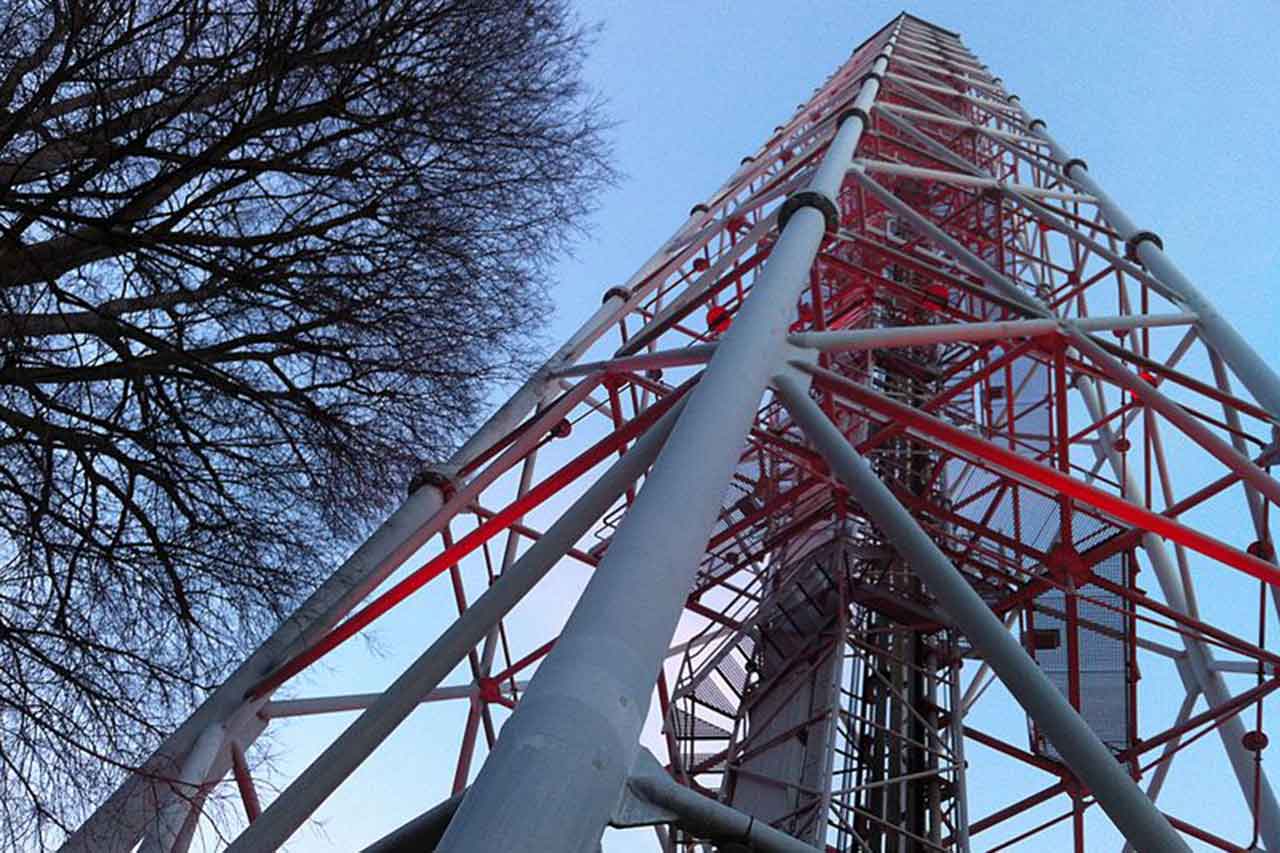
When visiting Milan, be sure not to miss the Torre Branca, a park tower that is a must-see during a visit to Sempione Park. Going to the top, you’ll discover a breathtaking view of Milan, including the park, the Arch of Peace (Arco della Pace), the majestic Sforza Castle, modern skyscrapers in the distance, and other picturesque parts of the city. This panoramic view from above allows you to appreciate both the historic and modern architecture of Milan, creating unforgettable memories and making it one of the city’s most memorable spots.
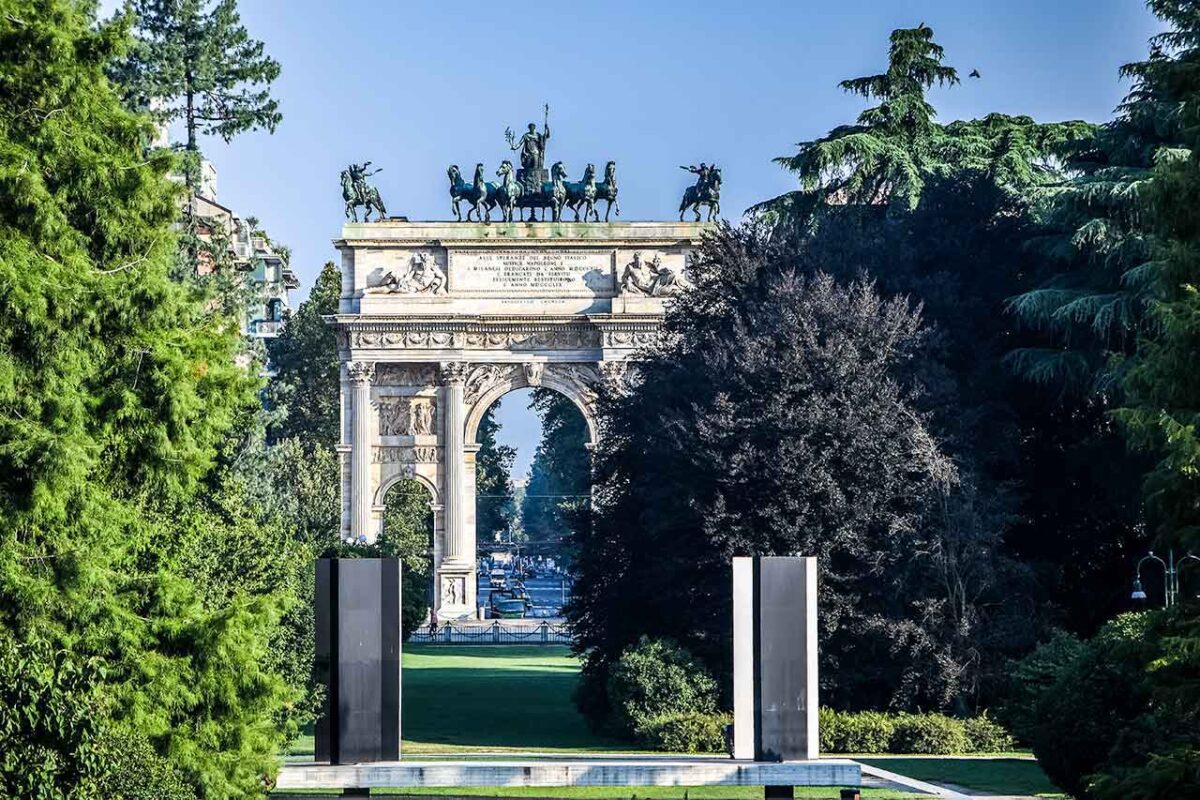
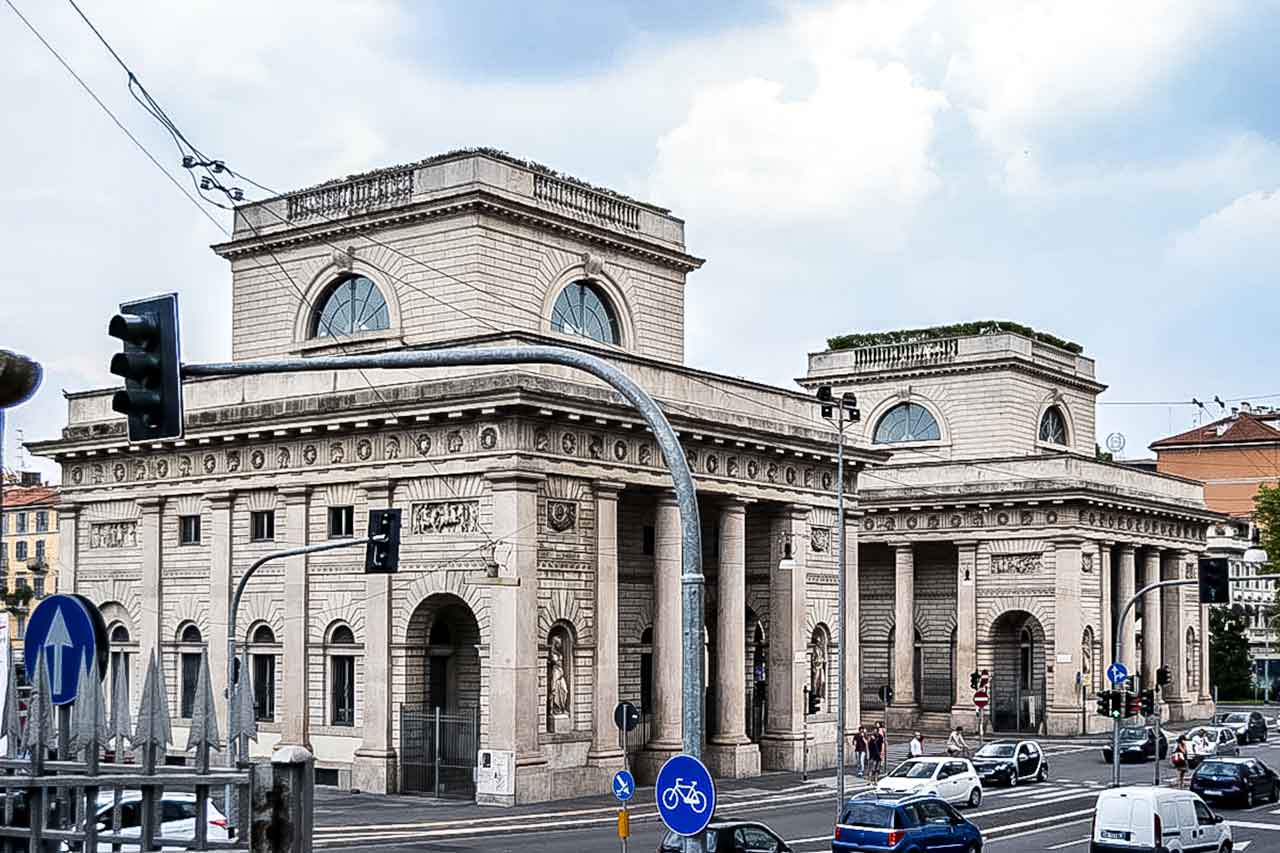
While walking through the park, it is also worth seeing the classicist stadium “Arena Civica“, built in 1807. This historic sports facility has witnessed many important events in the history of the city. Another point that cannot be missed is the Arch of Peace, a monumental gate, the brainchild of Napoleon. This arch was to face Paris, symbolizing Napoleon’s power and influence in Europe.
Parco Sempione, with its attractions, is the perfect place to relax and escape the hustle and bustle of the city. It is definitely a place to put on your list during your stay in Milan, offering both historical and natural beauty.
La Scala Theatre – a pearl of operatic art
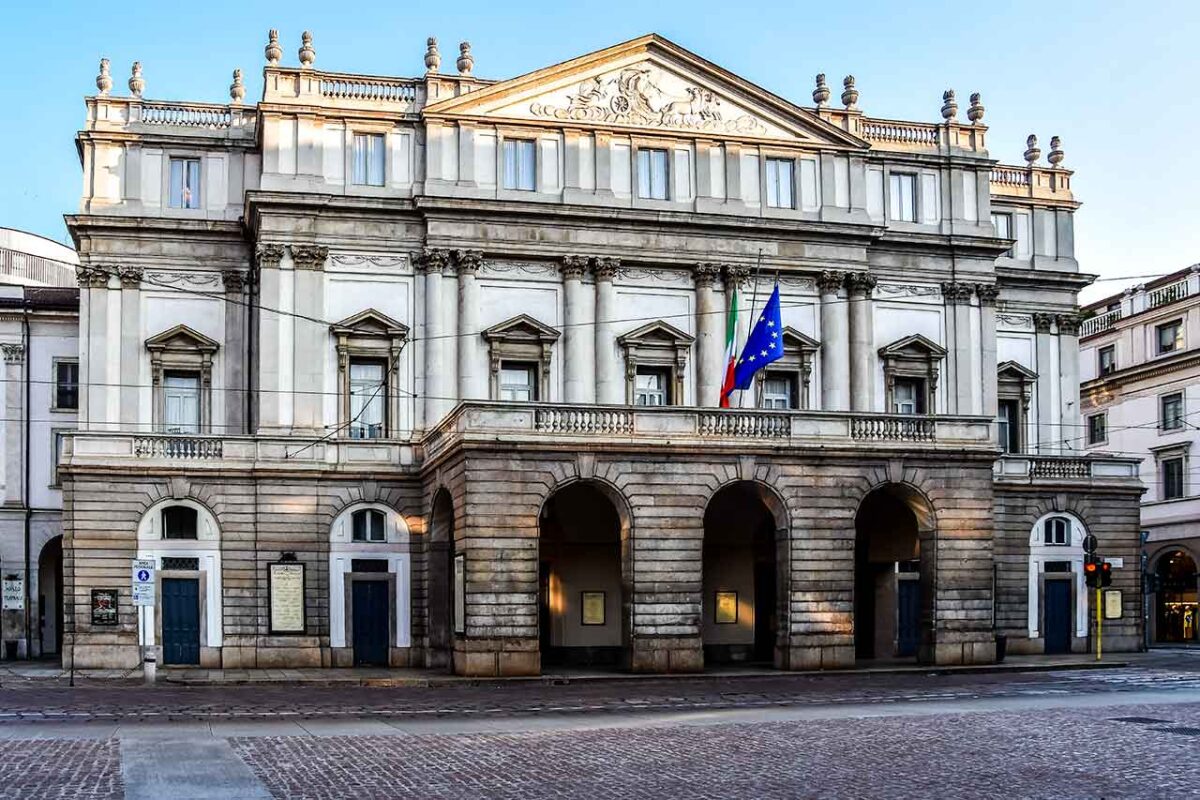
The Teatro La Scala in Milan may look rather inconspicuous from the outside. Walking past, it is easy to miss its modest facade. However, it is enough to cross the threshold to feel the unique atmosphere that fills this place. The greatest stars of opera have performed on this legendary stage – Maria Callas, Luciano Pavarotti, Placido Domingo – and the emotions in the air are almost tangible. It was here that great careers were born, and the applause of the audience carried far beyond the walls of the theatre.
You don’t have to be an opera fan to appreciate the magic of La Scala, it captivates every art lover. It’s more than just a theatre – it’s the heart of Milan’s musical world, and perhaps even the whole of Europe’s music. It’s worth taking a peek inside, not just for a performance, but also for the museum, which houses incredible treasures: old programmes, costumes, scores and memorabilia related to the biggest names in opera.
You can also book a tour that includes both the theater and the museum. If you want to know how to get tickets to the show, my guide to La Scala Theater will give you all the information you need.
While you’re in Piazza della Scala, check out the Gallerie d’Italia. Less well-known than the Pinacoteca di Brera or Palazzo Reale, it boasts a vast collection of art, and the building itself is a masterpiece of architecture worth seeing.
Also near La Scala is Palazzo Marino, the seat of the city council. You can enter for free with a guided tour or wander around the courtyard on your own. This is a place that highlights the cultural and historical richness of Milan, an attraction for every visitor to the city.
If you’d like to experience it all firsthand and learn how to get tickets for a performance, check out my guide to La Scala Theater. There, you’ll find all the details you might need before visiting this remarkable place.
Basilica of St. Ambrose: the spiritual heritage of Milan
Although it may not be as big and grand as the famous Milan Cathedral, the Basilica of Sant’Ambrogio is my favorite church in the city and is definitely worth a visit. As one of the oldest churches in Milan, built in the 4th century in Romanesque style, the basilica is a witness to the rich history and traditions that Milan calls its heritage.
The basilica is named after the patron saint of Milan, Saint Ambrose, who personally consecrated the church and dedicated it to the martyr saints. The interior of the church is equally impressive, with numerous artistic and historical treasures. There you can admire, among others, the golden altar, which is a true work of art, the beautifully carved Silicon sarcophagus, the marble bishop’s throne, the ciborium and the stunning pulpit.
A visit to the Sanctuary of Saint Ambrose is not only an opportunity to see one of the most important churches in the city, but also a chance to immerse yourself in the deep spirituality and history that are inextricably linked to this city. It is a place that attracts both lovers of sacred art and those who seek peace and reflection in the hustle and bustle of the big city.

Leonardo da Vinci Museum of Science and Technology: discover the genius in the heart of Milan
During your weekend in Milan, one of the unforgettable attractions and monuments to include in your visit is the Leonardo da Vinci Museum of Science and Technology. This place is not only a tribute to one of the greatest minds to ever work in Milan, but also a fascinating journey through the history of science and technology.
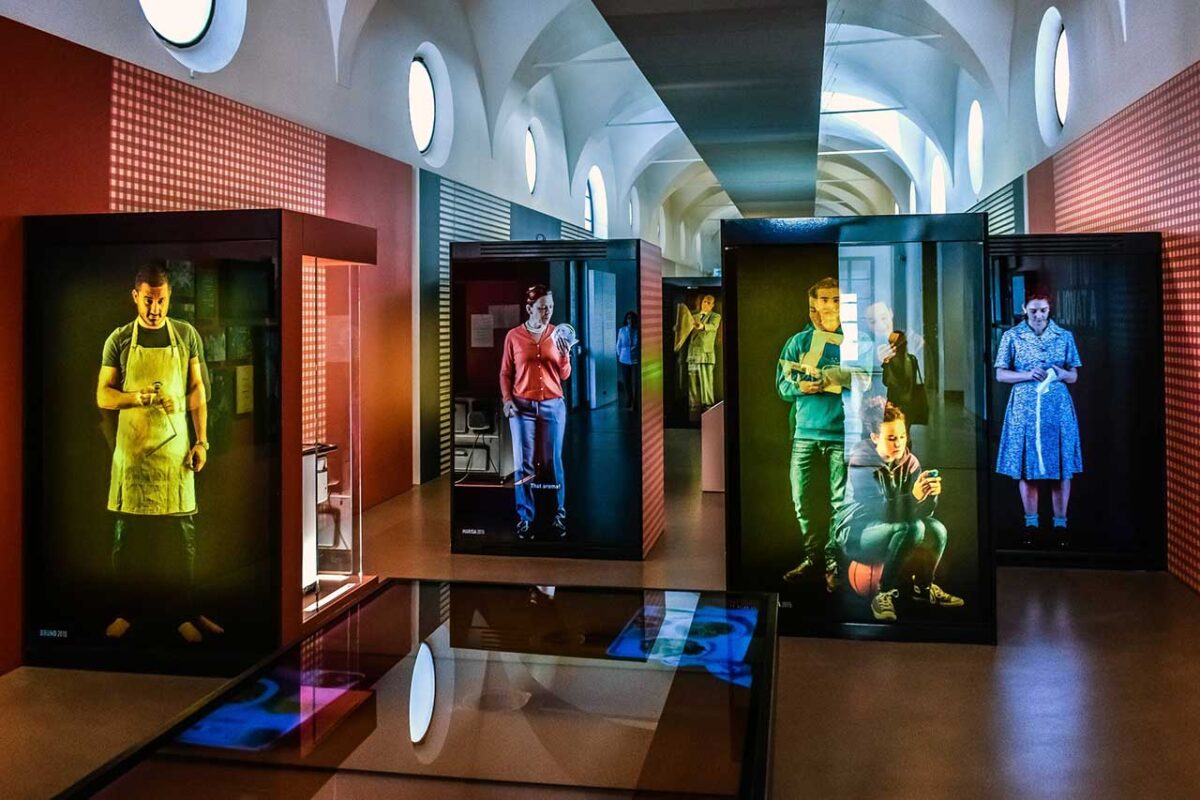
The museum, housed in an old monastery, boasts a vast collection of documents, models and exhibits that trace scientific progress and technological inventions from the Renaissance to the present day. These include reconstructions of craft shops and laboratories of ancient scientists, as well as an impressive hall of wagons and locomotives, a kind of railway museum.
Particular attention is drawn to documents and models of Leonardo da Vinci’s inventions. The museum has the world’s largest collection of models of machines made based on the drawings of this brilliant artist and inventor. The Leonardo da Vinci Gallery on the first floor presents a selection of these extraordinary works, which testify to da Vinci’s extraordinary creativity and versatility.
In addition to the interiors, you will also find outdoor displays, including the Enrico Toti submarine (S 506), which became part of the collection in 2005. Also worthy of note is the Mauro Collection, which contains objects in gold and precious stones, a reconstruction of a lithographic shop, and memorabilia related to Marconi.
The Leonardo da Vinci Museum of Science and Technology is the perfect place to spend an inspiring afternoon, for both adults and children. Discover the genius of Leonardo da Vinci and immerse yourself in the fascinating world of science and technology while you are in Milan. And here is the museum’s website.
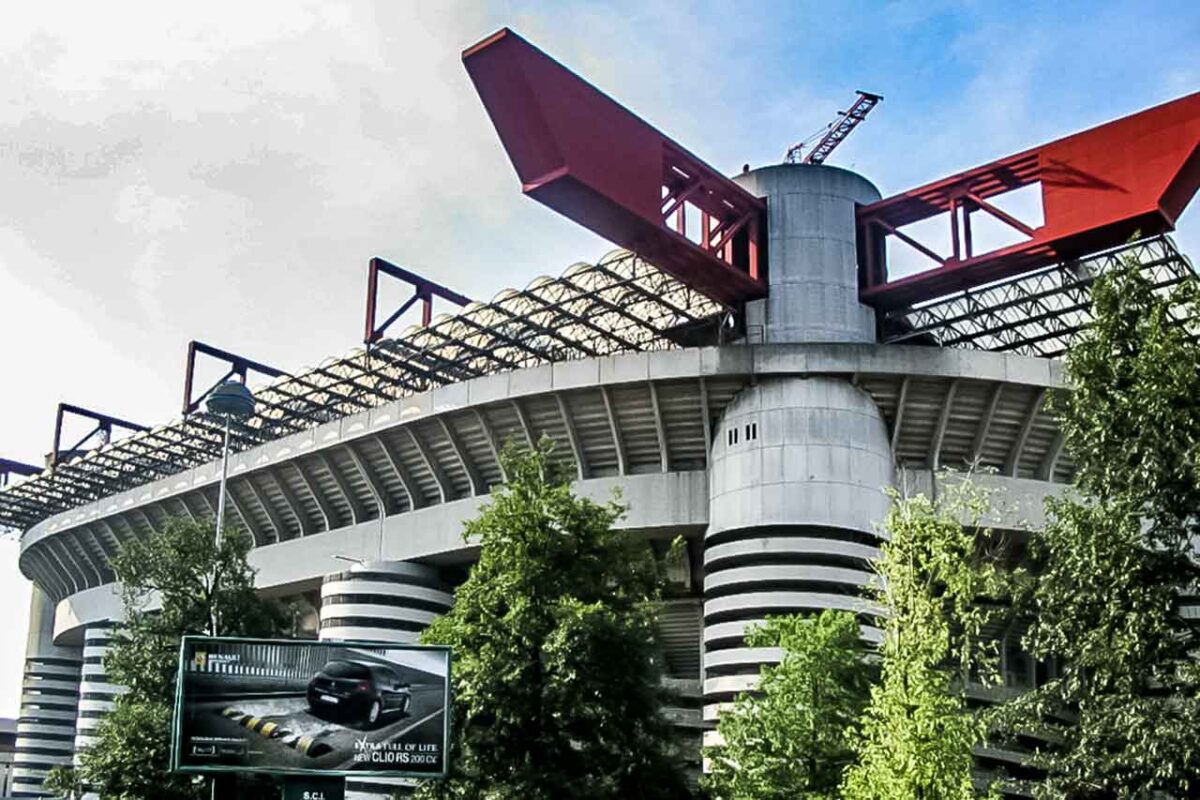
San Siro Stadium: the heart of football excitement in Milan
When considering Milan for the weekend, football fans cannot miss the opportunity to visit the legendary San Siro Stadium, home to two famous teams: AC Milan and Inter Milan. It is a place where football history is almost tangible and sporting emotions reach their peak, especially during heated derbies between these local rivals.
San Siro, also known as Stadio Giuseppe Meazza, is one of the largest football stadiums in the world, with a capacity of 85,000. Its impressive architecture and atmosphere make it a mecca for football fans from all over the world.
A visit to San Siro is not only a chance to watch a live match, but also to visit the stadium museum. It is a real treasure trove of memorabilia and history of both AC Milan and Inter Milan, presenting the rich history of these clubs, their triumphs, legends and most important moments. Entry to the museum, including a tour of the stadium, costs 17 euros, which is a great opportunity to immerse yourself in the world of great football.
For every football fan, especially fans of AC Milan and Inter Milan, a visit to the San Siro Stadium is a must-see during your visit to Milan. It is not just a stadium, it is a temple of football, where every match is an unforgettable event and football history is still being written.
Milan off the beaten track: lesser-known attractions
Beyond the top 10 must-sees in Milan, there’s a whole world of lesser-known but equally fascinating attractions. These hidden gems of Milan often escape the attention of official guidebooks, yet they have so much to offer those who want to delve into the true character of the city. Here are some lesser-known but absolutely worthy places that reveal a different side of Milan.
Milan off the beaten track: lesser-known attractions
Beyond the top 10 must-sees in Milan, there’s a whole world of lesser-known but equally fascinating attractions. These hidden gems of Milan often escape the attention of official guidebooks, yet they have so much to offer those who want to delve into the true character of the city. Here are some lesser-known but absolutely worthy places that reveal a different side of Milan.
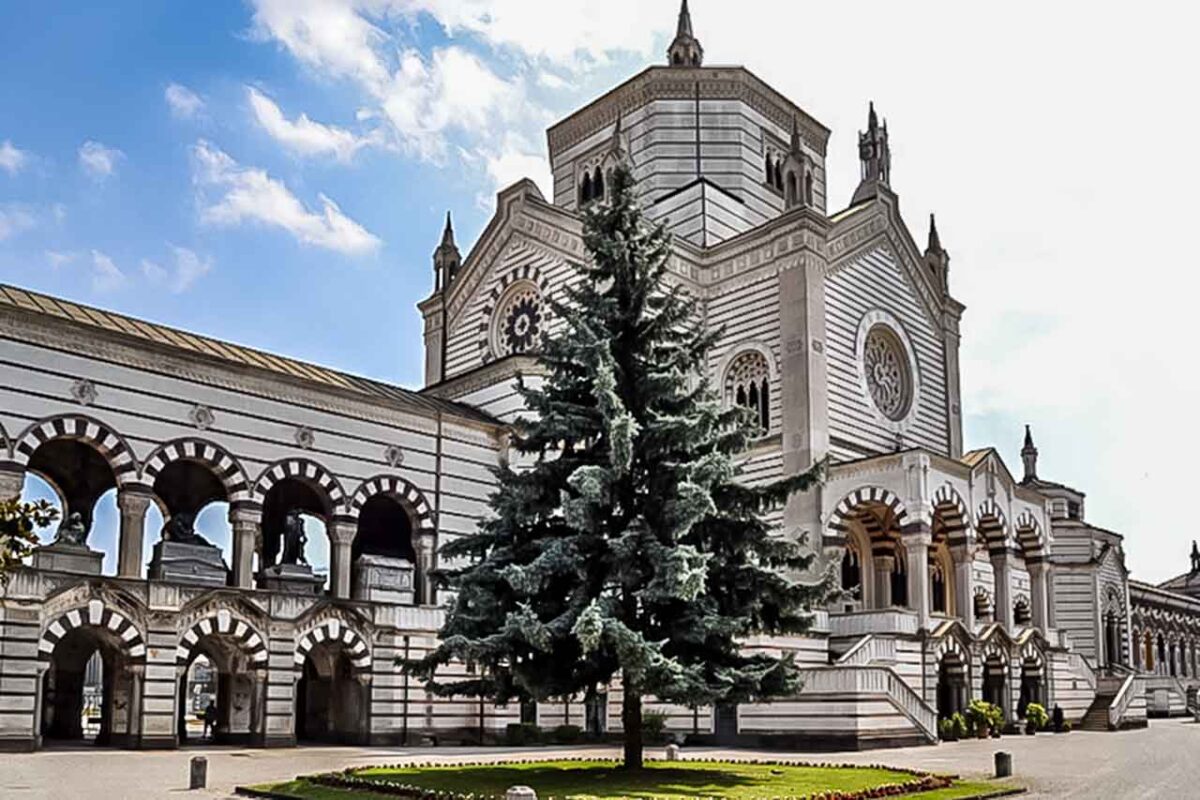
Milan Monumental Cemetery (Cimitero Monumentale) – an open-air art gallery
The Monumental Cemetery in Milan is not only a resting place, but also a veritable open-air art gallery. Ideal for those seeking a moment of respite from the hustle and bustle of the city, it offers a unique combination of history, art and nature.
Start your visit at the impressive Famedio building, which is located just outside the main entrance. It is a kind of pantheon where the remains of prominent figures from Milan’s history are buried. Among them is the tomb of Alessandro Manzoni, author of the famous novel “The Betrothed“, considered a masterpiece of Italian literature.
After leaving Famedio, it is worth immersing yourself in the labyrinth of the cemetery’s alleys, where each tombstone is a work of art. Here you will find richly decorated mausoleums, Greek temples, obelisks and other original structures that testify to the rich history and culture of Milan. Among them, it is worth paying attention to the reduced version of the famous Trajan’s Column.
The Monumental Cemetery is a place that surprises with its diversity and beauty. It is one of those interesting places that allows for a moment of reflection and contemplation, while witnessing the history of the city. Walking among these monumental works of art is an unforgettable experience that allows you to appreciate the richness of the city’s culture and art.
Piazza dei Mercanti: a hidden attraction in the center of Milan
Piazza dei Mercanti, located in the center, near the famous Duomo, is a place that transports visitors back in time, offering a unique perspective on the rich history of the city. It is one of the interesting places in Milan that are definitely worth visiting.
The focal point of the square is the Loggia degli Osii, an imposing building dating back to 1316. From its balcony, adorned with an eagle – a symbol of justice – judges would issue important edicts and rulings. It was here, on this historic balcony, that key moments in the city’s public life took place.
Next to the Loggia stands the Palazzo della Regione, built in the 13th century. This building, once an administrative building, is known for its characteristic bas-relief of a sow, one of the symbols of Milan. It was in the Palazzo della Regione that the city was governed in medieval times.
Another noteworthy building in Piazza dei Mercanti is the Casa dei Panigarola, also known as the Notary House. It was here that, in the Middle Ages, the Statutory Office operated, responsible for registering and transcribing princely decrees and public acts. This building played a key role in the city’s administration and law, giving a category to private acts.
Piazza dei Mercanti, with its historic buildings and rich history, is a place that allows you to understand and appreciate Milan’s past. Walking through this square is like a journey through time, revealing to visitors the layers of history of this fascinating city.

Università Cattolica del Sacro Cuore: Milan’s academic heritage is worth seeing
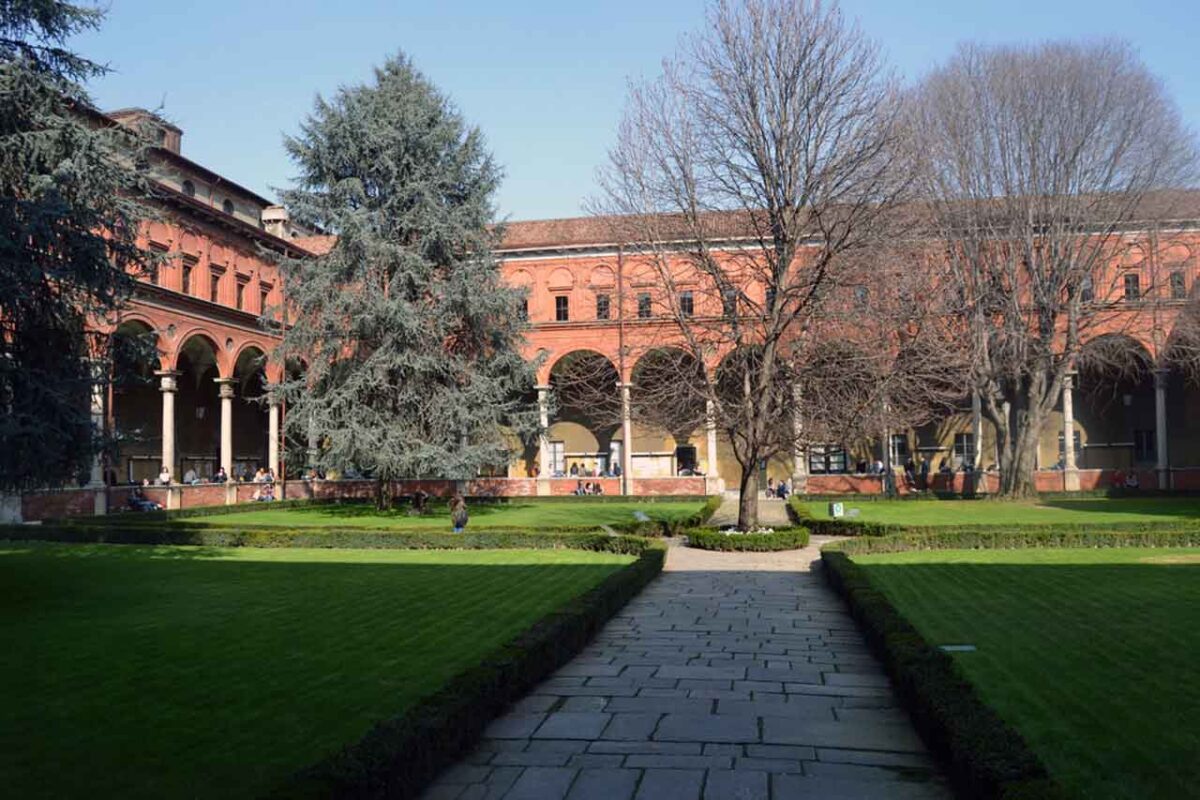
The Catholic University of the Sacred Heart (Università Cattolica del Sacro Cuore) is a renowned private university that holds a special meaning for me as it is my “Alma Mater”. Located near the Basilica of Sant’Ambrogio, this university is an ideal place to visit when exploring this part of the city.
Founded in the beautiful, historic Cistercian monastery of St. Ambrose Abbey, the university underwent a major reconstruction that lasted 20 years, ending in 1949. The campus architecture combines historical and modern elements, creating a unique academic environment.
During your visit, there are a few key features to note about the university. Two impressive cloisters, which bear witness to the rich history and tradition of the site, provide a peaceful and inspiring atmosphere. The Aula Magna, the main hall of the university, is the heart of academic life and often serves as the venue for important events and ceremonies.
The University Chapel is another must-see. It is a place of peace and reflection that contrasts with the hustle and bustle of city life in the Lombard capital. The crypt, used as a lecture hall, is a unique combination of historical architecture and modern educational functions.
When visiting the Catholic University of the Sacred Heart, you can feel the spirit of history and tradition that are vividly present in every corner of this unique place. It is not only an educational institution, but also an important part of the cultural heritage.
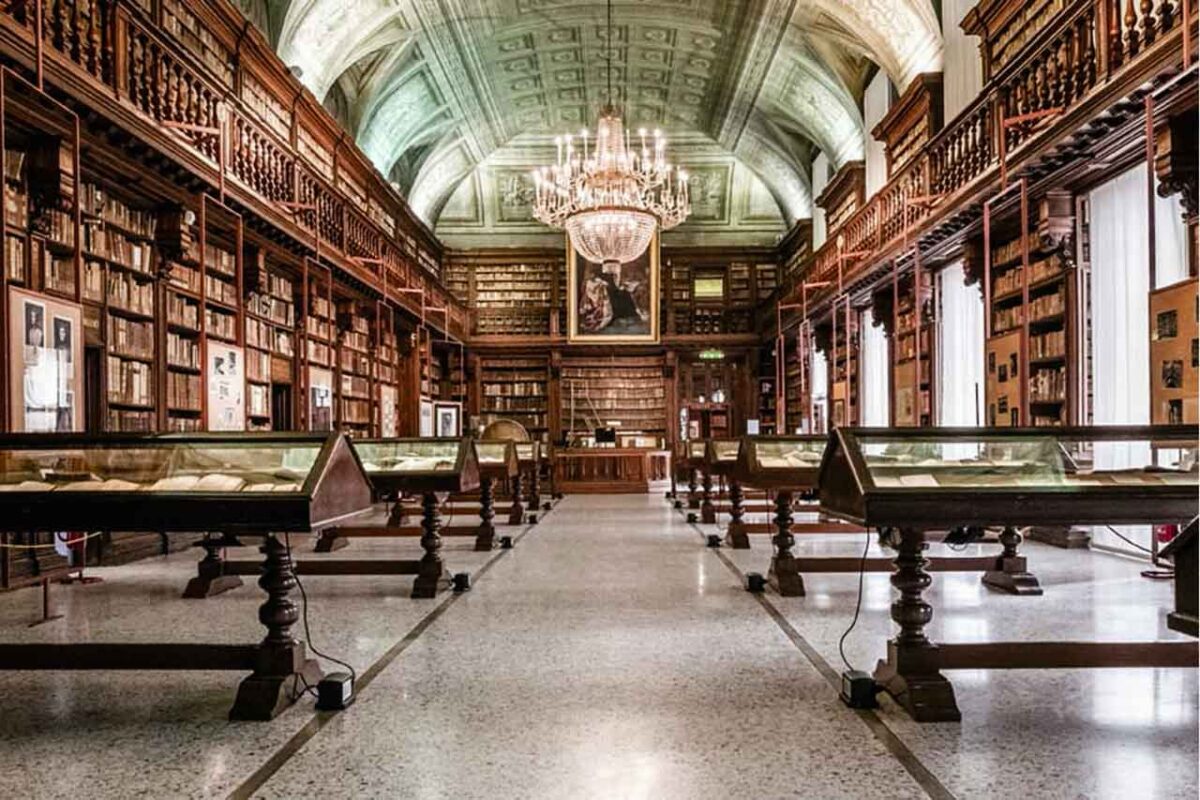
The Brera District and the Braidense National Library
The Brera district, known for its unique charm, is one of the most picturesque corners of Milan. Its narrow streets, full of suggestive alleys, interesting squares and small churches, create an atmosphere from another world. It is here, in the heart of this district, that the Braidense National Library is located, a real treasure for lovers of books and history.
Built in 1770 at the request of Maria Theresa of Austria, after the dissolution of the Jesuit order, the library became home to the richest humanistic collection in Italy. Opened to the public in 1786, it is housed in the 17th-century Palazzo di Brera, which it shares with the Pinacoteca di Brera and the Brera Botanical Garden.
In 1880, the Braidense National Library was granted the status of “national library,” which officially entrusted it with the task of preserving the Italian publishing heritage. Although the Pinacoteca di Brera, which uses the corridors surrounding the library, is widely known, the library itself remains unjustly in the shadows, unknown to many residents. It is a place open to the public, especially students and researchers. To enter, all you need to do is show your ID and fill out a short form.
The Brera district is an attraction in itself, offering not only cultural experiences but also numerous shops, stalls with various items and charming restaurants and bars. Walking through its streets, you can feel like you are in a completely different city, full of history and culture. It is the perfect place to spend an afternoon discovering the cultural richness of Milan.
The Baroque Charm of Guastalla Park: an Oasis of Silence
The Guastalla Park, located in the heart of Milan, is the perfect place for those looking for a break from the hustle and bustle of the city. Located opposite the University of the Studi, between Via Francesco Sforza and Via San Barnaba, this park is a true haven of peace.
Its main attraction is the stylish Baroque fish pool, which was built on the site of a former pond. This pool, with two elegant terraces, stairs and balustrades decorated with white granite, is not only a beautiful architectural element, but also a place where you can stop for a moment and admire the peaceful atmosphere of the park.
Guastalla Park, although smaller than Sempione Park, offers a unique experience. Its quiet paths, carefully maintained green spaces and classic architecture create the perfect backdrop for a relaxing walk or a short break from the hustle and bustle of the city. It is a place where you can find a moment of peace, read a book or simply enjoy the beauty of nature in the heart of the concrete jungle.

Quadrilatero della Moda and Quadrilatero del Silenzio.
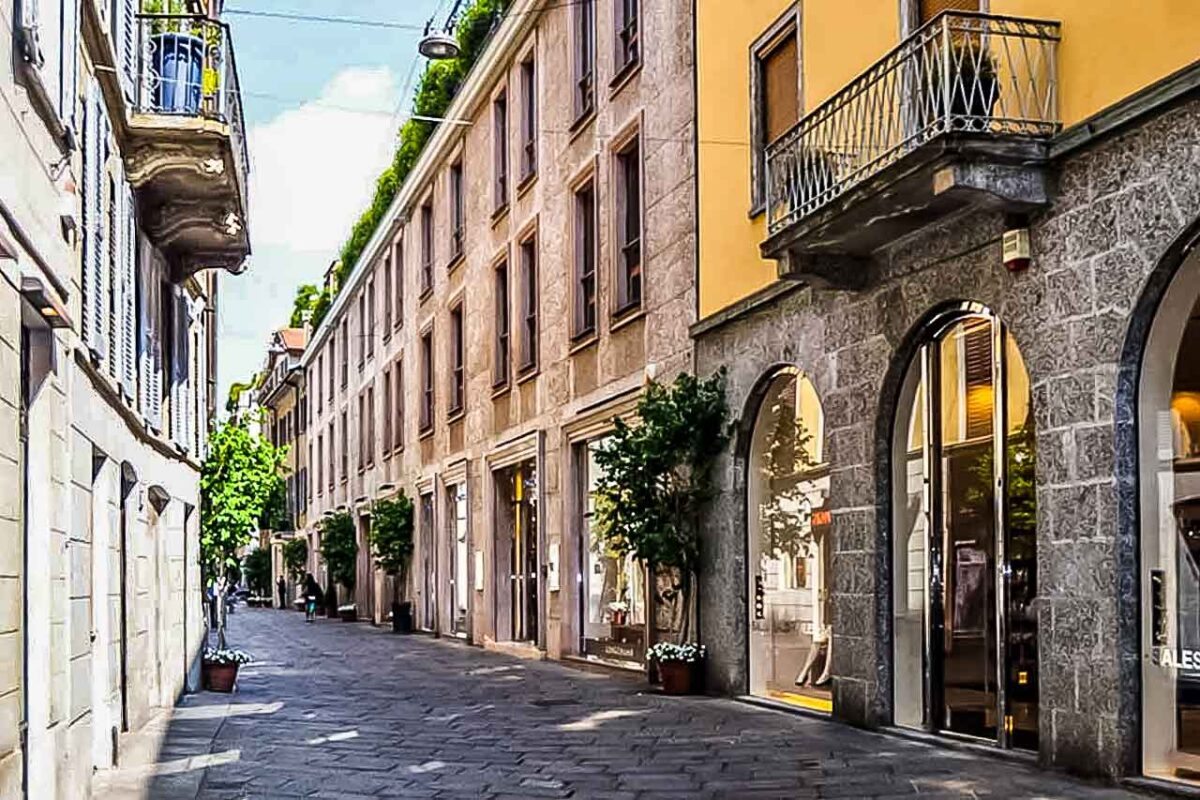
The Fashion Quadrilateral, also known as the Quadrilatero della Moda, is one of the most prestigious places in the world for lovers of luxury fashion and shopping. Bounded by the streets Via Monte Napoleone, Via Manzoni, Via della Spiga and Corso Venezia, it is the place that is most vibrant during the famous Milan Fashion Week.
Via Monte Napoleone, the heart of this district, offers shops and showrooms of world-class brands such as Alberta Ferretti, Armani, Valentino, Salvatore Ferragamo, as well as luxury jewelers such as Damiani, Bulgari, Cartier and Swatch. In the nearby, pedestrianised streets, you can find boutiques of other famous fashion designers. This part of the city is always full of energy, people and a certain hustle and bustle, being a magnet for lovers of fashion and luxury.
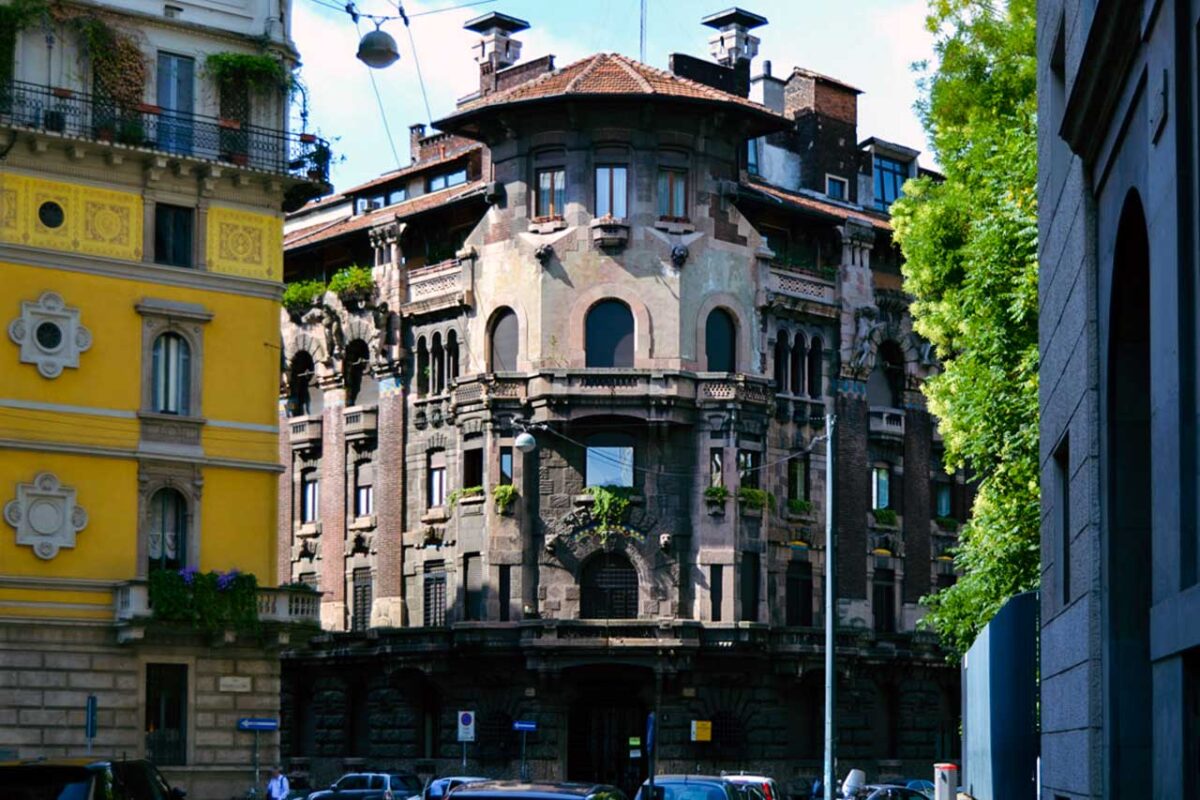
The Quadrilatero del Silenzio, on the other side of Corso Venezia, has a completely different character. It is a quieter, more secluded part of the city, where you can admire elegant villas and apartment buildings, surrounded by beautiful gardens and quiet streets. It is the perfect place for those looking for a moment of respite from the hustle and bustle of city life, while still being in the center.
Among the must-see stops in this district are Piazza Eleonora Duse with its sequence of Liberty palaces such as Casa Berri Meregalli, Villa Invernizzi with its lush garden and pink flamingos, and Palazzo Fidia.
Also a short distance away is Villa Necchi Campiglio, a magnificent example of the Deco style, a typical residence of the Milanese industrial bourgeoisie, immersed in a vast park with the first private swimming pool built in the city.
Quadrilatero del Silenzio is an oasis of peace and elegance, offering a unique experience away from the hustle and bustle of the city.
Quadrilatero della Moda (Fashion Quadrilateral)
Quadrilatero della Moda is where Milan shows its most luxurious side. If you love fashion, this district is a must-visit. Strolling down Via Montenapoleone, Via della Spiga, or Via Sant’Andrea, you’ll encounter storefronts of the world’s top fashion houses – from Prada and Gucci to Armani. It’s a corner of Milan where everything sparkles, and the air is filled with the scent of novelty and elegance.
Quadrilatero della Moda isn’t just about stores and expensive brands. Here, you can feel the “Milanese vibe” – narrow streets, beautiful townhouses, and people who look like they’ve just stepped off a fashion show. Even if you don’t plan to buy anything, it’s worth walking through and seeing what this center of fashion and luxury looks like.
The Church of San Bernardino alle Ossa and the mysterious Chapel of Bones
The Church of San Bernardino alle Ossa in Milan is one of the most unusual and mysterious places in the city. Built in 1269, this church is known primarily for its unique chapel, whose walls are lined with human bones and skulls. This unusual decoration is the result of the practice of keeping human remains in the church, which was common at the time.
In 1695, the artist Sebastiano Ricci enriched the interior of the church with numerous frescoes that decorated the vault, adding even more character and depth to the place. The chapel, the main attraction of the church, is reached through a narrow corridor, located just off the entrance on the right.
The bones and skulls that can be seen in the chapel come from a nearby ancient ossuary. In 1652, after the closure of the local hospital and the related exhumation of the cemetery, additional remains were added to the chapel. This unusual and somewhat macabre decoration makes the Church of San Bernardino alle Ossa one of the most unforgettable and unique places that attracts both tourists and lovers of history and art.

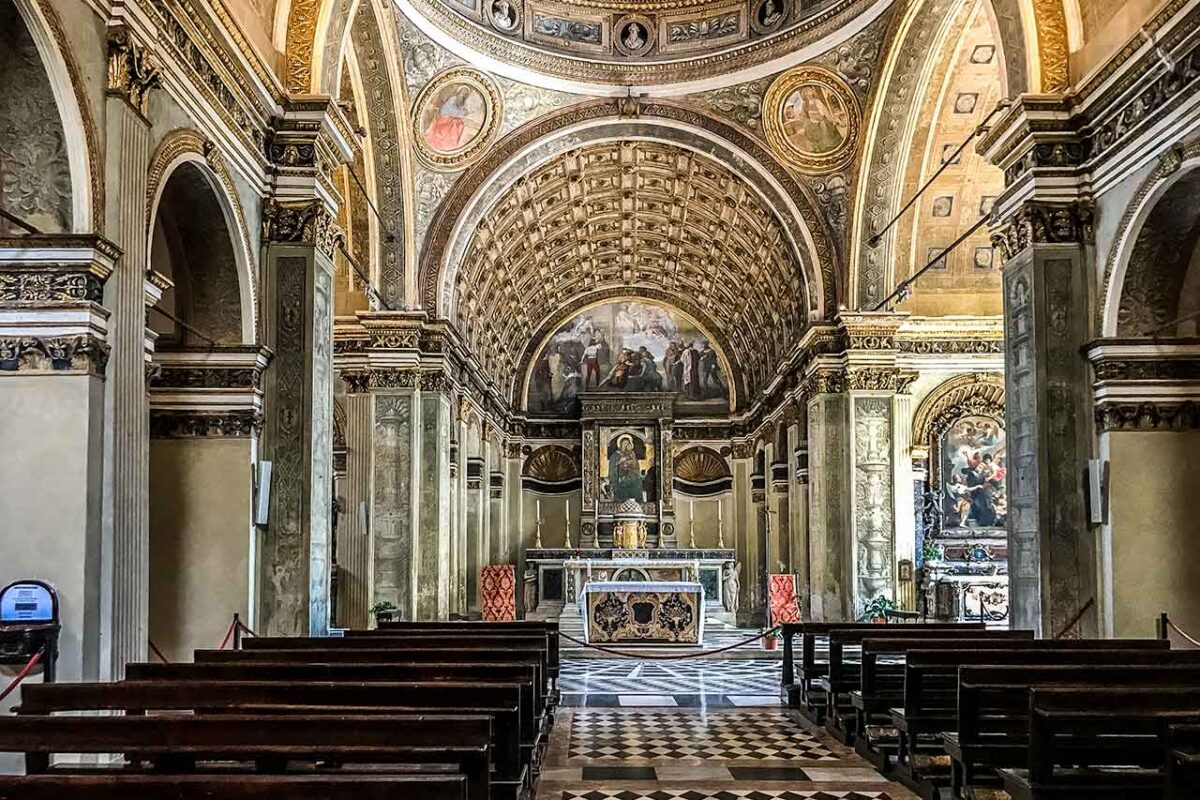
The Church of Santa Maria presso San Satiro a hidden monument on via Torino
The church of Santa Maria presso San Satiro, built in the late 15th century, is one of the most significant examples of Renaissance architecture in Milan. Its designer, Donato Bramante, showed extraordinary creativity in creating the famous optical illusion of the “false apse” or “imaginary presbytery”. This illusory perspective, only 97 centimetres deep, was designed to replace a real apse, the construction of which was impossible because of the street running directly behind the church.
The interior of the church, although modest in size, seems much larger thanks to this intricately designed illusion. There are three niches on each side wall, and two on the back wall, with a centrally placed painting of the Virgin Mary on a throne with the Child. This painting of the Virgin Mary is surrounded by a special cult, because according to legend, in the 13th century it was supposed to bleed after being struck with a dagger by a young vandal. This event contributed to the growth of the church’s importance as a place of worship and pilgrimage.
The church of Santa Maria presso San Satiro, with its unique optical illusion and rich history, is one of those lesser-known but incredibly fascinating monuments that is definitely worth a visit when you are in the city.
Vicolo dei Lavandai: a witness to the history of everyday life
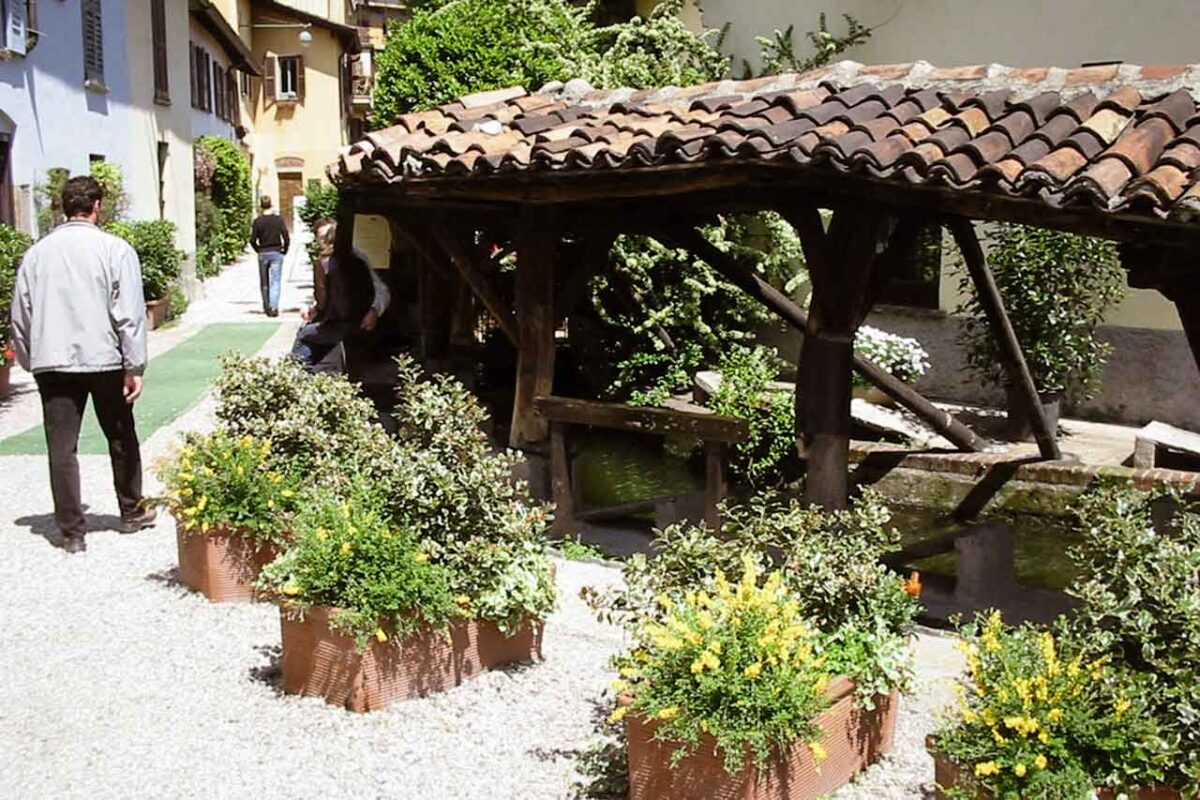
Vicolo dei Lavandai, or Laundry Alley, is a picturesque and historic place, hidden in the Navigli district of Milan. Its name comes from a traditional open-air laundry that was actively used by women to wash clothes until the late 1950s. This place, although small, is a significant witness to the daily life and culture of times gone by.
The alley still retains its original early 20th-century spin dryer, a valuable historical and cultural asset. This preserved laundry infrastructure is a unique record of past customs and ways of life, offering a glimpse into the city’s past that often escapes the notice of even its residents.
Visiting Vicolo dei Lavandai, you can feel the atmosphere of old Milan, with its simplicity and authenticity. It is the perfect place for those who want to escape the hustle and bustle of the modern city and immerse themselves in a quieter, more reflective environment. Walking through its narrow streets, you can experience the unique combination of history and charm that make this place a unique corner of Milan.
Foro Romano: Underground Treasures of Ancient Mediolanum
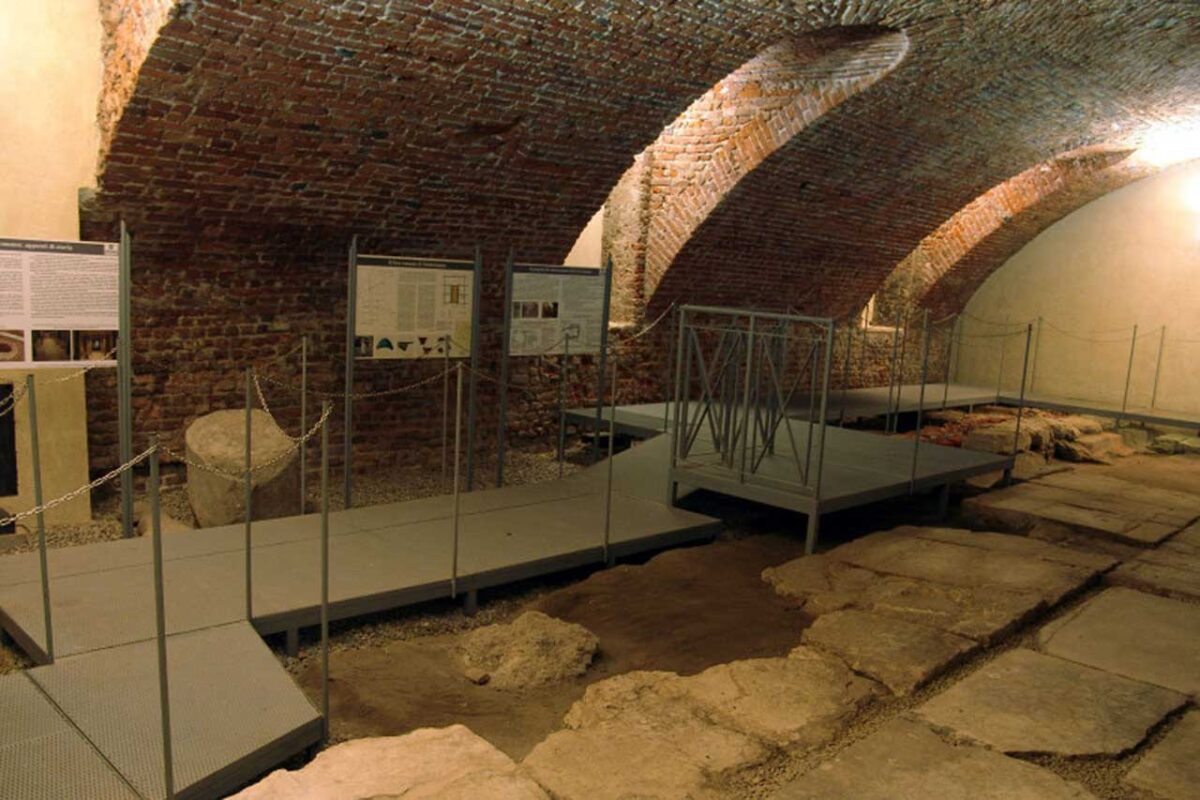
Beneath the surface of modern Milan lies the Foro Romano, the ancient main square of the former Mediolanum, the name Milan bore during the Republican era. The Forum, measuring an impressive 160 metres long and 100 wide, is currently only open to the public in selected sections. These fascinating underground areas can be explored within the Ambrosian Library and the Church of San Sepolcro. The Church of San Sepolcro in particular, recently reopened to the public after a major renovation, offers a unique opportunity to immerse yourself in the history of the ancient city.
Although the area of the Foro Romano that is accessible to visitors is limited, it is nevertheless a valuable window into Milan’s past. Visitors can buy a regular ticket, and an additional advantage is the typically Roman aperitifs organized in the basement, which combine the discovery of history with local culinary traditions. This unique combination makes the Foro Romano a fascinating place to visit when in the city.

I lived in Milan for 18 years, and it was there that I came to know the city’s daily life best - not just its landmarks, but also its rhythm, its habits, and its less obvious sides. Today I live in Wrocław, but I still return to Milan regularly.