


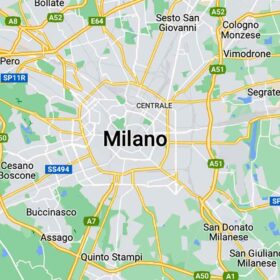
 The Geographic Location of Milan – A Strategic Spot in the Heart of Europe
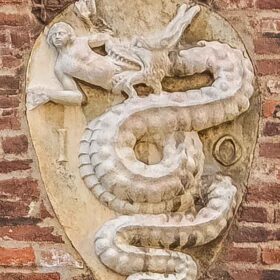 Milan’s coat of arms
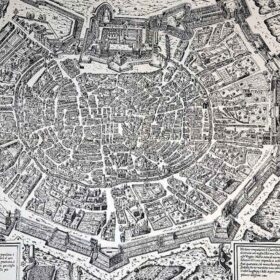 History of Milan
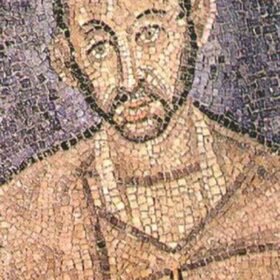 Saint Ambrose
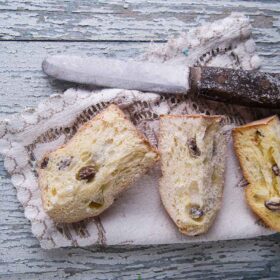 History of Panettone
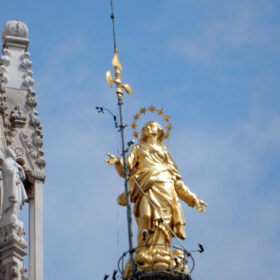 Madonnina
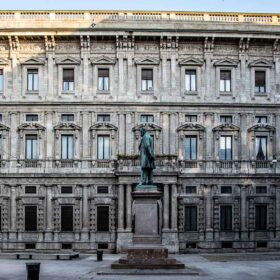 City Hall
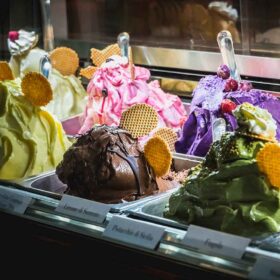 Milanese cuisine


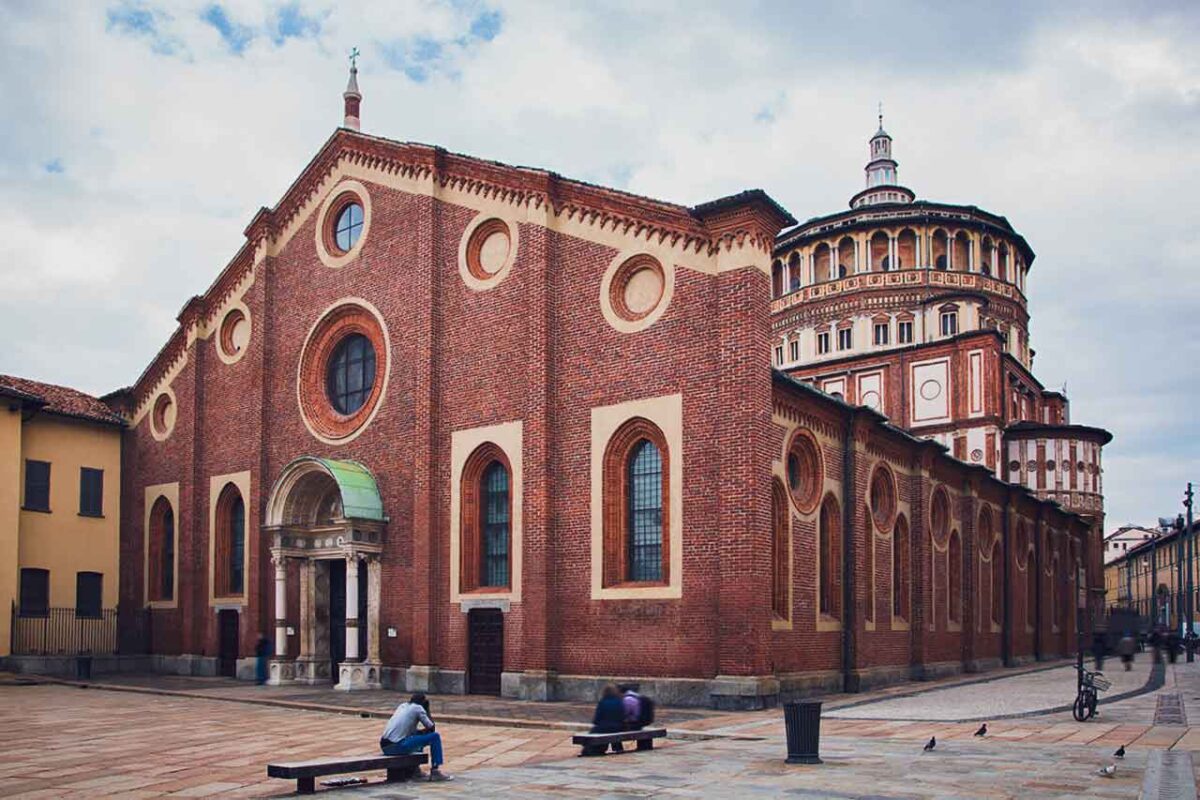
The Basilica of Santa Maria delle Grazie, located in the heart of Milan, is a masterpiece of the Italian Renaissance and is a UNESCO World Heritage Site. Known for housing Leonardo da Vinci’s famous “Last Supper” fresco, this church is a meeting point of art, history, and piety, reflecting Milan’s glorious cultural past under the Sforza family.
History of the Basilica of Santa Maria delle Grazie
Basilica’s origins
Construction of the Basilica of Santa Maria delle Grazie began in 1463, much insisted upon by Dominican monks. The land on which the basilica stands was donated by Gaspare Vimercati, the commander of Francesco Sforza’s troops, who gave the plot to the monks with the intention of building a temple and monastery.
The gesture reflected not only the religiosity of the time, but also emphasized the importance of the Church being a symbol of power and authority among Milanese noble families.
The role of Ludovic il Moro
Ludovico Sforza, commonly known as the Moor, played a key role in transforming the basilica during the Renaissance. Under his patronage, the church underwent extensive renovations in the Renaissance style. The most important elements were the construction of a new portal and the restoration of the stand, which significantly changed the appearance of this place of worship.
Ludovico il Moro also chose Santa Maria delle Grazie as the funeral chapel for his family, an additional confirmation of the connection between the church and the Sforza dynasty, reinforcing the church’s role as a family memorial and symbol of dynastic power.
Bombing of Milan during World War II
During World War II, the basilica was severely damaged by bombing. Bramante’s dome and the cloisters were particularly badly damaged and required extensive post-war restoration.
Despite the destruction, the Last Supper inside the monastery miraculously survived, thanks to safeguards made before the bombing.
Architecture
Guiniforte Solari’s original design and Renaissance modifications
The Basilica of Santa Maria delle Grazie is an exemplary example of the architectural evolution between Late Gothic and Renaissance in Italy. Initially designed by Guiniforte Solari in 1463, the basilica reflected the predominant Gothic style with elements such as pointed arches and cross vaults, typical of Lombard architecture of the time.
However, with the coming to power of Ludovic il Moro, there was a significant change in style. Donato Bramante was commissioned to make radical changes, introducing Renaissance elements that transformed the appearance of the church.
His most notable work was the design of the tribune, an imposing cubic structure topped by a hemispherical dome that represents one of the earliest examples of Renaissance architecture in Milanese sacred architecture.
Characteristic architectural elements
During the renovation work, the basilica’s facade was enriched with Renaissance elements, while retaining traces of the original Gothic style. The inner naves have retained their Gothic structure, but have been adapted to the new Renaissance character with the introduction of square side chapels that house important works of art.
Of particular note is Bramante’s tribune, which features a pure Renaissance style, with excellent use of geometric proportions and a focus on symmetry and harmony, key elements of the Renaissance.


Monastery and cloisters at the church of Santa Maria delle Grazie
The Santa Maria delle Grazie monastery complex consists of three main cloisters, which were extremely important for monastic life here.
The most famous of these is the Frog Cloister, named for the frog sculptures in the fountain at its center.


This cloister not only serves as a place of meditation for the monks but is also an attraction for visitors, offering them a moment of peace and an opportunity to admire the architectural beauty.
Each cloister serves a specific function while supporting both the religious and daily activities of the monastic community, collectively creating a distinctive example of Renaissance monastic architecture in Italy.
Artworks in the church of Santa Maria delle Grazie
The Last Supper by Leonardo da Vinci
Leonardo da Vinci‘s Last Supper, also known as the Cenacolo Vinciano, located in the refectory of the Dominican monastery of Santa Maria delle Grazie, is one of the most famous and revolutionary fresco paintings of the Renaissance. Created between 1495 and 1498, the work was commissioned by Ludovico il Moro as part of a project to renovate the church and convent of Santa Maria delle Grazie. Leonardo chose to depict the biblical moment when Jesus announces that one of his disciples will betray him, capturing the intense emotional reactions of those present.
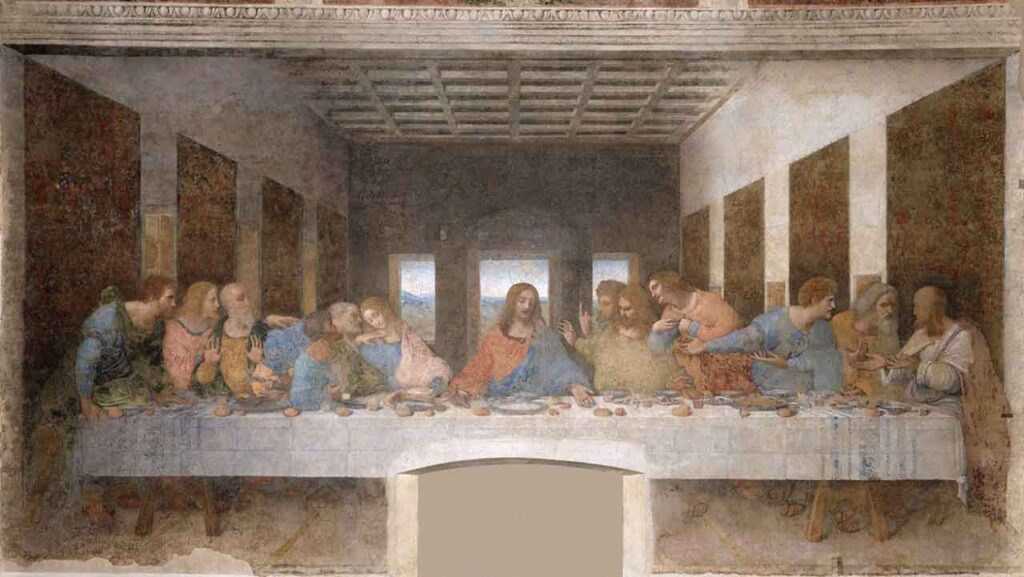
For more on the Last Supper and how to buy tickets, read the article: The Last Supper in Milan – the mysteries of Master Leonardo da Vinci.
Other works of art
In addition to the Last Supper, the Basilica of Santa Maria delle Grazie and its monastery contain other valuable works of art that deserve attention. These include sculptures by Antonello da Messina, whose finesse and detail enrich the sacred aura of the basilica. In addition, Gaudenzio Ferrari’s frescoes in the side chapels depicting religious scenes reflect the Renaissance era’s spiritual richness and artistic innovation. These works not only adorn the space of the basilica and monastery, but are also excellent examples of the artistic currents and painting techniques of the time, offering visitors a journey through the history of Italian art.
Curiosities
It is said that around 1500, the son-in-law of a baker, inspired by the dome of Bramante’s Basilica, instructed his wife, who was kneading the dough, to add candied fruit to it and give it the shape of a dome. This is how the panettone was born, the most famous pastry in Milan.
Practical information
To visit the Basilica of Santa Maria delle Grazie in Milan, you can enter the church free of charge any day of the week during the indicated hours.
However, to visit the Last Supper, it is necessary to book well in advance.
Where is the church of Santa Maria delle Grazie located?
The Basilica of Santa Maria delle Grazie is located in Milan, in the Piazza di Santa Maria delle Grazie.
How to get there?
To reach the church of Santa Maria delle Grazie you can use various means of public transportation:

I lived in Milan for 18 years, and it was there that I came to know the city’s daily life best - not just its landmarks, but also its rhythm, its habits, and its less obvious sides. Today I live in Wrocław, but I still return to Milan regularly.