


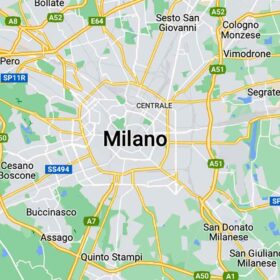
 The Geographic Location of Milan – A Strategic Spot in the Heart of Europe
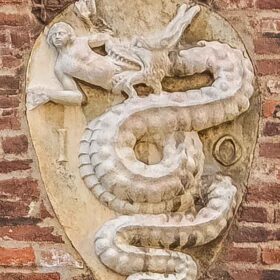 Milan’s coat of arms
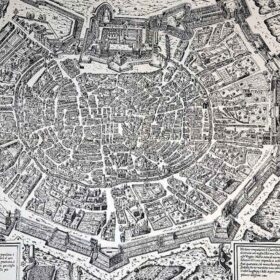 History of Milan
 Saint Ambrose
 History of Panettone
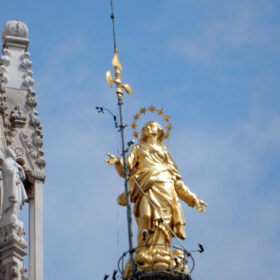 Madonnina
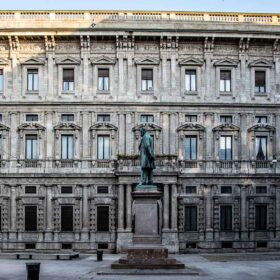 City Hall
 Milanese cuisine


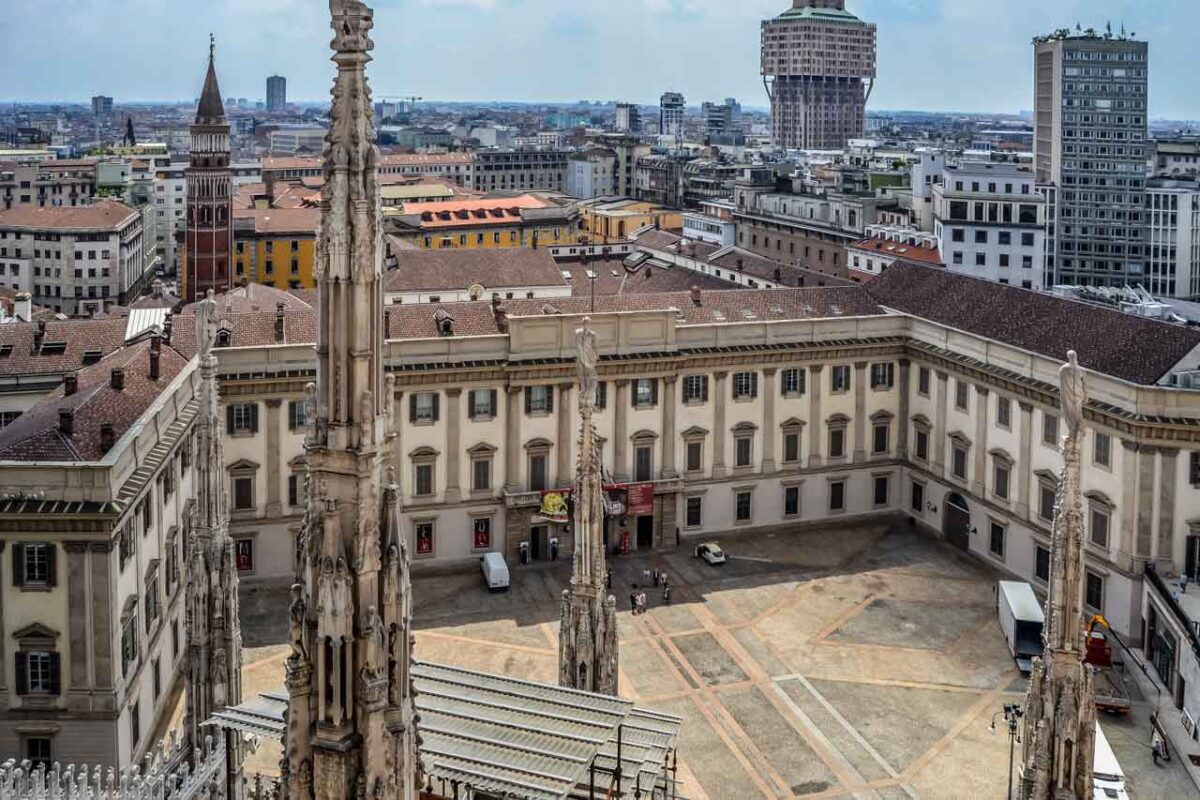
You’re standing in Piazza del Duomo, snapping a photo of the cathedral, and heading straight to Galleria Vittorio Emanuele II on the left side. Meanwhile, just to the right of the Duomo’s facade stands a building that most tourists won’t even glance at. That’s a mistake. Palazzo Reale is the former residence of Milan’s rulers and today the city’s most important center for temporary exhibitions, where thousands of artworks from museums around the world pass through 7,000 square meters of exhibition space each year.
In 2026, the palace plays a special role in the cultural program of the Milan-Cortina Winter Olympics. From a Robert Mapplethorpe retrospective to the major Macchiaioli exhibition and the Metafisica/Metafisiche project, which connects Palazzo Reale with other city institutions in an artistic trail spanning 2,000 steps of art.
Basic Information
Address and contact details
How to get there
Opening Hours [2026]
Last entry one hour before closing (30 minutes for free exhibitions).
Holiday hours may vary. Always check the current calendar on the official website before your visit.
💡 Local tip: Thursday evening visits are a great opportunity to avoid crowds. Arrive around 7:00 PM when most tourists are finishing up, and the exhibition halls are nearly empty.
Tickets and Prices [2026]
Palazzo Reale is primarily a space for temporary exhibitions. This means you pay separately for each exhibition you want to see. There’s no single admission ticket to the palace, and prices vary depending on the show.
|
Ticket Type |
Price |
For Whom |
|---|---|---|
|
Full€14-16adults |
€14-16 |
adults |
|
Reduced |
€12-14 |
ages 6-26, 65+, groups (15-25 people), military, disabled visitors |
|
Children€6children 6-14 years |
€6 |
children 6-14 years |
|
Free |
€0 |
children under 6, companion of disabled visitor |
|
Abbonamento Musei Lombardia |
€10 (~$11) |
cardholders |
Specific prices depend on the exhibition; the ranges above are approximate.
Where to buy tickets?
Online reservation is not mandatory but strongly recommended. On weekends and holidays, entry without advance reservation is not guaranteed, even if you arrive first thing in the morning. You can buy tickets through:
Add the online booking fee to the ticket price (usually €1-2).
Is the Milano Museo Card Worth It?
If you’re planning intensive sightseeing in Milan, the Milano Museo Card (annual pass) provides free entry to all Municipal Museums and a 20% discount on exhibitions at Palazzo Reale. For visitors staying just a few days, the Milano City Pass is a better value, combining transportation and major attractions. Read more about available options in the article on discount cards in Milan.

The Milano City Pass is available on Tiqets and GetYourGuide.
History of the Royal Palace
The first mention of a building on this site dates back to the 10th century, when Palazzo del Broletto Vecchio stood here as the seat of city government. The name broletto originally meant an enclosed area, but in Milan it became synonymous with city hall.
The real transformation came under Habsburg rule. Between 1770 and 1778, architect Giuseppe Piermarini – the same one who designed Teatro alla Scala – converted the medieval complex into a grand neoclassical residence. The monumental halls were created during this period, including the famous Sala delle Cariatidi.
Napoleon Bonaparte, who entered Milan in 1796, made Palazzo Reale his official residence. He slept here, threw balls here, and in 1805 proclaimed the Kingdom of Italy here. The palace witnessed grand receptions, diplomatic audiences, and the most important political events of Lombardy.
The Night That Changed Everything
August 15, 1943 proved to be one of the most tragic dates in Milan’s history. 140 Lancaster bombers from the British Royal Air Force dropped over 500 tons of bombs on the city. The target was the Duomo, but hits struck La Rinascente, Teatro alla Scala, and Palazzo Reale.
One of the spezzoni incendiari (incendiary bombs) landed on the roof near the Sala delle Cariatidi. Fire consumed the wooden trusses, causing the vault to collapse. The temperature was so high that it changed the structure and color of the stucco. Frescoes by Appiani were lost, including the monumental Apoteosi di Ferdinando I by Francesco Hayez.
But the worst was yet to come. The palace remained roofless for four years. Rain, snow, and wind caused more damage than the bombs themselves. It wasn’t until 1947 that the Soprintendenza ai Beni Culturali began preservation work.
Sala delle Cariatidi: The Heart of the Palace
This is the most extraordinary space in Palazzo Reale and one of the most photographed rooms in Milan. The Sala delle Cariatidi (Hall of Caryatids) measures 46 meters long and 17 meters wide, totaling 782 square meters. For comparison, the famous Galerie des Glaces at Versailles has 766 square meters.
Piermarini designed it between 1774 and 1778 as a ballroom, combining two earlier halls: the Sala dei Festini and Sala degli Imperatori. It owes its name to the forty caryatids, sculptures of female figures supporting the entablature, created by Callani and Franchi.

A Breathtaking Contrast
This is where the contrast between former splendor and traces of war is most visible. Gilding and delicate stucco sit alongside charred walls and a missing vault. Some of the caryatids have lost their arms and faces. It was decided that the hall would not be fully restored but preserved as a memorial to the horrors of war.
In 1953, Pablo Picasso chose this very location to display his masterpiece Guernica. The painting depicting the Nazi bombing of a Spanish town hung in a hall destroyed by the Allies. The context was devastating, and the connection between the work and the place was obvious.
💡 Local tip: The Sala delle Cariatidi is primarily accessible during temporary exhibitions. In 2026, it hosts an installation by Anselm Kiefer called Le Alchimiste, created specifically for the Olympics.
Exhibitions in 2026
Palazzo Reale is not a museum with a permanent collection like the Pinacoteca di Brera. It’s a space for blockbusters, major traveling exhibitions from around the world. Each year it welcomes hundreds of thousands of visitors, and some shows break attendance records. The Munch exhibition Il grido interiore attracted over 276,000 people.
Metafisica/Metafisiche
A major project within the cultural program of the Milan-Cortina Winter Olympics. Nearly 400 works from over 150 institutions, including paintings, sculptures, photographs, drawings, architectural models, illustrations, comics, magazines, and vinyl records. The exhibition connects with shows at Museo del Novecento, Gallerie d’Italia, and Palazzo Citterio, creating a trail spanning 2,000 steps of art through central Milan.
Robert Mapplethorpe. Le forme del desiderio
The first major retrospective of the American photographer in Milan. Previously unpublished, iconic, and controversial works by one of the most important artists of the 1960s-80s counterculture. The exhibition was prepared in collaboration with the Robert Mapplethorpe Foundation in New York.
I Macchiaioli
The first major exhibition in Milan dedicated to the macchiaioli, a group of Tuscan painters who revolutionized Italian painting in the mid-19th century. Over 90 works by Fattori, Lega, and Signorini from Italy’s most important museums. The curators are three of Italy’s leading experts on the movement: Francesca Dini, Elisabetta Matteucci, and Fernando Mazzocca.
Anselm Kiefer. Le Alchimiste
The German-American artist has prepared a special installation for the Olympics, paying tribute to Caterina Sforza and Milan’s Renaissance tradition as a center of scientific and cultural research.
Always check the current program at palazzorealemilano.it before your trip. Temporary exhibitions have specific dates, and prices and hours may vary depending on the show.

How to Visit Palazzo Reale
How Much Time Should You Allow?
For one exhibition, plan 1.5-2 hours. If you want to see several shows on the same day, allow 3-4 hours. Add time for the café and courtyard.
What to Bring (and What Not to Bring)
There’s a cloakroom on each floor where you must leave:
You won’t be allowed into the exhibition halls with these items. Small handbags and cameras are permitted (unless a specific exhibition has different rules).
Best Time to Visit
Avoid weekends and holidays, especially without a reservation. The quietest times are:
During peak tourist season (April-October) and during Milan Fashion Week (February, September) and Milan Design Week (April), crowds are larger. Book tickets in advance.
Giacomo Caffè: A Break in Royal Style
In the courtyard of Palazzo Reale you’ll find Giacomo Caffè Letterario, a café that’s an attraction in itself. You can enter without an exhibition ticket to escape the crowds in Piazza del Duomo.
The interior combines the aesthetics of a Parisian bistro with the atmosphere of a Viennese café. Upstairs is a tea room where you can browse exhibition catalogs from the past 25 years while sipping Mariage Frères tea.
Practical information:
💡 Local tip: Some exhibitions offer discounts at Giacomo Caffè for ticket holders. Ask the staff or check current information at the ticket counter.
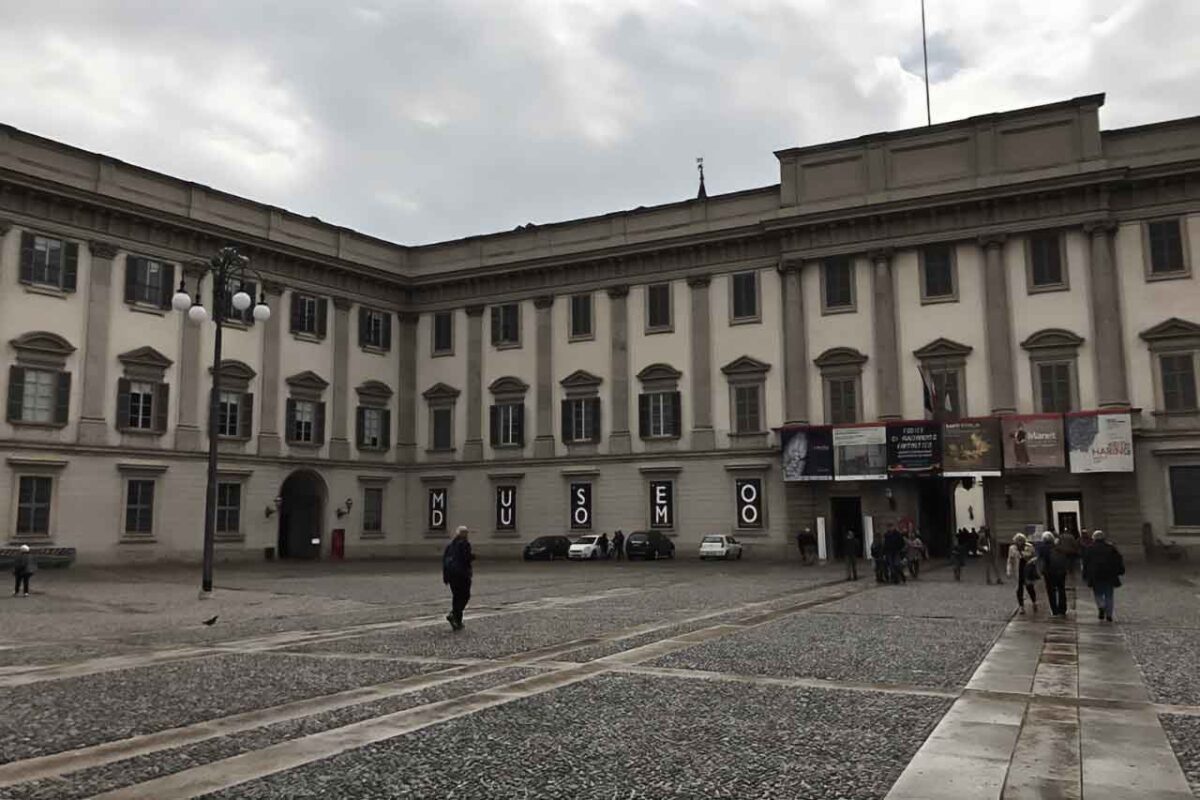
Palazzo Reale vs. Museo del Duomo
Some tourists confuse these two places. The Museo del Duomo (Cathedral Museum) is indeed located in a wing of Palazzo Reale, but it’s a separate institution with its own entrance, tickets, and opening hours. If you want to see original sculptures from the cathedral, stained glass, and Duomo treasures, buy a ticket to the Museo del Duomo.
Palazzo Reale focuses on temporary exhibitions, while the Museo del Duomo presents a permanent collection related to the cathedral’s history.
Some tourists confuse these two places. The Museo del Duomo (Cathedral Museum) is indeed located in a wing of Palazzo Reale, but it’s a separate institution with its own entrance, tickets, and opening hours. If you want to see original sculptures from the cathedral, stained glass, and Duomo treasures, buy a ticket to the Museo del Duomo.
Palazzo Reale focuses on temporary exhibitions, while the Museo del Duomo presents a permanent collection related to the cathedral’s history.
Visiting with Children
Palazzo Reale is family-friendly:
Is it worth visiting with children? It depends on the exhibition. Painting shows may be less engaging for younger children, but interactive exhibitions or those dedicated to design often include elements for families. Check the description of the specific exhibition before your visit.
The courtyard is a good place for a break if kids get bored. You can step out, relax at the café, and return to the galleries (on the same ticket, as long as you haven’t left the building).
What to See Nearby
Palazzo Reale lies in the heart of Milan, just steps from the main attractions:
FAQ
How much does admission to Palazzo Reale cost?
Entry to the courtyard is free. You pay separately for exhibitions. A full-price ticket usually costs €14-16, reduced €12-14, and children 6-14 years €6. Children under 6 enter free.
Do I need to book tickets in advance?
Reservation is not mandatory but strongly recommended. On weekends and holidays, entry without a reservation is not guaranteed. You can book online through palazzorealemilano.it or VivaTicket.
How long does it take to visit Palazzo Reale?
For one exhibition, plan about 1.5-2 hours. If you want to see several shows and the café, allow 3-4 hours.
Can I take photos at Palazzo Reale?
Rules vary depending on the exhibition. Some allow photography without flash, others prohibit it entirely. Check the regulations for the specific show.
When is Palazzo Reale closed?
The palace is closed on Mondays. On holidays (January 1, May 1, December 25) hours may be modified. Always check the calendar on the official website.
How do I get to Palazzo Reale?
The easiest way is by metro to Duomo station (M1 and M3 lines). You can also take a tram (lines 2, 12, 14, 16, 19) or bus (54, 73). I don’t recommend driving, as central Milan is covered by Area B and Area C zones with entry fees.
Palazzo Reale is the perfect escape when the crowds in front of the cathedral wear you out. Step into the courtyard, grab a coffee at Giacomo Caffè, and then immerse yourself in the world of art, where the silence of the exhibition halls contrasts with the buzz of Piazza del Duomo just beyond the wall. And remember: check the current exhibition program before your trip, because what you’ll see depends on when you arrive.
I lived in Milan for 18 years, and it was there that I came to know the city’s daily life best - not just its landmarks, but also its rhythm, its habits, and its less obvious sides. Today I live in Wrocław, but I still return to Milan regularly.