


 The Geographic Location of Milan – A Strategic Spot in the Heart of Europe
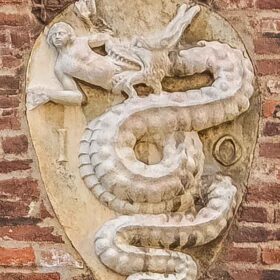 Milan’s coat of arms
 History of Milan
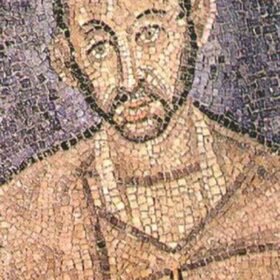 Saint Ambrose
 History of Panettone
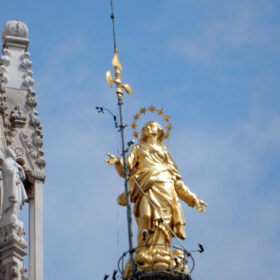 Madonnina
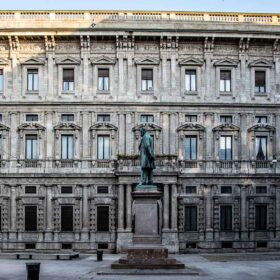 City Hall
 Milanese cuisine


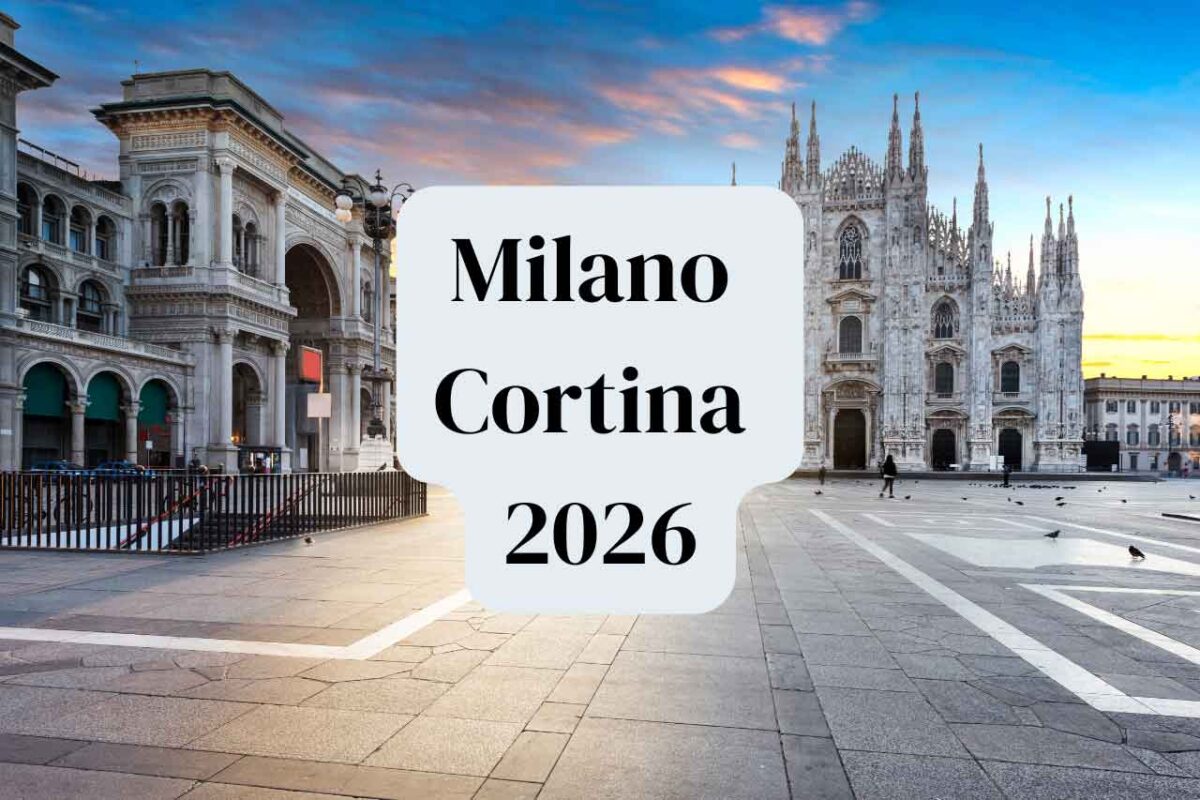
February 6, 2026. San Siro Stadium filled to capacity, spotlights cutting through the winter night, and a spectacle unfolding on the field that hundreds of millions of viewers around the world are watching. A few weeks later, the same magic will move to a two-thousand-year-old amphitheater in Verona. The Milan-Cortina 2026 Winter Olympics aren’t just athletic competitions—they’re above all two unforgettable shows ceremonially opening and closing winter’s biggest sporting event.
If you’re planning a trip to Italy in February 2026, this guide will help you understand what to expect from the ceremonies, how to get tickets, and what to do in Milan between the sporting thrills.
Opening Ceremony at San Siro: February 6, 2026
The Giuseppe Meazza Stadium, commonly known as San Siro, will transform into the stage for the world’s biggest show for one night. This is the first dispersed ceremony in Winter Olympics history, meaning the spectacle will take place simultaneously in several locations: Milan, Cortina d’Ampezzo, Livigno, and Predazzo.
Why San Siro?
The choice of San Siro is no coincidence. This iconic stadium, nicknamed La Scala del Calcio (The Soccer Cathedral), is one of the most recognizable sports venues in the world. Built in 1926, it will celebrate its hundredth birthday in February 2026, making the opening ceremony a unique tribute to its history.
The stadium currently holds approximately 76,000 spectators and for nearly a century has hosted the most important soccer events, concerts by music legends (from Bob Marley to the Rolling Stones), and Champions League finals. Now it will add another chapter to its rich history.
Date, Time, and Program
The ceremony program will center around the concept of Armonia (Harmony), intended to convey a universal message of peace, unity, and dialogue. Following Olympic tradition, you’ll see the Parade of Nations, athlete and official oaths, dignitary speeches, and of course the culminating moment: the lighting of the Olympic cauldron.
Symbolic Division of Fire Between City and Mountains
The organizers are promising an innovative approach to the Olympic cauldron tradition, meant to symbolize the connection between Milan and the mountain locations of Cortina. The scenic details, including the exact form and location of the Olympic cauldrons, will be officially announced closer to the ceremony date. One thing is certain: this symbolic connection between city and mountains, modernity and tradition, defines the character of these Games.
Who Will Perform at the Opening Ceremony?
The artistic concept is the responsibility of Marco Balich and Balich Wonder Studio, creators of ceremonies for the last sixteen Olympic Games. The creative director is Damiano Michieletto, known for innovative opera productions. The creative team also includes Simone Ferrari, Lulu Helbaek, and Lida Castelli.
💡 Note: Media speculation about international music stars participating has appeared, but the official list of performers has not yet been confirmed by the organizing committee. Artist names will be announced closer to the ceremony date.
Similarly, the title of the official Games song and its performer have not yet been officially announced, though various predictions are circulating in the media.
Tina and Milo: Mascots You’ll Love
Tina and Milo are two ermellini (stoats), siblings with different colored fur. Tina, the white Olympic mascot, represents the Winter Olympic Games, while her brother Milo with brown fur is the face of the Paralympic Games. Their names come from the host cities: Tina from Cortina, Milo from Milano.
Interestingly, the mascots were designed by students from Istituto Comprensivo di Taverna in Calabria as part of a nationwide competition that received over 1,600 submissions from children aged 6-14.
How to Get to San Siro?
By metro (most convenient option):
From main train stations:
Buses: lines 49, 78, 64, 80, 98
Tram: line 16 to Piazza Axum stop (Stadio Meazza)
⚠️ Warning: On the ceremony day (February 6), special traffic restrictions will be in effect around the stadium and along the dignitary route. Expect enhanced security checks and extended travel times. I recommend arriving at least 3 hours before the event starts.
Closing Ceremony at Arena di Verona: February 22, 2026
If the opening ceremony at San Siro will be a manifesto of modern Italy, the Games finale at Arena di Verona will become a tribute to two thousand years of history and culture of the Italian Peninsula
Why Arena di Verona?
Arena di Verona is the third-largest Roman amphitheater in the world, about 50 years younger than the Colosseum (built around 30 AD). In excellent condition, it has survived nearly two millennia, witnessing gladiator fights, medieval tournaments, and since 1913, famous opera performances.
This is the first closing ceremony of a Winter Olympics in a city that isn’t hosting any sporting events. The choice of Verona underscores the organizers’ ambition to include all of Italy in the Olympic celebration.
Date, Time, and Program
The ceremony is titled Beauty in Action and will be a fusion of opera, music, dance, cinema, design, and technology. The organizers promise a show combining classicism with modernity, paying tribute to Italy’s rich cultural heritage.
One of the evening’s stars will be Roberto Bolle, the world-famous ballet dancer who also performed during the Turin 2006 Games ceremony. Other artists will be announced closer to the event date.
Symbolism of the Farewell
The closing ceremony isn’t just the end of athletic competition—it’s also a moment of reflection on what unites the world’s nations. You’ll see traditional Olympic elements: the extinguishing of the Olympic flame, the handover of the Olympic flag to the next Winter Games host (Salt Lake City 2030), and joyful celebration by athletes who this time enter the arena together, without division by country. The scenic details will be revealed by the organizers closer to the event date.
The ceremony stage, inspired by the shape of a water droplet, will introduce an unusual layout: instead of a traditional stage-audience division, a large Italian piazza will form at the amphitheater’s center, dynamically changing throughout the entire show.
Verona: More Than Just the Arena
The ceremony will extend beyond the amphitheater walls, also encompassing Piazza Bra (the main square in front of the Arena) and Teatro Filarmonico, where the orchestra and choir of Fondazione Arena di Verona will perform.
💡 Tip: If you’re going to the closing ceremony, plan an extra day to explore Verona. The city of Romeo and Juliet, with its narrow medieval streets, picturesque Adige River, and excellent Venetian cuisine, deserves more than a fleeting visit.
The ceremony will extend beyond the amphitheater walls, also encompassing Piazza Bra (the main square in front of the Arena) and Teatro Filarmonico, where the orchestra and choir of Fondazione Arena di Verona will perform.
💡 Tip: If you’re going to the closing ceremony, plan an extra day to explore Verona. The city of Romeo and Juliet, with its narrow medieval streets, picturesque Adige River, and excellent Venetian cuisine, deserves more than a fleeting visit.
Ceremony Tickets: Where to Buy and What to Watch Out For
Tickets to Olympic ceremonies are among the most sought-after items in the Games’ offerings. Here’s what you need to know.
Official Ticket Source
The only official website: tickets.milanocortina2026.org
Ceremony tickets are among the most expensive in the entire Games offering. Various seat categories are available, from the cheapest in the highest tribune levels to exclusive hospitality packages with lounge access and catering.
⚠️ Important: Only buy tickets from the official source. The Olympic Committee warns against unauthorized sellers whose tickets may turn out to be invalid. Check current prices and category availability on the official ticket website.
Closing Ceremony at Arena di Verona
Due to the smaller capacity of the historic amphitheater (approximately 22,000 seats compared to 76,000 at San Siro), closing ceremony tickets may be harder to obtain and more expensive than opening ceremony tickets.
Special Offers
The organizers are announcing special offers for young viewers as part of their promotional program. Details are available on the official ticket website.
Don’t Have a Ticket? There Are Alternatives
The ceremonies will be broadcast live on television and likely on big screens in official Fan Zones in Milan and other Olympic cities. It’s an excellent opportunity to feel the event atmosphere in the company of other fans, without spending a fortune on tickets.
What to Do in Milan During the 2026 Olympics?
Milan in February is a city full of Olympic energy, but also an excellent time to discover its timeless attractions. Between sporting thrills, you’ll find time to visit iconic places: from the Gothic Duomo and elegant Galleria Vittorio Emanuele II, through Leonardo da Vinci’s Last Supper (book tickets in advance!), to the mighty Sforza Castle.
In the evenings, head out for aperitivo in the charming Navigli district or stroll through the artistic Brera neighborhood. Modern architecture lovers will be amazed by the Porta Nuova district with its famous Bosco Verticale (Vertical Forest).
💡 Read more: Milan: attractions and what to see
Where Are the Milan Competitions Held?
While the mountains will host snow sports, Milan and its surroundings take over ice disciplines:
All these venues are well connected by metro to the city center.
Practical Information for Ceremony Time
Transportation on Opening Ceremony Day (February 6)
Expect significant traffic disruptions. Authorities have prepared a special VIP route from Palazzo Reale to San Siro, meaning many streets will be closed from 3:00 PM to 10:00 PM.
Closed metro stations: toward the end of the ceremony, San Siro Ippodromo and Segesta stations may be closed for security reasons. Use San Siro Stadio or Lotto stations.
Schools: in districts along the Olympic torch route, schools will be closed.
Dojazd z Mediolanu do Werony
Getting from Milan to Verona
If you’re planning to see both the opening and closing ceremonies, you’ll need to plan your trip to Verona.
By train:
By car: approximately 100 miles, 1.5-2 hours depending on traffic. Remember that Verona’s center is a ZTL (restricted traffic zone) and parking can be problematic.
Weather in February
February in Milan means average temperatures of 35-46°F (2-8°C), often foggy mornings, and possible rain. For the ceremony at an open-air stadium, prepare for cold: a warm jacket, scarf, and hat are essential.
💡 Read more: Milan: weather and climate
Wrap-up
The Milan-Cortina 2026 Winter Olympics is an event that will go down in history. The opening ceremony for San Siro’s centennial and the finale in the two-thousand-year-old Arena di Verona is a combination we’ve never seen before. Whether you manage to get tickets to the stands or watch the broadcast in one of the Olympic Fan Zones, the atmosphere of those days will stay with you for a long time.
Book your flights in advance (February is still winter season in the Italian Alps), arrange accommodation, and prepare for two unforgettable weeks of sporting excitement, Italian culture, and Olympic spirit. Ci vediamo a Milano!
FAQ
When is the 2026 Olympics Opening Ceremony?
The opening ceremony will take place on Friday, February 6, 2026 at 8:00 PM at San Siro Stadium in Milan. The expected duration is approximately 2 hours and 20 minutes.
Where will the 2026 Olympic Games Closing Ceremony be held?
The closing ceremony will take place on Sunday, February 22, 2026 at Arena di Verona, an ancient Roman amphitheater. This is the first Winter Olympics closing ceremony in a city that isn’t hosting any sporting events.
How much do tickets to the 2026 Olympics Opening Ceremony cost?
Ceremony tickets are among the most expensive in the Games’ offerings. Various categories are available, from seats at the highest tribune levels to exclusive hospitality packages. Check current prices and availability exclusively on the official ticket website: tickets.milanocortina2026.org.
How do I get to San Siro for the Opening Ceremony?
The most convenient way is by metro: M5 line (lilac) directly to San Siro Stadio station, or M1 line (red) to Lotto station with a transfer to M5. I recommend arriving at least 3 hours before the event due to enhanced security checks.
Who will perform at the 2026 Olympics Opening Ceremony?
The artistic concept is the responsibility of Marco Balich and Balich Wonder Studio, creators of ceremonies for the last sixteen Olympic Games. The creative director is Damiano Michieletto. The official list of musical performers will be announced by the organizing committee closer to the event date.
Can I watch the ceremonies for free?
Yes, the ceremonies will be broadcast on television and likely on big screens in official Fan Zones in Milan and other Olympic cities.
Sources
- Official website of the Milano Cortina 2026 Winter Games (olympics.com)
- Olimpiadi e paralimpiadi invernali Milano Cortina 2026 – Comune di Verona
- Arena di Verona | Tourism Verona
- Official Milano Cortina 2026 tickets

I lived in Milan for 18 years, and it was there that I came to know the city’s daily life best - not just its landmarks, but also its rhythm, its habits, and its less obvious sides. Today I live in Wrocław, but I still return to Milan regularly.