


 The Geographic Location of Milan – A Strategic Spot in the Heart of Europe
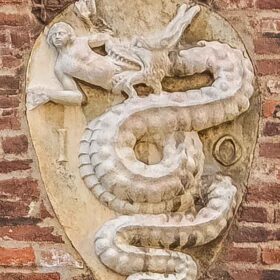 Milan’s coat of arms
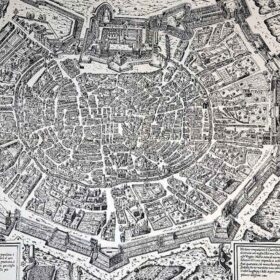 History of Milan
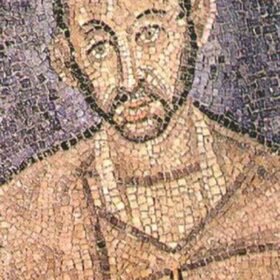 Saint Ambrose
 History of Panettone
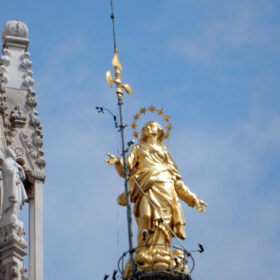 Madonnina
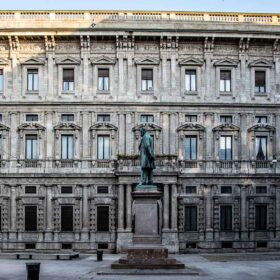 City Hall
 Milanese cuisine


The Last Show, First Exhibition, and Unexpected Farewell
On September 4, 2025, the fashion world lost one of its greatest creators. Giorgio Armani, the man who defined Italian elegance for half a century, passed away at age 91. His death transformed the planned September celebrations of the brand’s 50th anniversary into something completely different, deeply emotional. What was meant to be a joyful celebration became a moving farewell to a master.
In the heart of Milan, at the prestigious Pinacoteca di Brera, an unprecedented event took place. For the first time in the museum’s 200-year history, its halls opened to fashion. The exhibition “Giorgio Armani: Milano, per amore” and the accompanying final Spring/Summer 2026 collection show were not just a tribute to the designer, but a story about how fabric and cut can equal canvas and paint.
The Pinacoteca Opens Its Doors to Fashion – For the First Time in History
For those who aren’t familiar with the Pinacoteca di Brera – it’s one of the most important art museums in Italy. Its galleries display works by Raphael, Mantegna, Caravaggio and Piero della Francesca. Since its founding in 1809, the museum has been a stronghold of painting and sculpture. Until September 2025.
The decision to place Armani’s creations alongside Renaissance masterpieces was groundbreaking. Chiara Rostagno, the museum’s deputy director, in a statement widely quoted by media, emphasized that fashion understood as decorative art is welcomed at Brera, creating a unique dialogue between the designer’s work, the museum, and artistic heritage
This gesture carries enormous significance. It places a fashion designer in the same pantheon as great painters, officially recognizing that clothing can be as powerful an artistic medium as a painting.
Why Brera? The Designer’s Personal Connection to the Neighborhood
The choice of location was no accident. Giorgio Armani consciously chose the Brera district as his place to live and work. He loved its “double soul – cultured yet deeply vital.” This artistic neighborhood, full of galleries, cafés, and creative energy, perfectly reflected his own aesthetic – refined yet full of life.
In 1993, the Academy of Fine Arts in Brera honored him with an academic title for the consistency of his style. Thirty-two years later, in the same place, his final show took place.
Over 120 Creations Among Masterpieces
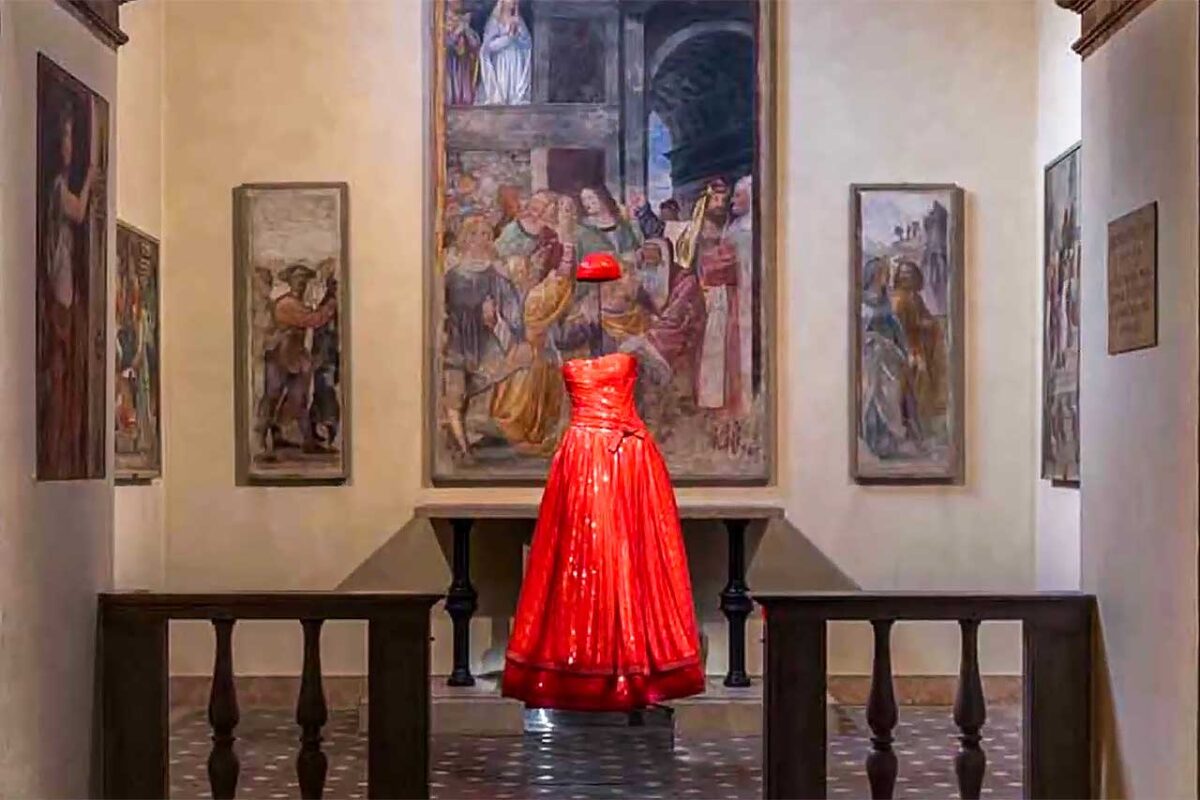
The exhibition presents over 120 creations from different decades of Armani’s career, placed in direct proximity to artworks. The clothes weren’t hung randomly – each piece was carefully selected for a specific painting or room, creating pairings based on color, form, or mood.
Thoughtful Pairings
Giorgio Armani was personally involved in the exhibition’s concept until his final days – he personally selected over 120 creations from his archive and oversaw their placement throughout the museum’s halls. He created surprising pairings:
Invisible Mannequins – Clothes as Sculptures
A special detail is the nearly invisible mannequins. They were designed in such a way that they don’t distract from the clothes themselves – making the creations appear as if floating in air. This is deliberate. Armani’s clothes have such precise cuts that they resemble sculptures in themselves, and their construction perfectly captures the human silhouette even without a visible mannequin.
Angelo Crespi, director of the Pinacoteca, aptly noted:
“Giorgio Armani was one of the highest expressions of Italian creativity, which manifested itself in the essentiality and rigor of forms. This rigor evolved from aesthetic to ethical, permeating his way of living and working. In this, Giorgio Armani embodies Milan’s character to the highest degree.”
Giorgio Armani’s Last Show – September 28, 2025
Three weeks after the designer’s death, the Pinacoteca Brera courtyard hosted the show of his final collection “Pantelleria, Milano.” The event gathered 700 guests, including Cate Blanchett and Richard Gere. The courtyard was lit by hundreds of candles, with live music performed by Ludovico Einaudi.
The collection referenced two important places in Armani’s life – Milan and the island of Pantelleria. Models presented flowing creations in characteristic beiges and grays (“greige”) and shades of blue, green, purple, and navy inspired by the sea.
The show’s finale was Agnese Zogli’s outfit with Giorgio Armani’s portrait embroidered in crystals, which received a standing ovation. After the show, Leo Dell’Orco, the designer’s longtime collaborator, took a bow. Guests could then move inside the museum to view the “Milano, per amore” exhibition.
A Lesson in Humility: Education Over Ego
One of the most surprising aspects of the exhibition is its purpose. One might expect that a retrospective of 50 years of career would be a manifestation of ego. Armani saw it differently.
In his autobiographical book “Per amore,” he wrote:
“An exhibition can be viewed in two ways. On one hand, there’s the immediate satisfaction of the creator’s ego. On the other hand, there’s educational value, a unique testimony you can offer to the public, and especially to young creators, through your work: a feeling that lasts and provides satisfaction. Well, I’m interested in this second aspect.”
This statement underscores his humility and thinking about future generations. The exhibition wasn’t meant to be a celebration of his person, but an educational tool meant to inspire young creators.
Director Crespi recalled that Armani explicitly asked to “first let the artworks speak, because he didn’t feel worthy of having his work compared with pieces by Piero della Francesca and other great masters.” This humility toward the painters whose works his creations were placed alongside shows the designer’s deep respect for art.
Why Did Giorgio Armani’s Work End Up in a Museum?
To fully understand this exhibition’s significance, it’s worth recalling why Armani forever changed the face of world fashion. His greatest achievement was rejecting everything artificial and uncomfortable in fashion, replacing it with elegance you can move freely in.
Armani removed stiff linings and reinforcements from jackets, allowing clothes to naturally drape on the body and move with it. For the first time, elegance went hand in hand with comfort. Equally important was his color palette – instead of bright colors, he focused on subtle beiges and grays. His famous shade of “greige” (a combination of gray and beige) became the hallmark of refined style.
Cinema was the breakthrough moment. When Richard Gere appeared in the film “American Gigolo” (1980) wearing an Armani suit, the world saw a new image of masculinity – elegant but not stiff, confident but not arrogant. That one film cemented Armani’s position as the undisputed “King Giorgio” (Re Giorgio) of Italian fashion and opened doors to Hollywood.
Practical Information: How to Visit the Exhibition
If you’re planning a visit to Milan between September 2025 and January 2026, be sure to reserve time for this exhibition, especially if you’re interested in fashion or art.
Basic Information
Tickets
Additional Exhibition: Armani/Silos
If you’re fascinated by Armani’s work, it’s worth visiting Armani/Silos as well – a museum founded in 2015 for the brand’s 40th anniversary. It’s housed in a converted 1950s Nestlé warehouse that the designer renovated at a cost of nearly $55 million.
Currently, you can see the exhibition “Giorgio Armani Privé 2005-2025,” presenting 20 years of the haute couture line (until December 28, 2025).
How to Get to Pinacoteca Brera
The Pinacoteca is located in the historic centre of Milan, right in the heart of the Brera district. Getting there is very simple:
After visiting the exhibition, be sure to walk around the area – the Brera district is one of Milan’s most charming areas, full of art galleries, boutiques, and atmospheric cafés.
Summary: Why Is This Exhibition Worth Seeing?
The “Milano, per amore” exhibition is more than a display of beautiful clothes. It proves that fashion can be art on par with great canvases hanging in museums.
Giorgio Armani had a special bond with Milan. The city shaped him, and he spent half a century co-creating its image as a world fashion capital. Milanese loved him not only for his success in fashion, but above all because he embodied their city’s character – he was disciplined, elegant, innovative and open to new things, while maintaining humility and dedication to craftsmanship. After his death, thousands came to pay him tribute, showing how deeply he was etched in Milanese hearts.
Ta wystawa to szczególna okazja, by zobaczyć ostatnie dzieło mistrza przygotowywane przez niego osobiście do ostatnich dni życia. To również pierwszy raz w 200-letniej historii Pinakoteki, kiedy moda została uznana za pełnoprawną sztukę i stanęła obok dzieł Rafaela czy Caravaggia.
If you’re planning a visit to Milan between September 2025 and January 2026, it’s worth reserving time for this exhibition. It’s a rare chance to see how one person’s creativity has permanently inscribed itself in Milan’s history and world culture.
Sources:
I lived in Milan for 18 years, and it was there that I came to know the city’s daily life best - not just its landmarks, but also its rhythm, its habits, and its less obvious sides. Today I live in Wrocław, but I still return to Milan regularly.