


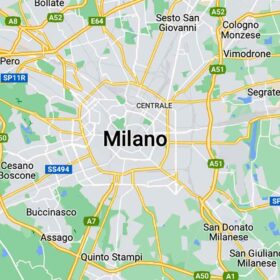
 The Geographic Location of Milan – A Strategic Spot in the Heart of Europe
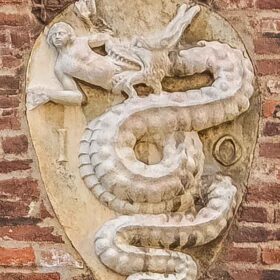 Milan’s coat of arms
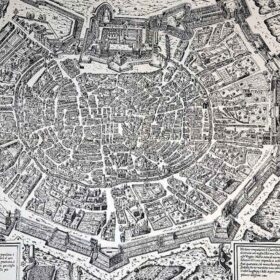 History of Milan
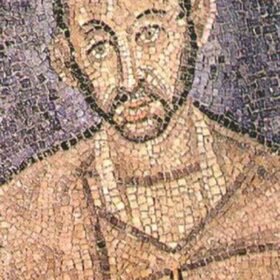 Saint Ambrose
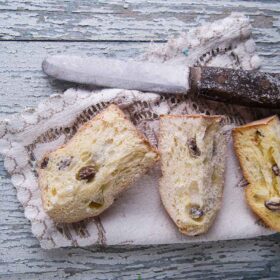 History of Panettone
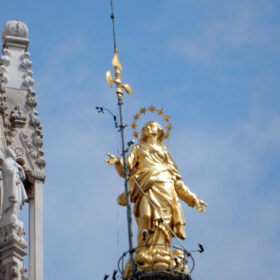 Madonnina
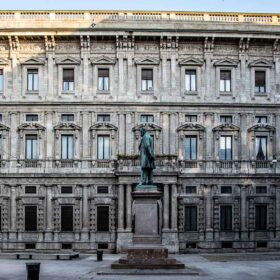 City Hall
 Milanese cuisine


Leonardo da Vinci was thirty years old when he arrived in Milan from Florence in 1482. He brought with him a letter to Duke Ludovico Sforza, in which he presented himself primarily as a military engineer, offering designs for bridges, siege machines, and armored vessels. He mentioned painting only at the very end, almost as an afterthought. He knew his audience: Sforza needed an engineer, not a painter, so Leonardo gave him exactly what he wanted to hear.
Leonardo stayed in Milan for nearly twenty-five years. Here he painted “The Last Supper,” designed canal locks, received a vineyard from the duke, and fought to keep it for the rest of his life (he even mentioned it in his will). He drew flying machines, studied anatomy, and organized court spectacles with special effects.
The traces he left behind are scattered across the city: from Piazza della Scala, where his monument stands, to the area around today’s CityLife, where he reportedly lived. They’re grouped here by theme, so you don’t have to run from one end of Milan to the other. Pick what interests you most and fold other nearby attractions into your plan.
What works by Leonardo da Vinci can you see in Milan?
In Milan you can see, among other things, “The Last Supper,” the fresco in Sala delle Asse at the Sforza Castle, and “Portrait of a Musician” at the Pinacoteca Ambrosiana.
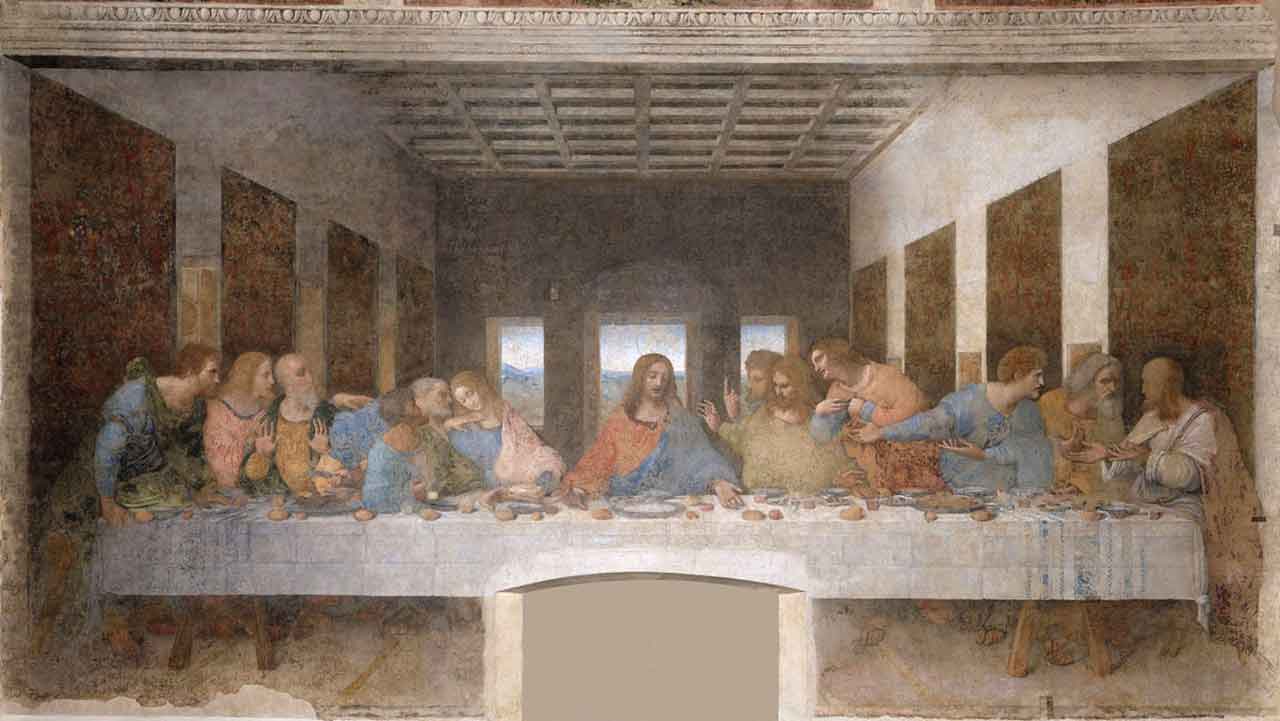
“The Last Supper” at Santa Maria delle Grazie
Let’s start with why most people look for Leonardo in Milan in the first place. “The Last Supper,” the artist’s most famous work, covers an entire wall of the refectory of the former Dominican monastery on Corso Magenta: 15 feet high, 29 feet wide. Leonardo painted it between 1495 and 1498, and being Leonardo, he had to experiment: instead of traditional fresco (paint on wet plaster, you have to work fast), he used tempera on a dry surface to have more time for corrections and shading. The approach achieved the desired effect, but proved fragile – the paint started flaking off while he was still alive.
Since then, the painting has undergone multiple restorations, not all of them successful. During the Napoleonic Wars, the refectory was even turned into a stable, and in 1943 a bomb hit the church roof. Fortunately, the wall with the painting miraculously survived. Decades of humidity took their toll as well. The last restoration, spanning over twenty years, was completed in 1999 and brought back the original colors where they had managed to survive.
Today, a maximum of 40 people are admitted per time slot, and visits last 15 minutes. Tickets are released three months in advance and sell out within days of going on sale. I realize this sounds like a logistical nightmare, but those 15 minutes have something truly special about them: the room is quiet, the painting is right there in front of you, and you suddenly understand why people fly here from the other side of the world.
Since December 2025, the museum has been managed by the Pinacoteca di Brera, though the reservation system itself hasn’t changed.
Details on tickets and proven strategies for securing a slot are in the dedicated Last Supper article.
More about the church itself: Santa Maria delle Grazie.
Krużganek Żab i stara zakrystia
While you’re at Santa Maria delle Grazie, it’s worth stepping into the Chiostro delle Rane (Cloister of the Frogs), the only cloister in the complex that’s open to visitors today. It’s part of the Bramante-led renovation that Donato Bramante carried out for Ludovico il Moro in the late 15th century. From the cloister, you pass into the Sacrestia Vecchia, or old sacristy – a large hall with frescoes and carved wooden cabinets that now serves as an exhibition space. This is where rotating displays of pages from Leonardo’s Codex Atlanticus are held, so you have a chance to see the genius’s original notes just a few dozen yards from his most famous painting.

Ritratto di Musico at the Pinacoteca Ambrosiana
After leaving the refectory, it’s worth heading to the city center, because a short metro ride away, at Piazza Pio XI, hangs one of the few surviving oil-on-panel paintings by Leonardo in Milan.
Ritratto di Musico, painted around 1485, was misidentified for a long time. It was believed to depict Ludovico Sforza himself. Only in 1905, during restoration, were later overpaintings removed, revealing a hand holding a sheet of musical notation in the lower portion. Since then, scholars have debated: some claim it’s Franchino Gaffurio, the chapel master of Milan’s cathedral, others point to the Franco-Flemish composer Josquin des Prez. There’s no certainty, and there probably never will be.
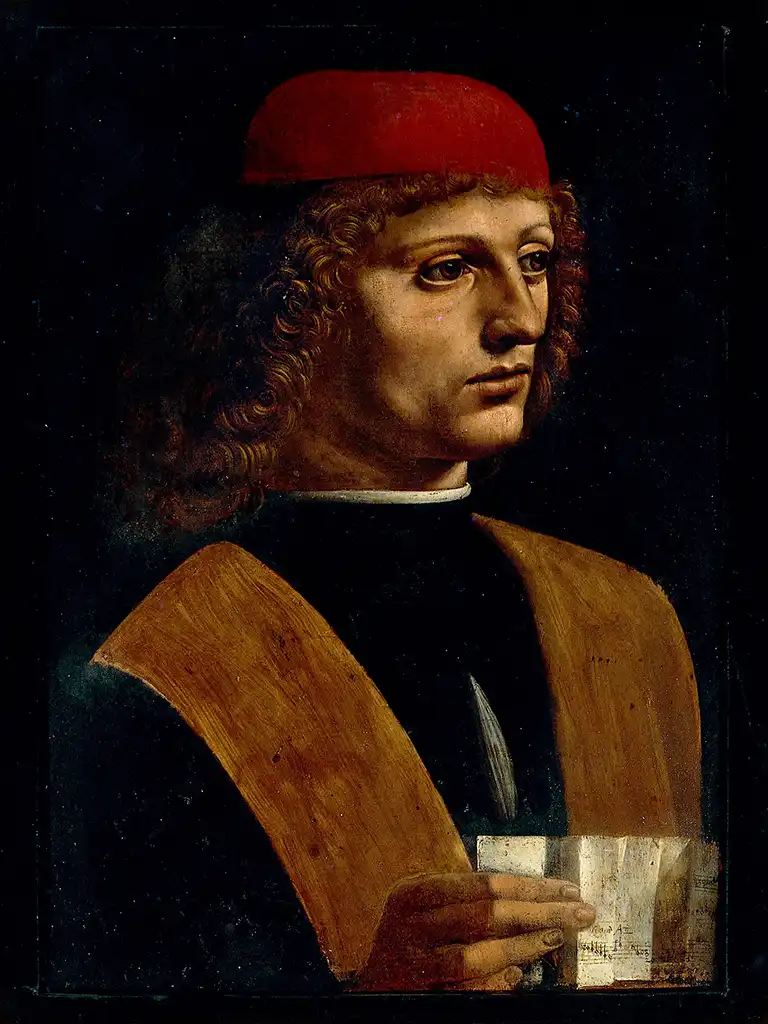
The painting hangs in the Pinacoteca Ambrosiana, so while you’re there you’ll also see Caravaggio’s “Basket of Fruit” and Raphael’s cartoon for “The School of Athens.” The museum was founded in 1618 by Cardinal Federico Borromeo – the same Borromeo that Manzoni wrote about in “The Betrothed.” It’s one of the oldest public museums in the world, yet many tourists walk right past it without knowing what’s inside.
Sala delle Asse at the Sforza Castle
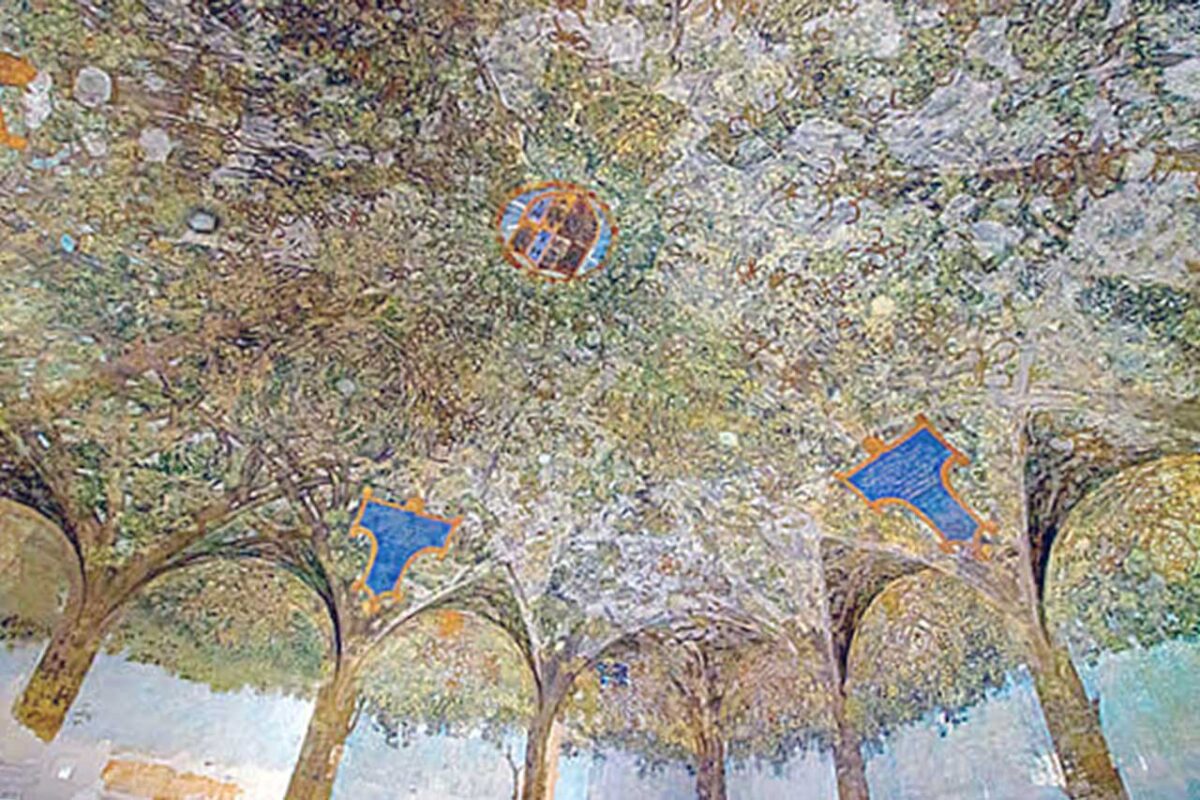
A third work by Leonardo in Milan is about a fifteen-minute walk from the Pinacoteca Ambrosiana, at the Sforza Castle. Sala delle Asse is located on the ground floor of the northeast tower and features a decoration Leonardo created for Ludovico il Moro. Across the vault stretches an illusionistic pergola of mulberry branches, arranged in a geometric pattern full of the characteristic “Leonardo knots.” It’s not a painting in the traditional sense, but an architectural decoration: you stand inside and feel as if a canopy of real trees is spreading above you.
Sala delle Asse is part of the Castle Museums – one ticket gives you access to all the collections.
The Castle’s underground passages: Castello Sforzesco has a network of underground corridors dating back to the Sforza era. Legend has it there’s a secret tunnel to Santa Maria delle Grazie, through which Ludovico supposedly walked to the church in secret. There’s no historical evidence for it, but the corridors are real and can be visited with a guide. Tours are organized by Ad Artem, starting at around €10.
What is the Codex Atlanticus and where can you see it?
The Codex Atlanticus is the largest collection of Leonardo’s notes: 1,119 sheets housed at the Biblioteca Ambrosiana in Milan.
If you’re already at the Pinacoteca Ambrosiana or planning to visit, it’s worth going downstairs to the Biblioteca Ambrosiana as well. This is where the Codex Atlanticus is kept – the largest collection of Leonardo da Vinci’s notes, totaling 1,119 sheets. You’ll find everything in it: from studies on the flight of birds and designs for military machines to anatomical drawings, geometric analyses, and sketches of bridges. It’s not a coherent treatise, though – just a collection of notes, sketches, and ideas that Leonardo jotted down as they came to him.
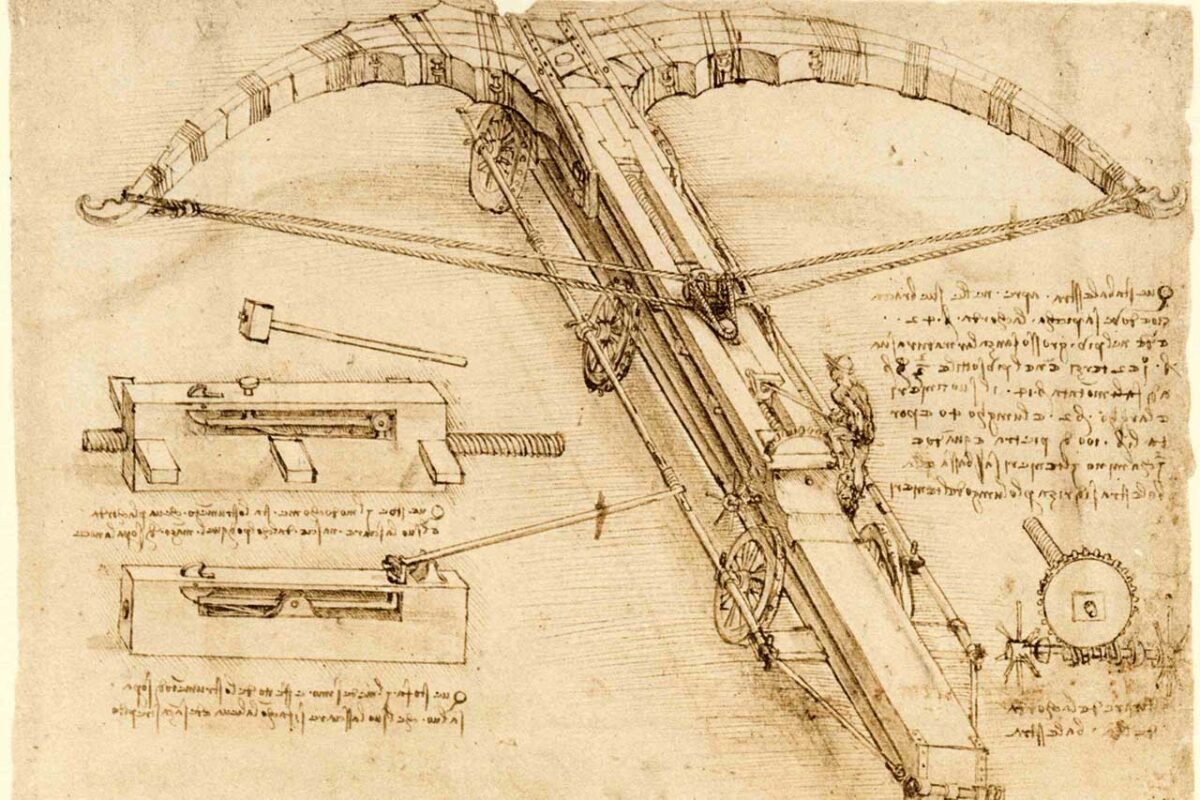
The name “Atlanticus” has nothing to do with the ocean. It comes from the format of the sheets, which are larger than ordinary paper, resembling large atlases. For conservation reasons, the entire codex can’t be displayed at once, but the library regularly shows selected pages in temporary exhibitions. Some of them also make their way to the Sacrestia Vecchia at Santa Maria delle Grazie, mentioned above.
Buy a ticket to the Pinacoteca and Library:
At the Sforza Castle, there’s another notebook: the Codex Trivulzianus (Codex Trivulzianus) from 1487-1490, kept in the Biblioteca Trivulziana. It contains architectural sketches and notes on fortifications, but also something touching: lists of Latin words that Leonardo taught himself, having never received a formal education – something that bothered him his entire life. The codex isn’t permanently on display, but check for current temporary exhibitions.
Where can you see Leonardo da Vinci’s inventions and machines?
The Museum of Science and Technology on Via San Vittore houses the world’s largest permanent exhibition dedicated to Leonardo as an engineer.
It’s just 300 meters from “The Last Supper.” Along the way, you can stop at the Basilica of Sant’Ambrogio, one of the oldest churches in the city, and explore the whole neighborhood in one go.
Leonardo da Vinci Museum of Science and Technology
The museum is housed in the former San Vittore monastery and covers 50,000 square meters of exhibition space. The main reason to come here is the Leonardo Galleries – about 170 machine models built from his drawings, from a tank design to a revolving bridge to a parachute prototype. On top of that, there are historical volumes and multimedia installations that show how these inventions were supposed to work and where Leonardo’s ideas came from.
The rest of the museum is a separate story: you’ll find sections on space, energy, and transportation, and in the garden sits a real Enrico Toti submarine that you can go inside. There are also interactive workshops for kids. The Leonardo Galleries alone take about two hours, but for the whole museum you’ll want to set aside half a day.
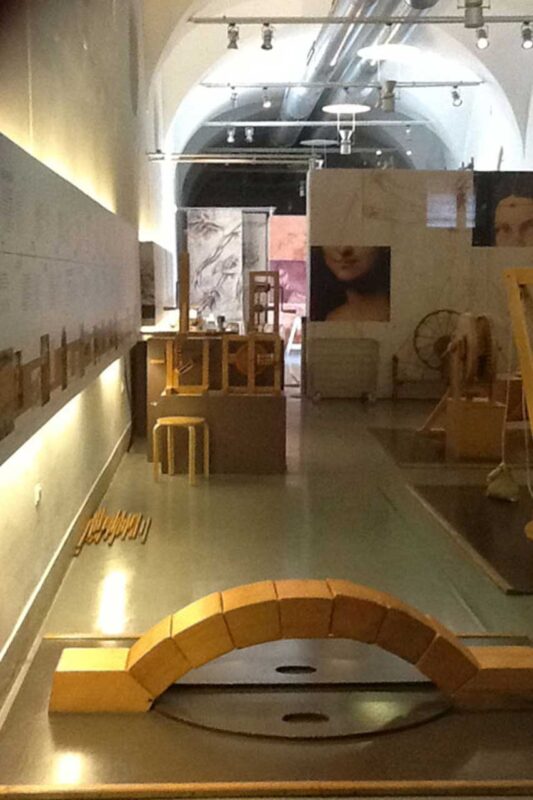
More about the museum: dedicated article.
Buy a ticket to the museum:
Leonardo3 Museum in the Galleria Vittorio Emanuele II
If the Museum of Science and Technology shows Leonardo from a broad perspective, Leonardo3 focuses on a more interactive experience. It’s a smaller space with a completely different approach: machine models you can examine up close, digital reconstructions of his works, and multimedia presentations. The entrance is at Piazza della Scala, through the Galleria Vittorio Emanuele II, right next to Leonardo’s monument. The two museums complement each other well, showing Leonardo from two different angles.
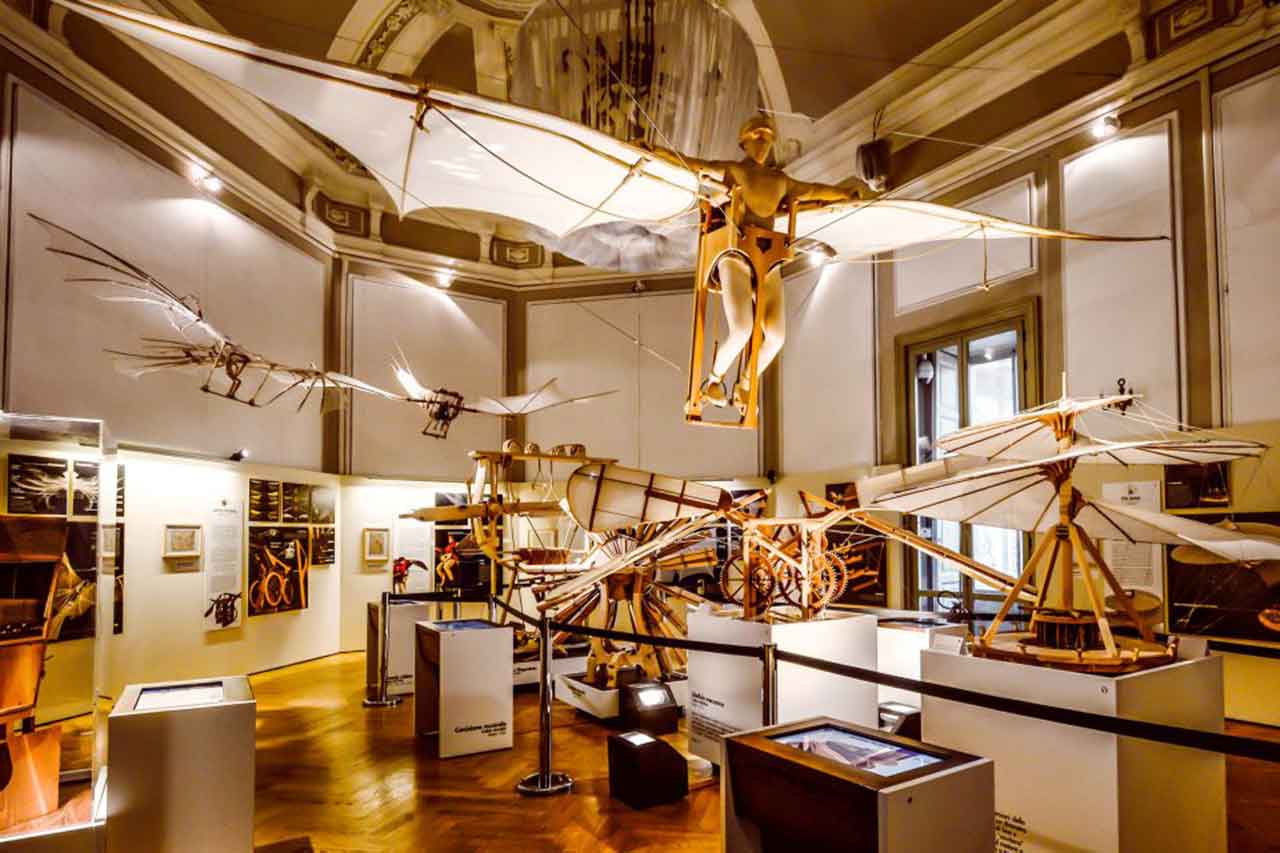
Read more: Leonardo3 Museum.
Buy a ticket to the Leonardo museum3:
How did Leonardo da Vinci change Milan’s canals?
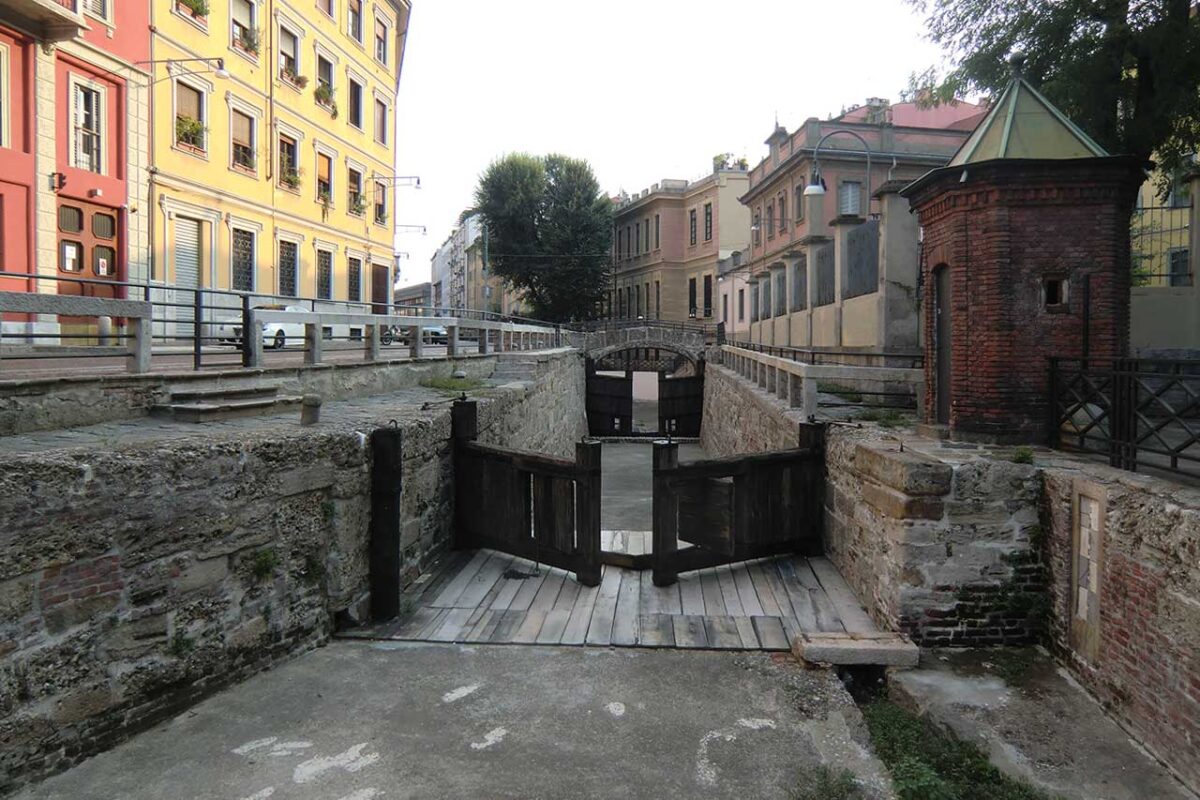
Leonardo contributed to improving the lock system on the Navigli, and Conca dell’Incoronata on Via San Marco is today the only surviving trace of that system in central Milan. The site is free to visit and still offers a clear picture of how important the city’s canal network once was.
Leonardo wasn’t just a painter and a theoretical inventor. On Sforza’s commission, he also worked on the Navigli canal system, which in those days served as one of Milan’s most important transportation routes: goods, marble for the cathedral, and even passengers traveled along them. The only tangible trace of that work that survives in the city center to this day is Conca dell’Incoronata on Via San Marco.
This navigation lock from 1496, also known as Conca delle Gabelle, connected the Naviglio della Martesana to the inner ring of canals and allowed boats to navigate the difference in water levels between the two sections. It’s one of the most important surviving remnants of Leonardo’s hydraulic projects in central Milan. Restored in 2020, it now sits on a street corner between parked cars. Nobody sells tickets, there’s no line, no sign reading “Leonardo worked here.” Locals call the spot Le chiuse di Leonardo and keep walking.
What is Leonardo da Vinci’s vineyard in Milan?
Vigna di Leonardo is a historic vineyard on Corso Magenta, given to the artist by Ludovico Sforza in 1498 as payment for “The Last Supper.”
In 1498, Ludovico Sforza gave Leonardo a vineyard across the street from Santa Maria delle Grazie. It was his reward for “The Last Supper” – a small plot of land planted with Malvasia di Candia Aromatica vines. Leonardo grew so attached to it that after the French confiscated his property, he fought to get the vineyard back. He later left it in his will to his pupil Salaì and his servant Villani. In the 20th century, the vineyard was destroyed during the 1943 bombings, and in 2015 it was replanted for Expo Milano using DNA research and historical measurements.
In late 2022, Bernard Arnault, head of the LVMH group (Louis Vuitton), purchased the entire Casa degli Atellani complex including the vineyard. Since October 1, 2023, the property has been closed. There were announcements that part of the complex would reopen after renovation, but as of now there are no concrete details. From the outside, you can see the facade at Corso Magenta 65 and keep in mind that behind the wall lies Leonardo’s historic vineyard.
Cascina Bolla
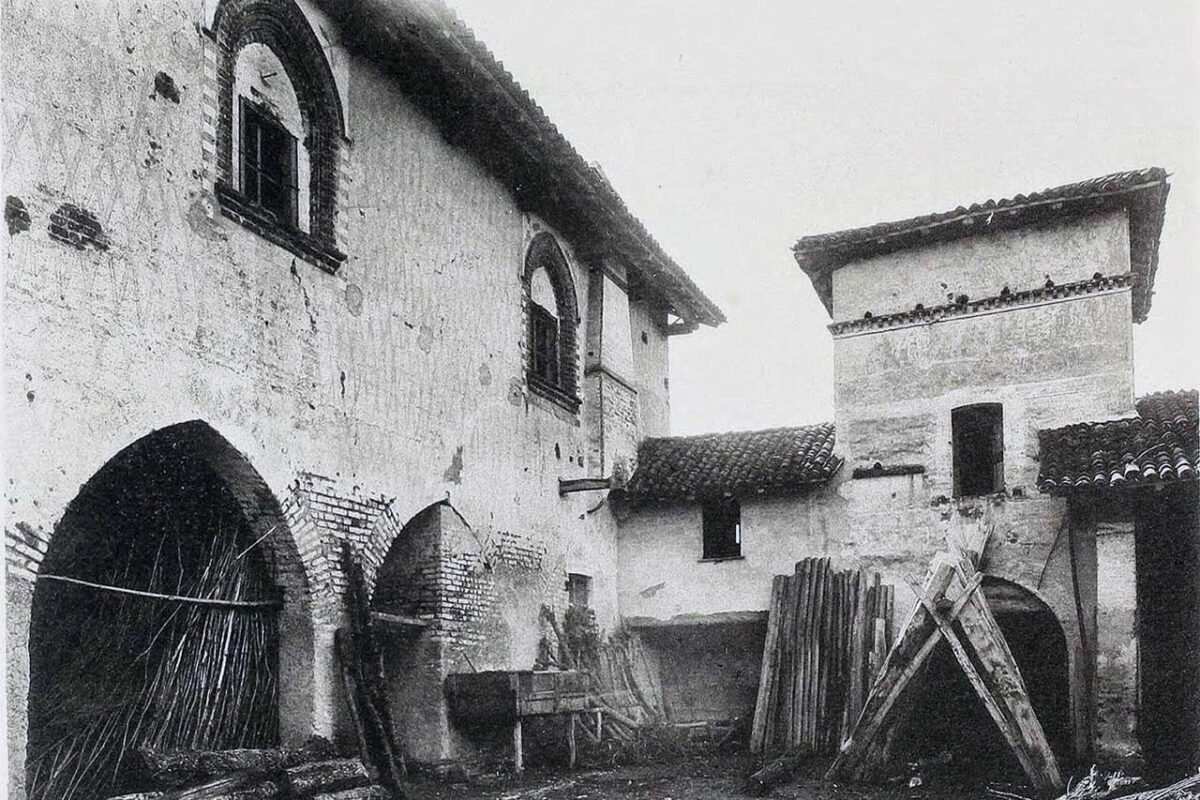
There’s also a second location believed to be connected with Leonardo – Cascina Bolla at Via Paris Bordone 9, today in the CityLife area. In Leonardo’s time, this was countryside surrounded by fields and canals, and local tradition links it to the artist’s stay in Milan. According to local accounts, Leonardo would come here to rest from court life and his work on “The Last Supper.”
To be fair, there’s no hard historical evidence for this. Local tradition connects the place with Leonardo, but the documents don’t confirm it. In 2018, the property was purchased by Chinese entrepreneur Gordon Gu, and during Fuorisalone 2025 he opened it as an exhibition space. For now, there’s no certainty whether the site will be opened to the public again.
Leonardo da Vinci statue in Piazza della Scala
The Leonardo da Vinci monument from 1872 stands on Piazza della Scala, across from the La Scala opera house, and makes a great starting point for exploring the city center.
Back to the center, and to a spot where many people begin their day in Milan. On Piazza della Scala, across from La Scala, stands the Leonardo da Vinci monument by Pietro Magni, unveiled in 1872. The white marble Leonardo stands 4.40 meters tall, gazing down from a granite pedestal at the square. At his feet stand four pupils: Boltraffio, d’Oggiono, da Sesto, and Salaì.
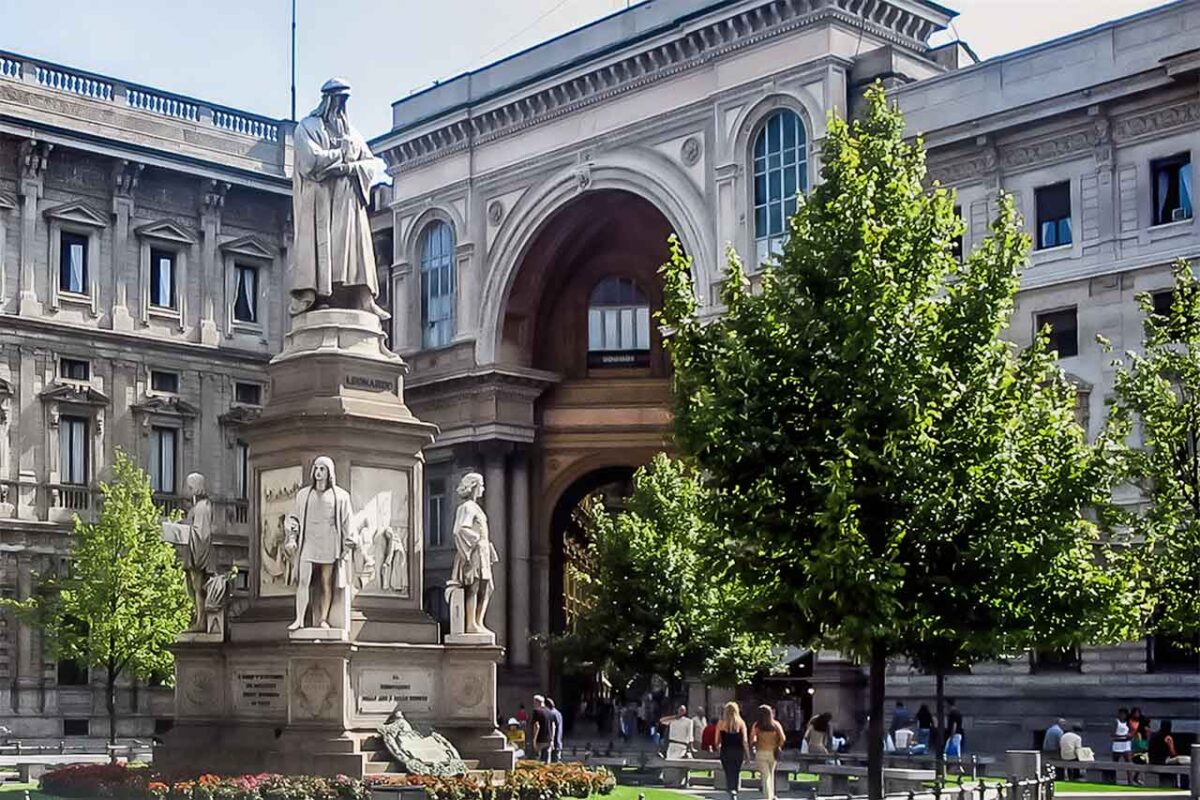
The Milanese almost immediately nicknamed it “on liter in quatter,” which in the local dialect means “a liter bottle among four glasses.” Supposedly it was Giuseppe Rovani who cracked the joke over a glass of wine, and the name stuck for good.
From here it’s 2 minutes to the Galleria Vittorio Emanuele II (and to the Leonardo3 Museum), 5 minutes to the Duomo, and 15 minutes on foot to the Sforza Castle.
Leonardo da Vinci’s Horse at the San Siro Hippodrome
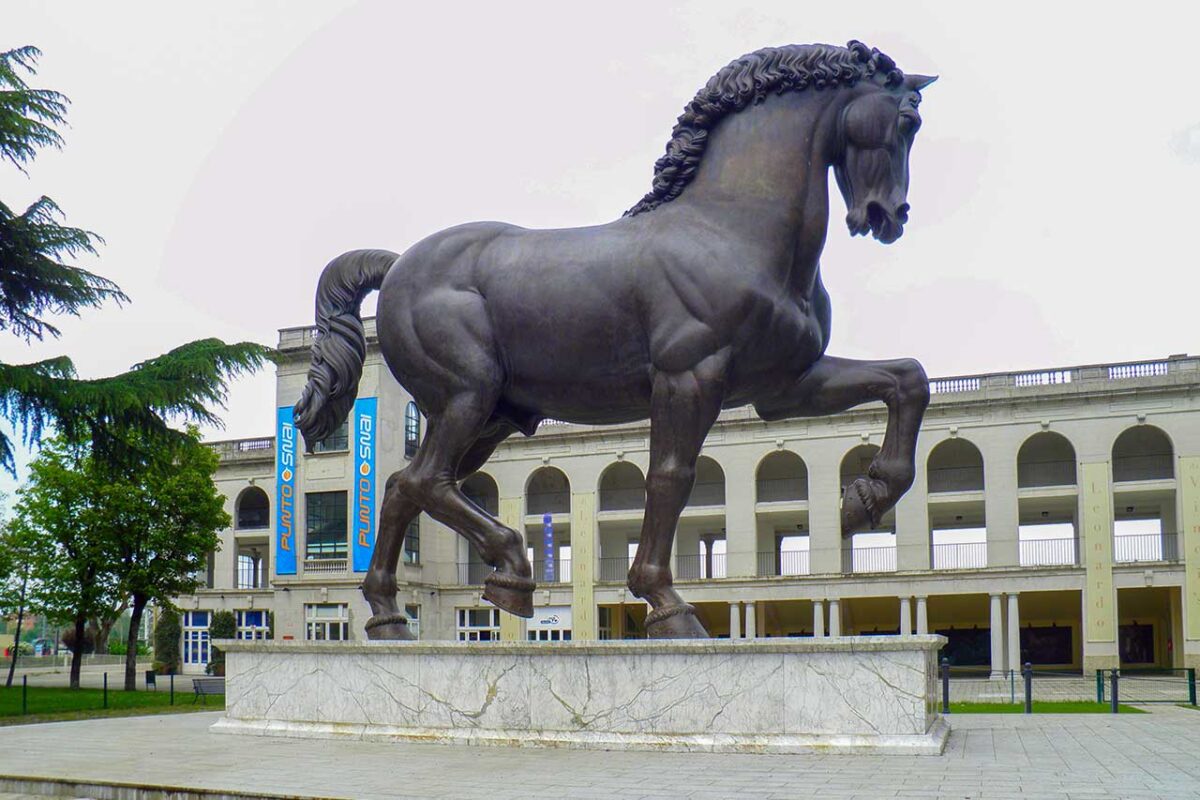
Leonardo’s Horse is a 23-foot equestrian sculpture at the San Siro Hippodrome, re-created in 1999 based on the artist’s Renaissance sketches.
To close things out, it’s worth venturing outside the center to the Ippodromo Snai San Siro, where the Cavallo di Leonardo stands – one of the largest equestrian sculptures in the world, installed at Piazzale dello Sport 6 since 1999. Its story began in 1482, when Ludovico il Moro commissioned Leonardo to design an enormous equestrian monument in honor of his father Francesco, but the artist never finished it. The modern bronze cast, made from Leonardo’s drawings by Nina Akamu, was realized thanks to the initiative of Charles Dent, who wanted to bring the project back to Milan. This is a spot for those who are heading to San Siro anyway or want to see the stadium and hippodrome on a single walk.
How to plan your Leonardo da Vinci trail through Milan?
One intensive day is enough for the key Leonardo sites. Two days let you explore at a more relaxed pace and combine these spots with other Milan attractions.
Pulling it all together: Leonardo’s sites are spread across the city but fall into logical geographic clusters. The table below should help you figure out what each one costs and how far it is from the nearest metro stop.
|
Place |
Ticket |
Visit time |
|---|---|---|
|
The Last Supper |
€15 + res. |
15 min (+ 30 min check-in) |
|
Ambrosian Art Gallery |
€1590 minCordusio (M1)Recommended |
90 min |
|
Sforza Castle (museums) |
€5 (from 5/10: €10) |
2-3 hrs |
|
Museum of Science and Technology |
€10 |
2-4 hrs |
|
Museum Leonardo3 |
check current price |
1-1.5 hrs |
|
Conca dell’Incoronata |
gratis |
15 min |
|
Monument (Piazza della Scala) |
gratis |
5 min |
|
Leonardo’s Horse (San Siro) |
gratis |
15 min |
Is there a combined ticket for Leonardo sites?
There’s no single ticket covering all the Leonardo-related sites. In 2019, for the 500th anniversary of the artist’s death, Milan launched the “5xLeonardo” initiative, combining Cenacolo, Sforza Castle, Pinacoteca di Brera, Ambrosiana, and the Museum of Science and Technology in one ticket for €38. It was valid through 2020 and unfortunately hasn’t been renewed.
Each museum requires a separate ticket. There are, however, passes that partially help:
The Tourist MuseumCard (€12, valid 3 days) covers 8 municipal museums including the Sforza Castle, but doesn’t include The Last Supper or the Ambrosiana, since those are separate institutions.
The combined Duomo + Ambrosiana + San Sepolcro Crypt + cathedral terraces (via stairs) ticket costs €30 (€20 reduced, valid 3 days). It’s not strictly a “Leonardo” ticket, but it pairs the Ambrosiana (Portrait of a Musician, Codex Atlanticus) with the Duomo, so you’ll save in the process.
More on discount cards in the dedicated article.
How to spread out your sightseeing?
In theory, you can see the main Leonardo sites in a single day, especially since many of them are close together. The Last Supper, the Museum of Science, and Conca dell’Incoronata are all in the Corso Magenta area, while the Sforza Castle, Ambrosiana, and Leonardo3 cluster in the center. But the pace that kind of schedule demands takes the pleasure out of it.
Better to spread it over two days and combine with other attractions nearby. One day you explore the Corso Magenta area (Basilica of Sant’Ambrogio, the Navigli), the next the city center (Duomo, Galleria Vittorio Emanuele II, the Brera district). Leonardo fits naturally into both of these walks, without the need for a separate “trail.”
Find all places related to Leonardo da Vinci on Map
Leonardo’s presence in Milan doesn’t stop at the museum walls. You can feel it in the layout of the canals, in the geometry of the castle frescoes, in the vineyard that has survived five centuries behind a wall on Corso Magenta. This city was his home, workshop, and laboratory all at once, and his traces – scattered as they are across different neighborhoods – come together to form a picture of someone who wanted to understand absolutely everything. And that, I think, is why we keep coming back.
Sources:


I lived in Milan for 18 years, and it was there that I came to know the city’s daily life best - not just its landmarks, but also its rhythm, its habits, and its less obvious sides. Today I live in Wrocław, but I still return to Milan regularly.