


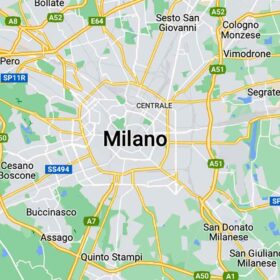
 The Geographic Location of Milan – A Strategic Spot in the Heart of Europe
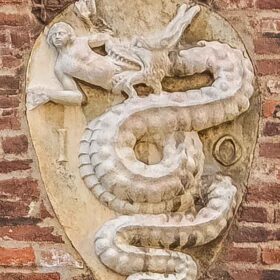 Milan’s coat of arms
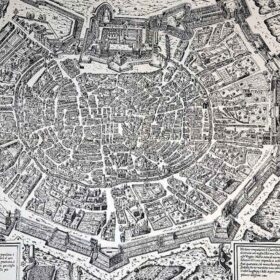 History of Milan
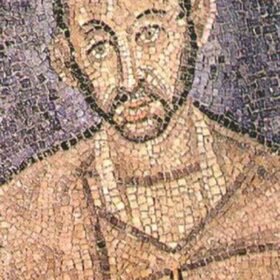 Saint Ambrose
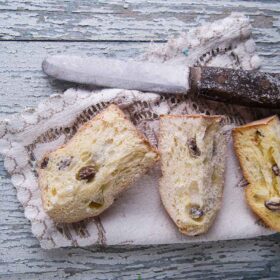 History of Panettone
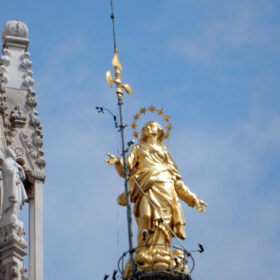 Madonnina
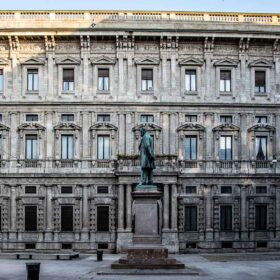 City Hall
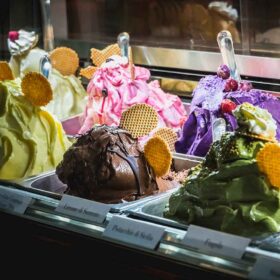 Milanese cuisine


Porta Venezia – a neighborhood that has it all
In 2020, the British Time Out ranked Porta Venezia as the 35th coolest neighborhood in the world. For comparison – it was the only Italian district on the list, and interestingly, it ranked higher than places in Kuala Lumpur or Mumbai.
And that wasn’t by chance. Here you’ll find stunning Liberty-style architecture that’s hard to look away from. It’s also the capital of the LGBT+ community in Italy – with rainbow bars and the country’s biggest Pride parade. A large Eritrean and Ethiopian community lives here, so you’ll find authentic East African restaurants. Corso Buenos Aires, stretching all the way to Piazza Lima, is one of the longest shopping streets in Europe. And in the legendary Bar Basso, the Negroni Sbagliato – one of Italy’s most famous cocktails – was invented.
Sounds like several neighborhoods in one? Exactly. That’s why it’s worth exploring…
How to get here (and why getting around won’t be a problem)
Porta Venezia sits on the red metro line M1. You can choose between three stops: Palestro (for museums and gardens), Porta Venezia (the center of the neighborhood), and Lima (the start of Corso Buenos Aires). In 2018, Porta Venezia station was decorated in rainbow colors as the “Rainbow Station” – sponsored by Netflix for Milano Pride, but the city decided to keep it permanently.

The suburban railway Passante Ferroviario also runs underground, with lines S1, S2, S5, S6, and S13 – useful if you’re planning day trips outside Milan.
Above ground, trams (lines 5, 9, 33) and buses run frequently. If you’re lucky, you might catch one of the vintage yellow Carrelli trams from 1928 – they still run on some routes and make a bigger impression than the new air-conditioned ones.
Parking? It exists, but honestly – why bother? The best way to explore this district is on foot. Hidden courtyards, ceramic facades, unexpected details – you’ll only catch these while walking.
A short history of Porta Venezia – the gate that gave the district its name
Let’s start with the basics. The Porta Venezia gate itself consists of two neoclassical customs pavilions designed by Rodolfo Vantini in 1827–1828. They stand on Piazza Oberdan and look imposing – Doric columns, marble statues, and bas-reliefs depicting Milan’s history.
The name has its own story…
For centuries, the gate was called Porta Orientale (though not very logically, since it faces northeast). People also called it Porta Renza – probably a distorted form of the Roman Porta Argentea, which led to Argentiacum (today’s Crescenzago). During Napoleon’s time, it was renamed Porta Riconoscenza (“Gate of Gratitude”). The current name, Porta Venezia, was given in 1860 – as a gesture of solidarity with Venice, still under Austrian rule.
Fun fact: Renzo Tramaglino, the protagonist of Alessandro Manzoni’s The Betrothed, enters Milan through this gate. Nearby stood the Lazzaretto – a plague hospital also described in the novel.
In the early 20th century, Filippo Tommaso Marinetti, the founder of Futurism, lived in this neighborhood. From his home at Corso Venezia 23, he launched the movement that turned European art upside down.
Flamingos, the “Ear,” and the hidden heart
Porta Venezia has its secrets. Some are absurd, others just quirky. All worth seeing.
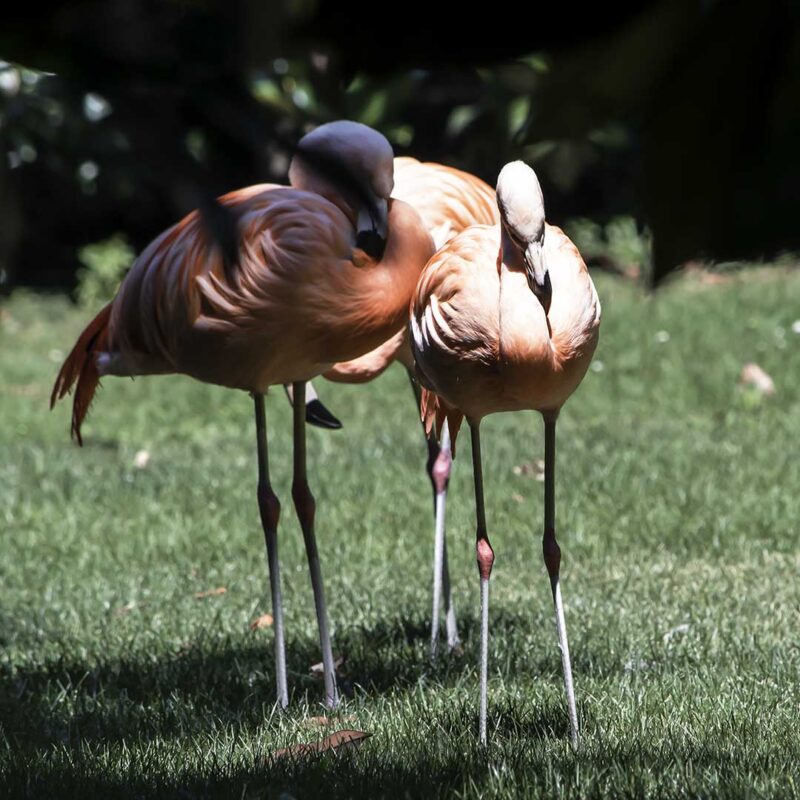
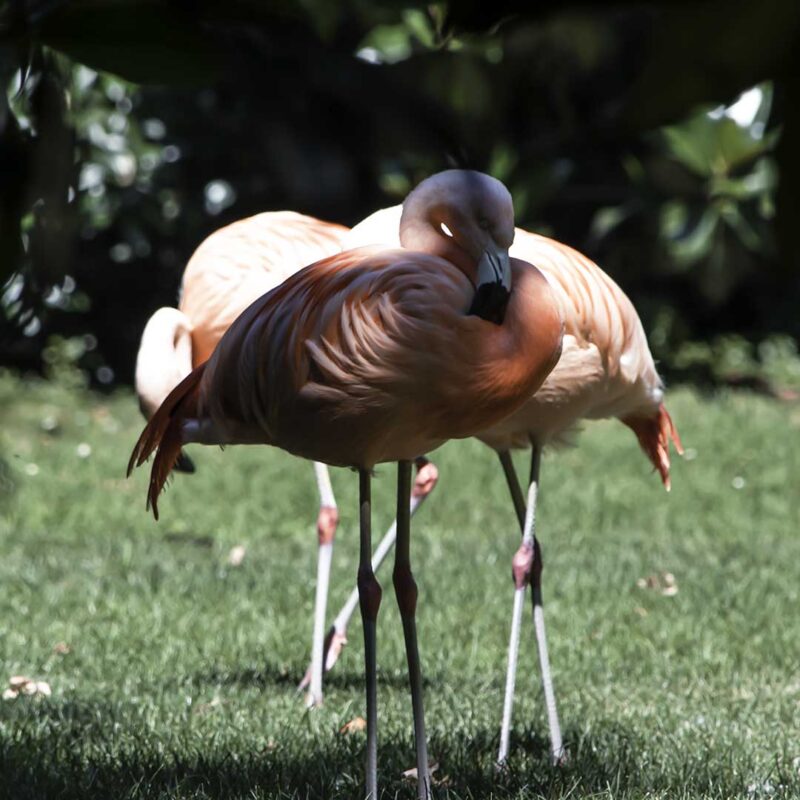
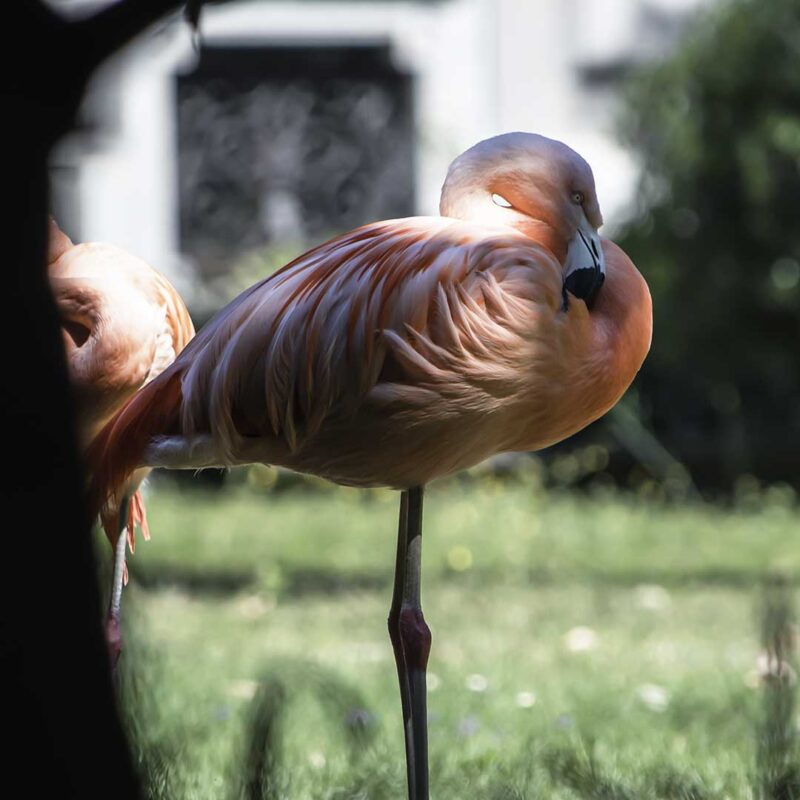
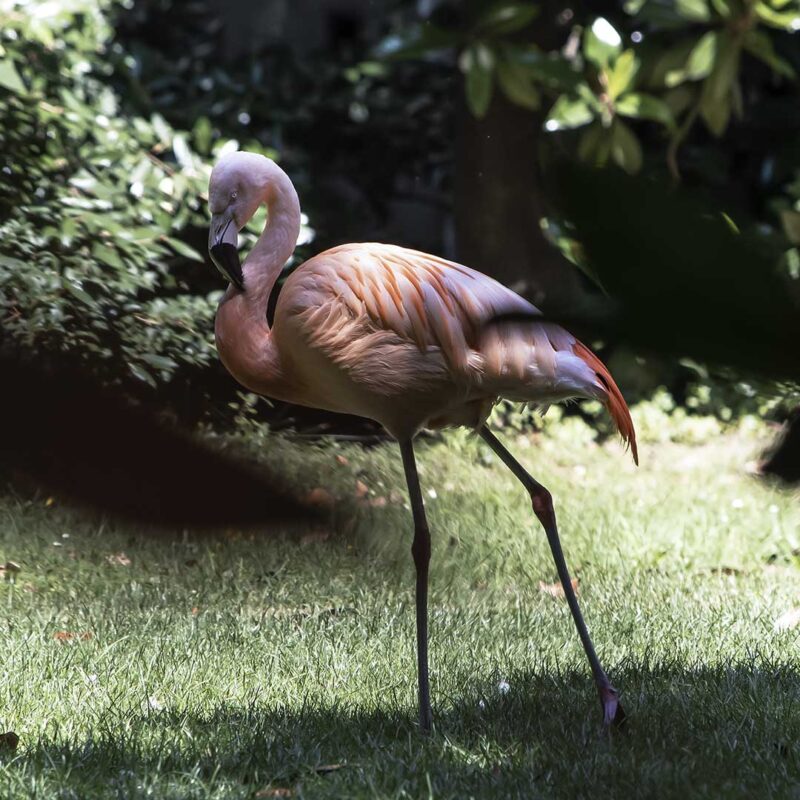
Flamingos at Villa Invernizzi (Via dei Cappuccini 7)
Behind the fence of this private villa lives a colony of pink flamingos. Real, live flamingos. Right in the middle of Milan. Nobody really knows why the owners keep birds from Africa and South America here, but locals and tourists come to peek through the fence. Instagram loves it. The flamingos seem to love it too – they’ve been living here for years.
The “Ear” at Ca de l’Oreggia”Ucho” przy Ca de l’Oreggia
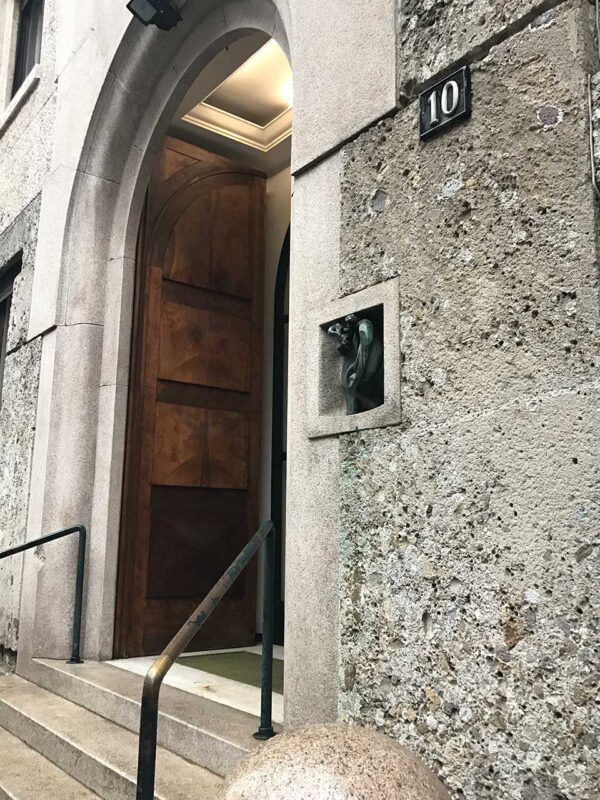
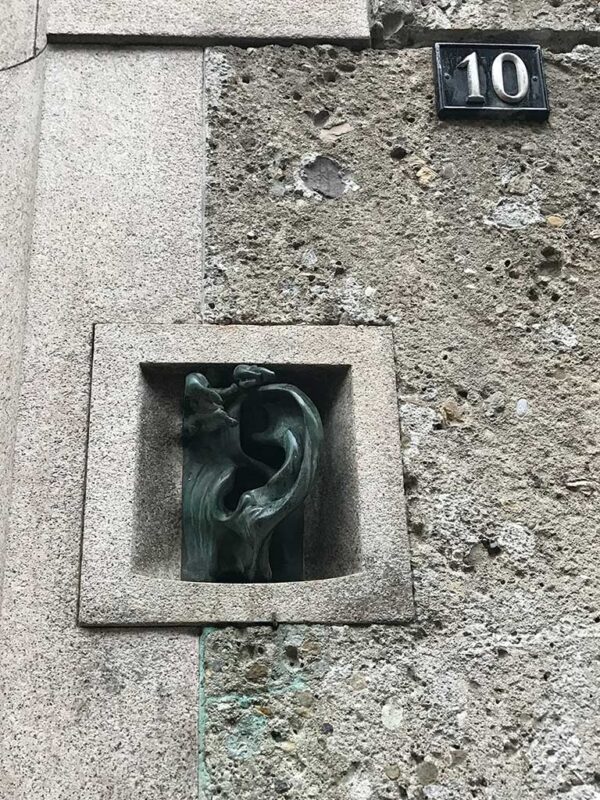
Palazzo Sola-Busca (nicknamed Ca de l’Oreggia, or “House of the Ear”) has a giant bronze sculpture of a human ear on its facade. Strange? Absolutely. But this work by Adolfo Wildt had a very practical use – it was one of Italy’s first intercoms. You’d speak into the ear, and someone inside would hear you. Simple, practical, and totally surreal.
The hidden heart of Milan
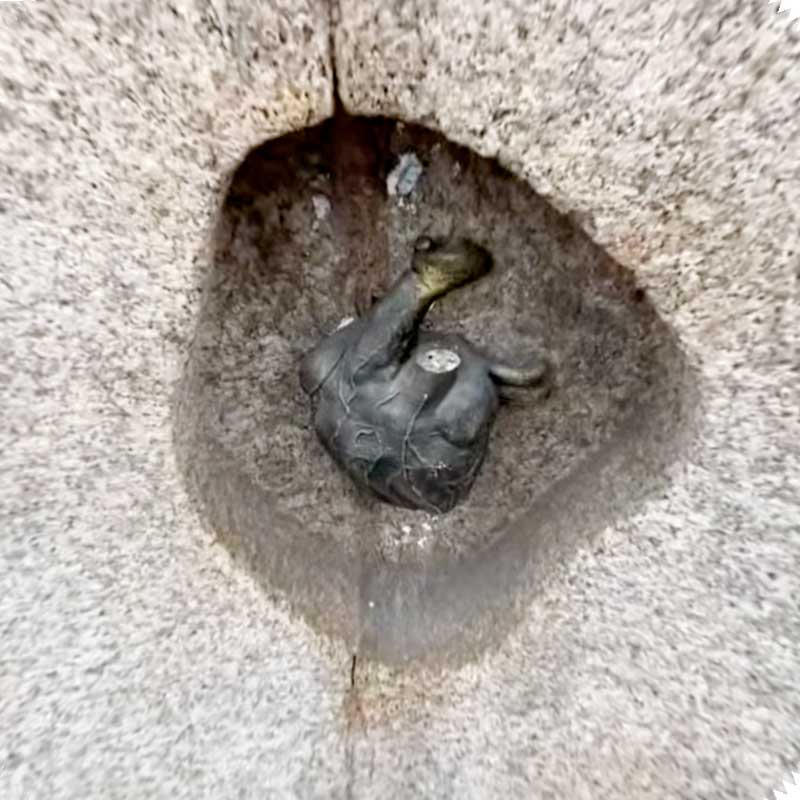
In one of the neoclassical customs pavilions by the gate, tucked into a small niche, you’ll find a miniature sculpture of a human heart. Anatomically correct – apparently made by someone with medical training. It’s a symbolic nod to the saying “Milano ha il cuore in mano” (“Milan wears its heart on its sleeve”). Finding it takes a moment, but it’s worth it – one of the sweetest secrets of the district.
Casa 770 (Via Poerio 35)
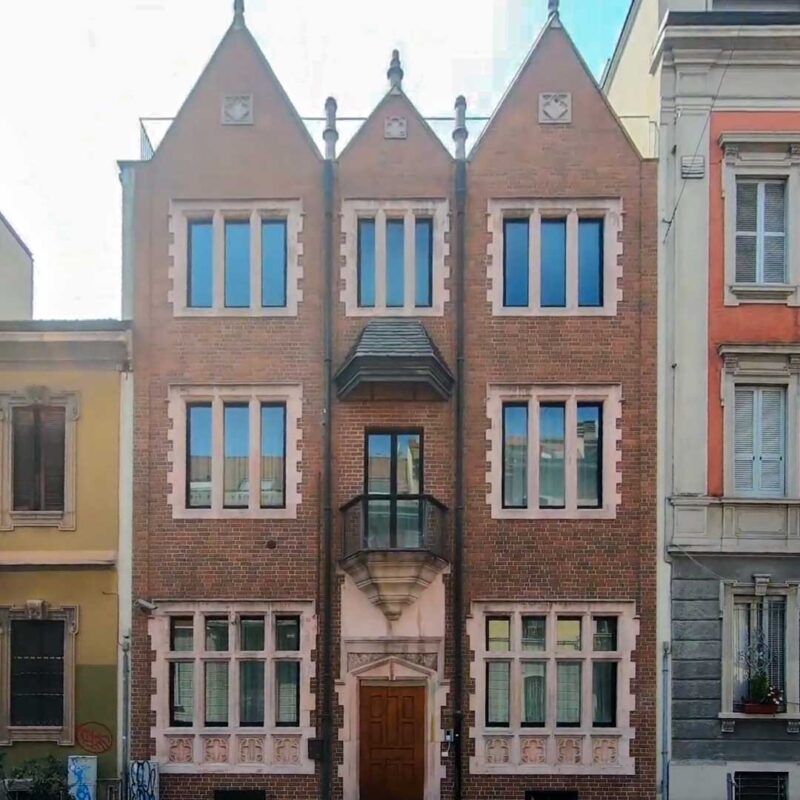
A neo-Gothic building that looks like it was teleported straight from Brooklyn. And in a way, it was – it’s an exact replica of the house at 770 Eastern Parkway, headquarters of the Chabad-Lubavitch movement in New York. The only such replica in Europe, built for Milan’s Hasidic community. Milan has its architectural oddities, but this might be the most unexpected.
Liberty architecture: when facades speak for themselves
Porta Venezia is Milan’s capital of Liberty architecture. And you don’t have to search for it – just look up.
Casa Galimberti (Via Malpighi 3)
If you’re going to see only one Liberty building in your life, let it be this one. Designed by Giovanni Battista Bossi in 1903–1905, its facade is covered with 170 square meters of painted ceramic tiles. Female figures in flowing dresses, male figures, twisting plants – all created using a complex fire-painting method. The result? A giant Art Nouveau comic book drawn on the facade.
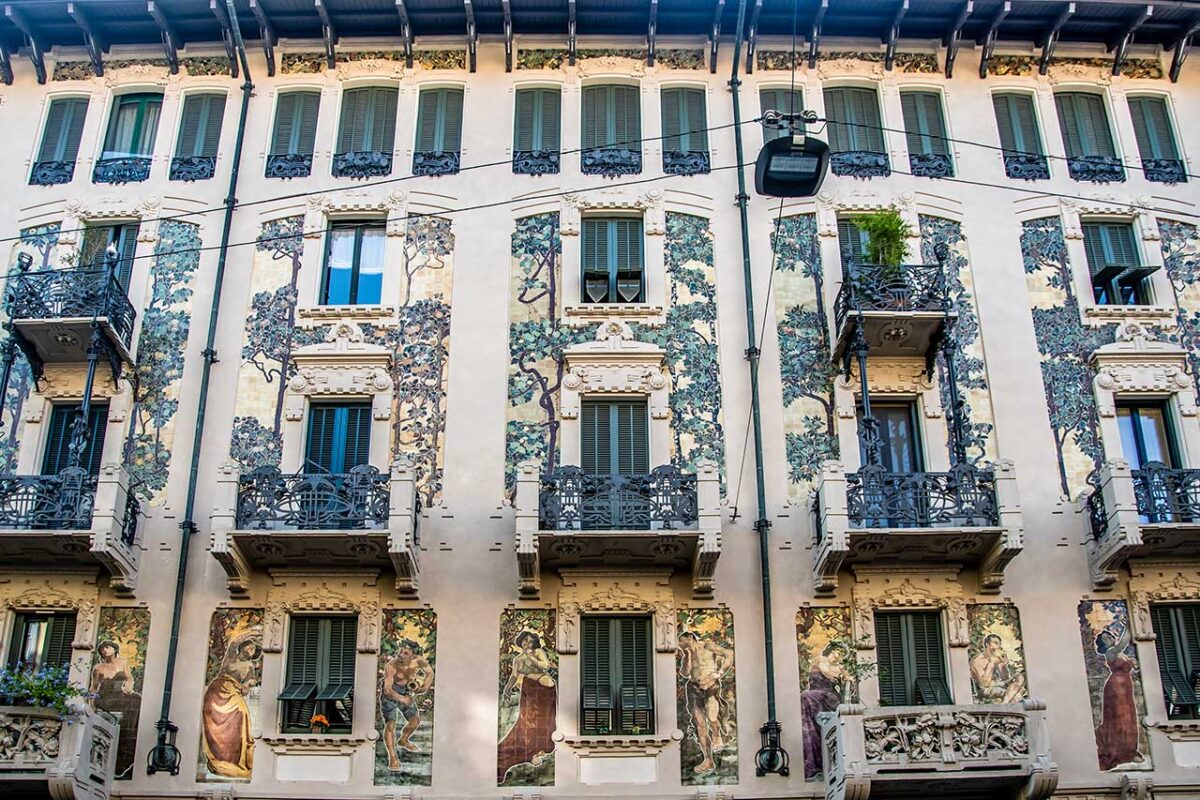
Casa Guazzoni (Via Malpighi 12)
It stands across from Casa Galimberti and looks as if someone forgot to add color. Where Casa Galimberti boasts ceramic women and flowers, here you’ll find stark minimalism – monochrome concrete friezes and wrought-iron decorations forming organic shapes. Paradoxically, both buildings were commissioned by the same people – the Galimberti brothers, who made a fortune in construction at the start of the 20th century. Their biggest project? The demolition of the Lazzaretto – the historic plague hospital described by Manzoni in The Betrothed. Emilio Galimberti even earned the nickname “Barbarossa of Porta Venezia” for it. Apparently, large-scale destruction of monuments didn’t stop them from creating Art Nouveau masterpieces.
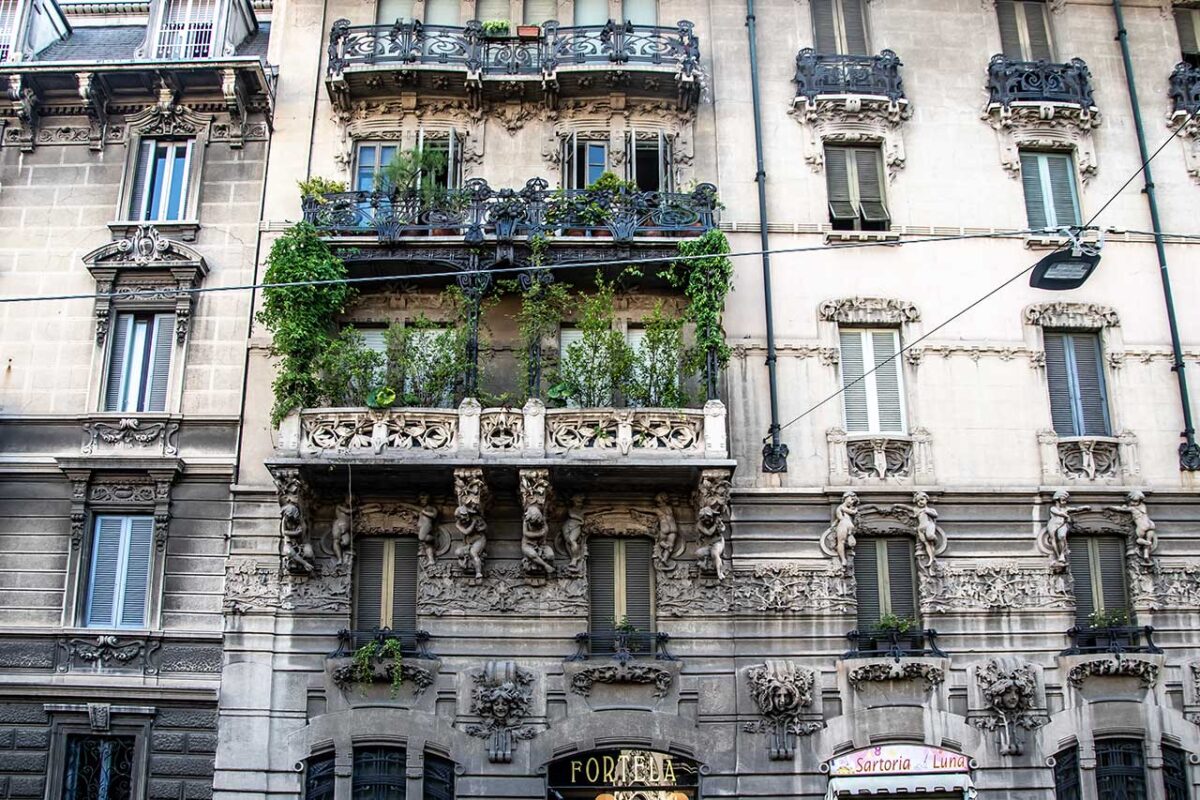
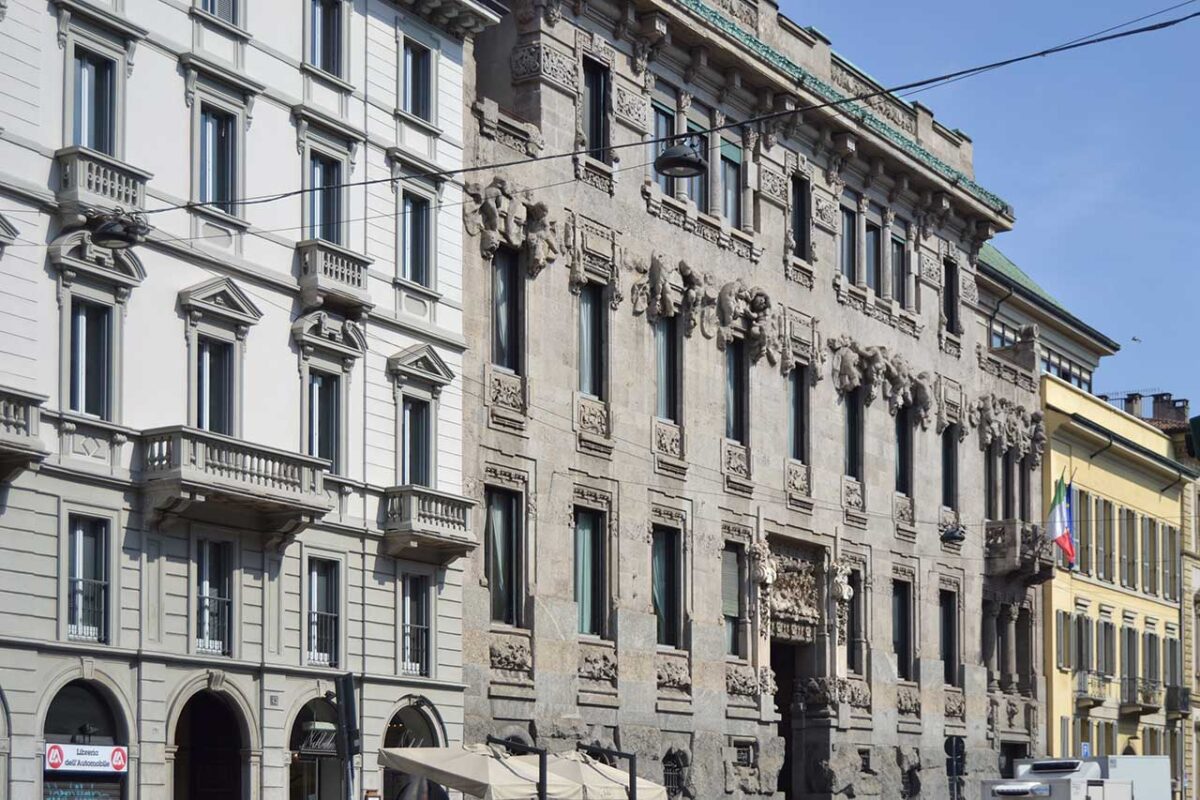
Palazzo Castiglioni (Corso Venezia 47)
In 1904, Giuseppe Sommaruga designed Milan’s first Liberty building – and didn’t hold back. Two nude female statues appeared on the facade, shocking the city’s bourgeoisie. The scandal was so great that the statues were eventually removed, but the nickname “Ca’ di Ciapp” (“House of Buttocks”) stuck forever. Today, the building houses the Chamber of Commerce – probably the only one in Europe with such a risqué backstory.
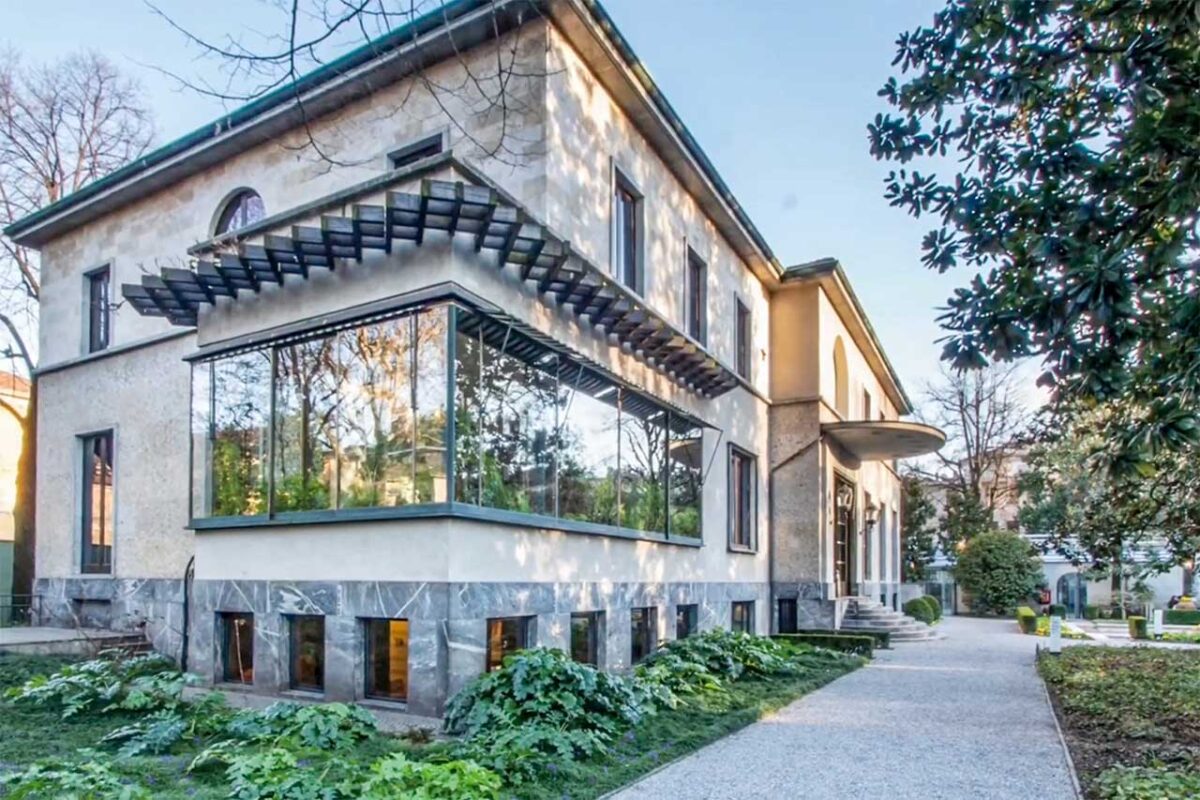
Villa Necchi Campiglio (Via Mozart 14)
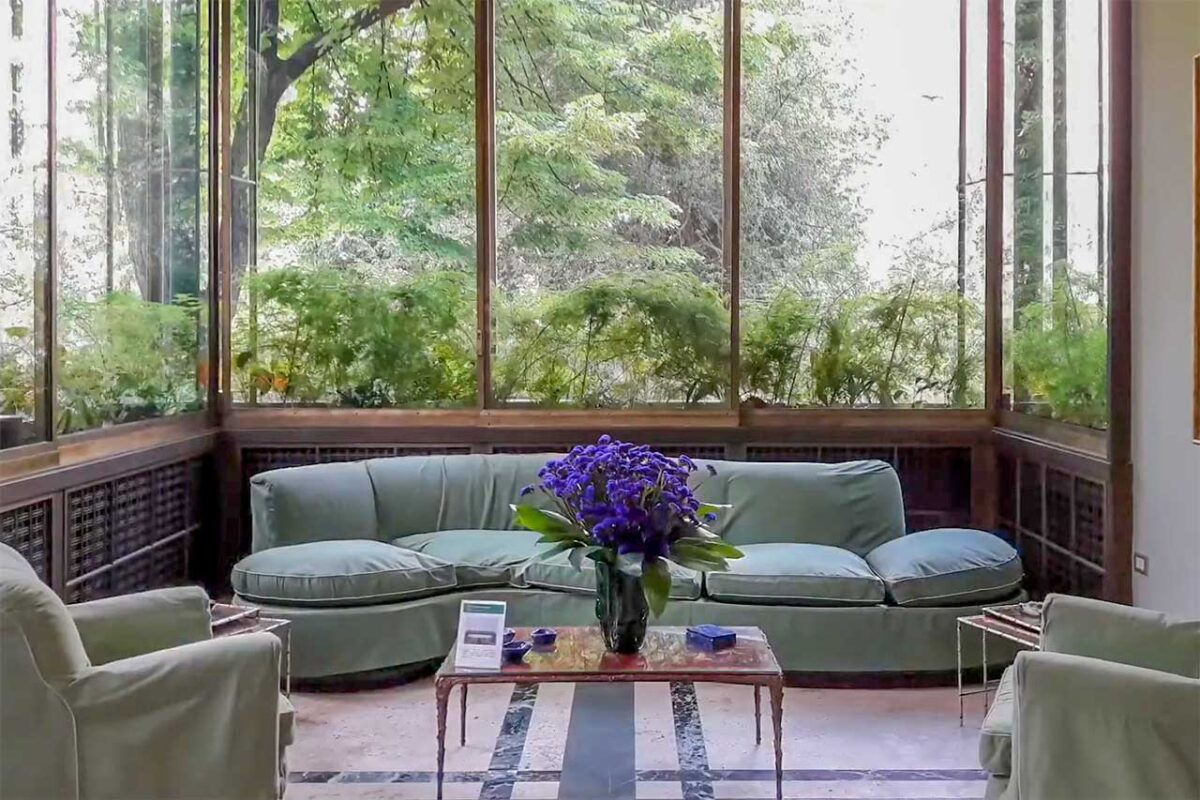
We move into the 1930s and modernism, but this villa is far too good to skip. Piero Portaluppi designed it for the Necchi sisters and Angelo Campiglio – textile industrialists who clearly had a very specific idea of the good life. A luxurious residence with a garden, swimming pool, and tennis court, it now houses FAI (the Italian National Trust). It’s open to visitors from Wednesday to Sunday (10:00 AM–6:00 PM, €15 ticket). The interiors are so immaculate that Hollywood filmed here twice: I Am Love with Tilda Swinton and House of Gucci with Lady Gaga. If you’ve ever wondered how wealthy Milanese lived in the 1930s, here’s your answer – with a pool, of course.
Palazzo Berri Meregalli (Via Cappuccini 8)
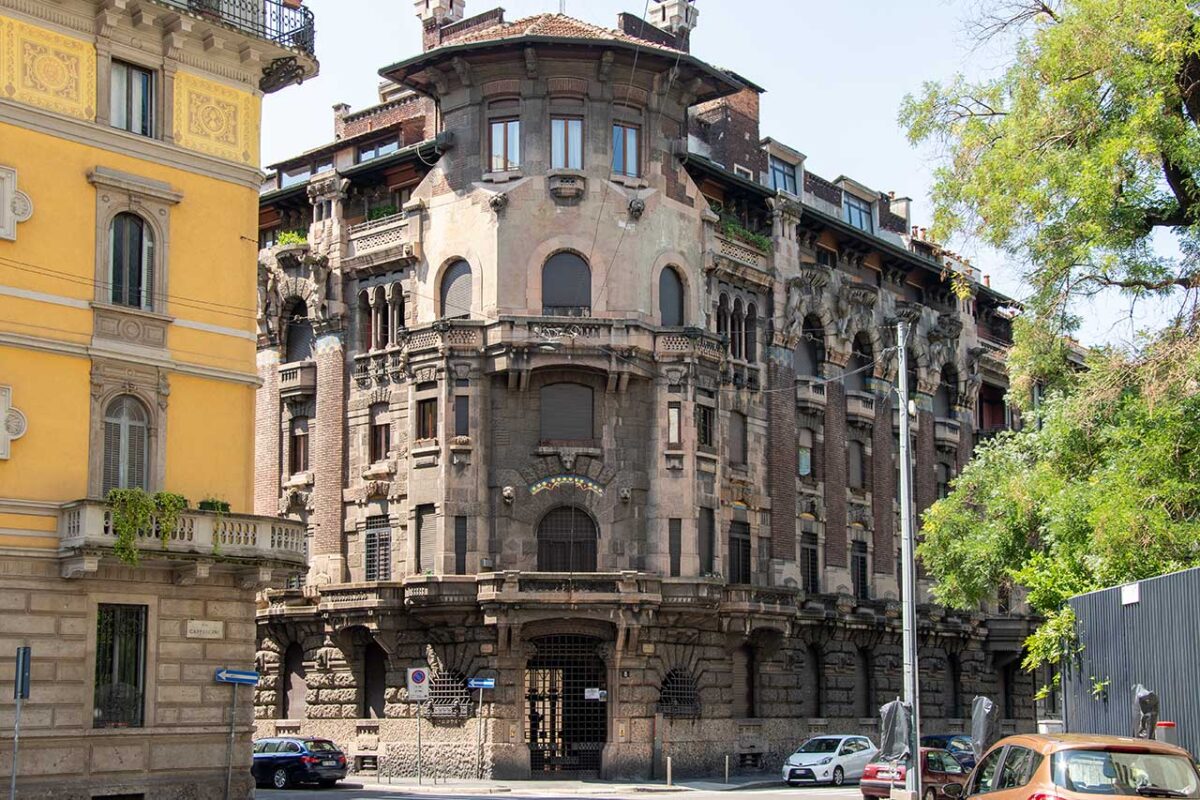
The architect of this building apparently couldn’t decide between Liberty, Gothic, and Baroque – so he chose all three at once. The result? An eclectic mix that, surprisingly, works quite well. In the vestibule you’ll find stunning mosaics and Adolfo Wildt’s sculpture “Winged Victory.” Yes, the same artist who designed the giant bronze ear that served as an intercom. Clearly, the man had a sense of humor.
Quadrilatero del Silenzio – where Milan slows down
Between Corso Venezia and Via Mozart lies the “Quadrilateral of Silence.” The name isn’t a metaphor – it really is quiet here. Elegant streets with villas from the 1920s and 30s, hidden gardens, cobblestone paths, and an air of calm. In a city always rushing, this feels like pressing pause.
Here you’ll find Villa Necchi Campiglio and Villa Invernizzi with its flamingos, but even if you skip the sights, just take a walk. The streets – Via Mozart, Via Serbelloni, Via Cappuccini – invite you to slow down.
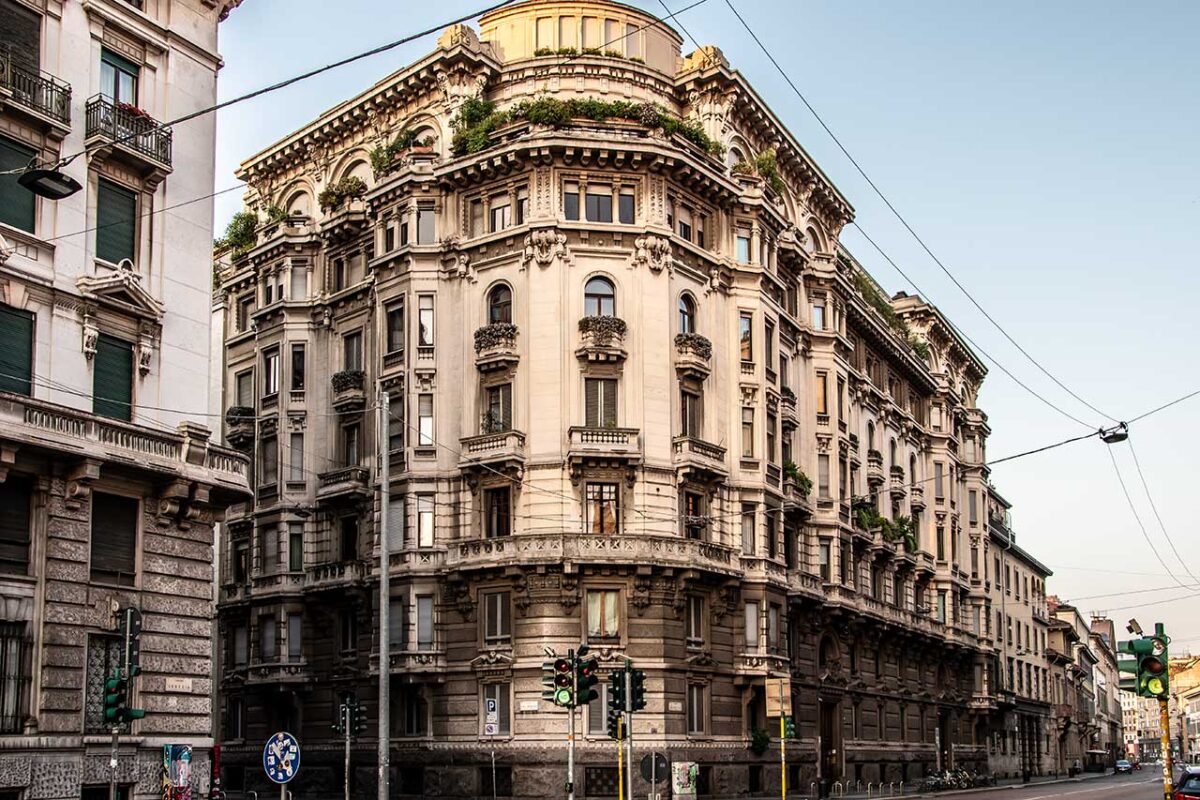
If after three hours in the center or on Corso Buenos Aires you feel like you need a breather, come here. Sit on a bench (yes, there are some!), slow down. The Quadrilatero del Silenzio is proof that Milan can be peaceful – you just need to know where to look.
Indro Montanelli Public Gardens – Milan’s first park
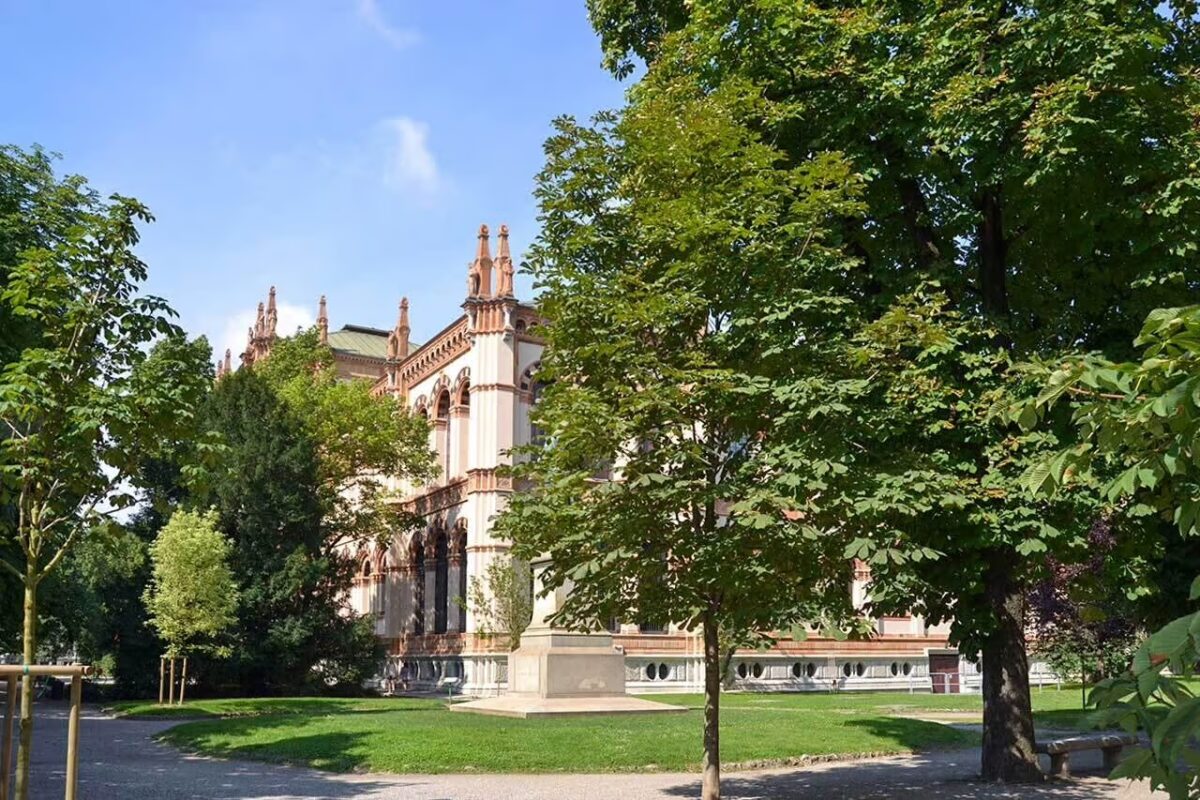
Founded in 1784 as the city’s first public park – quite revolutionary for its time. Today it’s where joggers gather at dawn, families with children in the afternoon, retirees playing cards in the evening, and tourists whenever they have a free moment between sightseeing.
The park covers nearly 20 hectares, and everyone can find their own spot here. Want to sit under a tree with a book? You’ve got it. Need a bench in the shade? They’re everywhere. Looking for a place where your child can run around while you enjoy a coffee in peace? Bingo.
In the park you’ll find:
Right next to the park you’ll find two more museums.
The Rainbow District – the heart of LGBT+ Italy
Porta Venezia is not only the center of LGBT+ life in Milan – it’s the queer capital of all Italy. Other cities may have their gay-friendly districts, but none have the history, scale, and energy of this one.
The streets Via Lecco, Via Panfilo Castaldi, and Via Tadino form the so-called Rainbow District – a triangle of rainbow bars, clubs, and cafés where every evening feels like a small party. Here you’ll find places everyone knows:
Every June, Milano Pride – the largest LGBT+ parade in Italy – passes through the neighborhood. Thousands of people, colorful floats, and music that can be heard three districts away. But Pride isn’t just one day – the entire month of June is filled with parties, concerts, debates, and events all around the area. The neighborhood literally comes alive.
The Porta Venezia metro station has been decorated in rainbow colors since 2018. Netflix funded the design during the Milano Pride campaign, and the city decided to keep it permanently. It’s the first official LGBT station in Italy – and one of the few such spots in all of Europe. When you step off the metro, you immediately know where you are.
A multicultural mix – from Eritrea to Japan
Porta Venezia is often called the “African district of Milan” or the “Milanese casbah.” Since the 1960s, a large community from Eritrea and Ethiopia has lived here – people who fled wars and conflicts, settled in Milan, and brought their culinary traditions with them.
The result? The best Eritrean and Ethiopian cuisine in the city. Here you can try zighinì – a spicy stew served on traditional spongy injera bread, which doubles as both plate and utensils. You eat with your hands, tearing off pieces of bread to scoop up the meat. Check out Ristorante Zula or Injera – both run by families with many years of tradition.
But Porta Venezia isn’t just about Africa. The neighborhood’s culinary scene is absurdly wide – as if someone decided to fit half the world onto just a few streets:
And of course, Italian classics – after all, we’re in Milan. The Neapolitan pizzerias Maruzzella and Cocciuto serve pies with fluffy crusts straight from a wood-fired oven. Dal Milanese offers traditional Milanese dishes – cotoletta, risotto, ossobuco – just the way grandparents used to make them.
And something truly unique: Joia – the first vegetarian restaurant in Europe to earn a Michelin star. It’s run by Pietro Leemann, a Swiss chef who proved that vegetarian cuisine can reach the highest level. Book in advance, because this isn’t the kind of place you can just walk into spontaneously.
Corso Buenos Aires – 1.5 km of shopping freedom (and madness)
One of the longest shopping streets in Europe – 1.5 kilometers of nonstop retail from Piazza Oberdan to Piazzale Loreto. Over 350 shops lined up one after another. On weekends it looks like a citywide evacuation, only everyone’s heading the other way – straight to the stores.
Here you’ll find absolutely everything: international chains (Zara, H\M, Uniqlo), Italian brands (Intimissimi, Calzedonia, OVS), local boutiques, shoe stores, perfumeries, bookstores, and drugstores. If you’re looking for something specific and can’t find it on Corso Buenos Aires, it probably isn’t for sale anywhere.
Prices? From budget-friendly to mid-range – this isn’t the Quadrilatero della Moda with Prada and Gucci boutiques, so your wallet will survive. You can dress from head to toe here for a few hundred euros, or spend a fortune if you really want to. Corso Buenos Aires is a democratic street – everyone comes here.
On the other side of the district, you have Corso Venezia – the elegant extension of Milan’s luxury fashion zone. Here you’ll find designer boutiques, showrooms, and high-end furniture galleries. A different price range, a different clientele, a different vibe. If Corso Buenos Aires is a crowd, Corso Venezia is a calm stroll among grand facades.
And in the side streets? That’s where the real fun begins. Vintage shops like East Market Shop (carefully curated second-hand clothes, not just anything), artisan workshops like Michele Chiocciolini (handmade leather bags, wallets, and belts), small art galleries, and antiquarian bookshops with volumes that still remember the lira. These are the places where you can find something unique – or at least spend an hour away from the crowds.
Where to drink the most famous “mistake” in cocktail history
Bar Basso (Via Plinio 39) is an institution. A local bar opened in 1947 by Giuseppe Basso, it was taken over in 1967 by Mirko Stocchetto – a bartender with years of experience at Harry’s Bar in Venice and Hotel Posta in Cortina.
And here a mistake happened that changed the history of aperitivo.
In 1972, Stocchetto – in a rush, with a packed bar – grabbed the wrong bottle. Instead of gin, he poured Ferrari spumante into Campari and vermouth. The customer asked what the drink was. “Negroni Sbagliato” (Mistaken Negroni), he replied without missing a beat. The name stuck. The cocktail went on to conquer the world.
Today, the Negroni Sbagliato (Campari, vermut rosso, prosecco brut) is one of the most recognizable Italian cocktails. At Bar Basso, it’s served in the legendary bicchieroni – giant glasses that Stocchetto had custom-made at a Milanese glassworks to catch people’s attention. It worked.
The bar looks just like it did fifty years ago: a red neon sign, retro interior, and a menu of over 100 cocktails mixed “by eye” – Stocchetto despised measuring tools, and his son Maurizio does too.
Other worthy bars include:
La dolce vita: where to go for coffee and cakes
Porta Venezia has its favorite spots for coffee and cakes – the kind locals have been returning to for years, where the lines are no coincidence.
Pavè – already an institution for those in the know. Artisan pastries that look too good to eat (but you’ll eat them anyway), and one of the best cappuccinos in Milan. Come in the morning, grab a cornetto, sit by the window and watch the neighborhood wake up. Or take it to go and eat it in the park – no one will judge you.
Gelsomina – a pastry shop specializing in southern sweets. Maritozzi (fluffy buns filled with whipped cream), Sicilian cannoli with ricotta, Neapolitan babà soaked in rum. If you think northern Italy can’t master southern desserts, come here and see that you’re wrong.
Museums – because life isn’t just about coffee
If you find a moment for culture between aperitivo and shopping, the district has several museums worth visiting – from completely free to surprisingly fascinating.
Casa Museo Boschi Di Stefano (Via Giorgio Jan 15): A free house-museum with a private collection of 20th-century Italian art. Works by Sironi, Fontana, and De Chirico hang exactly where the Boschi Di Stefano family placed them. Free admission – a rarity in Milan, so take advantage.
MEET Digital Culture Center (Viale Vittorio Veneto 2): A hub for digital culture, new technologies, and art. Interactive exhibitions, workshops, and installations you can actually touch. A refreshing change after spending hours among Art Nouveau buildings and 19th-century paintings.
Fondazione Luigi Rovati (Corso Venezia 52): Newly opened in 2022, this foundation houses a collection of Etruscan and contemporary art. In one elegant building you can see ancient vases from 2,500 years ago, Etruscan funeral urns, and works by Lucio Fontana, Picasso, and Andy Warhol. A time jump on a single ticket.
Safety – don’t panic, but keep your eyes open
Porta Venezia has a… complicated reputation. And it’s only fair to say it honestly.
On one hand: residents and the media report problems with petty theft, muggings, and drug dealing – especially around Bastioni di Porta Venezia and Piazza Oberdan, particularly after dark. These aren’t places where you want to be walking alone at three in the morning with your phone in hand.
On the other hand: in the residential parts of the district (like Via Rosolino Pilo or the Quadrilatero del Silenzio) it’s calm and safe. Families with children, retirees out for walks, no issues at all.
Common-sense rules:
The city has increased police presence and runs regular checks. Things are improving, but as in any big city – keep your head up, eyes open, and common sense switched on.
Where to stay and why it makes sense here.
Porta Venezia is a great base if you’re planning a few days in Milan. You’re not right in the very center, but that’s actually a plus – prices are lower, life feels more authentic, and the city’s main attractions are just a few metro stops away.
Why stay here?
Hotels, BBs, and apartments
Sheraton Diana Majestic – a luxury hotel with a famous garden where in summer you can have breakfast under a magnolia tree. The building stands exactly where the Diana Baths once were – Milan’s first public swimming pool (1842–1908), a meeting spot for the city’s elite. The hotel still carries that belle époque charm.
Chain hotels (Mercure, NH, ibis Styles) – solid, predictable, no surprises. If you just want a clean room, a good breakfast, and efficient service, these are safe choices. Prices are reasonable, especially outside trade fair season.
Boutique BBs in Liberty-style houses – if you’re lucky, you’ll find an apartment in a 1910 building with original ceilings, parquet floors, and a view of the inner courtyard. You won’t always see these at the top of Booking listings – but they’re worth seeking out.
Short-term rentals (Airbnb, Booking) – perfect if you prefer your own kitchen, more space, and a “live like a local” vibe. Porta Venezia has plenty of such places, often in beautifully renovated townhouses.
Prices? Lower than in the center or near the Duomo, with everything still at your fingertips. A hotel near the Duomo for €200/night? Here you’ll find something just as good for €120–150. And without tourist crowds under your window at 7 AM.
In Porta Venezia you’ll find over 9,000 accommodation options. Check Booking.com to tailor the offer to your needs.
Practical tips (so you don’t look like a tourist)
Best time to visit?
How to get around? Walk. Seriously. Porta Venezia is a district meant to be explored on foot. The metro and trams will get you here, but after that, switch off Google Maps and just wander. Step into side streets, get a little lost. The best things – hidden courtyards, quirky bars, ceramic facades – you’ll only find this way. You can walk Corso Buenos Aires in half an hour, but if you dive into Via Malpighi or Via Cappuccini, you could spend two hours and still keep discovering new corners.
Reservations: For popular places (Bar Basso, Joia, Pavè on weekends) book ahead. Bar Basso technically doesn’t take reservations, but you can call and ask – sometimes it works. Joia is Michelin-starred, so no chance without a booking. Pavè on weekend mornings has a line out the door – either come early or be ready to wait.
Language tip: Locals often just say “Venezia” instead of “Porta Venezia.” If you hear “ci vediamo a Venezia” – no, you’re not going to Venice, just the neighborhood. It may confuse you at first, but you’ll get used to it quickly.
Summary
Porta Venezia is a neighborhood that packs a lot into one place. Art Nouveau architecture, food from half the world, LGBT+ bars, museums, one of Europe’s longest shopping streets, and quiet corners where you can escape the city’s buzz. All within a short walking distance.
You don’t have to spend your whole stay in Milan here. But if you’re looking for a district that shows you different faces of the city – from elegant architecture to multicultural restaurants, from rainbow bars to peaceful gardens – it’s worth dedicating a day or two.
Metro M1 will get you here in just a few minutes. The rest depends on what you’re in the mood to see.

I lived in Milan for 18 years, and it was there that I came to know the city’s daily life best - not just its landmarks, but also its rhythm, its habits, and its less obvious sides. Today I live in Wrocław, but I still return to Milan regularly.