


 The Geographic Location of Milan – A Strategic Spot in the Heart of Europe
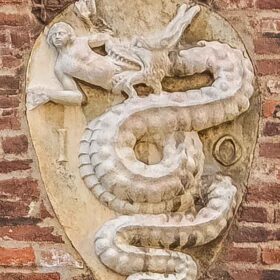 Milan’s coat of arms
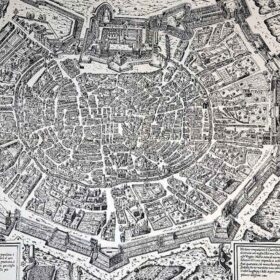 History of Milan
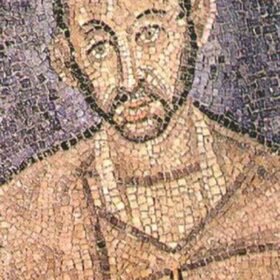 Saint Ambrose
 History of Panettone
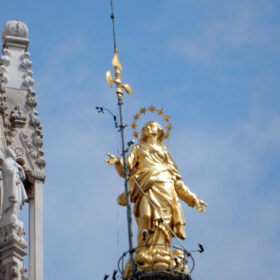 Madonnina
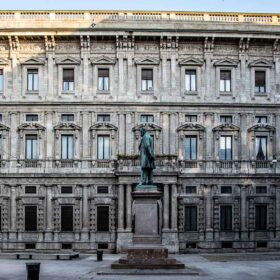 City Hall
 Milanese cuisine


Milan is a city of paradoxes. It’s the capital of fashion, business, and modernity, yet also a treasure trove of historical landmarks, often tucked away between elegant shop windows and sleek office buildings. For most tourists, Milan means the majestic Duomo Cathedral, the Galleria Vittorio Emanuele II, or the La Scala opera house. Yet, just a few steps from the tourist-packed Piazza del Duomo, nestled among the upscale boutiques along Via Torino, lies an architectural gem that far too few visitors know about. Santa Maria presso San Satiro Church is a jewel of Renaissance architecture and a place where Donato Bramante crafted one of the most stunning optical illusions in art history.
Fun Facts to Start About Santa Maria presso San Satiro Church
Why Visit This Church?
Unassuming from the outside, San Satiro Church hides one of the Renaissance’s most ingenious tricks. It’s here that Bramante, faced with an impossible task – a lack of room for an apse – crafted a solution that still elicits gasps of awe today. Rather than abandoning the traditional church layout, the architect harnessed the magic of perspective, creating the illusion of deep space on a surface just 97 centimeters thick.
The church captivates more than just art historians. Even those who don’t usually care about Renaissance art will be amazed by the brilliant optical trick that makes a shallow wall look like a perfectly proportioned, expansive space.
This is a place where Renaissance genius shines in its most practical form. You won’t find the grandeur of the Duomo or the scale of the Sforza Castle here, but you’ll witness a pure intellectual triumph over spatial limitations. Standing before the altar, you experience the same illusion that dazzled 15th-century Milanese residents – an art that doesn’t just decorate but solves real-world problems.
Plus, photographing this masterpiece from different angles is a treat for any photographer – you can capture both the flawless illusion and the moment of truth when you view the apse from the side.
Where Exactly Is It Located?
Santa Maria presso San Satiro sits in the heart of Milan at Via Torino 17, just a few minutes’ walk from the Duomo Cathedral. The church is somewhat tucked away—its entrance is in a small alley off the main street. This subtle location means many tourists pass by this architectural marvel without even realizing it.
To reach the church on foot from the Duomo, head down Via Torino (which starts at the southwestern corner of the cathedral square) and, after a few minutes, look to your left for a small entrance leading to the church’s courtyard.
History of Santa Maria presso San Satiro Church
Origins of the Temple and Its Patron
The history of this site stretches back to the 9th century when Archbishop Ansperto, who ruled Milan before 879, founded a small chapel here dedicated to Saint Satyrus – the brother of the far more famous Saint Ambrose, Milan’s patron saint. This early medieval sacellum (small chapel) still stands today and forms the oldest part of the current complex.
The original chapel’s patron was Satyrus (Latin: Satyrus), brother of Saint Ambrose and Saint Marcellina, who lived in the 4th century and was known for his piety. This is where the first part of the church’s name – “San Satiro” – comes from. The second part – “Santa Maria presso” (Saint Mary near) – was added later when a new temple dedicated to the Virgin Mary began construction beside the original chapel.
A defining moment in the church’s history came in 1242 when, according to legend, an image of the Madonna and Child on the chapel’s outer wall began to bleed after being struck by a vandal’s knife. This miraculous image became a pilgrimage site, leading to the decision to build a larger temple to protect it.
There’s no official confirmation about the dagger, though – it might just be a local legend.
Bramante and the Genius of Renaissance Architecture
The current church began construction on the orders of Duke Gian Galeazzo Sforza and his mother, Regent Bona di Savoia. Their goals were to bolster the Marian cult and enhance the city with a prestigious, monumental building.
Donato Bramante, an architect from Urbino who arrived in Milan around 1480, was likely involved in the project between 1472 and 1478. While recent studies suggest his role might have been less extensive than once thought (with significant contributions from Giovanni Antonio Amadeo), Bramante is credited with the church’s most innovative feature – the illusionistic presbytery.
Bramante faced a serious challenge: the building site was tightly constrained, with the busy Via Falcone running right behind the planned presbytery. A traditional Latin cross plan with a deep apse was out of the question. Instead of scrapping the classic design, Bramante opted for a perspectival illusion, crafting a shallow space that gives the impression of a grand presbytery.
In 1486, work started on decorating the vault, and Amadeo was tasked with the façade, though only the base was completed. An intriguing hypothesis suggests Leonardo da Vinci may have contributed to the San Satiro chapel’s renovation between 1492 and 1494 (though no solid evidence supports this), potentially explaining some of the innovative solutions used in the church.
Architecture and Illusion – The Famous Trompe-l’œil Apse
What Is Trompe-l’œil?
Trompe-l’œil (from the French trompe = deceive and l’œil = eye) is an artistic technique that uses realistic details and perspective to create the illusion of three-dimensionality on a flat surface. In European painting, this method dates back to antiquity—Pliny the Elder described paintings so lifelike that birds tried to peck at the painted fruit.
In architecture, trompe-l’œil was often employed to simulate larger spaces or add architectural features that were impractical or too expensive to build. While it reached peak popularity during the Baroque era, its masterful use at San Satiro Church stands as one of the earliest and most innovative examples in European architectural history.
How Was the Optical Illusion Created?
Bramante faced a challenge: how to create the impression of a deep, majestic presbytery in just 97 centimeters? His brilliant solution blended an understanding of perspective with sculptural and painting skills.

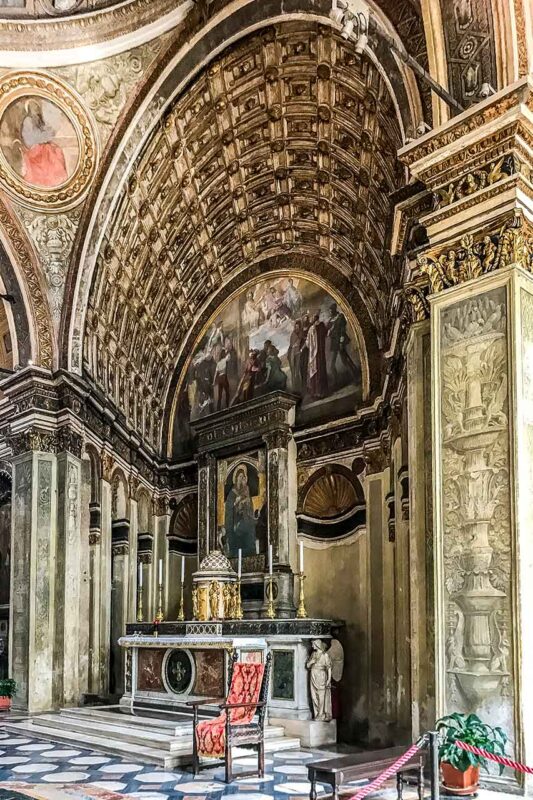
The architect designed the presbytery as a flat relief using convergent perspective principles. Architectural elements – columns, arches, and coffers – are sculpted and painted so that, from the right viewpoint (facing the altar), it feels like you’re looking into a space about 9.7 meters deep.
Bramante applied several key optical principles:
The illusion is so seamless that only a side view reveals the trick—a flat wall instead of a deep space.
What to See Inside and Outside
Interior and Artworks
This small temple hides a wealth of artistic treasures worth exploring. The interior is designed with three naves: the main one covered by a coffered barrel vault, and the side naves by cross vaults.
At the heart of the church, where the main nave meets the transept, rises a dome on pendentives, inspired by the Roman Pantheon. Set within an octagonal drum, it creates a monumental sense of space and light.

Among the most valuable artworks, besides the faux apse, inside the church are:
Façade and Exterior Details
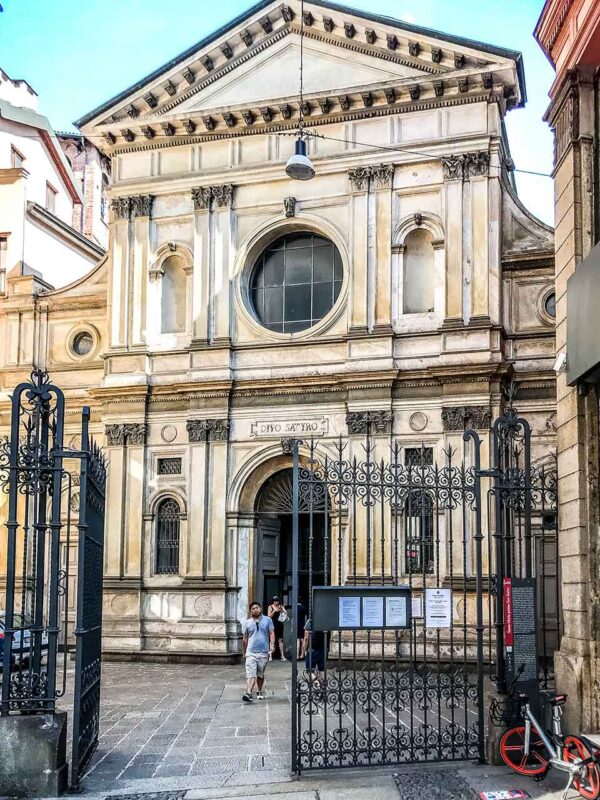
The exterior of Santa Maria presso San Satiro is far more modest than its interior. The façade remains unfinished – Giovanni Antonio Amadeo completed only the base, and the current look stems from 19th-century work by architect Giuseppe Vandoni.
One of the most striking exterior features is the old bell tower from the 9th-11th centuries, built in a pre-Romanesque style reminiscent of the monks’ tower at Basilica of St. Ambrose. . It is one of the oldest preserved fragments of the original chapel.
A particularly captivating view is the rear of the church, between Via Falcone and Via Speronari, where you can admire the San Satiro chapel – older than the main church and not directly connected to it. This masterpiece of turrets and terracotta decoration is a hallmark of Lombard architecture.
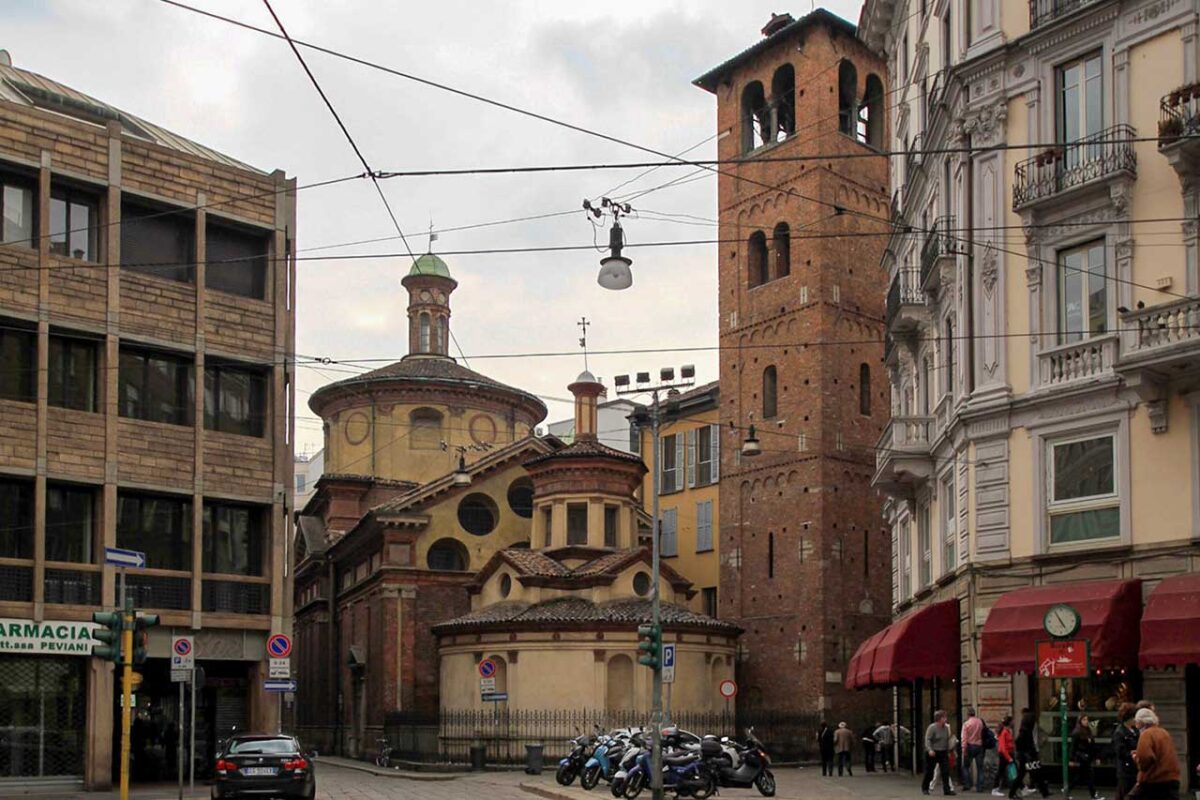
The entire complex forms a fascinating architectural palimpsest, preserving layers of history – from the pre-Romanesque chapel and medieval bell tower to the Renaissance church and 19th-century additions.
Practical Information for Tourists
Opening Hours and Admission
Santa Maria presso San Satiro is open to visitors during the following hours:
Admission to the church is free, making it an even more appealing option for tourists seeking valuable yet budget-friendly attractions in often-pricey Milan.
No advance booking is required, unlike other popular Milan attractions like Leonardo da Vinci’s The Last Supper. However, as an active place of worship, visitors should dress appropriately (covering shoulders and knees) and keep quiet during their visit.
Getting There and Location
Santa Maria presso San Satiro is located in central Milan at Via Torino 17, making it easily accessible on foot or by public transit.
How to get there:
- On foot: Just a 5-6 minute walk from Piazza del Duomo, heading down Via Torino.
- By metro: Lines M1 (red) and M3 (yellow) to the “Duomo” station, followed by a short walk.
- By tram: Lines 2, 3, 12, 14, 16, 19 to the “Duomo” stop, then a brief walk.
Its central location makes it a perfect stop on a broader tour of Milan’s attractions. Nearby, you’ll find plenty of shops, restaurants, and cafés.
What Else to See Near Via Torino?
Nearby Attractions and Landmarks
Via Torino and its surroundings form one of Milan’s most intriguing tourist areas, brimming with historic buildings, shops, and dining spots. Here are the top attractions worth checking out near Santa Maria presso San Satiro:
- Duomo Cathedral: Milan’s iconic landmark, a monumental Gothic cathedral with a rooftop terrace, just a few minutes’ walk away.
- Galleria Vittorio Emanuele II: A stunning 19th-century shopping arcade, considered one of the world’s most beautiful.
- Piazza dei Mercanti: A medieval square with historic buildings, including the Palazzo della Ragione.
- Pinacoteca Ambrosiana: One of Milan’s top art galleries, featuring works by Leonardo da Vinci, Botticelli, and Caravaggio.
- Museo del Novecento – A 20th-century art museum with a stunning view of the Duomo.
All these attractions are within a short walk from the church.
Where to Eat and Grab a Coffee
Via Torino and its surroundings are packed with restaurants, cafés, and bars where you can relax and enjoy local specialties after sightseeing. Here are some recommended spots near the church:
In this part of Milan, you’ll find everything from high-end dining to affordable street food, letting you tailor your visit to any budget.
Tips for Visitors and Photographers
Best Times to Visit
To fully appreciate the beauty of Santa Maria presso San Satiro and its famous perspectival illusion, plan your visit at the right time of day. Here are some tips:
- Morning (9:30 AM – 11:00 AM): Usually the least crowded time, ideal for quietly admiring the architecture and taking photos without crowds.
- Early Afternoon (2:00 PM – 3:00 PM): A good time to catch sunlight streaming through the windows, highlighting architectural details.
- Avoid Sunday Mornings: The church is closed to tourists until 2:00 PM due to services.
Also, keep in mind that summer months (June-August) bring heavy tourist crowds to Milan, which can make for a less peaceful visit.
How to Take Perfect Photos
Photographing the interior of Santa Maria presso San Satiro, especially its famous perspectival illusion, is both a challenge and an opportunity for stunning shots. Here are some tips for photographers:
- Compare Perspectives: Snap a photo of the presbytery from the center first, then from the side to capture the illusion’s effect.
- Use Natural Light: If possible, shoot when sunlight filters through the church windows.
- Bring a Tripod: The interior is fairly dim, and a tripod will help avoid blurry shots with longer exposures.
- Go Wide: A wide-angle lens will capture the church’s space and enhance the perspective effect.
- Focus on Details: Beyond the main illusion, photograph the decorative details, sculptures, and architectural elements.
- Exterior Shots: Don’t forget the bell tower and external features, especially from Via Falcone.
Note that flash photography is often banned in Italian churches, so be prepared to shoot in low light.
Get Inspired – Discover Milan’s Hidden Gems
The real Milan doesn’t end at the pages of a souvenir guidebook. It’s a city – a mosaic – where every piece tells a different story if you take the time to look.
Santa Maria presso San Satiro is a perfect metaphor for Milan itself – unassuming on the outside, it hides jaw-dropping craftsmanship within, revealed only to those who venture deeper. While tourists snap selfies in front of the cathedral, you can dive into a captivating tale of Renaissance genius, miraculous paintings, and perspectival illusions – all just steps off the main path.
After San Satiro, keep exploring Milan’s hidden corners – peek into San Bernardino alle Ossa with its eerie skull-lined chapel, uncover the secret courtyards of the university, or trace the canals designed by Leonardo da Vinci in the Navigli district.
Milan is like a complex Japanese puzzle box – open one compartment, and another awaits, then another. Santa Maria presso San Satiro is one of this city’s most intricate secrets, hand-carved by Renaissance masters. And the greatest irony? One of architecture’s most brilliant works is… a space that doesn’t even really exist.
I lived in Milan for 18 years, and it was there that I came to know the city’s daily life best - not just its landmarks, but also its rhythm, its habits, and its less obvious sides. Today I live in Wrocław, but I still return to Milan regularly.