


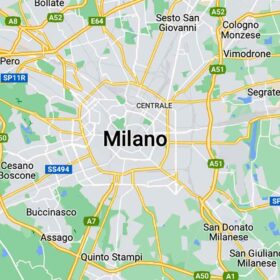
 The Geographic Location of Milan – A Strategic Spot in the Heart of Europe
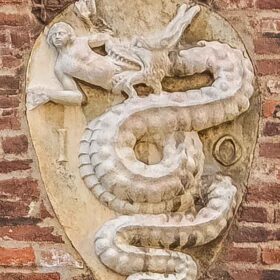 Milan’s coat of arms
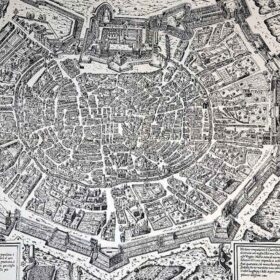 History of Milan
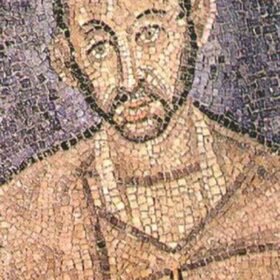 Saint Ambrose
 History of Panettone
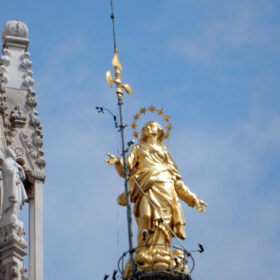 Madonnina
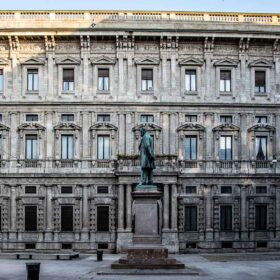 City Hall
 Milanese cuisine


Getting around in Milan by car
Is a car necessary during a visit to Milan? Honestly, it’s not. Milan’s public transport network is very well developed, and although the punctuality of buses and trams leaves much to be desired, not to mention the frequent strikes, it is still a recommended way to get around the city. I’ll add that in the very city center, it’s best to simply get around on foot!
However, if you’re planning trips to other places in Lombardy or elsewhere in Italy besides visiting Milan, a car might still be an option, although you can just as easily reach nearby towns and other Italian cities by train.
When planning to drive around Milan, whether in your own car or a rental, it’s a good idea to keep various aspects in mind beforehand, such as:
What are ZTL or restricted traffic zones?
ZTL – Zone a traffico limitato are areas where access and movement of vehicles are allowed at certain times only for certain categories of users and for certain types of vehicles. Entrance to these areas is granted to persons with proof of residence or registration in the zone. Entrance to these zones is also granted to suppliers.
ZTL zones are equipped with cameras that monitor cars and license plates.
There are different ZTL areas in Milan:
What is area B?
Area B covers most of Milan’s territory. It is a restricted area with no access or traffic for the most polluting vehicles except those over 12 meters long carrying goods. To find out which vehicles are banned from the Milanese territory, download this document, or visit the City Hall website – Area B
What is Milan area C?
Area C coincides with the restricted traffic zone (ZTL) of Cerchia dei Bastioni, with 43 entrances equipped with video cameras, 7 of which are for the exclusive use of public transportation only.
Entrance to Zone C is free for electric vehicles, mopeds, and motorcycles (motorcycles, three-wheelers, and four-wheelers), for vehicles transporting the disabled (properly marked), people going to the hospital emergency room and, until 2023, also for hybrid vehicles (electric-thermal-powered).
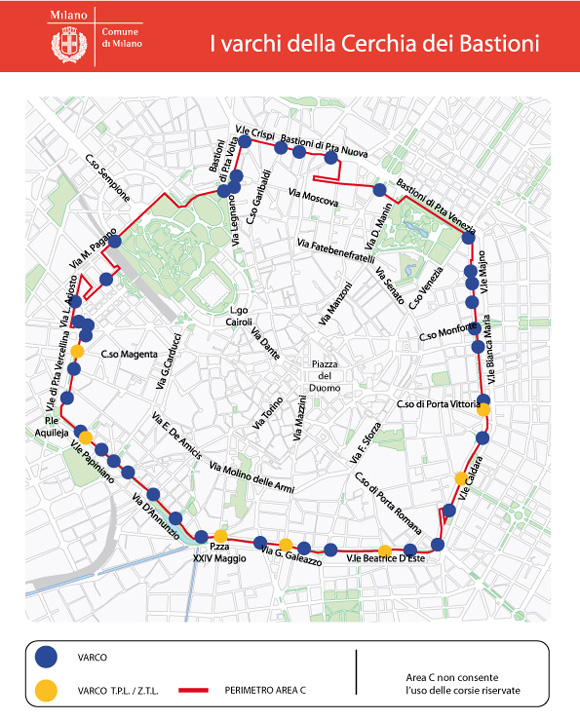
What do you have to do to enter Zone C?
- Buy a ticket (it is valid for one day and allows multiple entries and exits)
- activate it by linking it to your license plate – tickets must be activated by midnight the day after entry.
Where can you buy a ticket for Zone C?
How to activate a ticket for Zone C?

Important!
A Zone C ticket can also be purchased before entering the zone. However, its activation must be done on the day of entry or by midnight of the following day (by midnight of the same day on which access is gained, if the ticket is issued by the garage).
Activations the day before entry or after midnight the next day are not valid. If you enter Zone C on a day not covered by a ticket, you risk a fine.
If you do not receive an activation confirmation message, you must call 02.48684001 or send an email to 02.48684001 by midnight the following day, or the same day if the purchase was made at the garage: [email protected]
The same applies in case of an error in providing the license plate number.
How much does a ticket for Zone C cost?
Reserved lanes
These roads are reserved for vehicles used for public transport services and taxis.
Aree Pedonali – pedestrian areas
Urban pedestrian areas are areas that are off-limits to vehicle traffic, except for emergency, law enforcement, and PRM vehicles.
Parking in Milan

For those who have already made the decision to enter Milan by car, it is essential to understand the intricacies of parking in this sprawling metropolis. Milan, being a vast metropolitan area, often presents a parking challenge that can verge on the miraculous. On numerous occasions, even with a resident’s sticker in tow, I have found myself engaged in a seemingly endless quest, circling my own neighborhood for a precious vacant spot, consuming valuable time and testing one’s patience.
If you already find a vacant space, first check what lines are painted on the street. In Milan, parking spaces are marked with three colors:
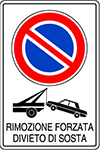
White lines – in these places you can park without any problem and without any charge, well, unless they are additionally marked with a parking ban or a “rimozione forzata” stamp
Blue lines– in these areas parking is allowed upon payment- look for parking meters, or go to the nearest kiosk or tobacco store (tabaccaio – look for a sign with a “T”) and ask for a parking scratch card. With a scratch card, scratch out the date and time you leave your car. Cars with signs for the disabled can park free of charge.
Yellow lines – in these places, parking is allowed only for residents of a specific zone. Lack of a proper sticker on the windshield of a car marked with a zone means a fine.
You’ll find white lines almost everywhere except in the historic center, La Cerchia dei Bastioni (zone C), the ring road, along trolley bus lines 90 and 91, the Fiera Milano (Milan Fair) zone, San Siro, and in the Bicocca neighborhood.
There is plenty of free parking in Milan near the Cimitero Maggiore, Monumentale, Lambrate, and Baggio cemeteries, and near train stations, such as Lambrate Station or near Stazione Centrale.
Under the link “MyParking” you can find parking lots in Milan, check their availability, and costs, and make reservations.
An alternative solution is to leave your car in one of the parking lots near the metro station. They are usually open until late at night, and prices are much lower than parking lots in the city itself.
You can find a complete list of parking lots on the official ATM website, under: “Parcheggi di interscambio“. Do każdego parkingu dołączony jest link, pod którym znajdziesz dokładne godziny otwarcia oraz koszty parkowania.
Italian highway costs

Italian highways are expensive. Even when driving on the outer ring road of Milan, you should expect additional costs. Fees are often charged both when entering and exiting, typically ranging from 0.8 to several euros. That’s why it’s important to plan your trips wisely.
As for the highways themselves, the costs are much higher. For example, driving from Milan to Florence on the highway costs around 22.5 euros. Adding fuel expenses to that, traveling by car might be uneconomical unless you’re traveling in large groups.
You can calculate how much a specific highway segment will cost you by clicking this link: “Highway Costs”
Milan traffic jams
Milan, being a bustling urban hub, often grapples with congestion, resulting in stressful and time-consuming journeys from one end of the city to the other. Navigating through congested streets and enduring seemingly interminable traffic jams can quickly diminish the joy of exploration. However, there exists a superior alternative: the Milan metro. Opting for the efficient and extensive metro system proves to be a far more favorable option.
Milan’s rush hours are in:
It’s easier to get around Milan in the morning hours on weekends, and definitely during the summer holidays in July and August, when Milanese residents leave the city and the metropolis empties out.
Therefore, if you’re planning to drive in Milan, getting around the city is easiest during the summer, as long as you don’t mind the high temperatures and the hot, humid air…


I lived in Milan for 18 years, and it was there that I came to know the city’s daily life best - not just its landmarks, but also its rhythm, its habits, and its less obvious sides. Today I live in Wrocław, but I still return to Milan regularly.