


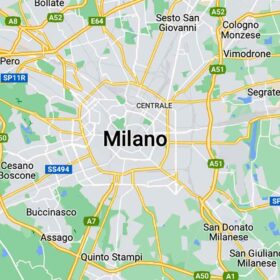
 The Geographic Location of Milan – A Strategic Spot in the Heart of Europe
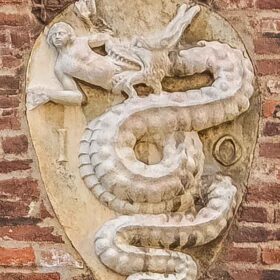 Milan’s coat of arms
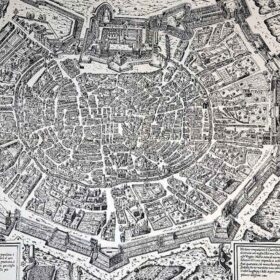 History of Milan
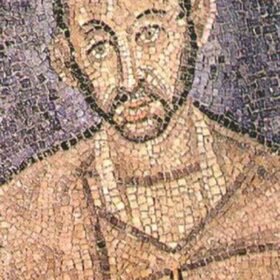 Saint Ambrose
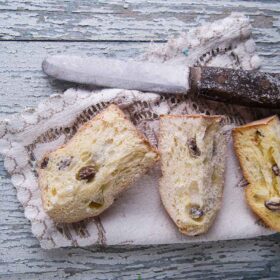 History of Panettone
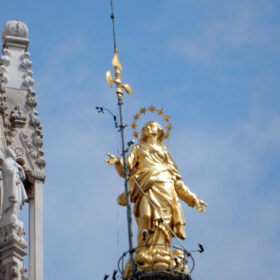 Madonnina
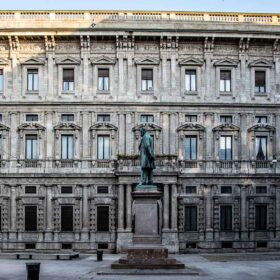 City Hall
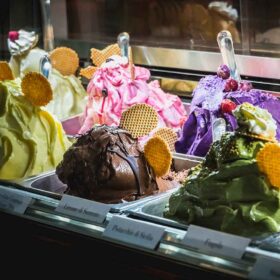 Milanese cuisine


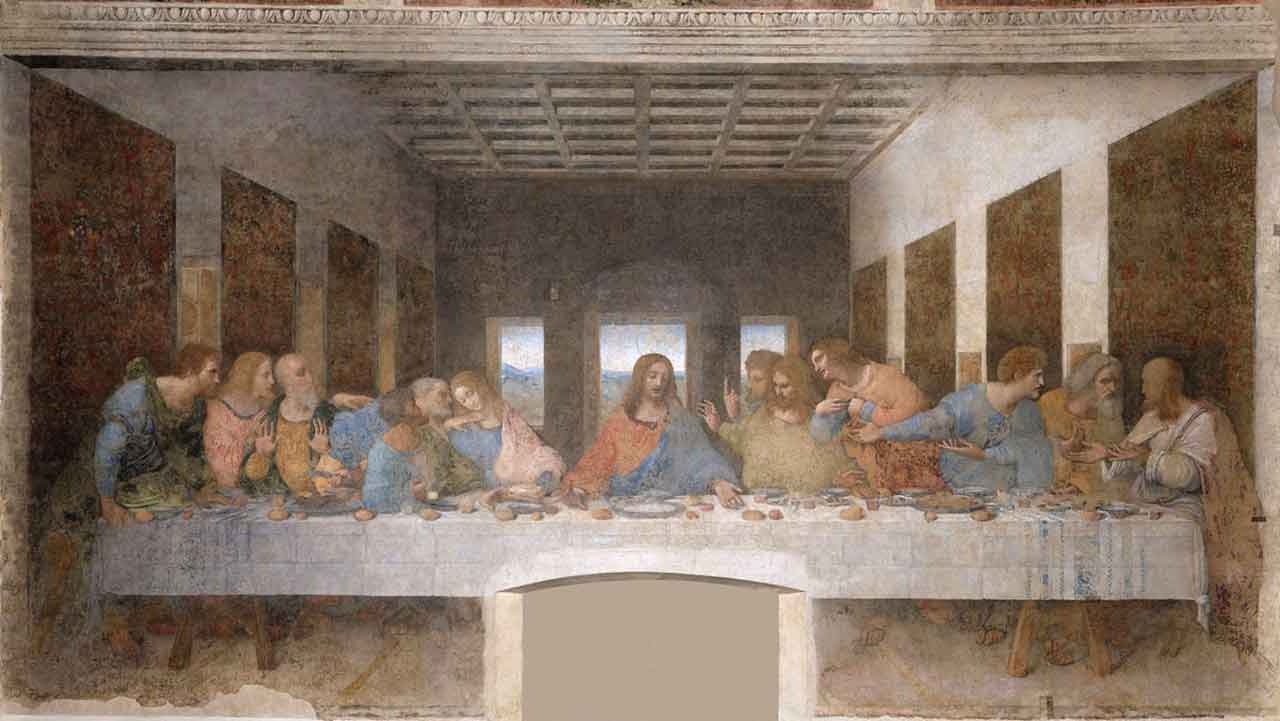
The Last Supper by Leonardo da Vinci – Cenacolo Vinciano
Welcome to the world of Renaissance genius and one of the most significant works in the history of art – “The Last Supper” by Leonardo da Vinci. This masterpiece, which has stood the test of time, continues to fascinate and inspire millions of people around the world. In this post, I will take you on a journey to the heart of Milan, where on the wall of the refectory of the Dominican monastery at the Basilica of Santa Maria delle Grazie, Leonardo da Vinci depicted one of the most iconic scenes in the history of Christianity.
Milan, a city known for its sophisticated fashion, impressive architecture, and rich cultural history, is also home to this extraordinary work. The Last Supper is not just a painting; it is a story of betrayal, human nature, and spirituality, captured by a master whose talent transcended the boundaries of the era in which he lived.
In this post, we will focus on a deeper understanding of Leonardo’s masterpiece – from its historical and cultural context, to its artistic analysis, to its contemporary significance and cultural impact. We’ll also look at how Leonardo da Vinci, a man of extraordinary imagination and versatile talents, created a work that remains one of the most recognized and analyzed paintings in the world today.
I invite you to discover the mysteries of the “Last Supper,” its place in art history, and the heart of the city. We will analyze why this work of art still evokes such deep emotion and discussion, and what challenges were involved in its creation and conservation. This is not only a journey into the past, but also an opportunity to understand how art influences our present and future.
Practical information
Visiting Leonardo da Vinci’s work is a unique opportunity to directly experience one of the most significant works in the history of art. To get the most out of your visit, it’s important to prepare properly.
Tickets for “The Last Supper” are highly desirable and often sell out well in advance. To secure entry, you must book your tickets online from the official website or through a trusted ticket provider. Reservations can usually be made several months before the planned visit.
Where to buy a ticket for the Last Supper?
Reduced tickets
Free tickets
are entitled, among others:
A full list of those entitled to a free ticket can be found on the website of the Ministry of Culture (MIC).
Best time to visit
The best time to visit the “Last Supper” depends on personal preference. The museum attracts the most tourists during the summer and holiday periods, which can mean larger crowds and longer waits. Visiting during less popular times of year, such as early spring or late fall, can provide a more tranquil experience.
Tips for visitors
Opening hours
Visiting tips – controls and rules
App for smartphones
You can download the official Museo del Cenacolo Vinciano app for free from the iOS and Android stores to help you prepare for your visit.
Limitations
Regulations
There are strict rules for visiting, including a ban on photographing and filming the fresco. In addition, it is recommended to remain silent during the visit. Before entering the venue where the artwork is located, visitors may be asked to pass through a security check.
Expectations
Even though it is one of the most famous works of art in the world, it is important to remember that the fresco has undergone many restorations and may look different than you expect. Its state of preservation differs from other famous works such as paintings in galleries. Nevertheless, the opportunity to see this painting with your own eyes is an extraordinary experience.
History and context of Leonardo da Vinci’s masterpiece
Leonardo da Vinci and his stay in Milan
Leonardo da Vinci, one of the most versatile figures of the Renaissance, spent a significant part of his life in Milan, a city that played a key role in shaping his artistic and intellectual path. His stay in the capital of Lombardy, which began in 1482 and lasted, with interruptions, until almost the end of the century, was a period of intense creativity and innovation.
Arrival in Milan
Leonardo arrived in the city at the invitation of Ludovico Sforza, known as Ludovico il Moro, who was seeking talented artists and scientists to strengthen his court as a center of culture and knowledge. Leonardo, initially employed as an artist and engineer, quickly gained recognition at the Sforza court, becoming one of the most influential figures in the cultural life of the city.
Leonardo da Vinci’s influence on Milan
During his stay, Leonardo not only created works of art, but also actively participated in the intellectual and cultural life of the city. His presence at the Sforza court contributed to the development of the city as an important center of Renaissance art and science.
Genesis of the Last Supper
The painting was commissioned as part of the restoration and decoration of the dining room of the monastery at the Basilica of Santa Maria delle Grazie, commissioned by Ludovico Sforza, Duke of Milan.
The order and historical context
In 1495, Leonardo da Vinci was commissioned by Ludovico Sforza, also known as Ludovico il Moro, Duke of Milan. Sforza, being a patron of the arts and ruler of the city, wanted to transform the Santa Maria delle Grazie monastery into a symbol of his power and piety. To this end, he commissioned Leonardo to create a painting as part of a project to renovate the monastery’s dining room.
Topic selection
The theme of “The Last Supper” was common in religious art, but the way Leonardo approached the subject was revolutionary. He chose the moment just after Jesus’ words: “Truly I say to you, one of you will betray me.” This allowed him to capture the varied emotions and reactions of the apostles, a departure from traditional, more static depictions.
Innovative technology
Leonardo decided to use an experimental painting technique that differed from traditional fresco painting. Instead of painting on wet plaster, Leonardo worked on dry masonry, which allowed him to be more detailed and subtle in colors and shadows. Unfortunately, this technique was not permanent, which contributed to the later deterioration of the work.
Political and cultural background
It is also worth noting that the creation of the work took place at a time when Milano was an important political and cultural center. Art was used not only for religious purposes, but also as a political tool. Leonardo’s work was therefore not only an expression of his artistic genius, but also a reflection of Ludovico Sforza’s political and cultural aspirations.
Composition and characters
Analysis of the composition of Leonardo da Vinci’s masterpiece, created between 1495 and 1498, reveals not only a mastery of artistic technique but also a deep understanding of the human psyche and emotions. This painting by Leonardo da Vinci, depicting a scene of the eucharist, is much more than a religious image. It is a work filled with human expressiveness and drama that has fascinated and inspired for centuries.
The centerpiece is the figure of Jesus, flanked by the twelve apostles, including St. John, St. Matthew, St. Thomas and St. Simon. Each of these characters is depicted with extraordinary attention to detail, allowing the viewer to gain a deeper understanding of their individual reactions and emotions. Leonardo conveys with masterful precision the variety of feelings – from amazement to sadness to anger and surprise.
The eucharistic scene, which is the central moment of the painting, is presented in a way that emphasizes its importance. Jesus, at the center of the composition, is both calm and authoritative, which contrasts with the emotional reactions of his companions. A dramatic scene unfolds around him, with each character expressing his feelings in a unique way.
Among the participants of the supper stands out a figure that is interpreted as a traitor – Judas. His positioning and facial expression are different from the others, further emphasizing his role in the scene. Leonardo skillfully uses light and shadow to highlight this difference, while at the same time linking him to the rest of the group, which adds additional depth to the composition.
Also of particular note is the way Leonardo depicted the figures seated on either side of the table. Although they are part of one scene, each side of the table seems to reflect different aspects of human nature and reactions to Jesus’ words. This masterful depiction of different attitudes and emotions makes the painting not only a work of art, but also a profound analysis of human nature.
The central figure of Jesus
At the center of the composition is the figure of Jesus, which is the axis around which the other figures are organized. Leonardo skillfully uses perspective to direct the viewer’s gaze to Jesus, whose figure is surrounded by a window in the background, creating a halo effect. This technique not only emphasizes his importance but also adds depth and space to the entire scene.
Grouping of Apostles
The apostles are depicted in groups of three, which adds to the dynamics of the composition and allows to show a variety of reactions to Jesus’ words of betrayal. Each group expresses different emotions – from amazement to denial to anger. Leonardo has rendered the gestures and facial expressions with great attention to detail, making each figure seem alive and full of emotion.
Judas – a controversial figure
Judas, traditionally depicted as isolated from the rest, here is woven into the group of apostles, although his figure is somewhat shadowed, which may symbolize his dark intentions. An interesting element is the way Leonardo depicted Judas grasping the money pouch – a gesture that could be interpreted as a symbol of betrayal.
Peter and his gesture
Another key figure is Peter, whom we see holding a knife, foreshadowing future events (Peter will use the knife in the Garden of Gethsemane). His figure, leaning toward John, creates a line of tension, adding drama to the entire scene.
The use of light and shadow
Leonardo used the technique of chiaroscuro, or contrast of light and shadow, to give the figures depth and three-dimensionality. The light falls on the faces of the apostles, highlighting their emotions, while the shadows add drama and mystery to the composition.
Symbolism and hidden meanings
“Cenacolo” by Leonardo da Vinci is a work that has fascinated for centuries, not only because of its artistic value, but also because of its wealth of symbolism and hidden meanings that can be interpreted in various ways.
Symbolism of the figure of Jesus in “The Last Supper”
The central figure of Jesus is full of symbolism. His calm and balanced posture in contrast to the emotional reactions of the apostles symbolizes his divinity and inner strength. Jesus is at the center of the composition, which not only emphasizes his importance, but also creates a sense of calm at the center of a storm of emotions. Moreover, the way the light falls on his figure creates a halo effect, further emphasizing his holiness.
Theories about Mary Magdalene
One of the most controversial interpretations of The Last Supper concerns the figure seated to the right of Jesus, traditionally identified as the Apostle John. Some researchers, such as Dan Brown in his novel *The Da Vinci Code*, suggest that this figure might be Mary Magdalene. This theory is based on the delicate facial features and seemingly feminine posture of the figure. Although this interpretation is not widely accepted in academic circles, it adds a fascinating dimension to the discussion surrounding the painting.
The meaning of the knife
The knife held by Peter is one of the most debated elements of the painting. Some interpret it as a symbol of aggression or a foreshadowing of the violence that took place in the Garden of Gethsemane. Others see it as a reference to Judas’ betrayal. The placement of the knife and Peter’s gesture, which appears to move it toward a figure identified as John (or according to some, Mary Magdalene), adds tension and drama to the entire scene.
Gestures and their meaning
The gestures of the various characters are key to understanding their emotions and reactions. For example, Jesus’ outspread hands symbolize his willingness to sacrifice, while the apostles’ gestures reflect their shock, disbelief and even anger after the announcement of the betrayal. Each gesture is deliberate and intended to convey a particular emotion or message.
Protection and restoration of the fresco
Conservation challenges
Leonardo da Vinci’s painting The Last Supper, despite its artistic merit, has struggled for centuries with conservation problems that challenge restorers and art historians.
History of destruction and attempts at restoration
The fresco was prone to damage from the beginning due to the experimental painting technique Leonardo used. Instead of the traditional fresco on wet plaster, Leonardo used drywall, which caused the paint to fall off and fade over time. In addition, the artwork was exposed to various disasters, including floods and bombing during World War II. Over the centuries, various attempts at restoration have been made, often doing more harm than good by applying new layers of paint and altering the original appearance of the painting.
Contemporary conservation techniques
In recent decades, modern conservation techniques have been applied to best preserve the original appearance of the painting. These include careful study and analysis, delicate removal of layers of paint from previous restorations, and the use of new technologies to stabilize and protect the work. As a result, many of the original details and colors that had been hidden for years have been recovered.
The Last Supper Today
The current state of the fresco
Thanks to the efforts of conservators, the “Last Supper” has been restored to a condition that reflects Leonardo da Vinci’s vision as closely as possible. Although the fresco still bears traces of time and previous interventions, it now presents itself in much better condition, with more visible details and depth of color.
Conservation and educational activities
A range of protective measures have been undertaken around the painting to ensure its long-term survival. These include controlling environmental conditions such as temperature, humidity, and lighting to minimize further damage. Additionally, restrictions on the number of visitors have been introduced to protect the fresco from excessive external influences. These efforts are supported by educational programs aimed at raising awareness of the significance and history of this extraordinary work of art.
The Last Supper – curiosities
Frequently asked questions (FAQ) about The Last Supper in Milan
Do I need to book a ticket in advance for the Last Supper?
Yes, reservations are always required. You cannot just walk in off the street, tickets sell out very quickly, and it is recommended that you purchase them online well in advance.
How and where to book tickets?
Online at the official website cenacolovinciano.org or by phone through the Call Center: +39 02 92800360
How much does a ticket cost?
A standard ticket costs approx. €15 – 18. Discounts are available for children, young people, seniors, teachers, and people with disabilities. Check the museum’s website for current prices.
How long does it take to visit The Last Supper?
Each visit is limited to 15 minutes. Groups are very small (35-40 people at a time).
What are the museum’s opening hours?
Tuesday – Sunday: 8:15 a.m. – 7:00 p.m. (last admission: 6:45 p.m.). Closed on Mondays, January 1, May 1, and December 25.
Can I cancel or change my reservation?
Cancellation conditions depend on the type of ticket and the agent. As a rule, tickets are non-refundable and non-exchangeable. Please read the terms and conditions of sale when purchasing.
Where is The Last Supper located?
Via Santa Maria delle Grazie 2, right next to the Basilica of Santa Maria delle Grazie.
You can get there by metro M1/M2 (Cadorna station), tram 16, or buses 50/58/94.
Is it permissible to photograph The Last Supper?
No, photography and filming of the fresco are prohibited in the museum.
Are there audio guides?
There are no official audio guides, but we recommend downloading the free smartphone app: “Museo del Cenacolo Vinciano.”
Is the museum accessible to people with disabilities?
Yes, the museum is fully accessible to people with disabilities, but it is worth informing the staff when booking to facilitate entry.
Are there any free tickets?
Yes, persons under the age of 18, persons with disabilities, teachers, and selected professional groups are entitled to free admission, but advance booking is required.
How often do you succeed in getting a last-minute ticket?
Very rarely, because tickets sell out well in advance. It is worth checking carefully when advance sales for the next month start (usually on the eighth day of the month for dates two months ahead).

I lived in Milan for 18 years, and it was there that I came to know the city’s daily life best - not just its landmarks, but also its rhythm, its habits, and its less obvious sides. Today I live in Wrocław, but I still return to Milan regularly.