


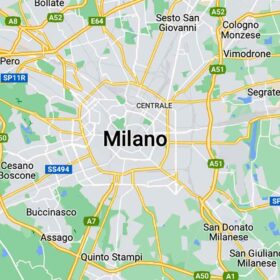
 The Geographic Location of Milan – A Strategic Spot in the Heart of Europe
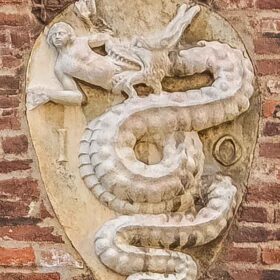 Milan’s coat of arms
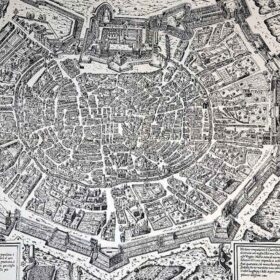 History of Milan
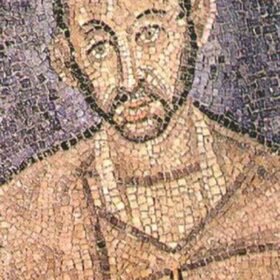 Saint Ambrose
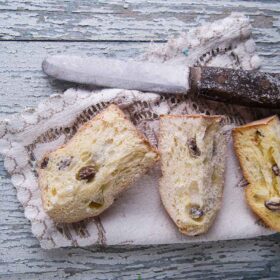 History of Panettone
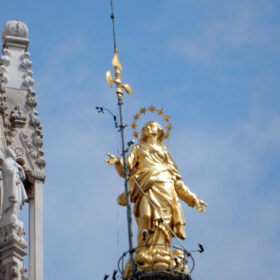 Madonnina
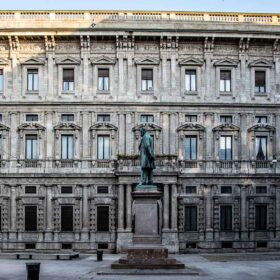 City Hall
 Milanese cuisine


The Peace Arch (Arco della Pace) in Milan is one of the city’s most recognizable landmarks and a symbol of neoclassical architecture. This impressive monument, which serves as a grand entrance to Sempione Park, commemorates significant historical events and is a popular tourist attraction. The arch stands on Piazza Sempione, separated from Sforza Castle by Sempione Park. In this article, we’ll delve into its fascinating history, unique architecture, and learn how to best plan a visit to this site.

History of the Peace Arch and Porta Sempione in Milan
Porta Sempione and the Arch of Peace are two distinct yet closely related elements of Milan’s architecture and history. Porta Sempione refers to the broader area that includes the Arch of Peace and two customs buildings, while the Arch of Peace itself is the monumental triumphal arch. The customs buildings were used for controlling the movement of goods and people entering Milan, making Porta Sempione an important part of the city’s infrastructure. Historically, Porta Sempione was part of the city’s medieval walls, serving as an entrance to the city.
The Peace Arch, the architectural monument and triumphal arch, was commissioned by Napoleon Bonaparte in 1807 as a triumphal gate to celebrate his victories. Porta Sempione, on the other hand, refers to both the city gate and the surrounding area (district), which includes the Peace Arch and the two customs buildings. The arch was constructed between 1807 and 1838, with a hiatus from 1814 to 1826. Porta Sempione, however, has older origins, dating back to the Roman walls of Milan. Napoleon envisioned the arch as a symbol of triumph, welcoming travelers arriving from Paris. After Napoleon’s fall, construction was halted and completed only in 1838, when the arch was dedicated to European peace, established after the Congress of Vienna.
Interestingly, in 1859, Napoleon III and Victor Emmanuel II rode through the triumphal arch, which further emphasized its significance as a symbol of triumph – not only military but also political unification. The monument was primarily made of granite from the Lake Maggiore region and Crevola d’Ossola stone, which give it its solidity and monumental character. Porta Sempione served as an entrance to the city, being part of the city walls. The two customs buildings were crucial for controlling traffic, and the Arch of Peace was the central element of this gateway, representing triumph and later peace. The columns were made of Creola d’Ossola marble.
At the top of the arch stands a bronze statue of a goddess leading four horses, symbolizing the triumph of peace over war. Today, the Peace Arch represents unity and the end of the Napoleonic Wars, reflecting Europe’s history in the 19th century.
Architecture and Neoclassical Style
The Peace Arch was designed in a neoclassical style by Italian architect Luigi Cagnola and completed by Francesco Peverelli and Francesco Londonio after Cagnola’s death. The arch is the central element of Porta Sempione, which also includes two customs buildings. These buildings not only had administrative functions but also added a representative character to the entire complex, emphasizing Porta Sempione’s role as a historic city entrance. The neoclassical style featured a return to the aesthetics of ancient Greece and Rome, symbolizing values such as strength, harmony, and balance.
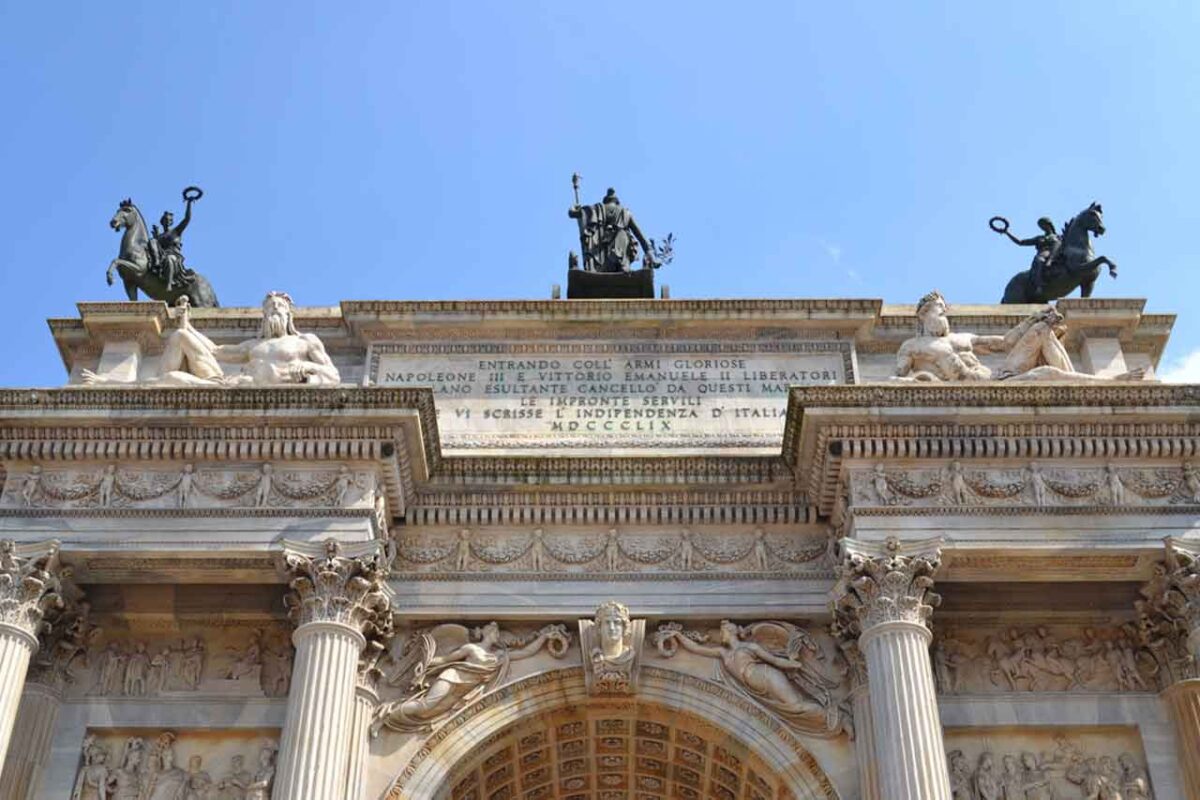
The monument stands 25 meters high and is adorned with rich reliefs commemorating significant battles, such as the Battle of Leipzig, and features allegorical figures, including personifications of rivers like the Po, Ticino, Adile, and Tagliamento. It has three arches: one main (larger) arch and two side (smaller) ones, along with eight Corinthian columns. The architectural details, Corinthian columns, and intricately crafted sculptures give it a monumental character reminiscent of ancient triumphal arches, like the Arch of Constantine in Rome.
Sempione Park and Surroundings
Porta Sempione, along with the Peace Arch and the two customs buildings, also serves as a significant entrance point to Sempione Park, one of Milan’s largest parks.
The Arch of Peace, part of Porta Sempione, marks the northern entrance to Sempione Park, one of the largest and most beautiful parks in Milan. Sempione Park is an ideal place for a walk, relaxation, and enjoying views of Milan’s landmarks. It is also home to the Sforza Castle (Castello Sforzesco), which, along with the arch, forms a historical and architectural axis of the city.
Established in the late 19th century, the park offers many attractions, from scenic paths to a lake, along with views of the arch itself. The area around the Peace Arch is filled with cafes where you can relax and enjoy Italian coffee, soaking in the city’s atmosphere.
Visiting the Peace Arch
How to get to the Peace Arch and Porta Sempione? The site is well-connected, and getting there is straightforward thanks to Milan’s extensive public transportation network. You can take a tram or metro, getting off at either “Cadorna” (M1) or “Domodossola” (M5) stations.
The best time to visit is in spring or summer when Sempione Park is in full bloom, and the weather is perfect for walks. Due to its location, the Peace Arch is a popular spot both during the day and at night – when beautifully illuminated, it becomes a highly photogenic landmark.
During your visit, pay attention to the numerous architectural details and plaques describing significant historical events. Guided tours offer insights into the Peace Arch’s role in the history of Milan and Europe.
Interesting Facts About the Peace Arch
Why Visit the Peace Arch and Porta Sempione?
The Arch of Peace in Milan is not only an important historical monument but also a beautiful example of Neoclassical architecture, offering much for both art and history enthusiasts. Porta Sempione, which includes the Arch of Peace and two customs buildings, forms a city gate, and its function as a historic entrance to the city underscores its architectural and historical significance. A visit to this site allows one to step back in time and understand the important role Milan played in European history.
Additionally, the surrounding Sempione Park offers a wonderful place for relaxation and walks, and the view of the Arch of Peace set against the backdrop of the park and the city is one of those sights worth capturing in a photograph. The Arch of Peace is the perfect spot for anyone who wants to experience the atmosphere of Milan, combine sightseeing with relaxation, and discover the rich history of the city.
Conclusion
Łuk Pokoju w Mediolanie to zabytek, który łączy w sobie bogatą historię, imponującą architekturę i symboliczne znaczenie dla całej Europy. Odzwierciedla przemiany historyczne, jakie zaszły na kontynencie w XIX wieku, a jego monumentalny wygląd robi ogromne wrażenie na odwiedzających. Odwiedzając Mediolan, warto poświęcić czas, aby zobaczyć Łuk Pokoju na własne oczy, poczuć jego historyczny charakter i cieszyć się wyjątkową atmosferą tego miejsca.

If you want to see Porta Sempione from above, take a ride to the top of Torre Branca!

I lived in Milan for 18 years, and it was there that I came to know the city’s daily life best - not just its landmarks, but also its rhythm, its habits, and its less obvious sides. Today I live in Wrocław, but I still return to Milan regularly.