


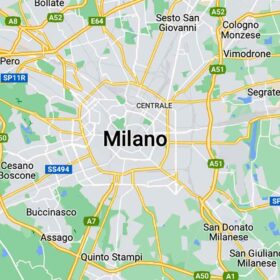
 The Geographic Location of Milan – A Strategic Spot in the Heart of Europe
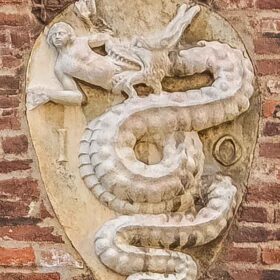 Milan’s coat of arms
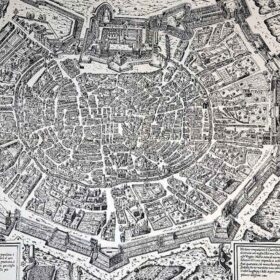 History of Milan
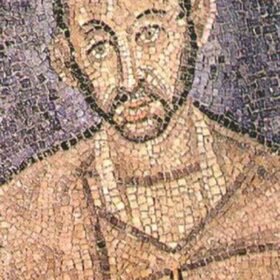 Saint Ambrose
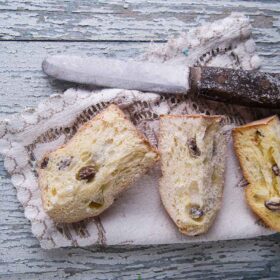 History of Panettone
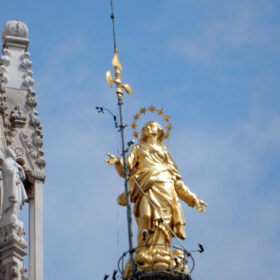 Madonnina
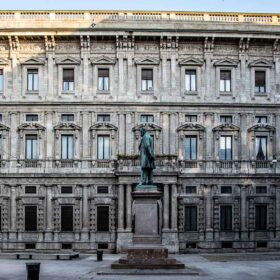 City Hall
 Milanese cuisine


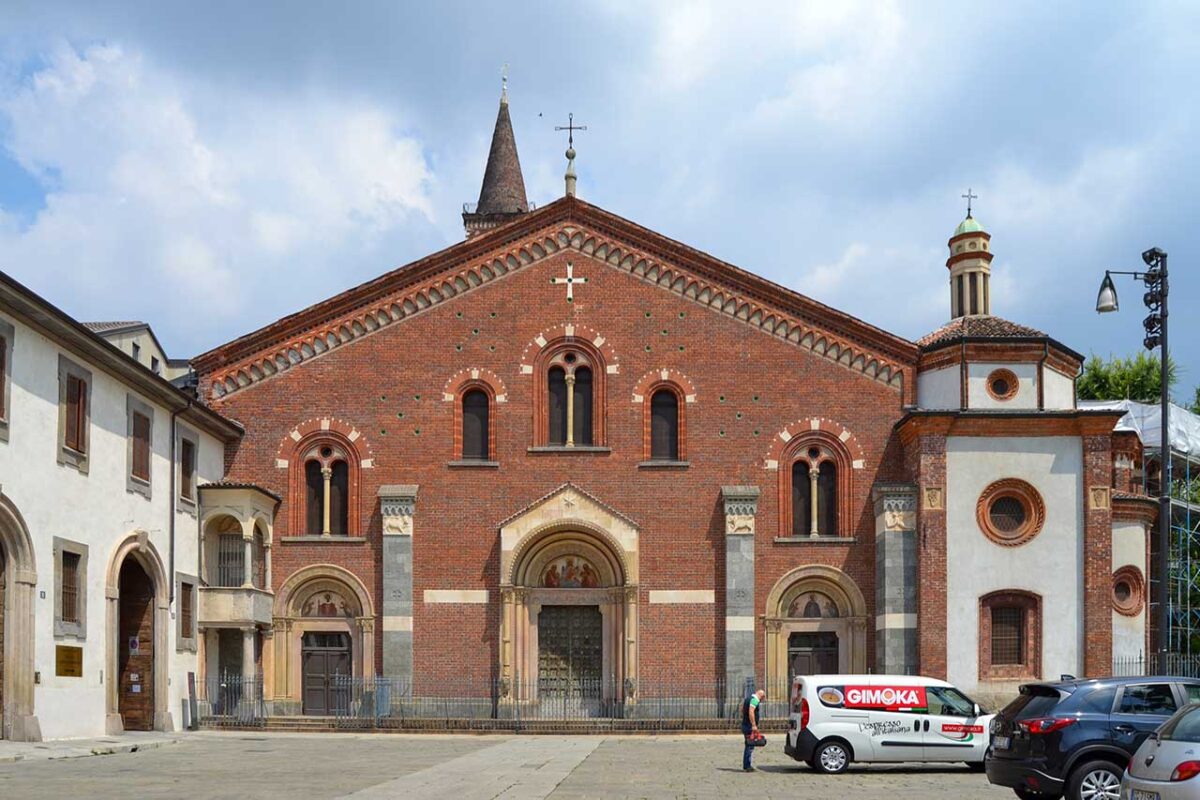
Located near the Navigli, the Basilica of Sant’Eustorgio is one of the most important and oldest churches in Milan, witness to thousands of years of history intertwined with religious, artistic, and cultural events in Milan. Probably founded around 344 during the late Roman Empire, the basilica is closely associated with the legend of the Three Kings, having been the custodian of their relics for centuries,
Its historical significance is underscored by the role it played in being an important stop for pilgrims heading to Rome or the Holy Land. Legend has it that it was Bishop Eustorgio, on behalf of Emperor Constantine, who transported a large stone sarcophagus containing the relics of the Three Kings to Milan, the event that deeply marked the identity of the basilica and the city itself.
History of the Basilica of Sant’Eustorgio (Basilica di Sant’Eustorgio)
Origins and foundation
The Basilica of Sant’Eustorgio, located in Milan, is closely linked to the history of the Epiphany relics. According to legend, Bishop Eustorgio received as a gift from Emperor Constantine I a “sarcophagus” containing relics of the Three Kings, which he transported from Constantinople to Milan.
The basilica, probably founded around 344, became an important center of worship and pilgrimage.
Architectural development
The original structure of the basilica dates back to the Romanesque phase, characterized by three naves and a structural layout that has changed over the centuries.
Romanesque architectural elements are still visible in the apse area and some capitals, while the remnants of an early Christian church can be found under the apse.
Over time, the basilica has seen Gothic, Renaissance and Baroque additions, bearing witness to the evolution of Milanese art and architecture.
Historical turbulence
Stored in the basilica, the relics of the Three Kings were stolen in 1162 by the troops of Frederick Barbarossa and taken to Cologne. This event deeply marked the history of the basilica, which lived to see the partial return of the relics only in 1903, thanks to the intervention of Cardinal Andrea Carlo Ferrari.
Currently, some of the relics are preserved in a reliquary above the altar of the Chapel of the Epiphany, on display for the faithful to see.
Relationship with the Three Magi
Epiphany tradition
The Basilica of Sant’Eustorgio in Milan has a deep and historical connection to the cult of the Three Kings, as it has been the resting place of their relics for centuries. According to the account, Bishop Eustorgio transported the relics of the Three Kings from Constantinople to Milan in the 4th century, where they were initially placed in a large sarcophagus inside the basilica
This event not only enriched the spiritual and cultural heritage of the city but also transformed the basilica into an important pilgrimage center, attracting the faithful from all over the world. Indeed, the presence of the relics in Milan was a sign of faith and devotion, strengthening the city’s connection to Christian history.
Three Kings procession
Every year, Milan celebrates its connection to the Wise Men through the Epiphany procession, an event that recreates the journey of the Wise Men in search of the baby Jesus. The procession, which takes place on January 6, begins in the famous Piazza del Duomo and winds through the streets of the city, ending at the Basilica di Sant’Eustorgio.
During the event, participants, dressed in historical costumes, bring symbolic gifts to the living nativity scene, recreating the Wise Men’s homage to Jesus. The Basilica of Sant’Eustorgio, with its thousand-year history and unbreakable bond with the Three Kings, thus confirms that it is not only the custodian of relics but also the true center of Epiphany celebrations in Milan.
Portinari Chapel (Cappella Portinari)
Pigello Portinari and his relationship with the Medici bank
The Portinari Chapel, located inside the Basilica di Sant’Eustorgio in Milan, was commissioned by Pigello Portinari, a Florentine who moved to Milan to take charge of the Banco Mediceo.
His deep devotion to St. Peter the Martyr, a saint highly venerated in both Milan and Florence, led him to dedicate a chapel for his burial and interment of the saint.
Pigello Portinari’s commission reflects the close relationship between Florentine culture, represented by the powerful Medici family and their bank, and the city of Milan, at a time of intense cultural and economic exchange.
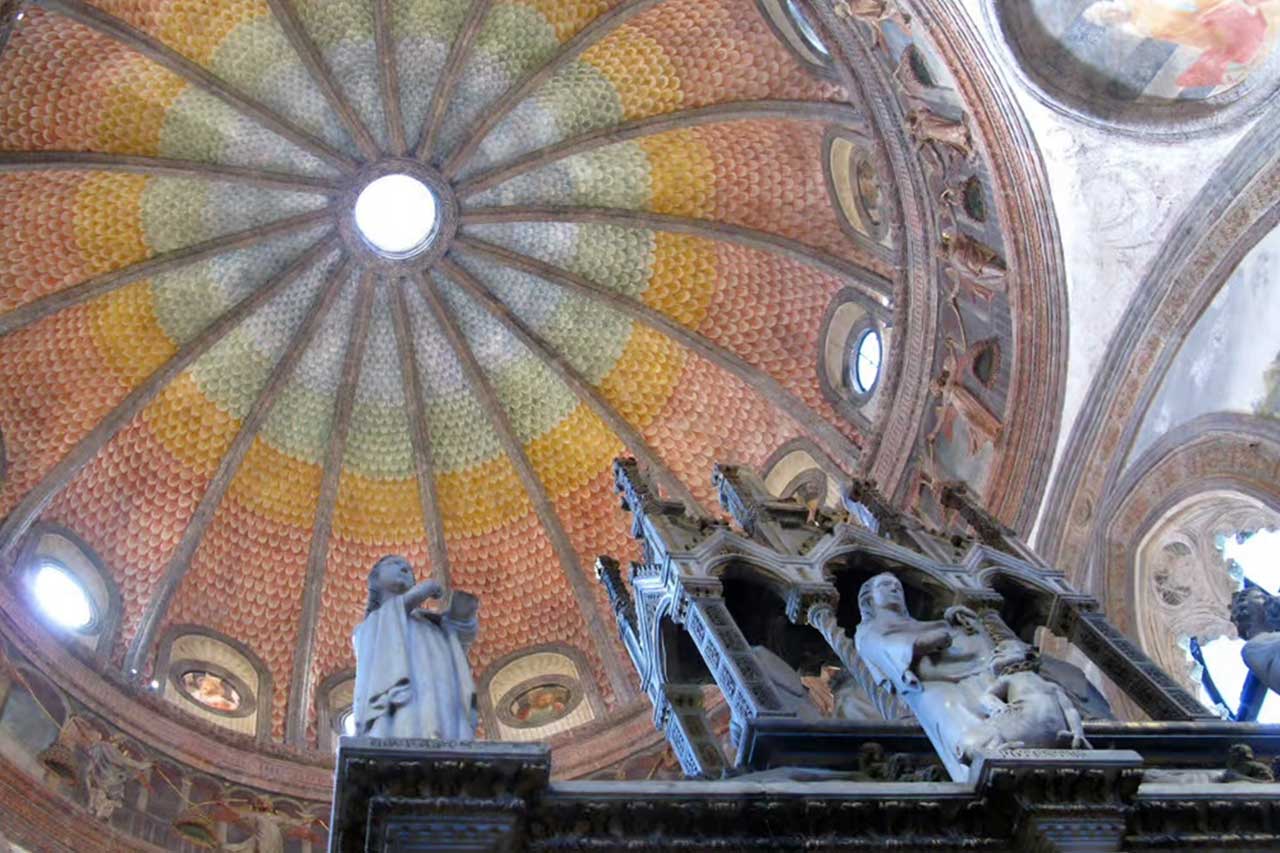
Tuscan Renaissance influence and distinctive chapel elements
The Portinari Chapel is a typical example of the influence of the Tuscan Renaissance on Lombard culture. Its architectural structure, characterized by a square main hall with a sixteen-segment dome and a small apse that is also square, clearly reflects Brunelleschi’s Florentine archetype.
This coveted architectural choice by Pigello Portinari was probably intended to confirm his Florentine roots and introduce the Tuscan Renaissance style into Lombard art.
The rich artistic decoration, mostly in terracotta, harmonizes with the frescoes in the interior, creating a coherent whole that confirms the fusion of two different cultures.
Artworks and decorations: Frescoes by Vincenzo Foppa and the Ark of St. Peter the Martyr
The frescoes in the Portinari Chapel by Vincenzo Foppa, one of the leading painters of the Lombard Renaissance, are a showcase of Milanese art of the period.
Architecture and works of art
Structure of the basilica
The Basilica of Sant’Eustorgio in Milan is an excellent example of architecture that has been transformed over the centuries.
The original structure dates back to the Romanesque period, characterized by three naves and a configuration that retains some characteristic elements, such as the apse and some capitals.
In the 13th century, the basilica was entrusted to the Dominicans, who renovated it to accommodate preaching, making the space larger and more accessible.
The current facade is the result of a 19th-century Neo-Romanesque renovation by engineer Giovanni Brocca.
The bell tower, the tallest in Milan, has a star on top, the symbol of the Epiphany, and dates from between 1297 and 1309
Major works of art
Inside the Basilica of Sant’Eustorgio are numerous works of art of great value. Among them are the previously mentioned frescoes and the Ark of St. Peter the Martyr, sculpted by Giovanni di Balduccio in the Portinari Chapel,
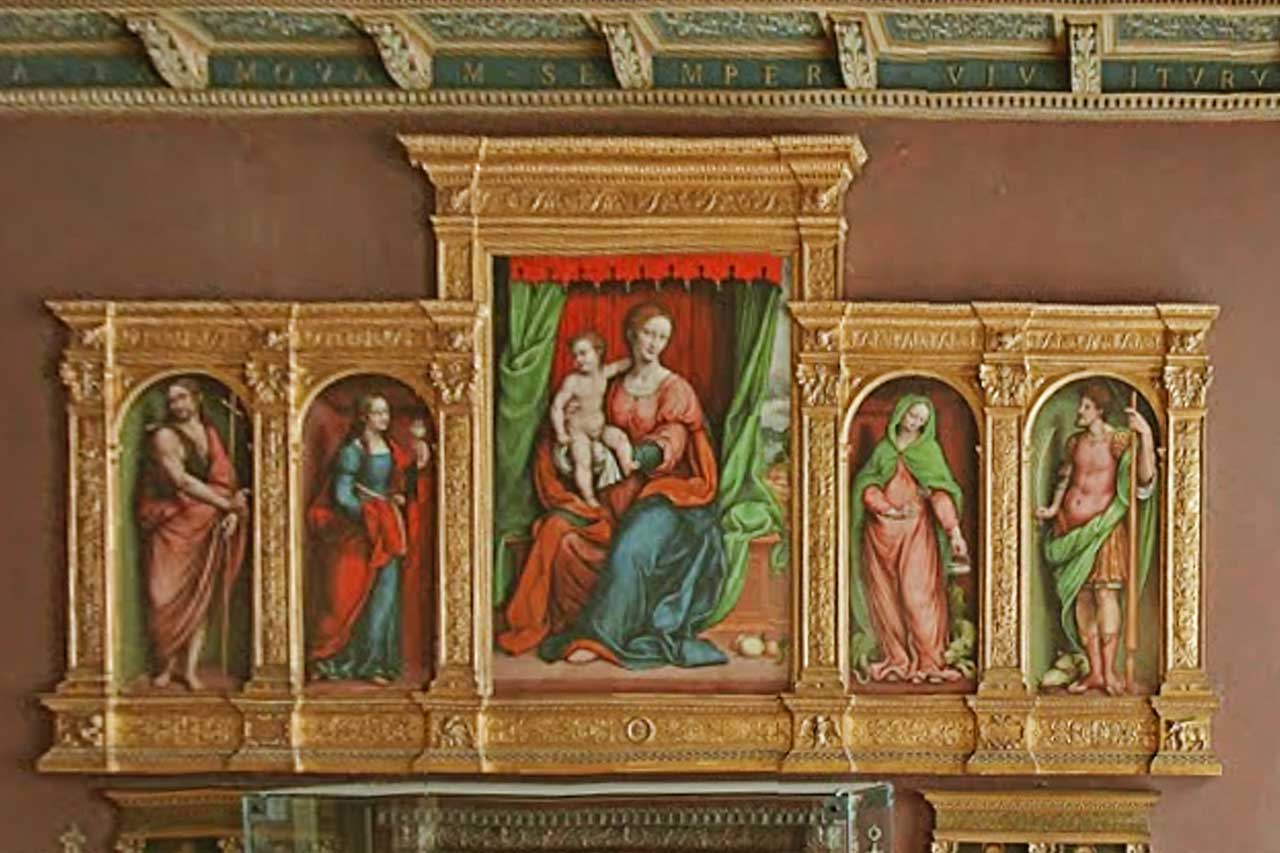
Other important works include the 15th-century marble polyptych of the main altar and the sarcophagus of the Three Kings, an ancient Roman sarcophagus that, according to tradition, contained the remains of the three Wise Men.
The basilica also features frescoes from Giotto’s school and the tombs of the Visconti family.
Accessibility and opening hours of the Basilica of Sant’Eustorgio
Location near Navigli
Bazylika Sant’Eustorgio znajduje się w Mediolanie, na Piazza Sant’Eustorgio, w pobliżu PortaTicinese.
How to get to the basilica?
The area around the basilica is well served and easily accessible on foot from Corso di Porta Ticinese or other parts of the city center.
To get to the Basilica of Sant’Eustorgio by public transportation, you can use:
- Tram: lines 2, 3, and 14 will take you directly to the basilica.
- Bus: Linia 94.
Sant’Eustorgio Basilica opening hours
- Every day from 10:00 am to 6:00 pm .

I lived in Milan for 18 years, and it was there that I came to know the city’s daily life best - not just its landmarks, but also its rhythm, its habits, and its less obvious sides. Today I live in Wrocław, but I still return to Milan regularly.